Artwork
Giving shelter, one of the seven works of mercy
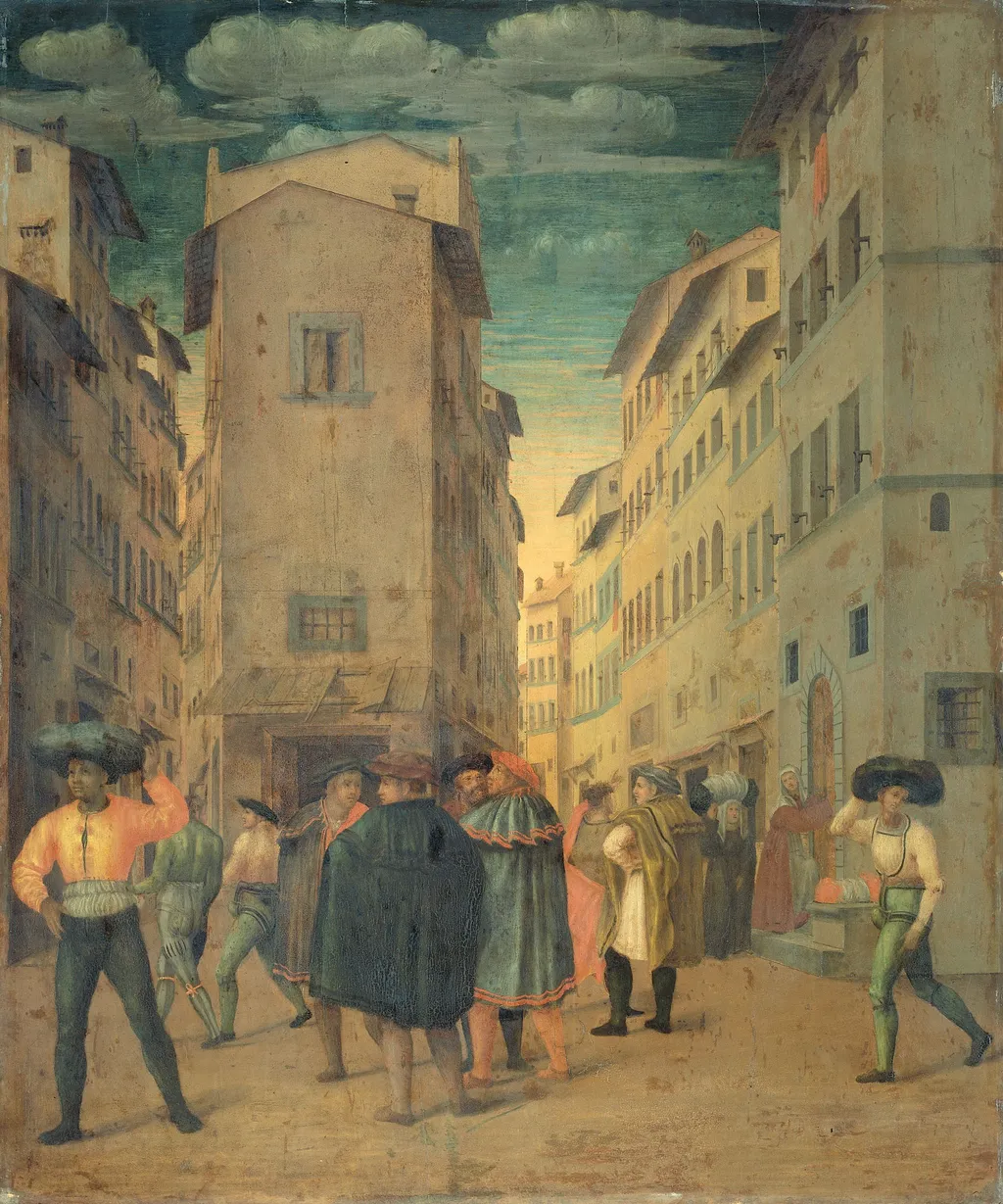
Giving shelter, one of the seven works of mercy is an oil painting by the Mannerist artist Unknown. It dates from 1550 and is held in the collection of the Rijksmuseum.
About this work
Technique & Style
Stylistically, the composition aligns with contemporary Florentine conventions, emphasizing clarity of form and measured space.
The painting is executed in oil on a wooden panel support, a common choice for mid-sixteenth-century Florentine works. The medium of oil paint allowed for fine gradations of tone and luminous color effects, which are evident in the depiction of architectural details and the soft fall of light across the scene.
Stylistically, the composition aligns with contemporary Florentine conventions, emphasizing clarity of form and measured space. The figures are arranged with careful attention to spatial recession, and the rendering of urban structures reflects an interest in perspectival accuracy and volumetric solidity.
History & Provenance
The painting Giving shelter, one of the seven works of mercy was created in 1550 in Florence. Executed in oil paint on a panel, the work is attributed to an unknown artist. It is currently held in the collection of the Rijksmuseum.
Overview
The oil painting titled “Giving shelter, one of the seven works of mercy” depicts a bustling urban street. Tall, closely spaced buildings line the scene, their shopfronts punctuated by open windows. A bright, partly clouded sky hovers above a dusty ground, while pedestrians in varied attire, wide‑brimmed hats, simple garments, orange‑sleeved coats, populate the composition.
Subject & Meaning
At the composition’s centre, a man appears to assist another individual, suggesting an act of protection or hospitality. The title links this gesture to the Christian charitable principle of providing shelter, framing the everyday street activity as an illustration of compassionate duty.
Context
The work belongs to a series that visualizes the seven corporal works of mercy, a tradition rooted in Christian moral teaching. By situating the theme of shelter within a contemporary street setting, the painting connects timeless ethical concepts to ordinary urban life.
Artist & collection









 Entry of Charles VIII into Florence
 Christ Presented to the People
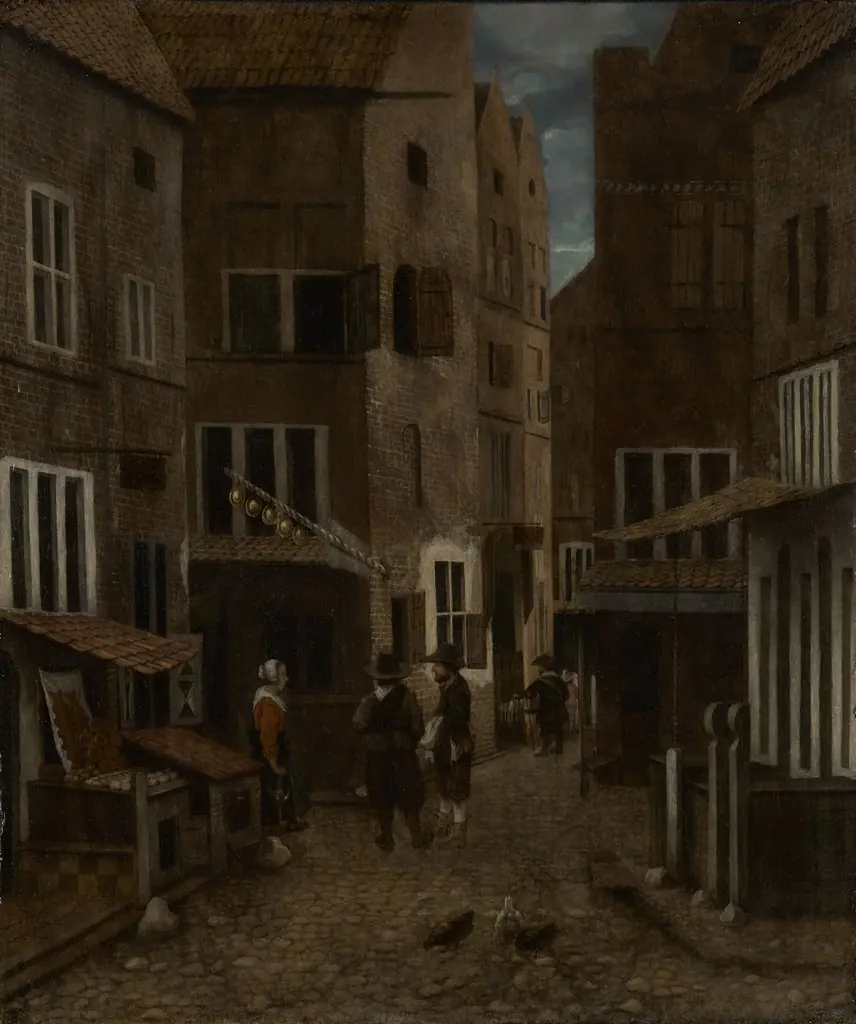 Street Scene
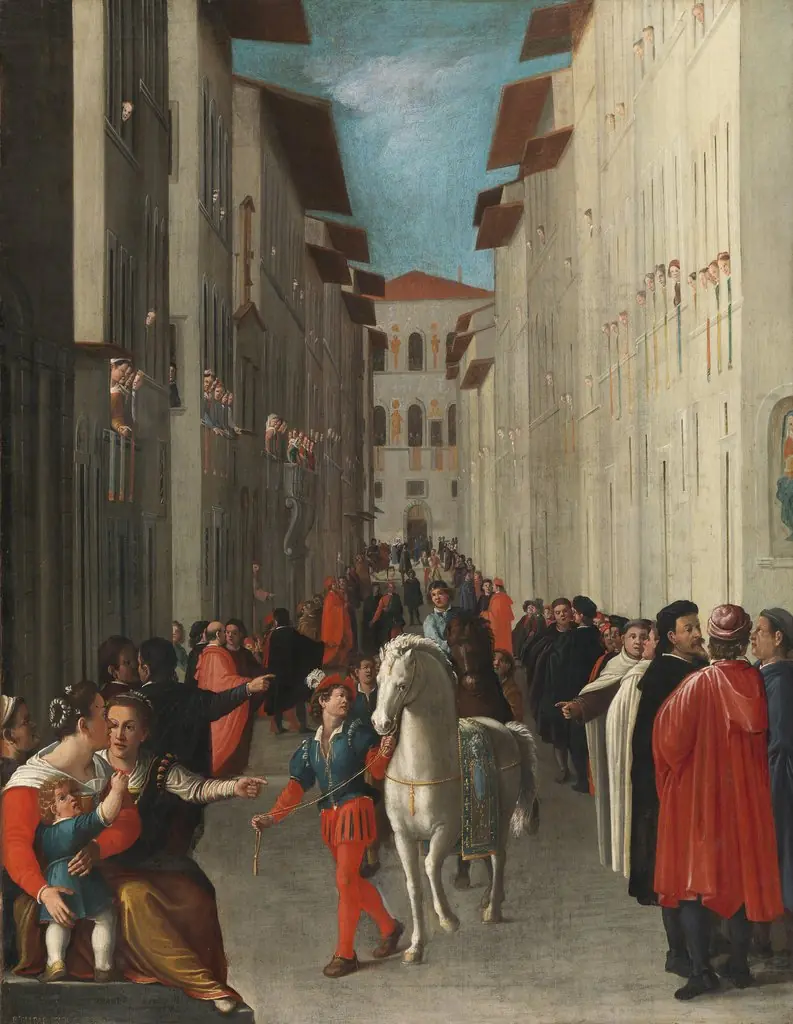 The Return from the Palio
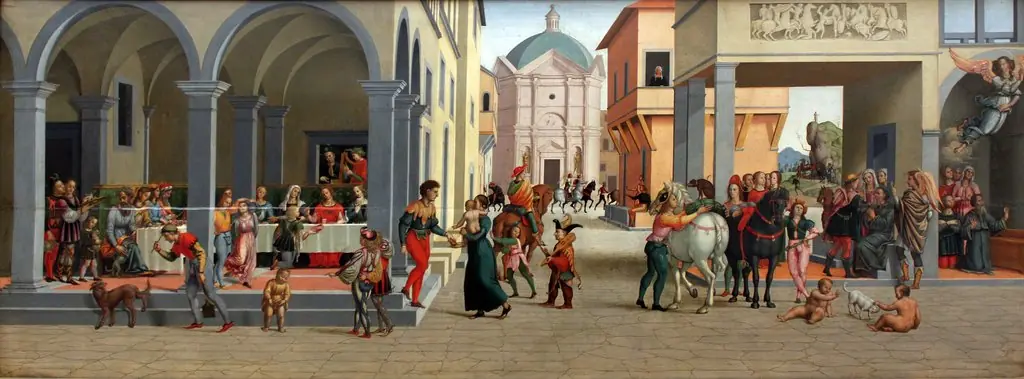 Representation from the Life of the Young Tobias II
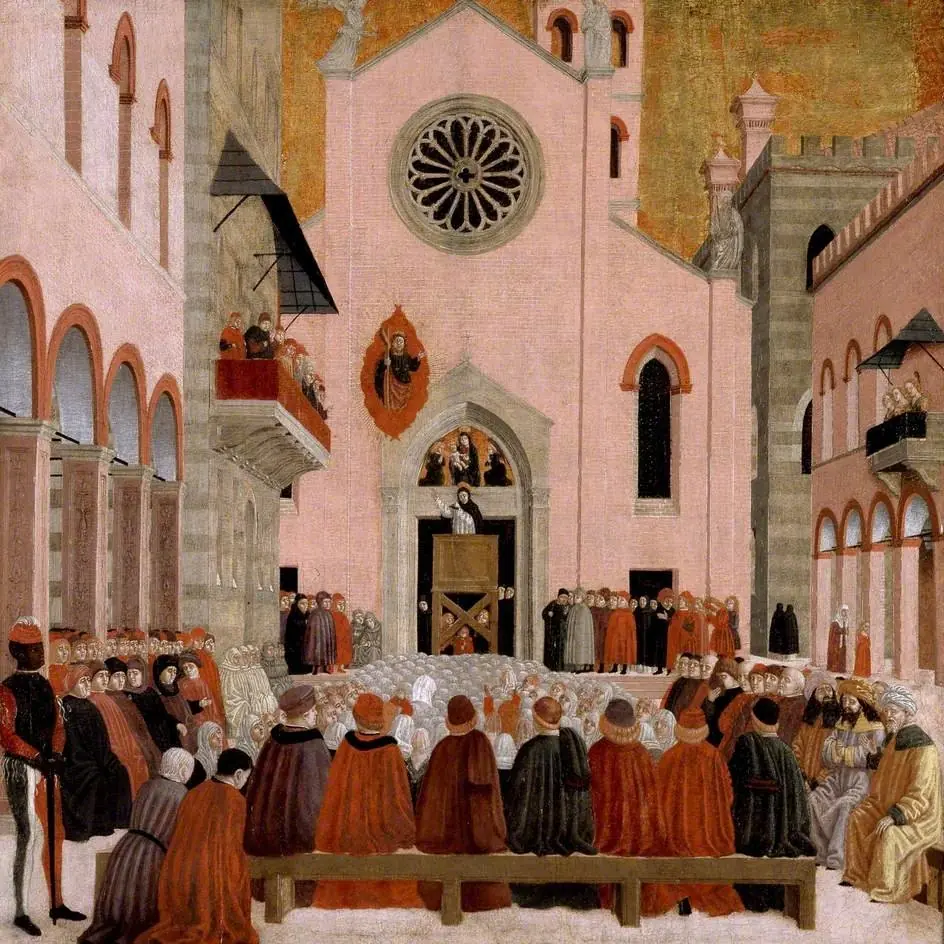 St Vincent Ferrer preaching before a Pope
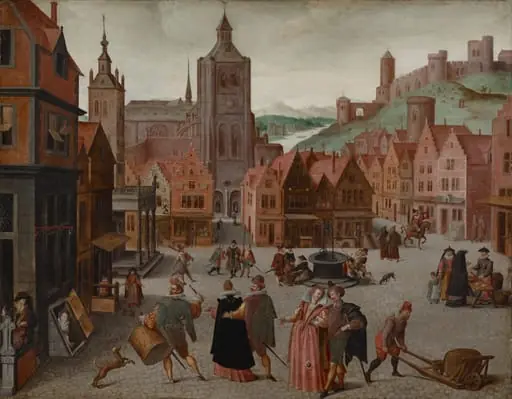 The Marketplace in Bergen op Zoom
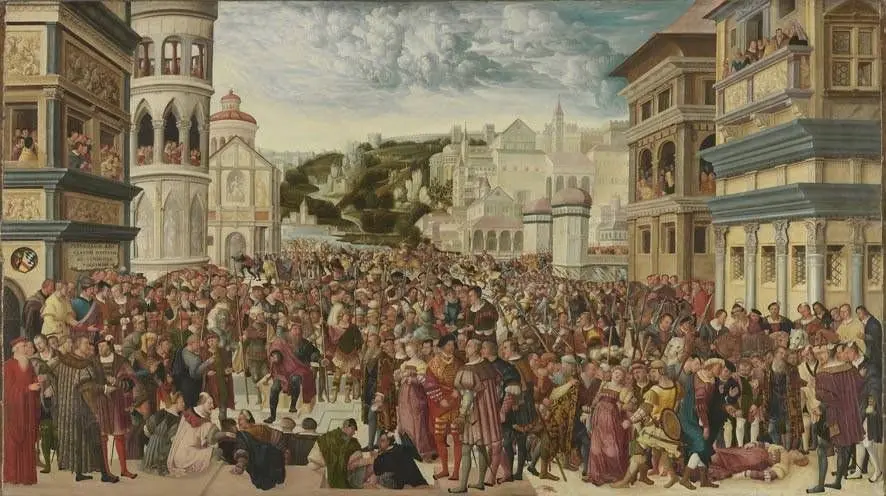 Historienzyklus: Geschichte der Verginia
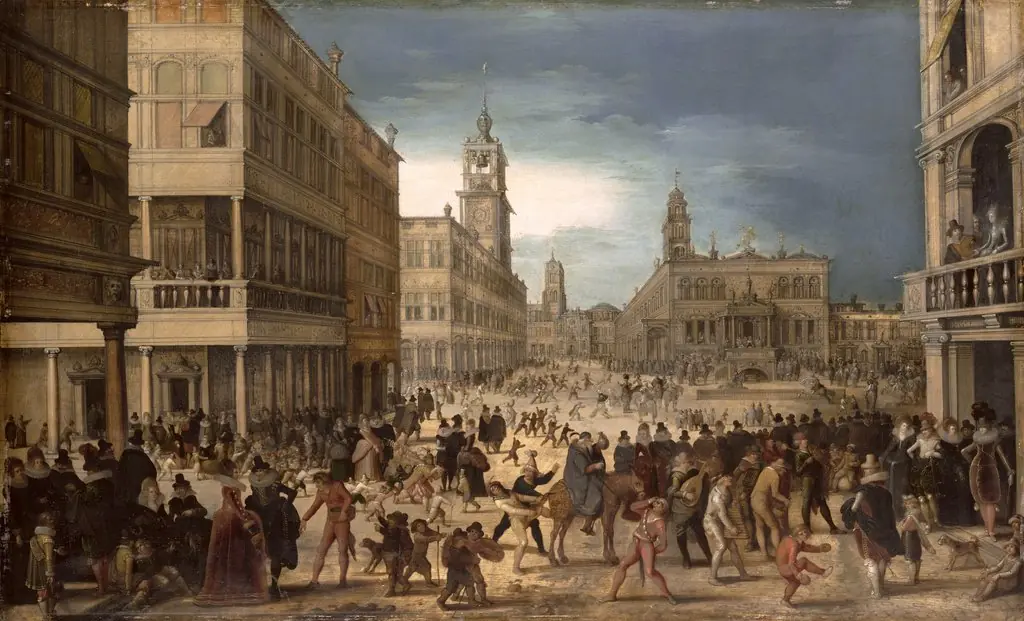 Carnival
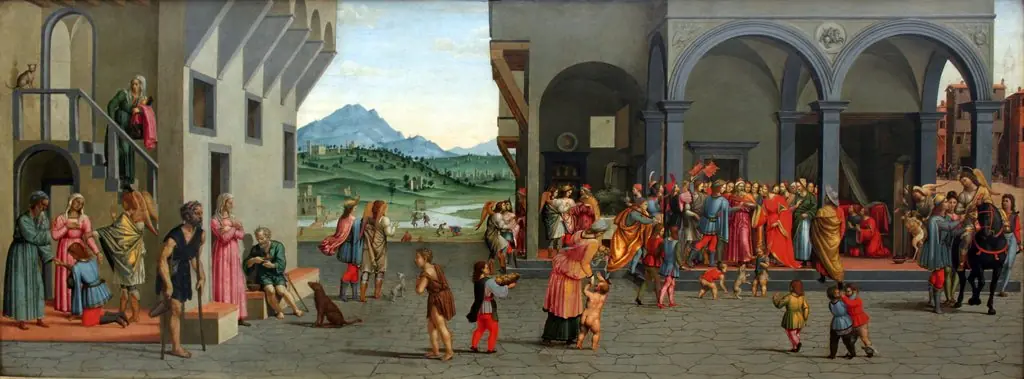 Representation from the Life of the Young Tobias I
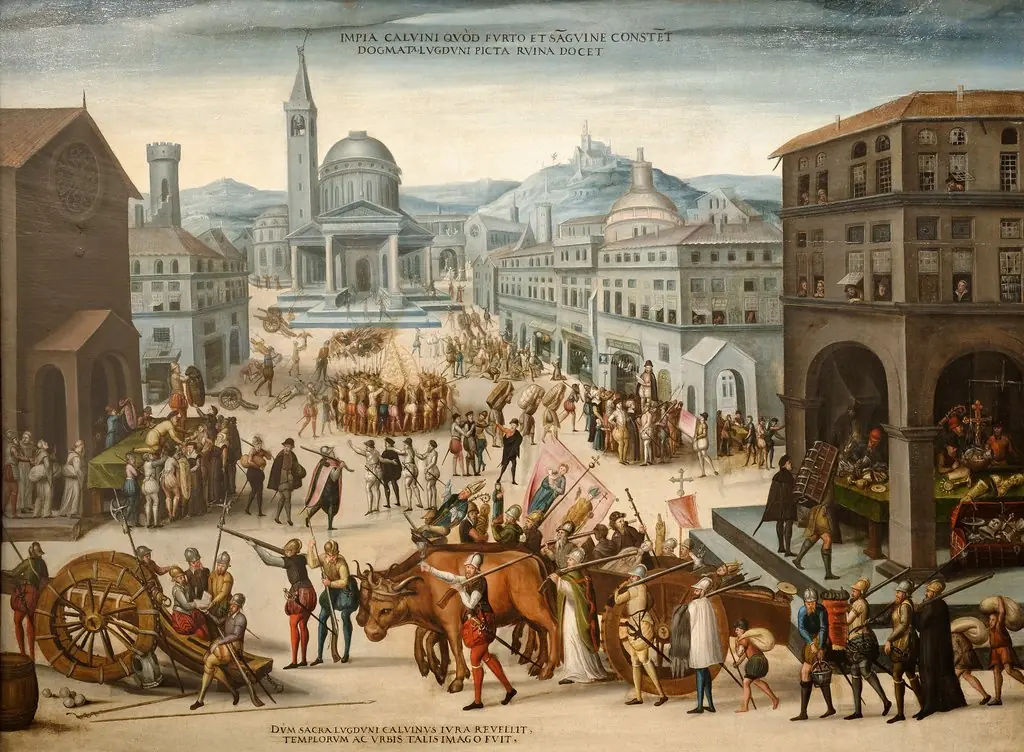 The Sack of Lyon by the Calvinists in 1562
- The Seven Works of Mercy