Artwork
土曜図像|Iconographic Drawing of Saturn
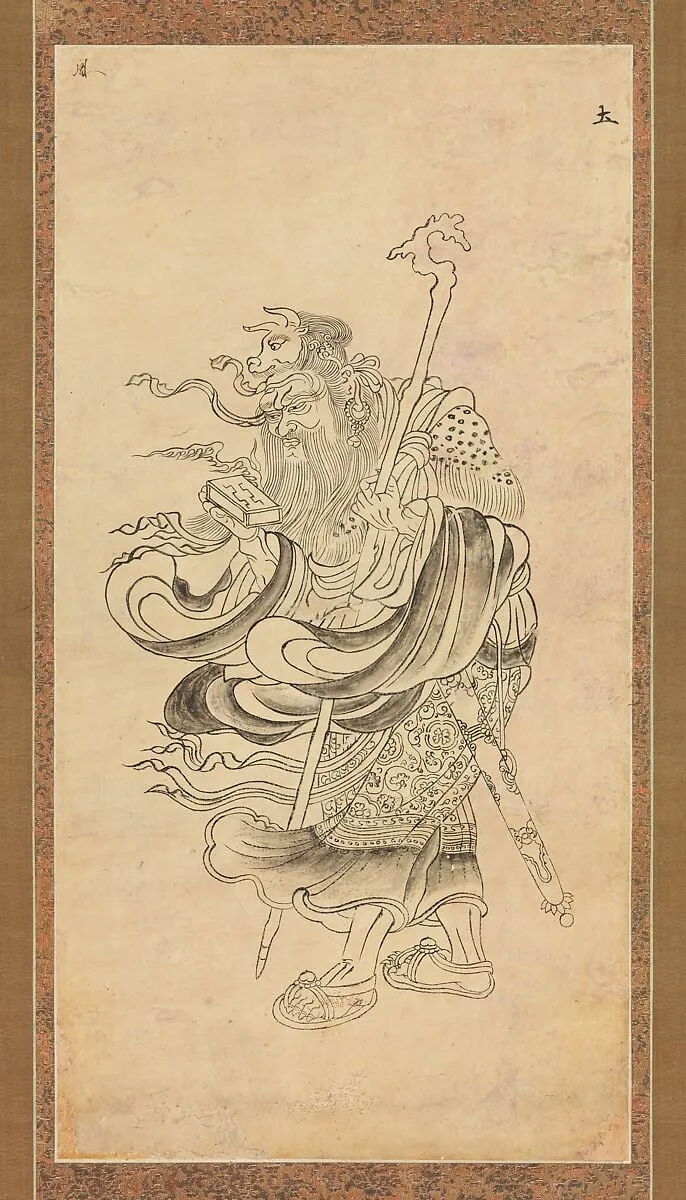
土曜図像|Iconographic Drawing of Saturn is an ink painting. It dates from 1142 and is held in the collection of the Metropolitan Museum of Art.
- Accession no.
- 1975.268.15
- Credit line
- The Harry G. C. Packard Collection of Asian Art, Gift of Harry G. C. Packard, and Purchase, Fletcher, Rogers, Harris Brisbane Dick, and Louis V. Bell Funds, Joseph Pulitzer Bequest, and The Annenberg Fund Inc. Gift, 1975
About this work
Technique & Style
The Iconographic Drawing of Saturn is executed as a hanging scroll in ink and color on paper, a format consistent with twelfth-century Japanese religious painting. The work is classified as a painting within a religious genre and depicts a male figure, rendered through the combined use of brush-applied ink and applied color on a paper support. Beyond the medium designation of ink and color on paper, the corpus record provides no further details on handling, pigment type, brushwork, surface preparation, or current condition.
No information is supplied regarding stylistic attributes such as line quality, compositional approach, iconographic conventions, or formal characteristics, nor any conservation or condition notes.
History & Provenance
The Iconographic Drawing of Saturn, known in Japanese as 土曜図像, is a hanging scroll painted in ink and color on paper during the twelfth month of 1142.
The Iconographic Drawing of Saturn, known in Japanese as 土曜図像, is a hanging scroll painted in ink and color on paper during the twelfth month of 1142. The work is attributed to an anonymous Japanese painter and belongs to the religious genre, depicting a male figure. It entered the collection of the Metropolitan Museum of Art, where it is catalogued under accession number 1975.268.15.
The painting was created in Japan. Its provenance is limited to the museum's ownership, with no earlier ownership records documented.
The work, a hanging scroll executed in ink and color on paper, was created in Japan in 1142 and belongs to the religious painting genre, portraying a male figure. Its presence in the museum's Japanese art holdings reflects its significance within the corpus of Heian-period religious imagery.
Overview
The work, titled “土曜図像|Iconographic Drawing of Saturn,” is a hanging scroll executed in ink and color on paper. It presents a slender, bearded figure with flowing hair, suspended above a knife and a severed infant’s head. The composition lacks any surrounding landscape or interior, focusing attention solely on the central figure and its symbolic accoutrements.
Subject & Meaning
The figure represents Saturn, the Roman deity notorious for devouring his offspring. In this rendition, the god is rendered in the guise of a Japanese monk, merging a classical Western myth with Eastern visual conventions. The knife and infant’s head allude to the mythological act of child‑sacrifice, while the monk’s attire suggests a contemplative, perhaps penitential, dimension.
Context
By portraying a Roman god in monastic dress, the work exemplifies a cross‑cultural dialogue, juxtaposing Greco‑Roman mythology with Japanese aesthetic sensibilities. This hybridization invites viewers to reconsider familiar narratives through an unfamiliar visual lens, a practice observed in various periods of East‑West artistic exchange.
Artist & collection

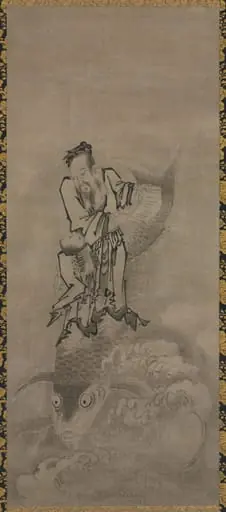
- Hotei with Daoist Immortals: Immortal Riding Carp
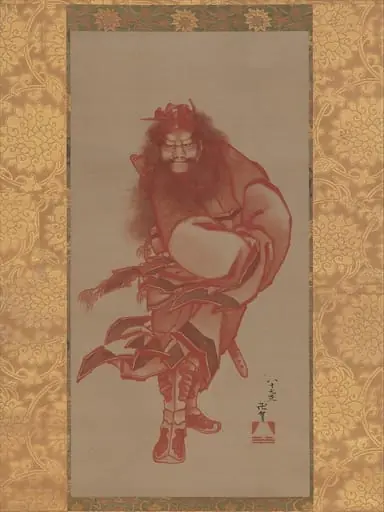 Untitled
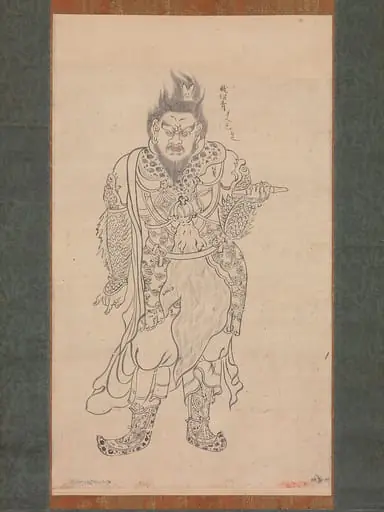 安底羅大将図像(付.裏書)|Anchira-taisho Jochi
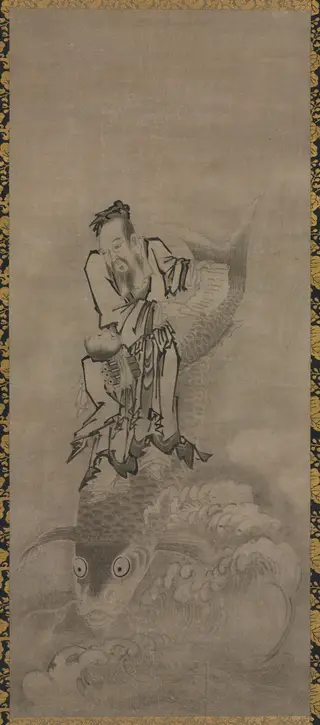 Hotei with Daoist Immortals
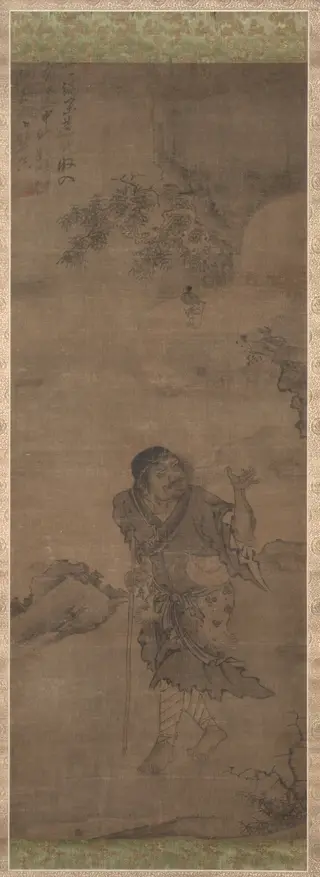 Li Tieguai; Liu Haichan
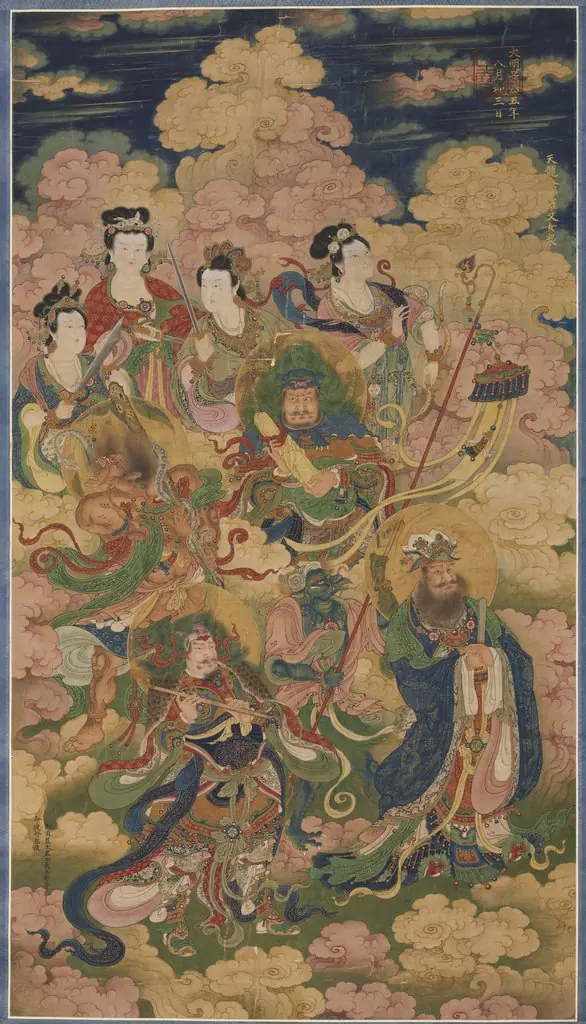 The Eight Hosts of Deva, Naga, and Yakshi
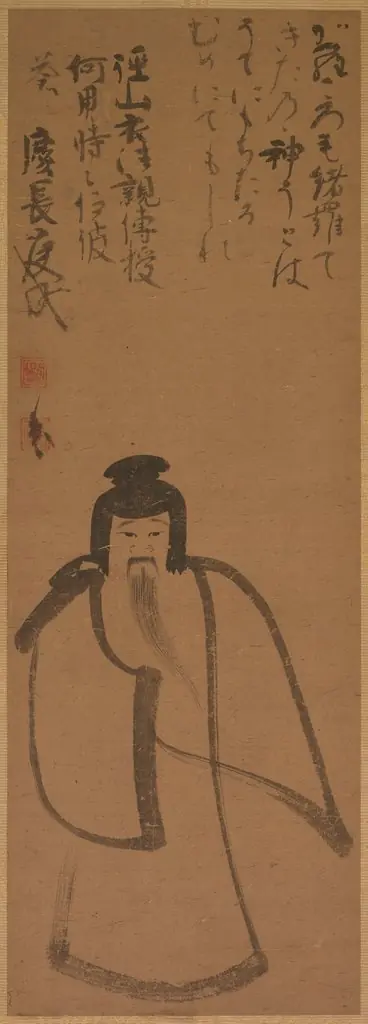 Tenjin Traveling to China
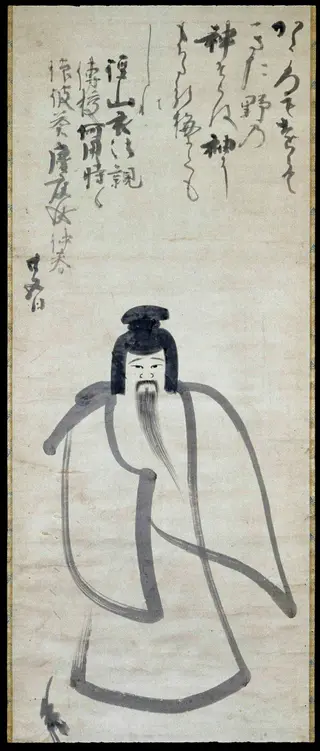 Priest
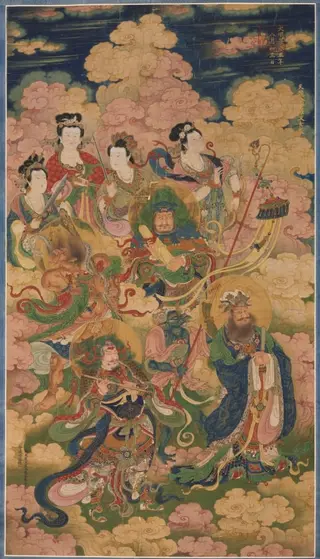 The Eight Hosts of Deva, Naga, and Yakshi
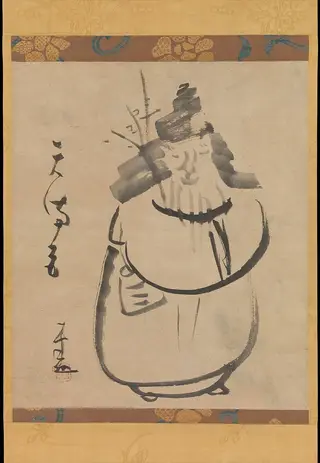 「天満宮」 渡唐天神図|“Tenmangū,” Sugawara no Michizane as Tenjin Traveling to China
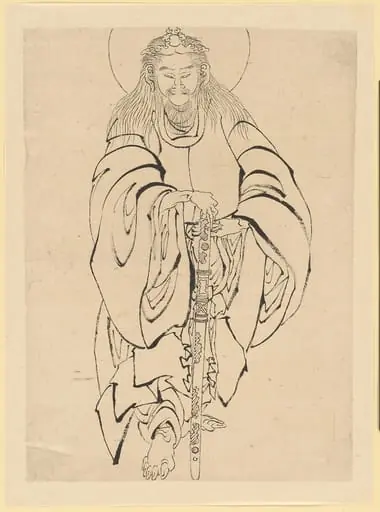 Untitled
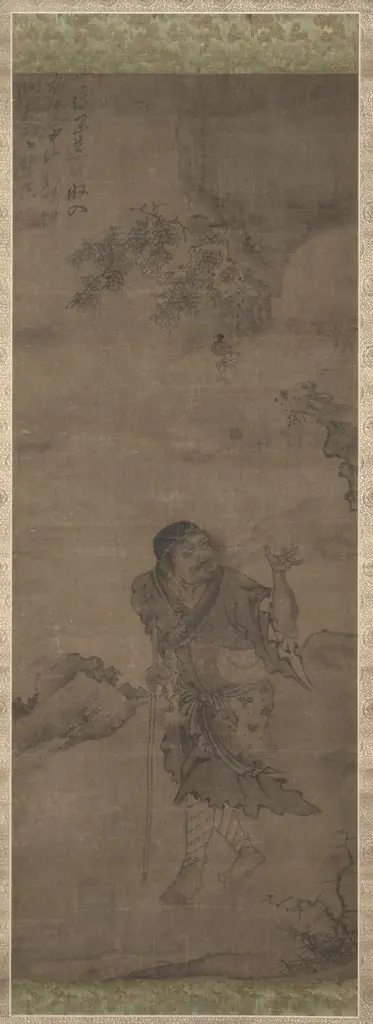 Li Tieguai