Artwork
Infant Bacchanal
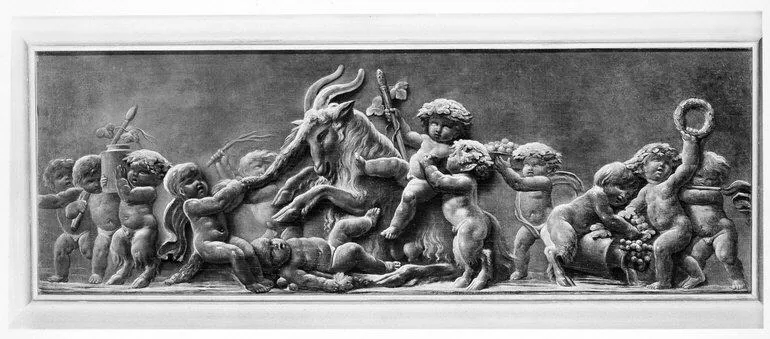
Infant Bacchanal is an oil painting. It dates from 1790 and is held in the collection of the Metropolitan Museum of Art.
About this work
Technique & Style
As a product of the workshop of Piat Joseph Sauvage, it likely involved studio assistants working under the master's direction.
The painting is executed in oil on canvas, a medium typical of eighteenth-century European academic practice. The composition is horizontally oriented, measuring approximately 26 cm in height and 75.2 cm in width, dimensions consistent with a cabinet picture or decorative overdoor. As a product of the workshop of Piat Joseph Sauvage, it likely involved studio assistants working under the master's direction.
The scene arranges putti, satyrs, and goats within a shallow, stage-like setting, the figures rendered with the clarity and classicizing precision characteristic of late eighteenth-century academic training.
History & Provenance
Infant Bacchanal was created in 1790 and is attributed to the Workshop of Piat Joseph Sauvage. Executed in oil paint on canvas, the painting measures 26 cm in height by 75.2 cm in width and depicts a scene featuring a satyr, a putto, a goat, and grapes. The work is held in the collection of the Metropolitan Museum of Art, New York.
No specific accession number, original commission, or chain of ownership prior to its arrival at the museum is provided in the available records.
Overview
"Infant Bacchanal" is an oil painting depicting a dynamic and crowded scene. It features numerous small, muscular figures, some with wings, engaged in a frenzied celebration. Among them, a bearded man with goat-like legs struggles with a woman on the ground, while other participants dance and play musical instruments.
The composition focuses intensely on the figures, set against a simple background that emphasizes the shallow depth of the depicted space.
Subject & Meaning
The painting portrays a bacchanalian revelry, characterized by its chaotic energy and mythical allusions. Central to the composition is the struggle between a satyr, identifiable by his goat legs and beard, and a female figure. Surrounding them, various small, robust figures, some winged, participate in the festivities, holding attributes such as grapes or horns, and engaging in dance and music. This imagery evokes themes of unrestrained joy and ancient mythological celebrations.
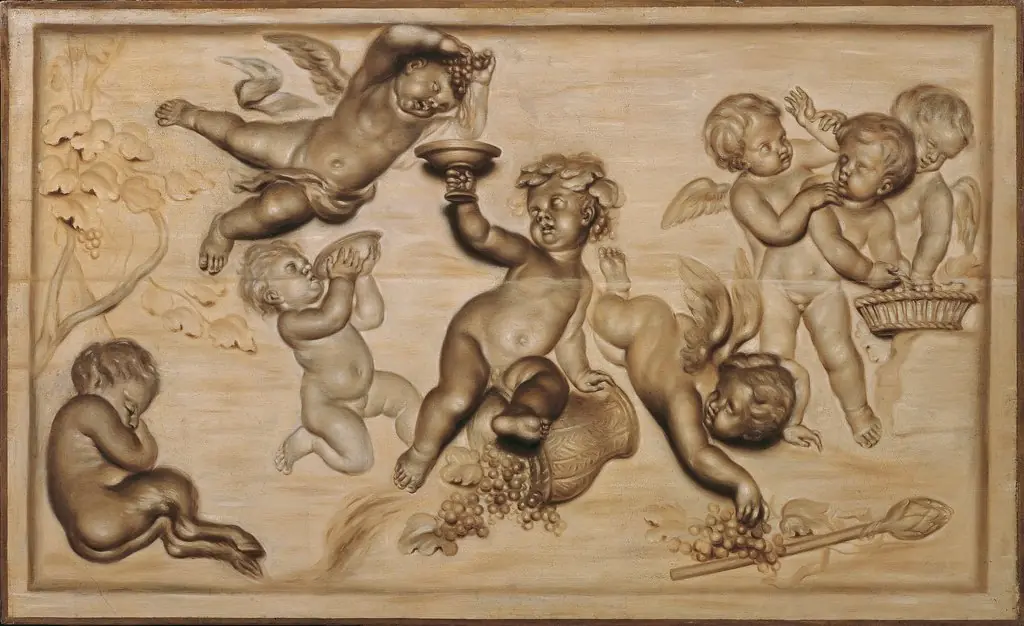
Artist & collection

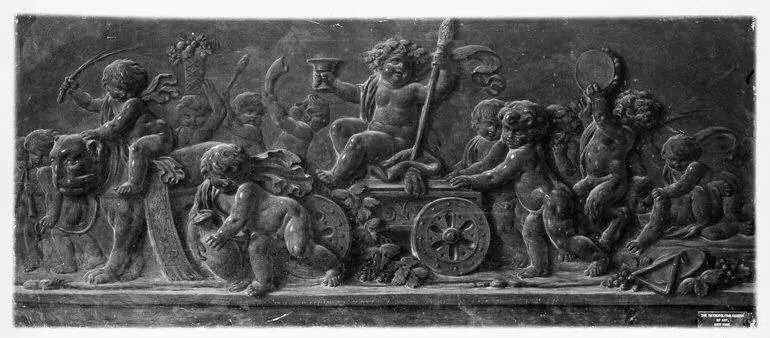 The Triumph of Bacchus
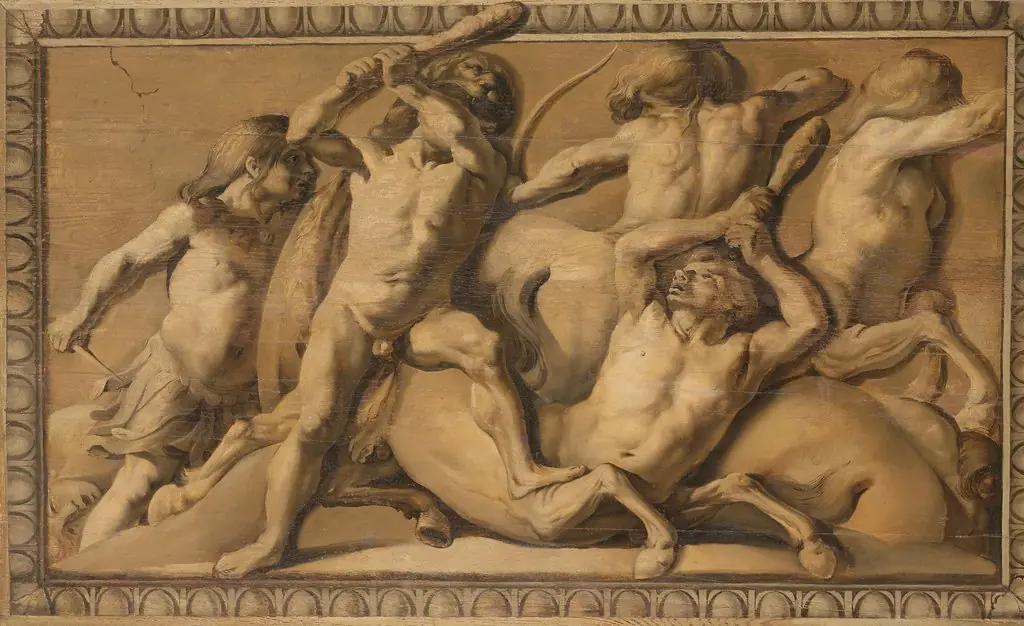 Hercules Defeated the Centaurs
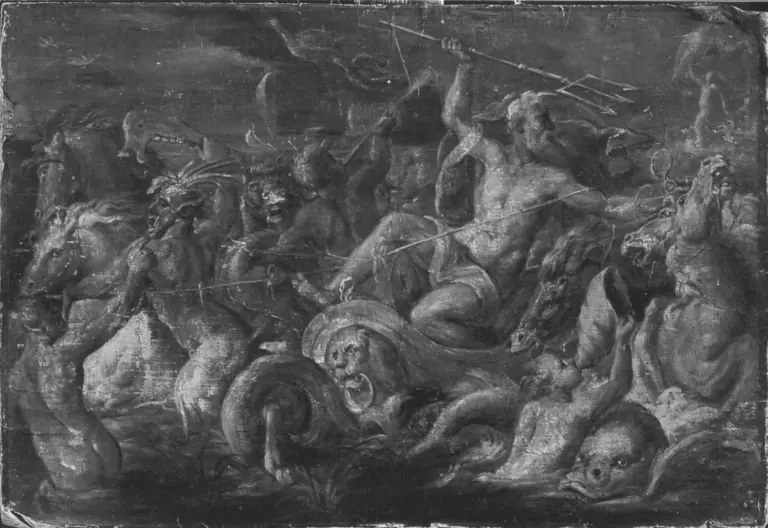 Neptun mit Tritonen (zugeschrieben)
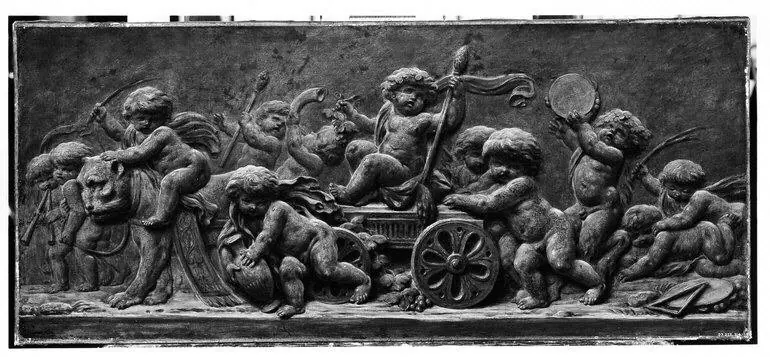 The Triumph of Bacchus
 Shepherds Watering Cattle in a Forest
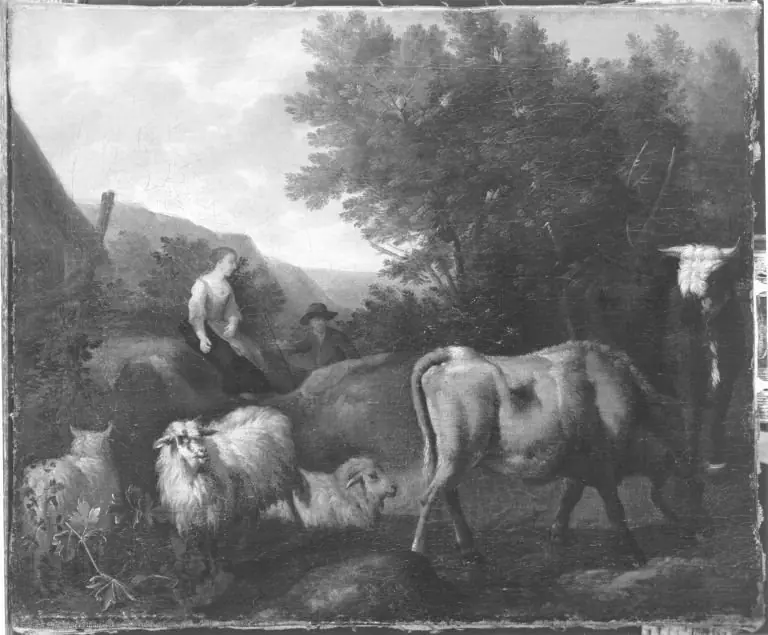 Landschaft mit Vieh und Hirten
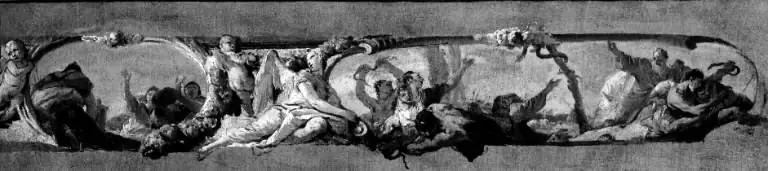 The Brazen Serpent
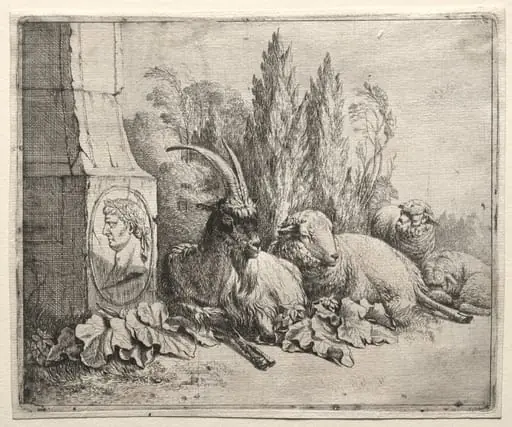 Bust at the Bottom of a Pyramid
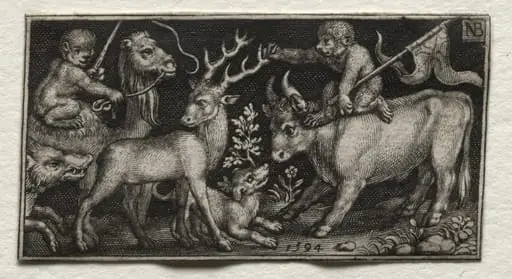 Monkeys Riding a Camel and a Bull
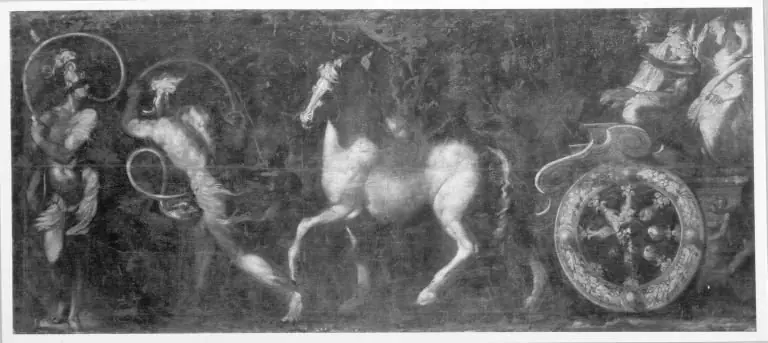 Der Wagen des Triumphators
 Thetis auf dem Meere
- Children's Bacchanal