Artwork
Der hl. Hieronymus
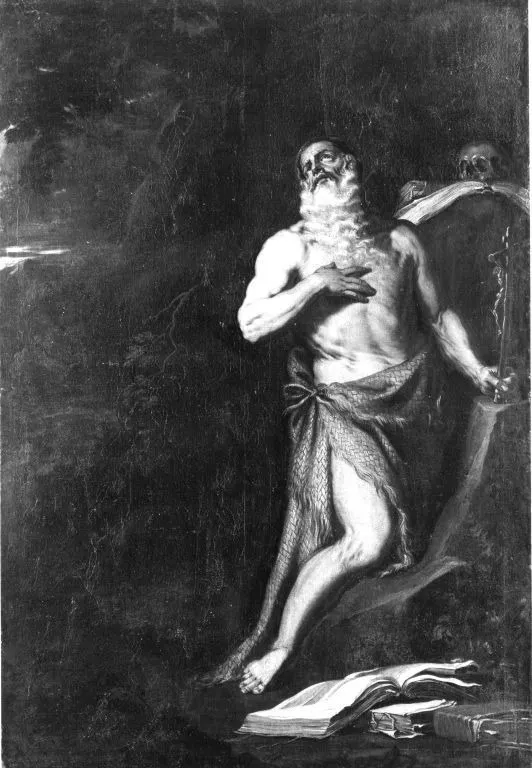
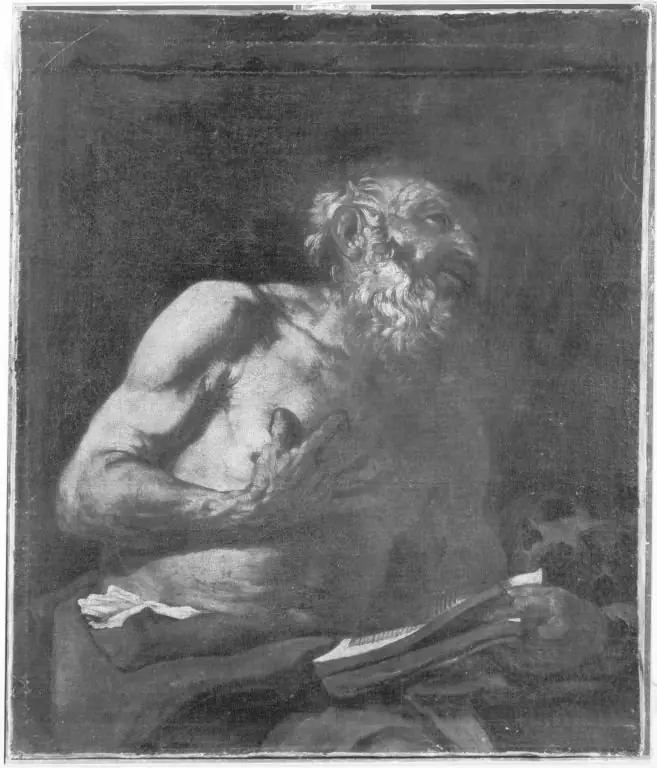
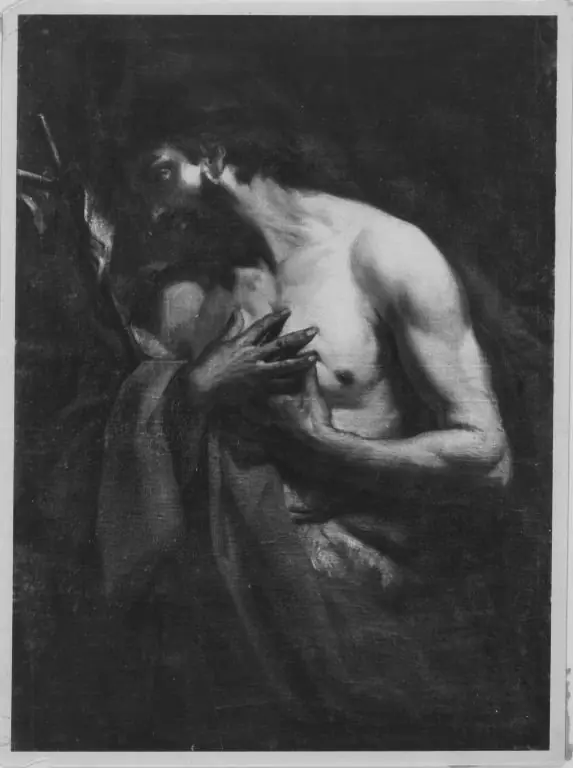
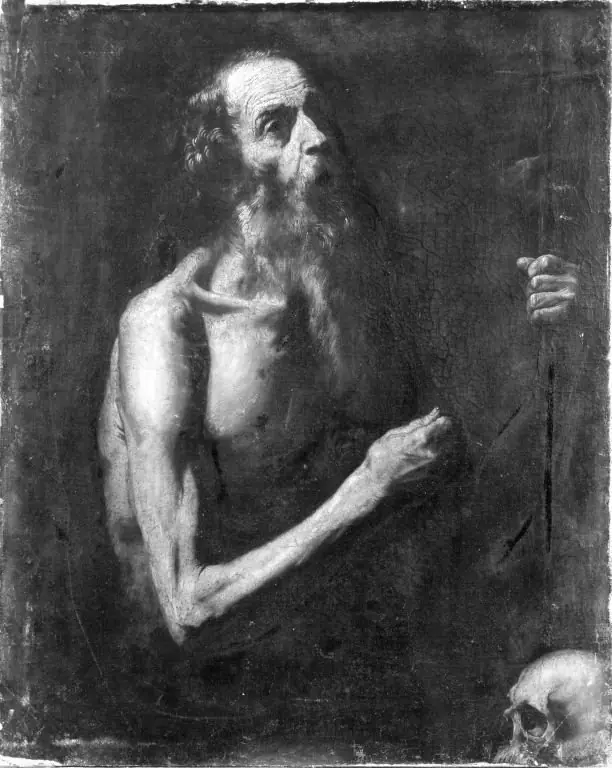
Der hl. Hieronymus is an unspecified painting by the Early Baroque Italian artist Unknown. It dates from 1600 and is held in the collection of the Bavarian State Painting Collections. The work portrays a bearded figure, likely a saint, standing before a dark backdrop that includes a skull.
About this work
History & Provenance
Hieronymus is housed in the Alte Pinakothek within the Bavarian State Painting Collections, with an inventory designation recorded in the museum's holdings.
Der hl. Hieronymus is a religious painting dated to circa 1600, attributed to a Neapolitan artist. The work entered the Bavarian State Painting Collections and is now housed in the Alte Pinakothek in Munich.
No earlier owners or specific commission are recorded in the available sources, so its provenance prior to acquisition by the Bavarian State Painting Collections remains unknown. The painting’s creation is thus situated in the early seventeenth‑century Neapolitan milieu, with its current stewardship reflecting the museum’s holdings of Baroque religious art.
Der hl. Hieronymus is housed in the Alte Pinakothek within the Bavarian State Painting Collections, with an inventory designation recorded in the museum's holdings. The work measures 156 cm in height and 106.5 cm in width and was completed in 1600.
It has been part of the Alte Pinakothek's exhibition spaces since its acquisition, forming part of the institution's display of religious paintings.
Overview
The work portrays a bearded figure, likely a saint, standing before a dark backdrop that includes a skull. He is draped in a simple cloth at the waist, his right hand placed over his chest while the left grasps a staff. The composition emphasizes the contemplative pose and the stark contrast between illuminated flesh and surrounding shadow.
Subject & Meaning
Identified as Saint Jerome, the saint is traditionally shown in penitent meditation, the skull symbolizing mortality and the transience of earthly life. The gesture of hand on chest suggests an internal oath or devotion, while the staff alludes to his role as a hermit scholar, reinforcing themes of asceticism and spiritual reflection.
Technique & Style
The painter employs chiaroscuro, a method that juxtaposes bright illumination on the figure’s face and torso against a deep, enveloping darkness. This handling of light creates a three‑dimensional effect and focuses attention on the saint’s expression. The subdued palette and smooth modeling are characteristic of late‑Renaissance or early Baroque devotional images.
Context
Works depicting Saint Jerome were common in Northern European religious art of the 16th and 17th centuries, often serving as didactic examples of scholarly piety. The inclusion of the skull aligns the piece with memento mori traditions, reminding viewers of death’s inevitability and the importance of spiritual preparation.
Artist & collection