Artwork
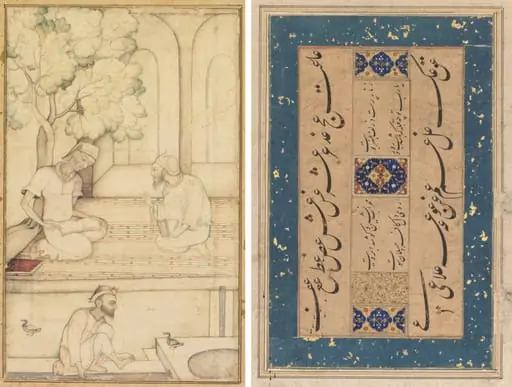
Kabir and Two Followers on a Terrace (recto); Calligraphy (verso)
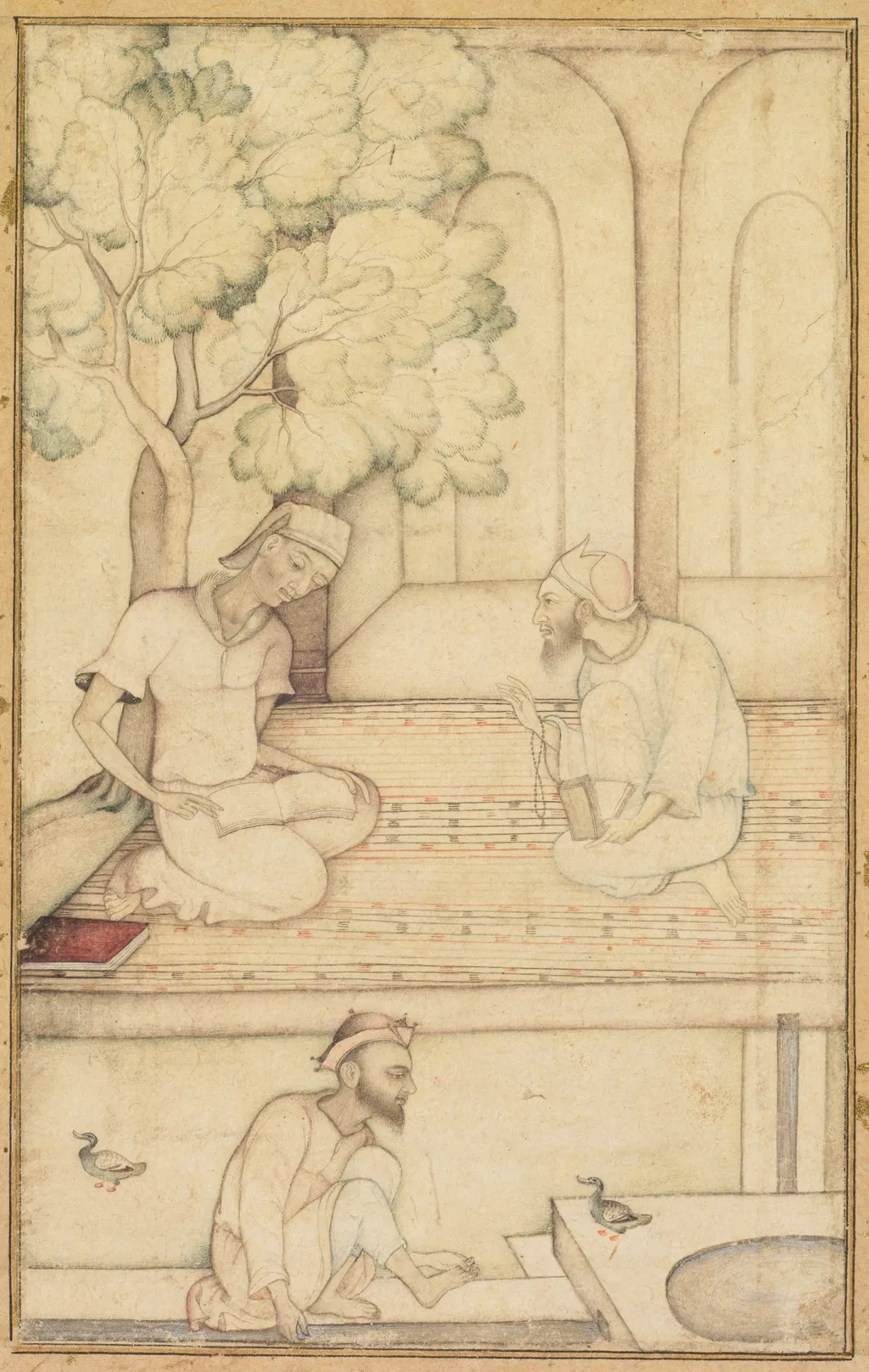
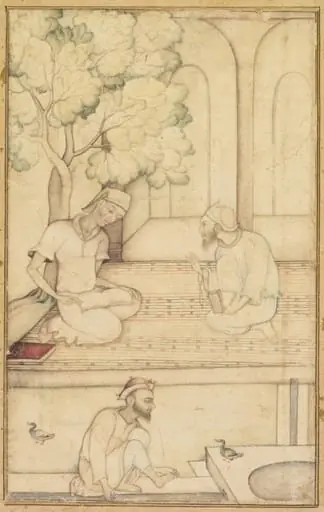
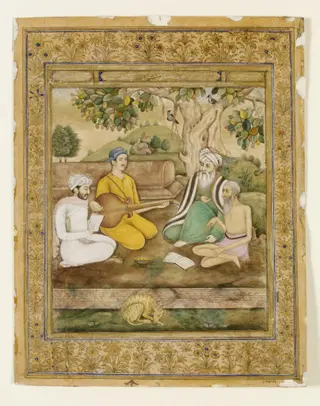
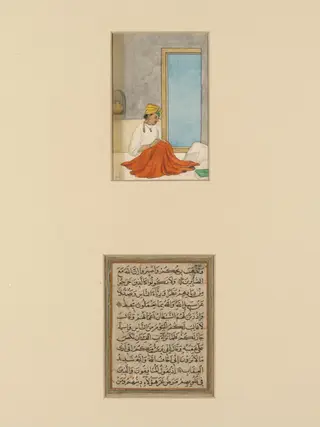
Kabir and Two Followers on a Terrace (recto); Calligraphy (verso) is an unspecified painting. It dates from 1615 and is held in the collection of the Cleveland Museum of Art. The work presents three figures gathered on a terrace, positioned beneath a tree and framed by arched windows.
About this work
History & Provenance
The painting Kabir and Two Followers on a Terrace (recto); Calligraphy (verso) is dated to 1615 and was produced in the Mughal Empire by an unknown artist.
The painting Kabir and Two Followers on a Terrace (recto); Calligraphy (verso) is dated to 1615 and was produced in the Mughal Empire by an unknown artist. It entered the Cleveland Museum of Art in 2013 with accession number 2013.326 and remains in the museum’s collection. Prior to its acquisition, the work’s provenance is not documented in the sources.
The artwork Kabir and Two Followers on a Terrace (recto); Calligraphy (verso) is held in the collection of the Cleveland Museum of Art. It was acquired by the institution in 2013 under the accession number 2013.326. Created in 1615 within the Mughal Empire, the painting is currently located at the museum in Cleveland. The provided sources do not contain information regarding specific exhibitions where this work has been displayed.
Context
The recto of this Mughal-era painting depicts Kabir and two followers on a terrace, while the verso bears calligraphy, reflecting the syncretic artistic practices of the period. Scholarship situates this work within the broader context of 17th-century Indian art, where spiritual themes were often interwoven with devotional inscription, particularly in regions under Mughal patronage. Its creation in the Mughal Empire aligns with a documented tradition of hybrid compositions blending figural narrative with textual elements, as noted in institutional records.
The piece is held by the Cleveland Museum of Art, which contextualizes it within its collection of South Asian miniature paintings, emphasizing its significance in illustrating the era’s cross-cultural artistic dialogues.
This work contributes to the understanding of artistic expression during the Mughal period, particularly in how religious figures like Kabir were visualized within courtly and spiritual networks. The attribution to an unknown artist, despite its high-quality execution, invites further study into workshop practices and patronage structures of the time, as highlighted in curatorial research. Its date of 1615 places it firmly within the early 17th century, a timeframe corroborated by both material analysis and historical records of artistic production in Mughal India.
Overview
The work presents three figures gathered on a terrace, positioned beneath a tree and framed by arched windows. Their modest robes and head coverings convey a humble atmosphere, while the composition balances seated and standing postures across two levels, establishing a quiet domestic scene.
Subject & Meaning
The three men, likely representing Kabir and his companions, engage in a shared moment of contemplation. Their arrangement, one seated on the floor, another on a bench, and a third on a lower platform, suggests a hierarchy of interaction, inviting viewers to consider themes of spiritual fellowship and communal learning.
Technique & Style
The painter employs a restrained palette of muted tones, allowing subtle shifts of light and shadow to model forms and suggest depth. Delicate brushwork renders the tree’s branches extending toward the figures, while the architectural elements are outlined with soft, graceful lines that enhance the scene’s tranquil mood.
Legacy
By combining understated color, careful modeling of light, and an intimate gathering of figures, the painting contributes to a tradition of devotional art that emphasizes personal reflection over overt dramatization, influencing later representations of spiritual discourse in a domestic setting.
Artist & collection

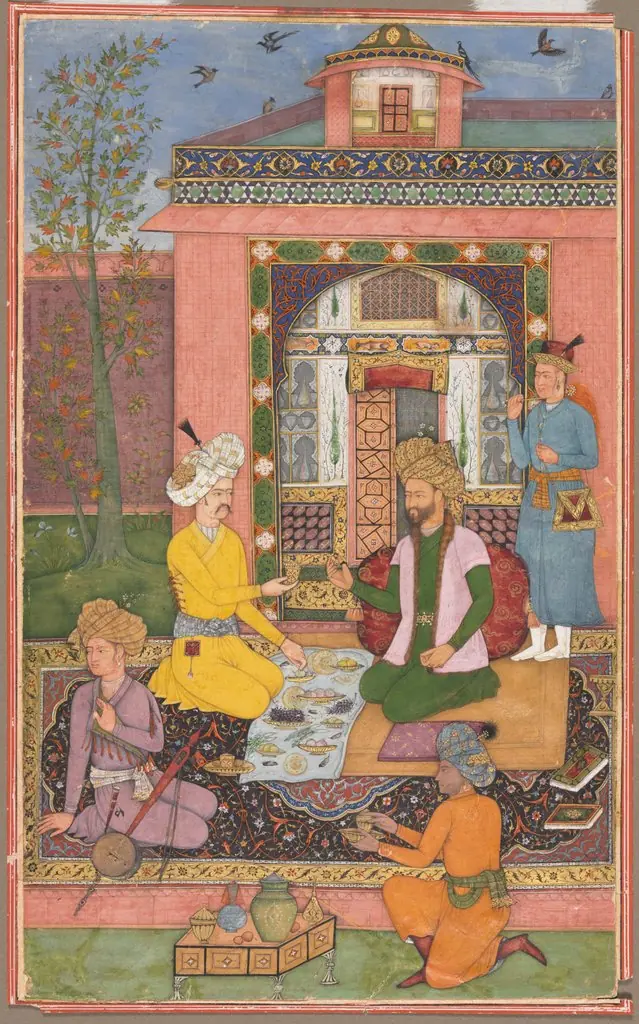 A Royal Picnic on a Terrace
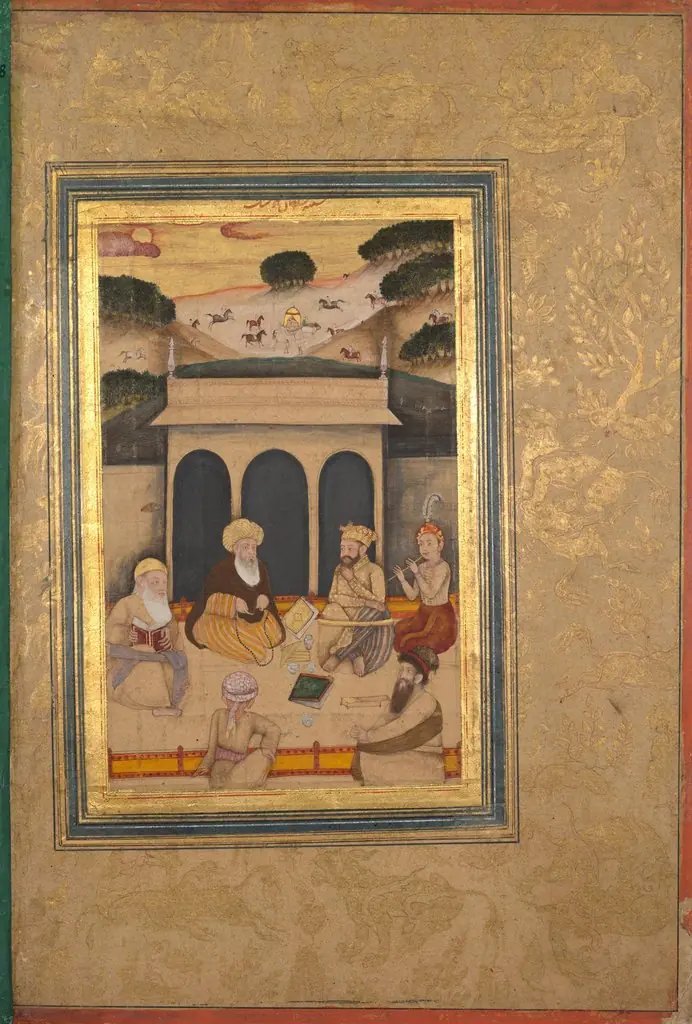 Nobleman Visiting Saint at his Shrine
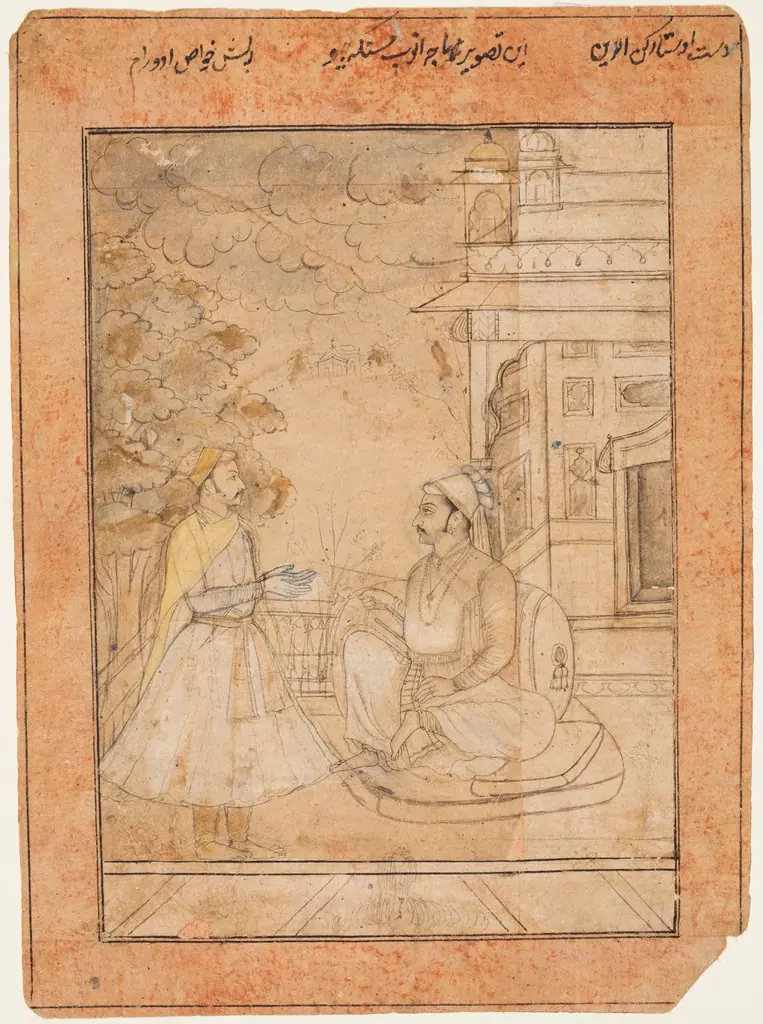 Maharaja Anup Singh of Bikaner (reigned 1669–98) Receives a Courtier
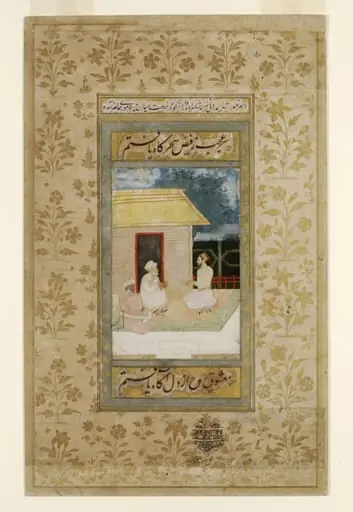 Dara Shikoh
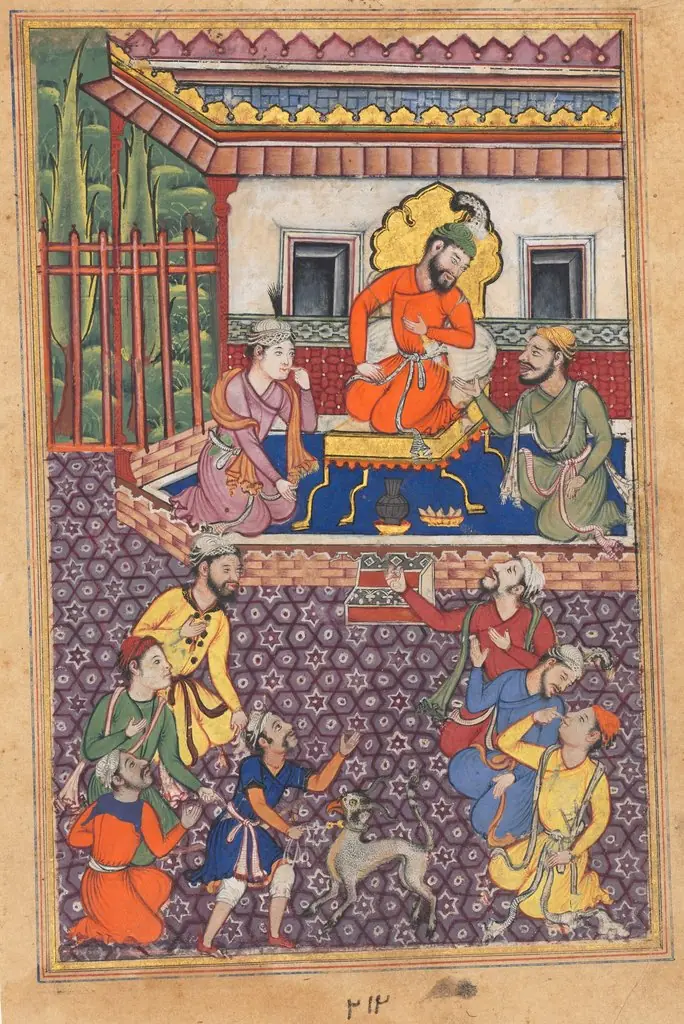 The court of the Raja of Ujjain, from a Tuti-nama (Tales of a Parrot): Forty-sixth Night
 Shaikh Salim Chishti
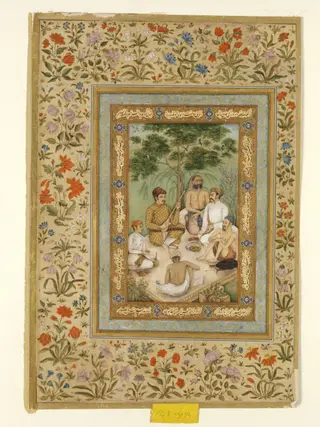 Prince Salim
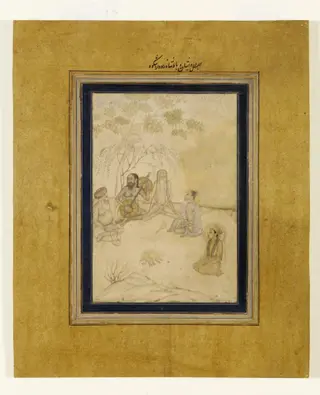 The gathering of dervishes with Prince Dara Shikuh
 An embroiderer