Artwork
Kakubha Ragini
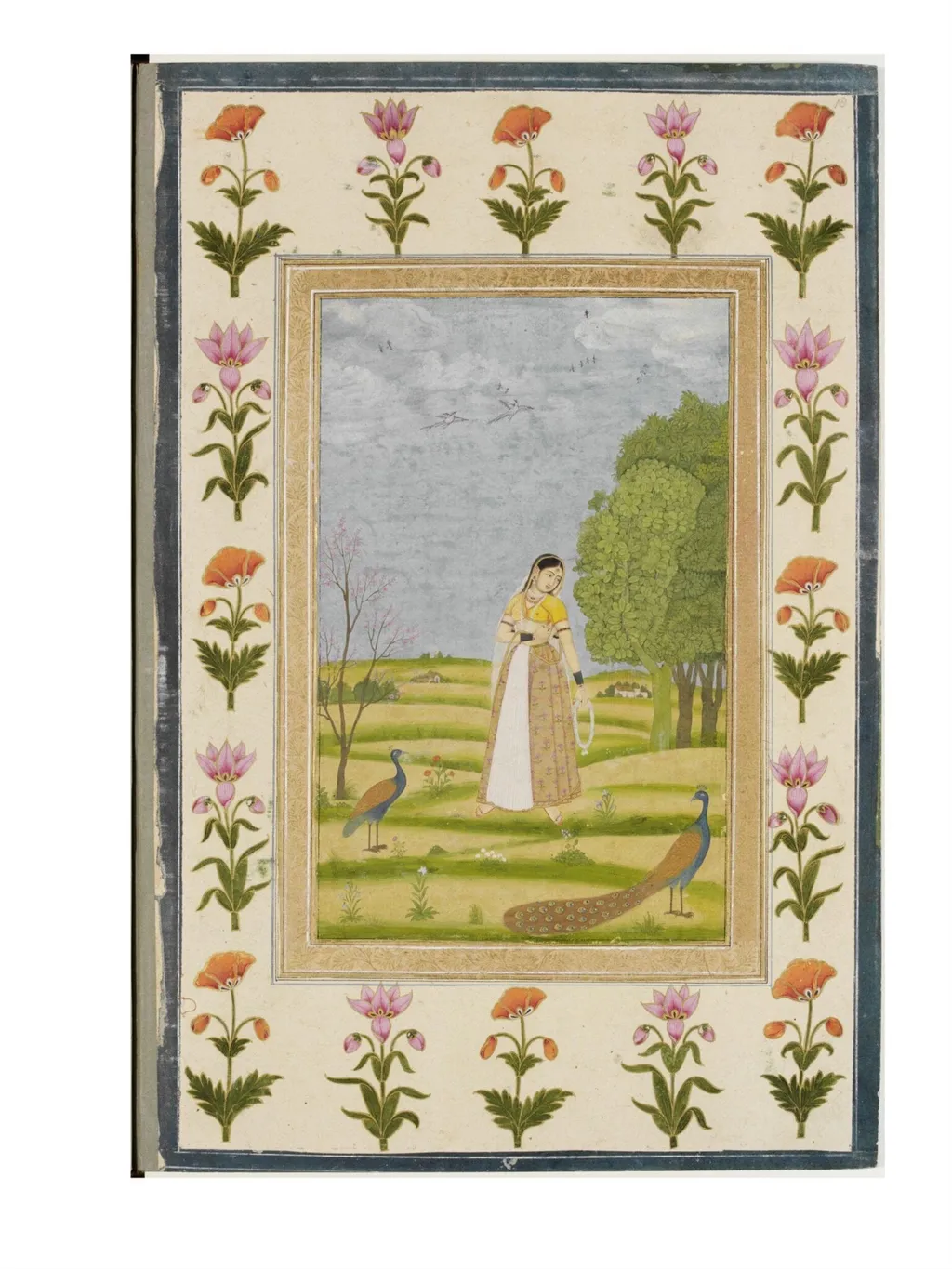
Kakubha Ragini is a paint painting by the Rajput painting artist Unknown. It dates from 1750 and is held in the collection of the Victoria and Albert Museum.
About this work
Overview
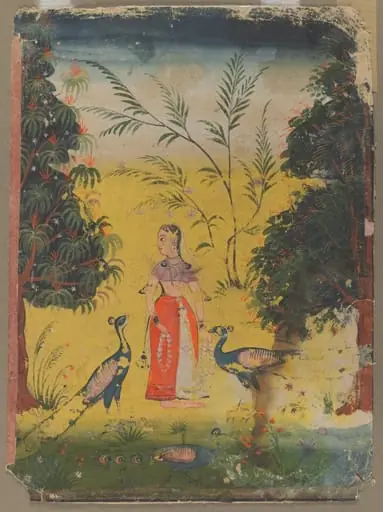
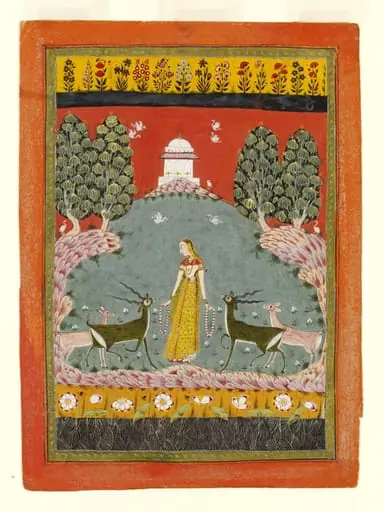
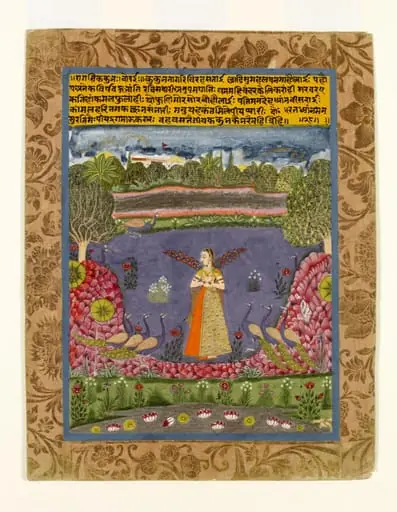
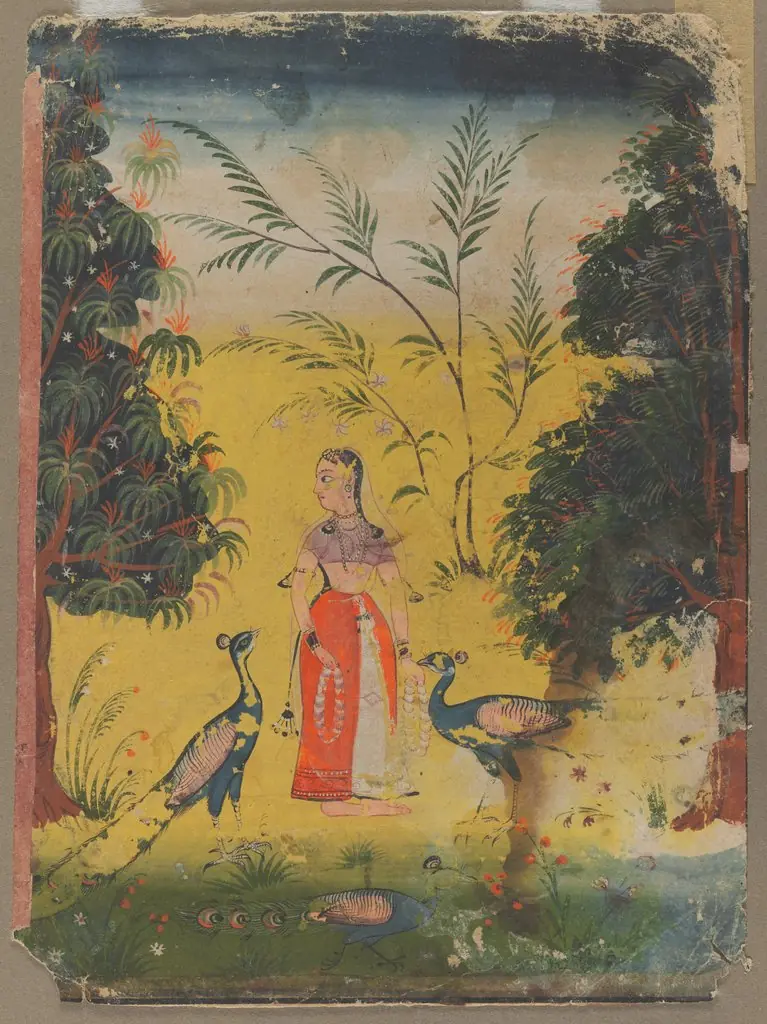
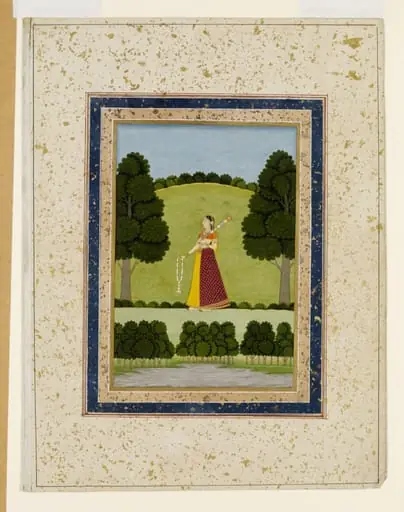
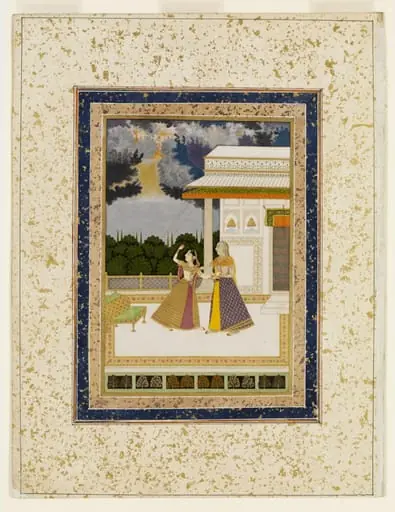
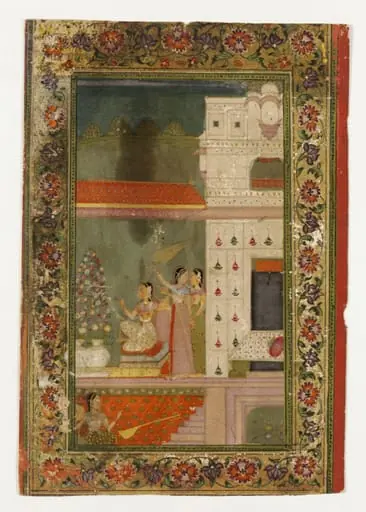
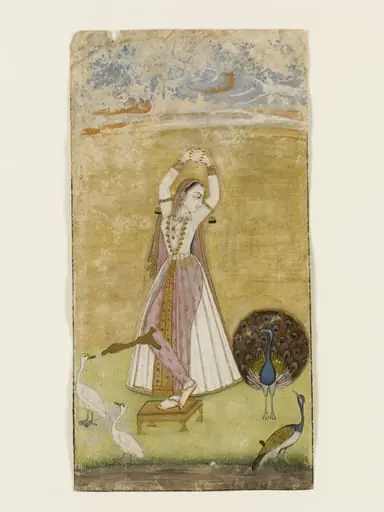
This miniature painting illustrates Kakubha Ragini, a musical mode personified as a woman in a tranquil garden setting.
This miniature painting illustrates Kakubha Ragini, a musical mode personified as a woman in a tranquil garden setting. Rendered in delicate brushwork, the composition blends human form with natural elements to evoke the mood of the raga. The figure is centrally placed amid peacocks and flowering vegetation, framed by an ornate buff-colored border typical of Rajasthani manuscript illustrations from the 17th century.
Subject & Meaning
Kakubha Ragini is depicted as a graceful woman embodying the emotional character of her corresponding musical mode. The presence of peacocks, symbols of beauty and seasonal change, reinforces the raga’s association with monsoon and longing. Her poised stance and adornments suggest both earthly elegance and spiritual resonance, aligning the visual with the poetic traditions of Indian classical music.
Technique & Style
The work employs fine-line detailing and flat, saturated pigments characteristic of Rajput painting. The woman’s attire is rendered with intricate floral patterns, while the peacocks’ feathers are meticulously outlined in vivid blues, greens, and golds. The landscape is stylized rather than naturalistic, with tiered horizons, simplified architecture, and decorative flora arranged to enhance rhythmic harmony rather than spatial depth.
History & Provenance
Created in Rajasthan during the late 17th century, this painting likely originated from a Ragamala series commissioned by a local court. Such albums paired musical modes with visual imagery for devotional and aesthetic use. The piece entered the Victoria and Albert Museum’s collection through colonial-era acquisitions, preserving its role as a cultural artifact of North Indian artistic practice.
Context
Ragamala paintings emerged as a visual language for Indian classical music, translating abstract melodic structures into symbolic scenes. This work reflects the fusion of devotional Hindu traditions with courtly patronage, where music, poetry, and painting intersected. The garden setting, peacocks, and ornate dress align with broader iconographic conventions used to personify raga emotions in Mughal and Rajput artistic circles.
Legacy
As part of a larger tradition of Ragamala illustration, this painting contributes to the enduring visual vocabulary of Indian music. Its preservation in major collections ensures continued study of how sound was rendered in image. Though no longer performed in its original context, the work remains a key reference for understanding the interplay between auditory and visual arts in pre-colonial India.
Artist & collection