Artwork
Krishna
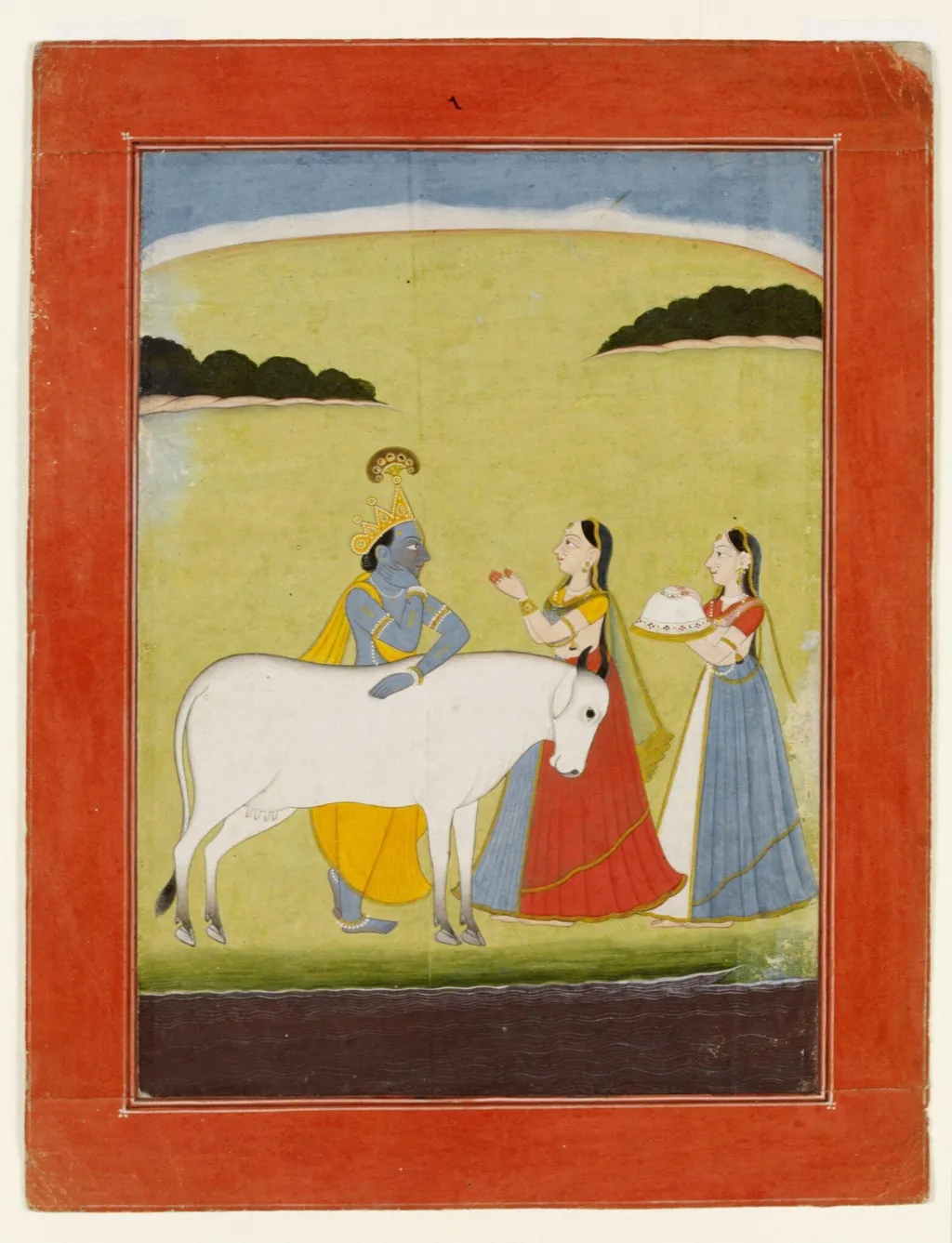
Krishna is a paint painting by the Rococo painting artist Unknown. It dates from 1760 and is held in the collection of the Victoria and Albert Museum.
About this work
Overview
The work is part of a small group of related compositions, discovered in the 20th century by a vendor at a flea market in Toulouse.
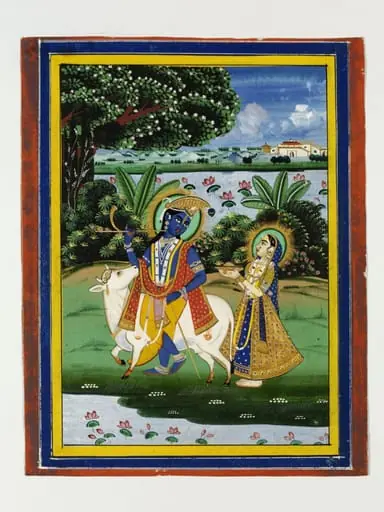
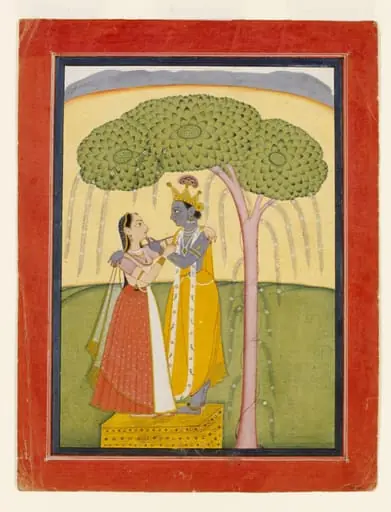
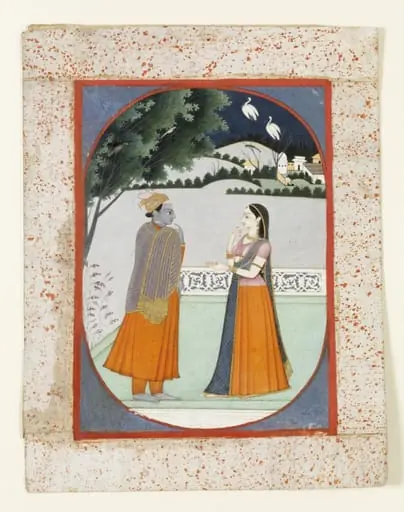
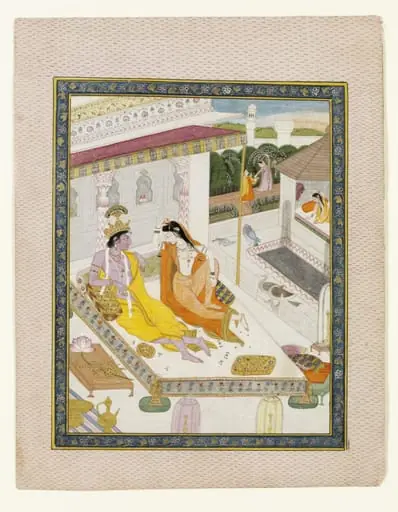
This opaque watercolor on paper, dated circa 1760, portrays a divine figure identified as Krishna, rendered in the Pahari style. The work is part of a small group of related compositions, discovered in the 20th century by a vendor at a flea market in Toulouse. Its modest scale and intimate composition suggest it was intended for private devotion rather than public display, typical of regional Indian painting traditions of the period.
Subject & Meaning
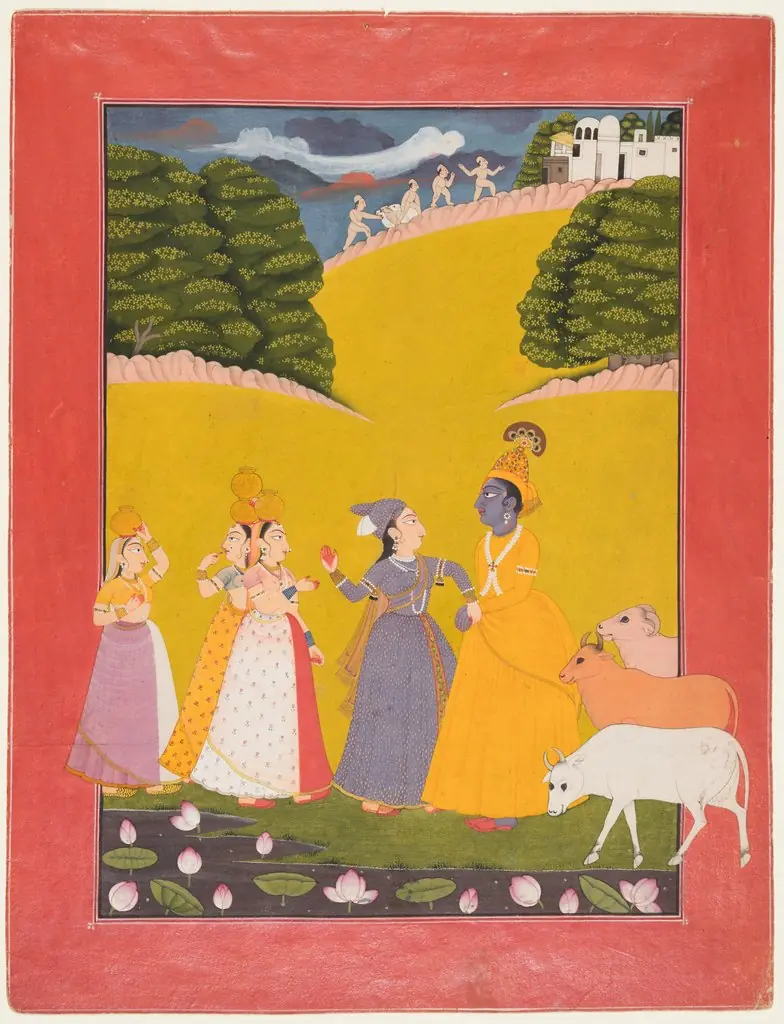
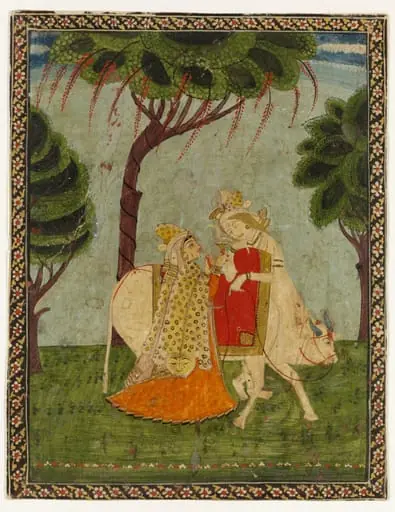
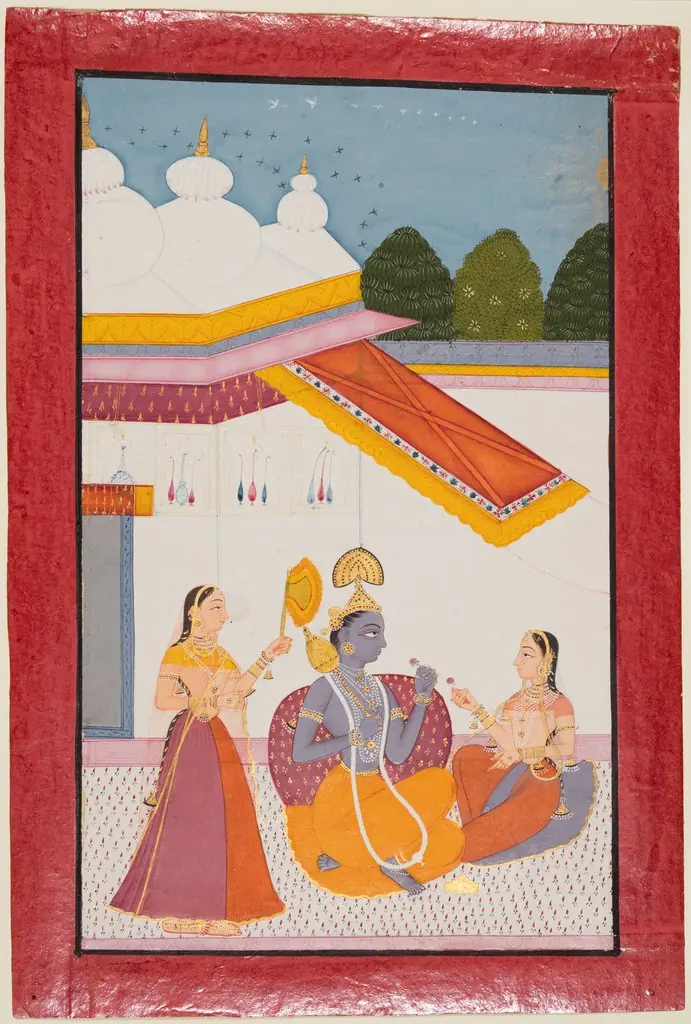
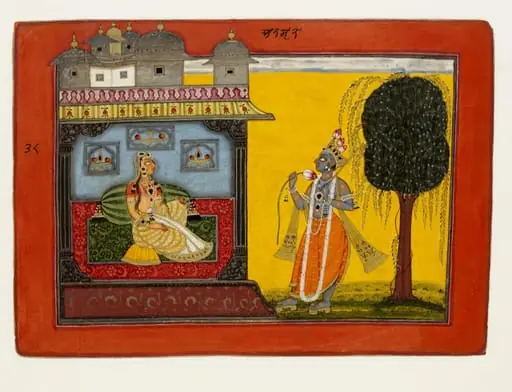
Krishna, recognizable by his blue skin and ornate peacock crown, is depicted in a moment of quiet encounter with two gopis. One offers reverence with folded hands, while the other holds a covered dish, evoking ritual offering or hospitality. The presence of the cow and the pastoral setting allude to Krishna’s role as a divine herdsman and protector, reinforcing themes of divine grace and earthly devotion central to Vaishnavite tradition.
Technique & Style
The painting employs opaque watercolor with fine brushwork, characteristic of Pahari miniatures. Colors are applied flatly yet with precision: the yellow dhoti, gold crown, and red border create a harmonious palette against the muted green hills. The background lacks perspective, emphasizing symbolic space over realism. Figures are stylized with delicate features and poised gestures, conveying stillness and spiritual focus.
History & Provenance
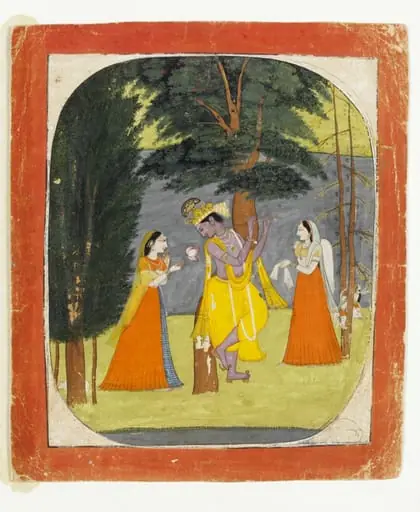
The painting’s documented history begins in the 20th century, when it was acquired at a flea market in Toulouse alongside a companion piece. Prior to this, its origin and ownership remain undocumented. Its survival outside India, likely through colonial-era circulation, reflects the dispersal of South Asian artworks during the 19th and early 20th centuries, though its exact path from the Himalayan foothills to France is unknown.
Context
Created in the hill kingdoms of northern India, likely in the Kangra or Guler region, this work reflects the devotional painting traditions that flourished under Rajput patronage. Artists in these courts adapted Mughal naturalism to local religious themes, favoring lyrical landscapes and intimate narratives. Such images were often kept in private collections or used in temple rituals, serving as aids to meditation and worship.
Legacy
Though unsigned and of uncertain provenance before its 20th-century discovery, the painting contributes to the broader understanding of regional Indian miniature painting. Its preservation and inclusion in institutional collections highlight the value placed on vernacular devotional art. It stands as a quiet testament to the enduring visual language of Krishna worship in the 18th-century Himalayan foothills.
Artist & collection