Artwork
Lamentation triptych: Lamentation of Christ (followers)
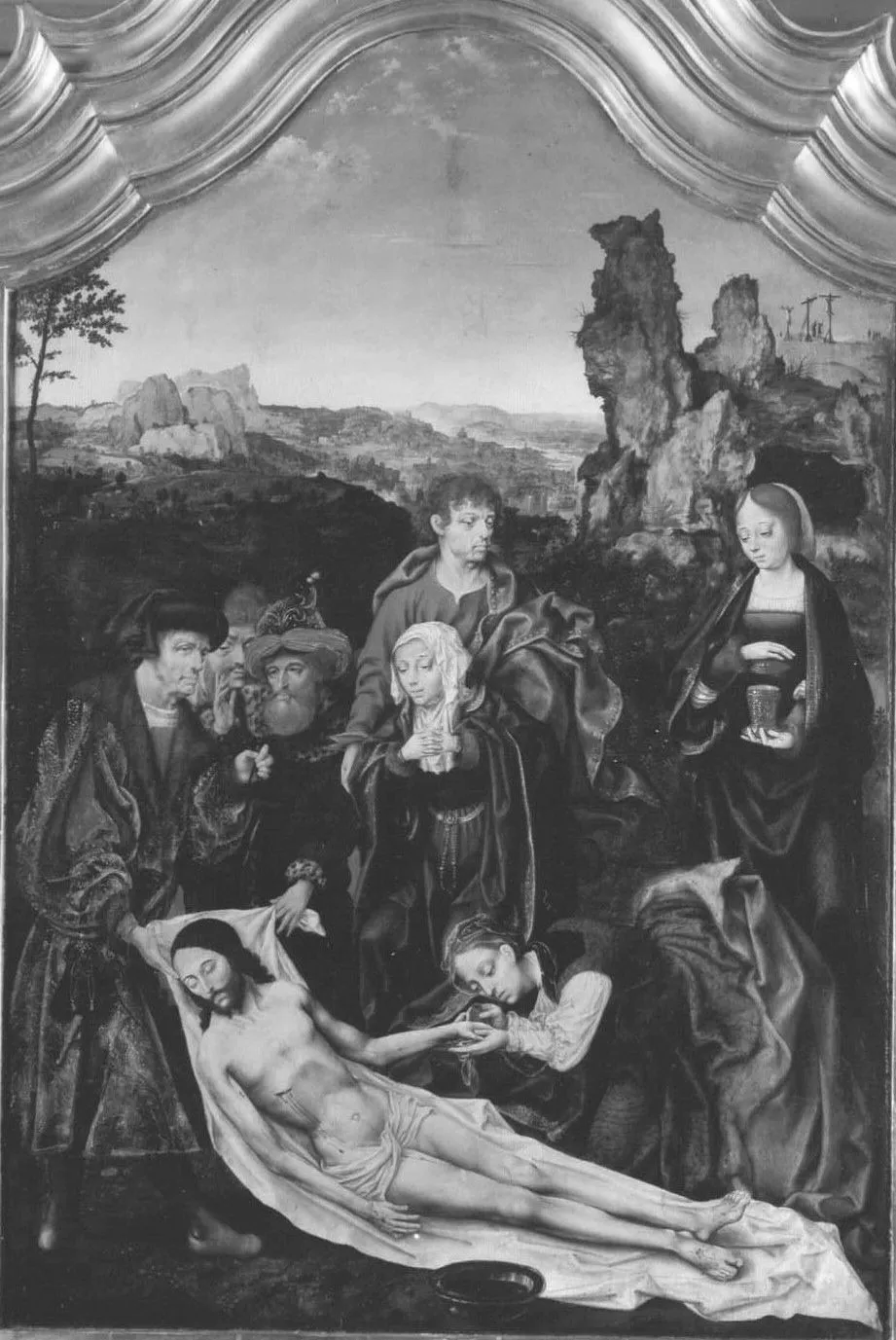
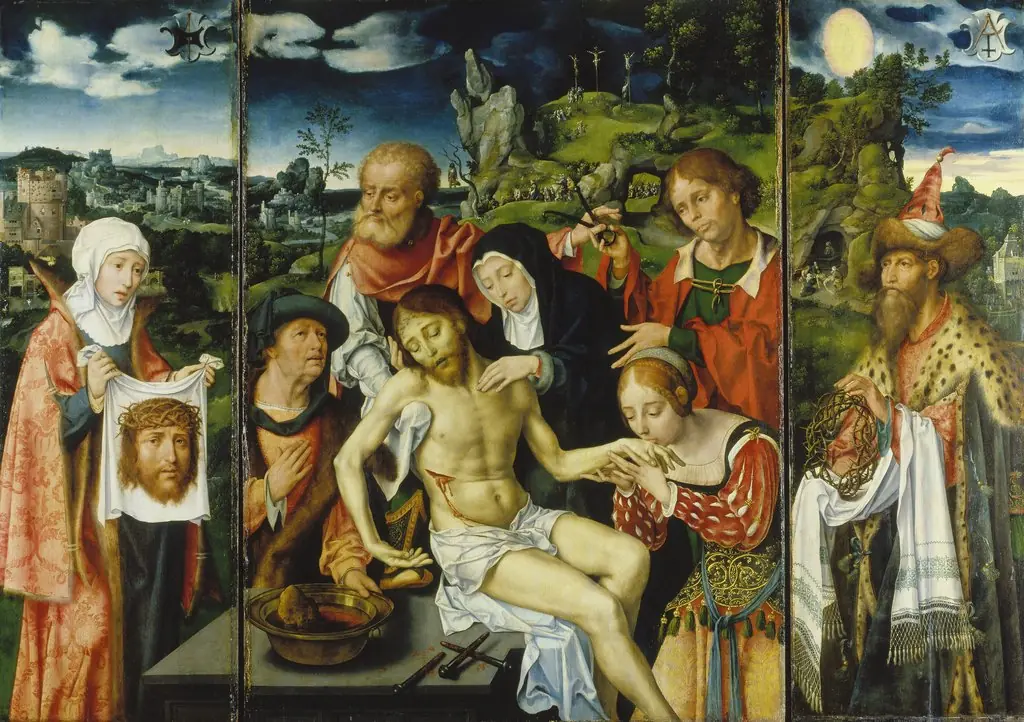
Lamentation triptych: Lamentation of Christ (followers) is an oil painting by the Early Baroque Italian artist Unknown. It dates from 1533 and is held in the collection of the Bavarian State Painting Collections. The work is an oil painting depicting a group gathered around a wounded, unclothed figure lying on the ground.
About this work
Subject & Meaning
The triptych depicts the Lamentation of Christ, a religious scene centered on the mourning of Jesus Christ following his crucifixion.
The triptych depicts the Lamentation of Christ, a religious scene centered on the mourning of Jesus Christ following his crucifixion. As a work of religious art, the painting focuses on the emotional and spiritual gravity of this biblical moment, presenting the body of Christ as the main subject of veneration and sorrow. Created in 1533, the piece utilizes the medium of oil paint on oak panel to convey the solemnity of the narrative.
The composition serves to represent the grief of Christ's followers and the theological significance of his sacrifice, aligning with the devotional traditions of the period.
Technique & Style
Executed in 1533, this religious work is an oil painting created on an oak panel support. The piece measures 81.5 cm in height and 56.7 cm in width. Stylistically, the composition focuses on the Lamentation of Christ as its primary subject matter, depicting Jesus Christ within a devotional context characteristic of the period.
History & Provenance
The work was created in 1533 as an oil painting on oak panel, depicting the Lamentation of Christ. It was executed by Joos van Cleve and his workshop, reflecting the religious artistic conventions of the period. The painting entered the collection of the Bavarian State Painting Collections, Alte Pinakothek, where it remains on display. Its dimensions are 81.5 cm in height and 56.7 cm in width.
The work is held in the Bavarian State Painting Collections at the Alte Pinakothek in Munich. It bears the inventory number 2684. The triptych has been part of the permanent collection since its acquisition and was included in the 2005 exhibition "German Renaissance Masterpieces" at the same institution.
Legacy
The triptych was attributed to Joos van Cleve within the Bavarian State Painting Collections, Alte Pinakothek, where it remains on display in Munich. Art historians have noted its role in shaping the Lamentation of Christ motif among 16th-century workshop productions, influencing subsequent depictions of devotional panels in German Renaissance art. Its technical innovation with oil paint on oak panel set a precedent for material handling in large-scale religious compositions.
The work's compositional treatment of grief and spatial depth informed later iterations of the subject, particularly in the transmission of narrative intensity through gesture and facial expression in follower workshops. This legacy is reflected in comparative studies of devotional art that trace stylistic continuities in emotional rendering across generations of painters.
Scholarly discourse on its provenance emphasizes the significance of its attribution process as a case study in workshop attribution methodologies.
Overview
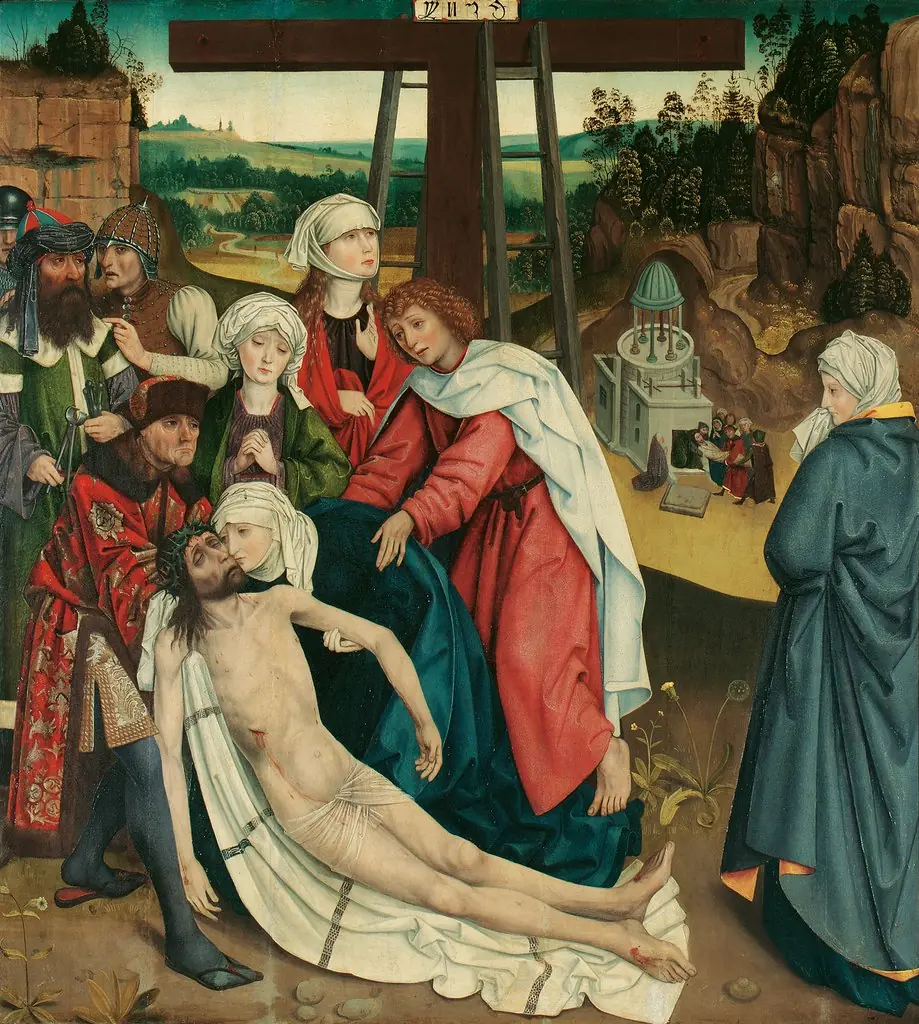
The work is an oil painting depicting a group gathered around a wounded, unclothed figure lying on the ground. Blood stains his side, while mourners surround him, including a kneeling woman clasping his hand. The setting includes craggy cliffs, a modest settlement, and an overcast sky, creating a somber atmosphere.
Context
Executed as a triptych, the painting aligns with a tradition of devotional panels used for contemplation. Its composition reflects the influence of Northern Renaissance approaches to narrative and emotional intensity, integrating landscape elements to situate the scene within a recognizable, yet symbolic, environment.
Artist & collection