Artwork
Landscape seen through window
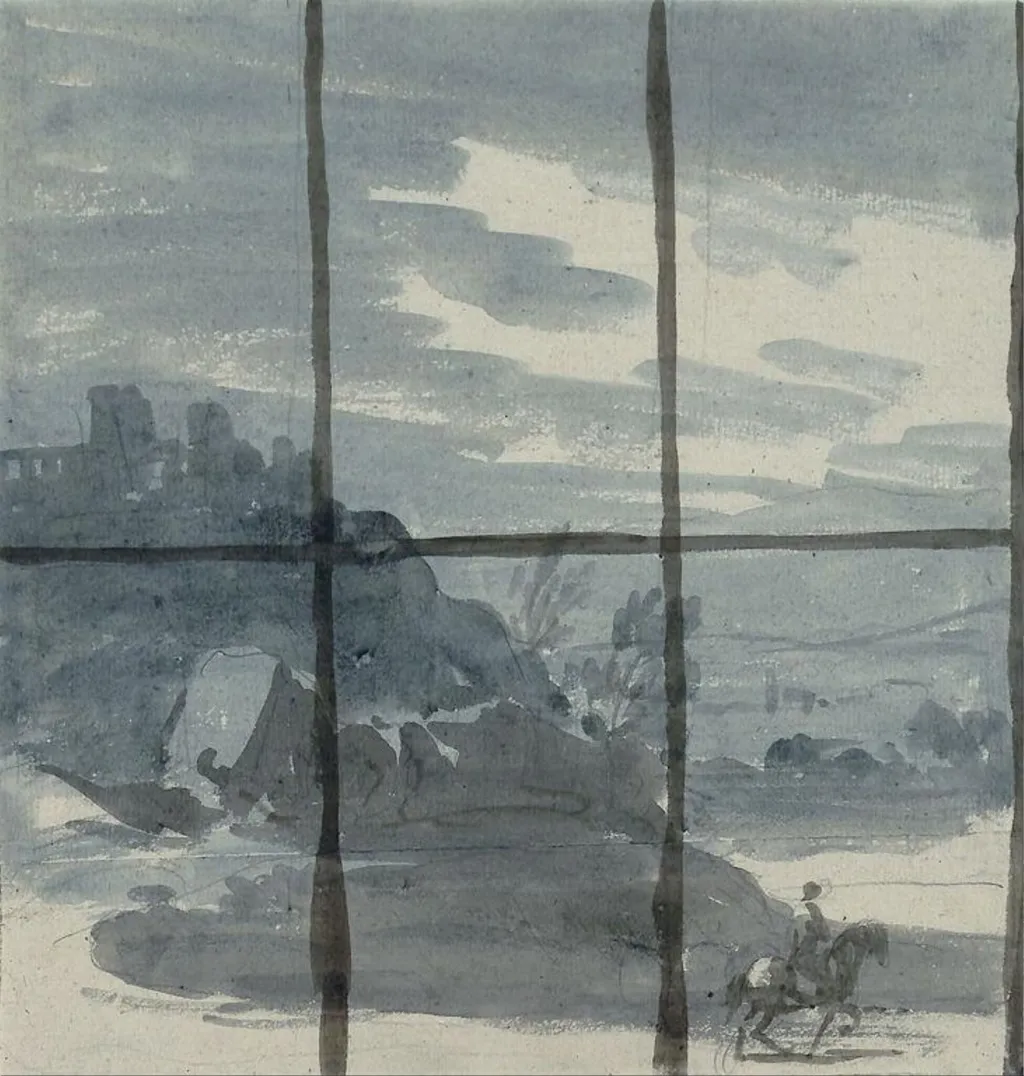
Landscape seen through window is a drawing by the Romanticist artist Unknown. It dates from 1750 and is held in the collection of the Victoria and Albert Museum. This drawing presents an interior space framed by a multi-pane window, offering a view of an exterior landscape.
About this work
Overview
This drawing presents an interior space framed by a multi-pane window, offering a view of an exterior landscape. Executed in wash and fine line work, the composition balances indoor shadow with the muted tones of a distant hillside. The scene’s intimacy and observational quality suggest it may have served as a preparatory study for a decorative surface, such as shutters or window coverings.
Subject & Meaning
The image evokes themes of separation and contemplation, where the interior becomes a threshold for observing the natural world.
The work captures a quiet moment of transition between enclosed space and open terrain. A solitary rider on horseback traverses a rocky slope, dwarfed by the expanse of land and sky. The window’s grid divides the scene into segments, emphasizing the act of looking outward while remaining within.
The image evokes themes of separation and contemplation, where the interior becomes a threshold for observing the natural world.
Technique & Style
The artist employs delicate cross-hatching and layered washes to render depth and texture, particularly in the rocky outcrops and foliage. Shadows within the room contrast with the softer, diffused light of the landscape, creating a sense of spatial recession. The sketch-like quality of the lines lends the work an immediacy, as if capturing a fleeting impression rather than a polished finish.
History & Provenance
The drawing’s function remains speculative, though its format aligns with designs intended for architectural elements, such as painted shutters or blinds. No definitive record of its commission or early ownership exists. Its survival as a standalone work suggests it may have been retained as a study or repurposed from a larger project, preserving its observational character.
Context
Works of this kind often emerged from a tradition of decorative arts, where interior surfaces were enlivened with illusionistic scenes. The muted palette and subdued lighting reflect conventions of landscape representation in periods favoring understated realism. The solitary figure in the distance aligns with broader artistic interests in solitude and the sublime within nature.
Artist & collection









![Figures in a Landscape [verso], by Thomas Barker](https://artifactworldgallery.com/img/thomas-barker--figures-in-a-landscape-verso--f990b8d4da80a5bc-w320.webp) Figures in a Landscape [verso]
Figures in a Landscape [verso] Landscape with Ruins
 Ramapo Hills
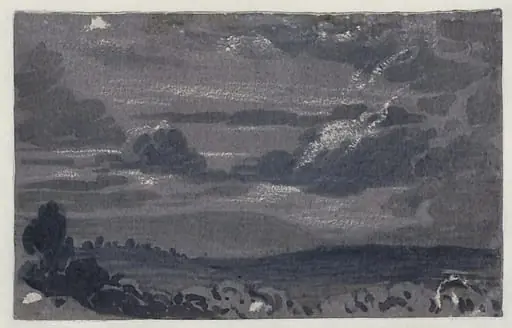 Study of a landscape with clouds
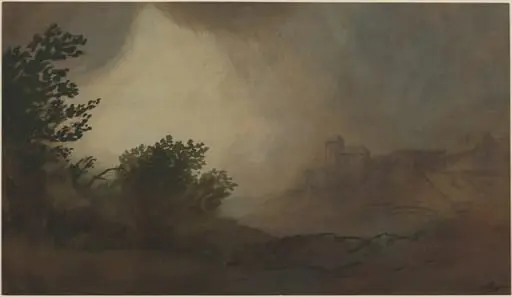 Storm
Storm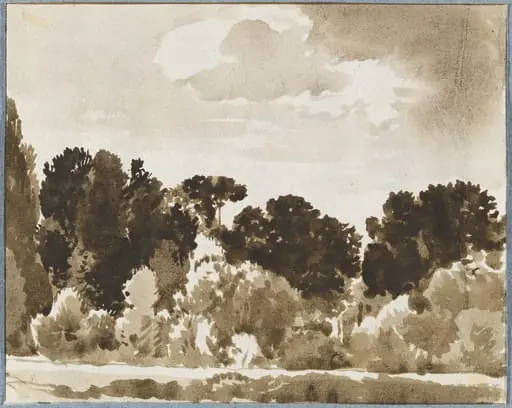 Forest Edge on a Brilliant Day
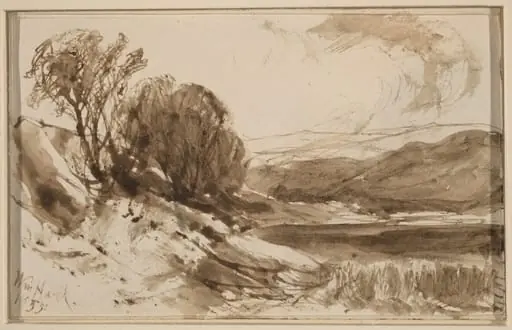 Hilly Landscape with Trees
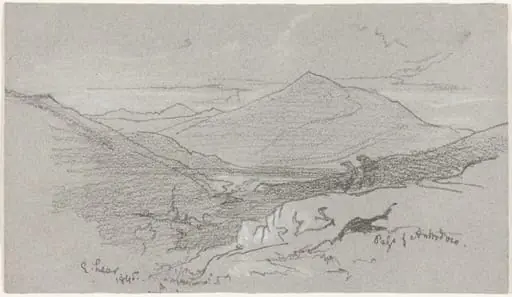 Mountainous View from Antrodoco
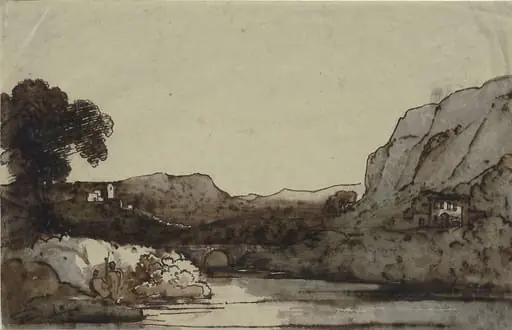 Landscape with Bridge and Mountains
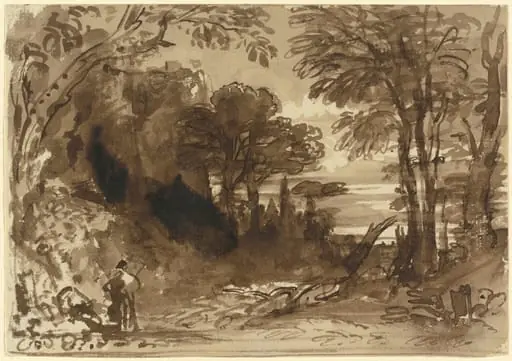 A Clearing in a Forest
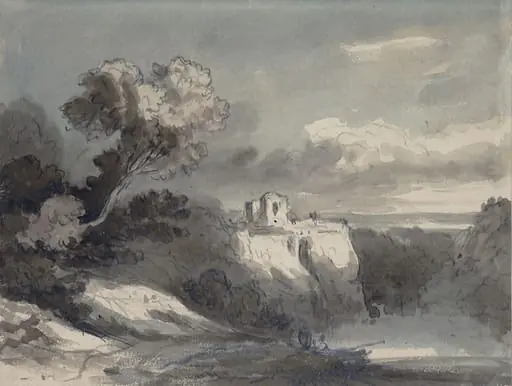 Landscape with Castle on a Cliff
- Landscape seen through windows