Artwork
「提婆達多品」 「安楽行品」 『(法華経)』|Lotus Sutra, Chapters 12 and 14
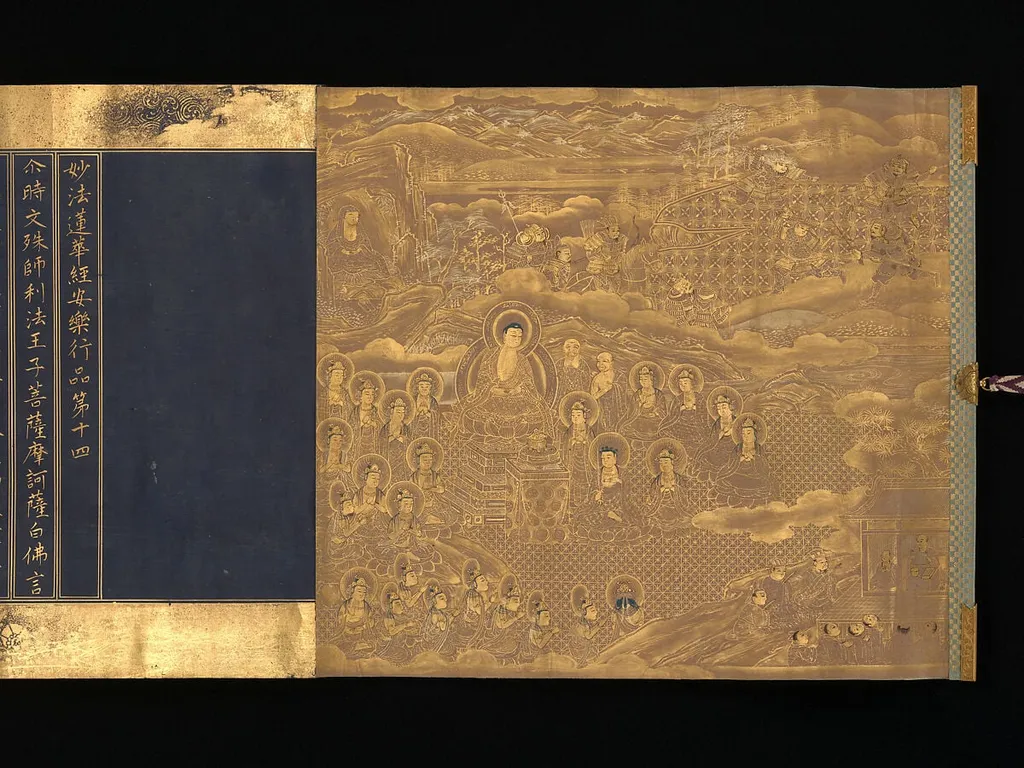
「提婆達多品」 「安楽行品」 『(法華経)』|Lotus Sutra, Chapters 12 and 14 is a silver painting. It dates from 1667 and is held in the collection of the Metropolitan Museum of Art. These two handscrolls illustrate specific chapters from the Lotus Sutra, a foundational Buddhist text.
About this work
Subject & Meaning
Together they visualise the sutra’s narrative of universal salvation, where even unlikely beings, symbolised by the horse and the mortal, can attain awakening.
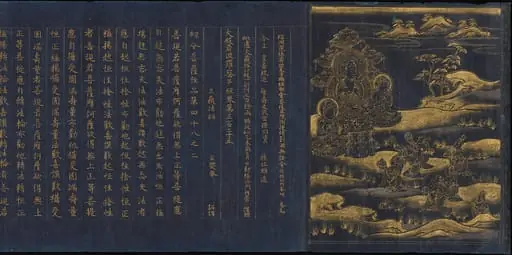
The handscrolls illustrate scenes from Chapters 12 and 14 of the Lotus Sutra, portraying Buddha seated amid a horse and a man. In the composition the Buddha embodies the enlightened teacher, the horse signifies powerful spiritual energy, and the human figure represents a seeker or disciple. Together they visualise the sutra’s narrative of universal salvation, where even unlikely beings, symbolised by the horse and the mortal, can attain awakening.
The gold and silver accents on indigo paper heighten the sacred atmosphere, emphasizing the divine revelation of hidden teachings within the Buddhist canon.
History & Provenance
The handscrolls titled ‘Devadatta Chapter’ (提婆達多品) and ‘Comfort and Joy Chapter’ (安楽行品) from the Lotus Sutra (法華経) were produced in 1667, as indicated by the date inscribed on the works. Both scrolls employ gold and silver ink on indigo-dyed paper, a technique associated with Edo-period Japanese Buddhist painting. The anonymous artist remains unattributed, consistent with the workshop or atelier practices of the period.
The scrolls entered the collection of the Metropolitan Museum of Art, where they are currently held, with their provenance traceable to Japanese ownership prior to acquisition by the museum.
The handscrolls are held by the Metropolitan Museum of Art, New York. The work entered the museum’s collection as part of the Rogers Fund in 1913 and is recorded under accession number 13.14.2a, b. There is no documented exhibition history for these scrolls in the museum’s records.
Overview
These two handscrolls illustrate specific chapters from the Lotus Sutra, a foundational Buddhist text. Rendered with meticulous detail, the paintings feature narratives from Chapters 12 and 14, unfolding across long sheets of indigo-dyed paper. The scrolls serve as visual interpretations of sacred teachings, inviting contemplation of the sutra's profound messages.
Technique & Style
The artists employed a luxurious technique, applying genuine gold and silver pigments onto deep indigo-dyed paper. This choice of materials creates a striking contrast, allowing the metallic elements to shimmer and reflect light, even in subdued conditions. The intricate lines and delicate forms, rendered in precious metals, contribute to an ethereal quality, enhancing the sacred nature of the depicted narratives.
Artist & collection

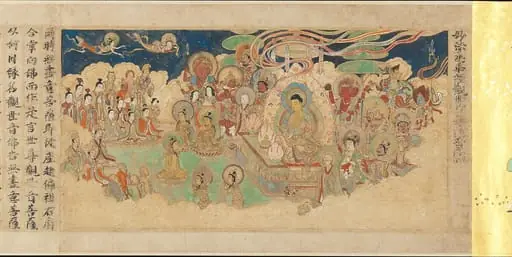
- 『妙法蓮華経』 「観世音菩薩普門品」|“Universal Gateway,” Chapter 25 of the Lotus Sutra
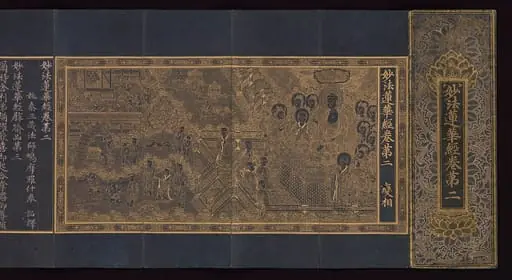 법화경변상도 고려|Illustrated manuscript of the Lotus Sutra (Miaofa lianhua jing), Volume 2
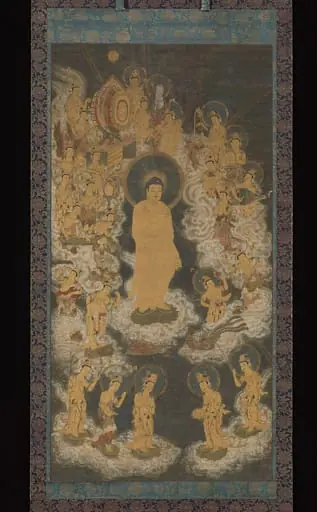 阿弥陀聖衆来迎図 |Welcoming Descent of Amida and Bodhisattvas
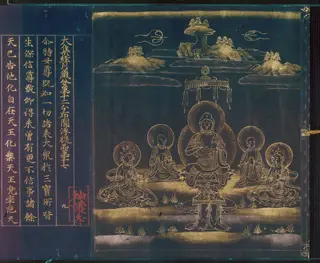 Jingoji Sutra
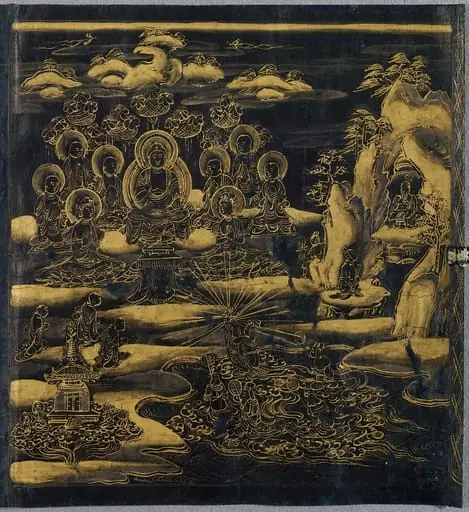 『妙法蓮華経』 「提婆達多品第十二」|“Devadatta,” Chapter 12 of the Lotus Sutra (Hoke-kyō, Daibadatta-bon)
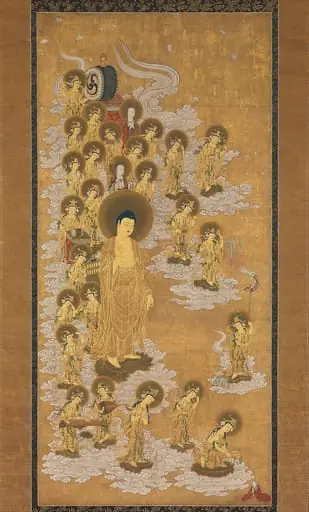 阿弥陀二十五菩薩来迎図|Welcoming Descent of Amida Buddha and Twenty-five Bodhisattvas
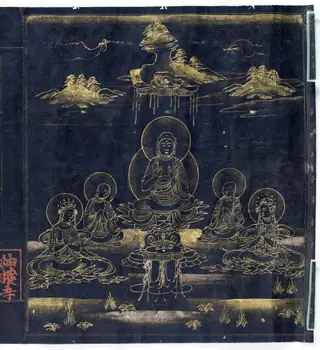 Anoku-Fu Sutra
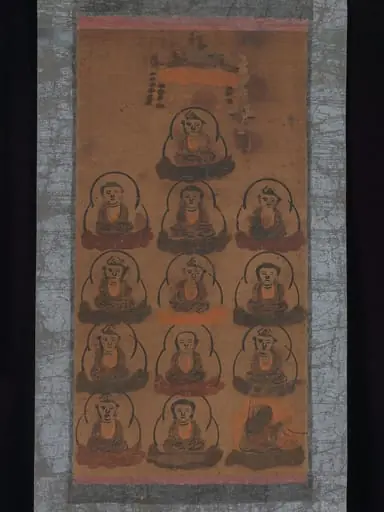 十三仏図大津絵|Ōtsu-e of Thirteen Buddhist Deities
 仏伝図|Scene from the Life of the Buddha