Artwork
『妙法蓮華経』 「提婆達多品第十二」|“Devadatta,” Chapter 12 of the Lotus Sutra (Hoke-kyō, Daibadatta-bon)
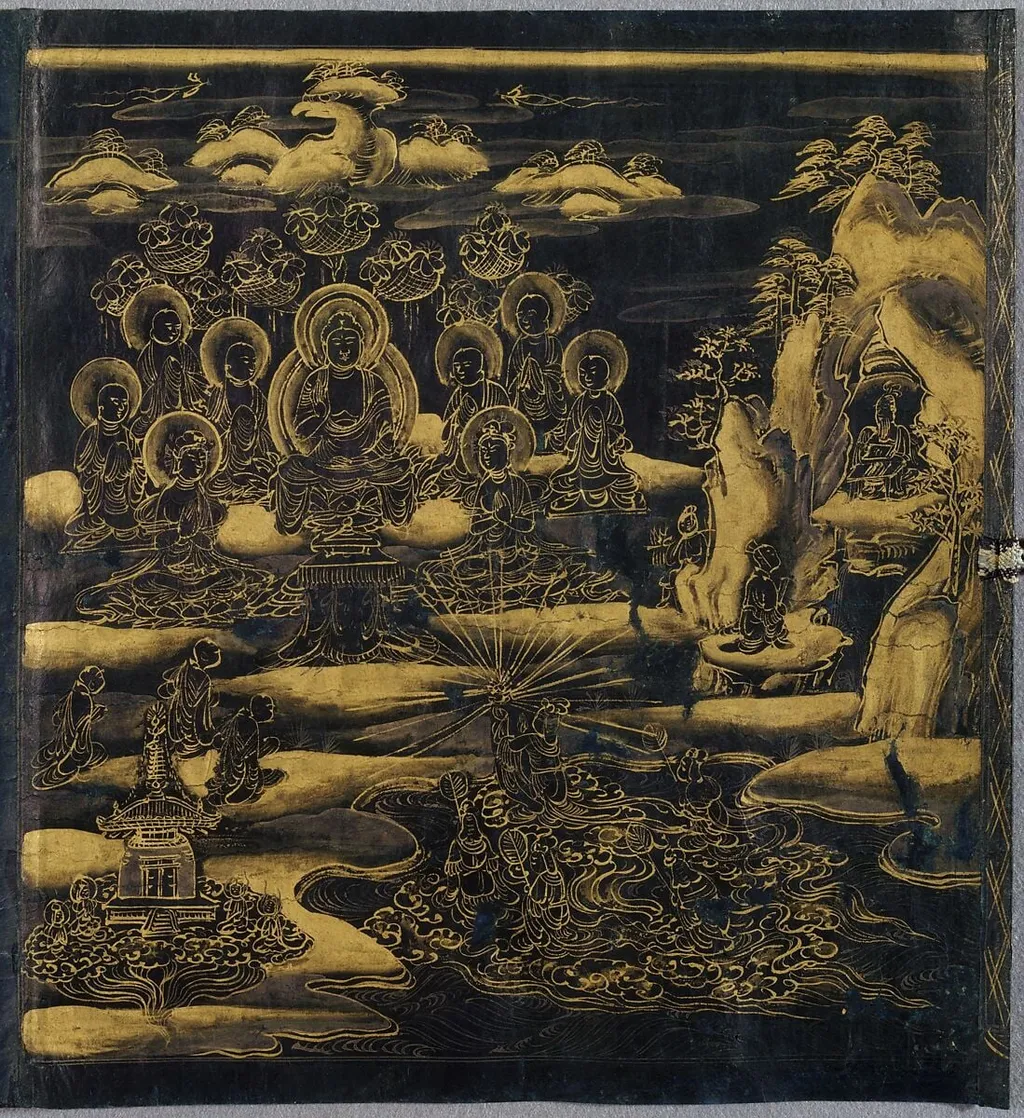
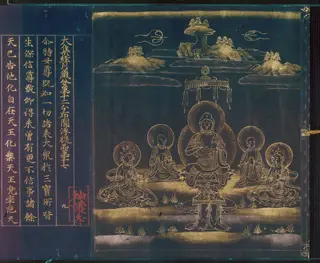
『妙法蓮華経』 「提婆達多品第十二」|“Devadatta,” Chapter 12 of the Lotus Sutra (Hoke-kyō, Daibadatta-bon) is a silver painting. It dates from 1142 and is held in the collection of the Metropolitan Museum of Art. This handscroll illustrates "Devadatta," the twelfth chapter of the Lotus Sutra.
About this work
Subject & Meaning
The painting’s iconography combines gold and silver pigment on indigo‑dyed paper to emphasize the sacred context of the sutra, reflecting its religious genre.
The handscroll illustrates a scene from Chapter 12 of the Lotus Sutra, known as the “Devadatta” chapter, in which Buddha appears with a young girl, a motif identified in the sources as representing the Buddhist narrative of that chapter. The painting’s iconography combines gold and silver pigment on indigo‑dyed paper to emphasize the sacred context of the sutra, reflecting its religious genre. By depicting Buddha together with the girl, the work symbolizes the sutra’s teaching that even those who cause division can attain enlightenment, conveying the chapter’s doctrinal meaning within Japanese Buddhist art.
Technique & Style
The work is a handscroll painted in 1142 in Japan, employing gold and silver pigments applied to indigo‑dyed paper; the support is thus a paper substrate typical of Heian‑period Buddhist scrolls. The anonymous painter executed the piece using traditional mineral pigments, and the composition portrays Buddhist iconography, specifically Buddha alongside a young girl, reflecting the religious narrative of Chapter 12 of the Lotus Sutra. As a handscroll, it is designed for intimate, sequential viewing rather than wall display, suggesting careful handling to preserve its delicate pigments. The work belongs to the Metropolitan Museum of Art collection, underscoring its provenance and scholarly significance.
History & Provenance
The handscroll was produced in Japan in 1142, executed in gold and silver on indigo-dyed paper as part of a set illustrating the Lotus Sutra. Its original patronage and early custodial history are not documented in the available records. The work is now held in the collection of the Metropolitan Museum of Art, where it is recorded as a religious painting by an anonymous artist.
No information is available regarding intermediate ownerships, commission circumstances, or the chain of custody between its twelfth-century creation and its present institutional home.
The handscroll is held by the Metropolitan Museum of Art, where it is recorded as an anonymous Japanese painting from 1142. The museum’s collection record classifies the work under religious art depicting Buddhist themes. No exhibition history is provided in the cited sources.
Overview
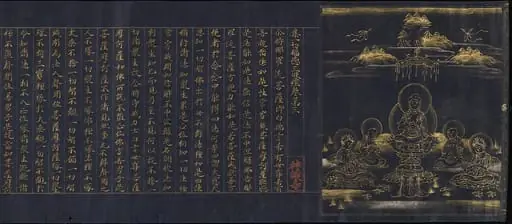
This handscroll illustrates "Devadatta," the twelfth chapter of the Lotus Sutra. Crafted with gold and silver on indigo-dyed paper, the artwork depicts a golden Buddha seated beneath a tree, flanked by two kneeling young girls. The deep blue background, accented by delicate silver elements, creates a serene atmosphere, with the figures appearing to emanate a soft luminescence.
Artist & collection

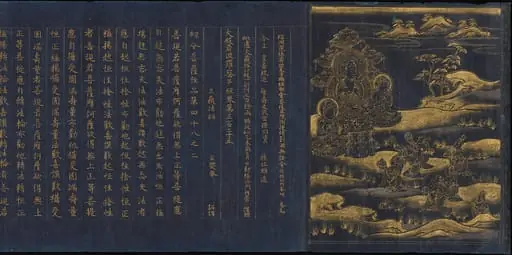 大般若経(中尊寺経)|Great Wisdom Sutra (Daihannya-kyō) from the Chūsonji Temple Sutra Collection (Chūsonji-kyō)
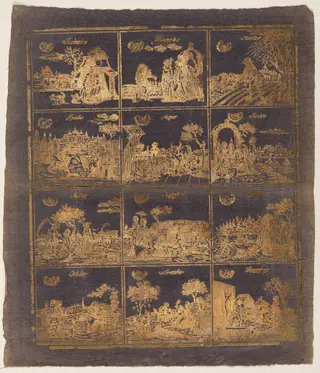 Endpaper with the Twelve Months
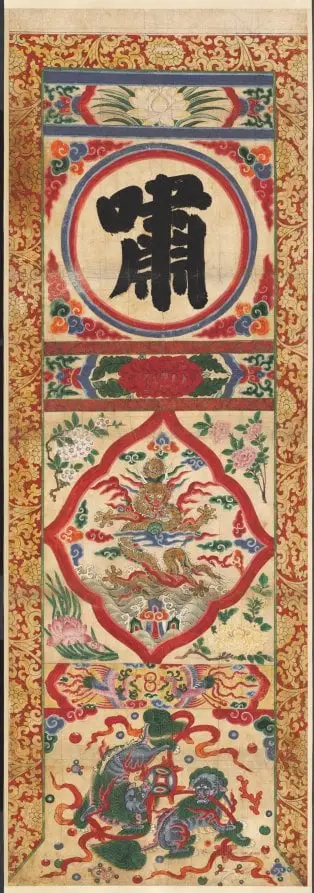 Painted Panel of Character "Whistle"
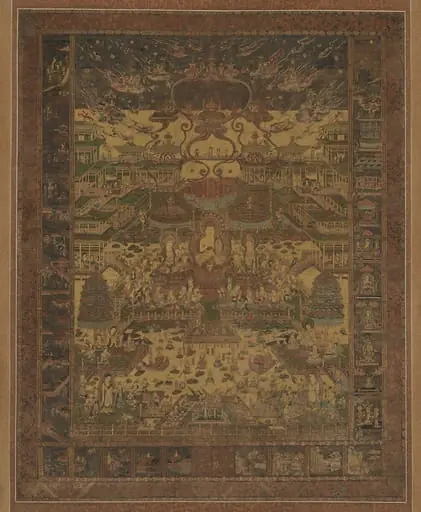 当麻曼荼羅図|Taima Mandala
 集一切福徳三昧経.|Illustrated Frontispiece to the Sutra of Enlightenment through the Accumulation of Merit and Virtue, the So-called Jingoji Sutra
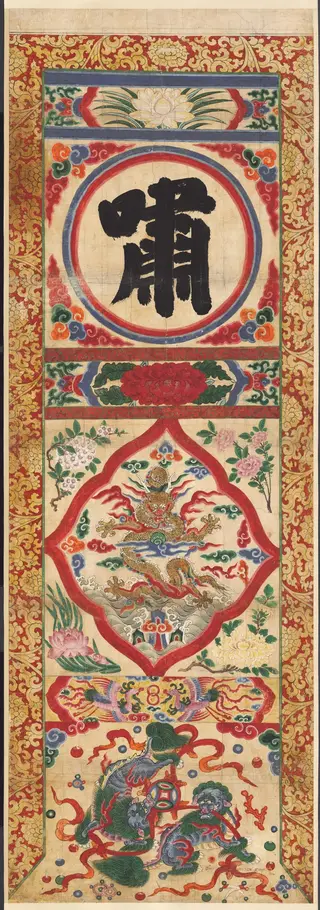 Painted Panel of Character "Whistle"
 Set of Four Painted Characters
 Painted Panel of Character "Tiger"
 Jingoji Sutra
 The White Path Between Two Rivers