Artwork
Lucretia
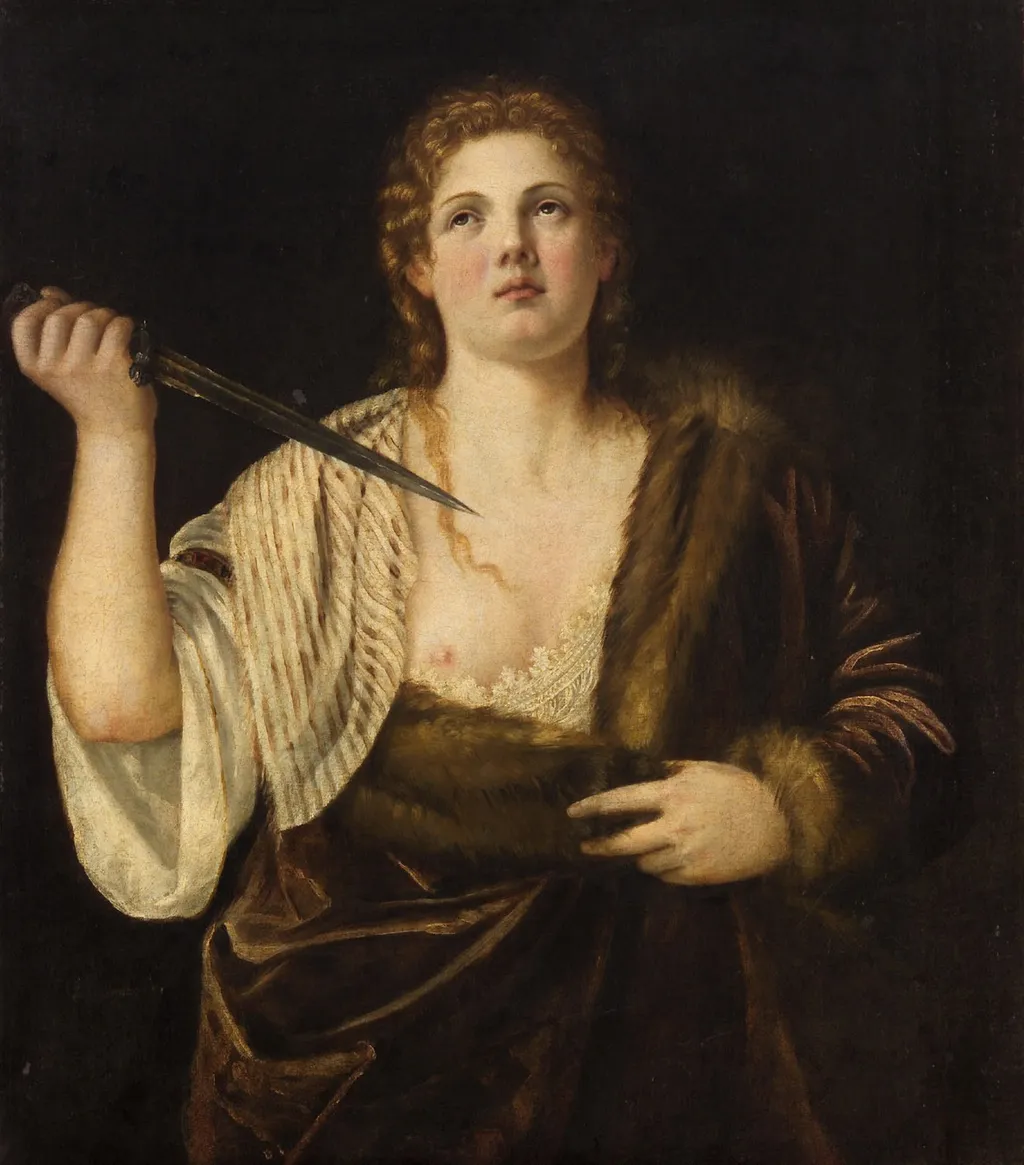
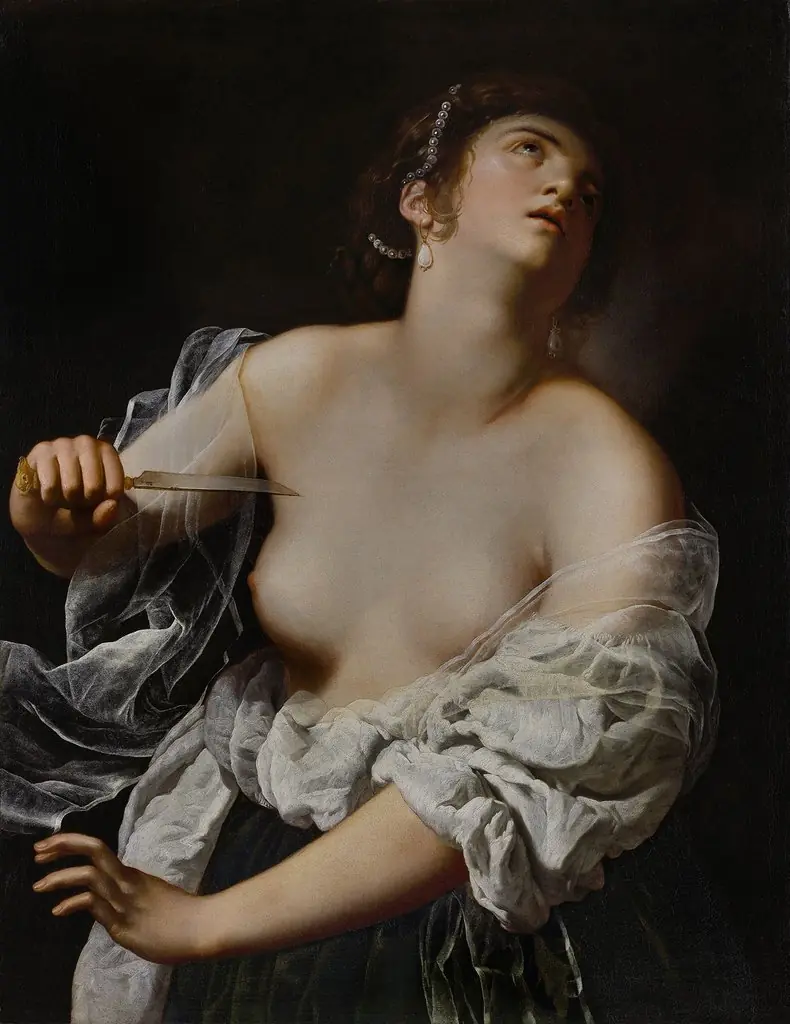
Lucretia is an oil painting by the Early Baroque Italian artist Unknown. It dates from 1570 and is held in the collection of the Kunsthistorisches Museum.
About this work
Subject & Meaning
The painting depicts Lucretia, the legendary Roman noblewoman whose suicide became a foundational episode in Roman moral and political history.
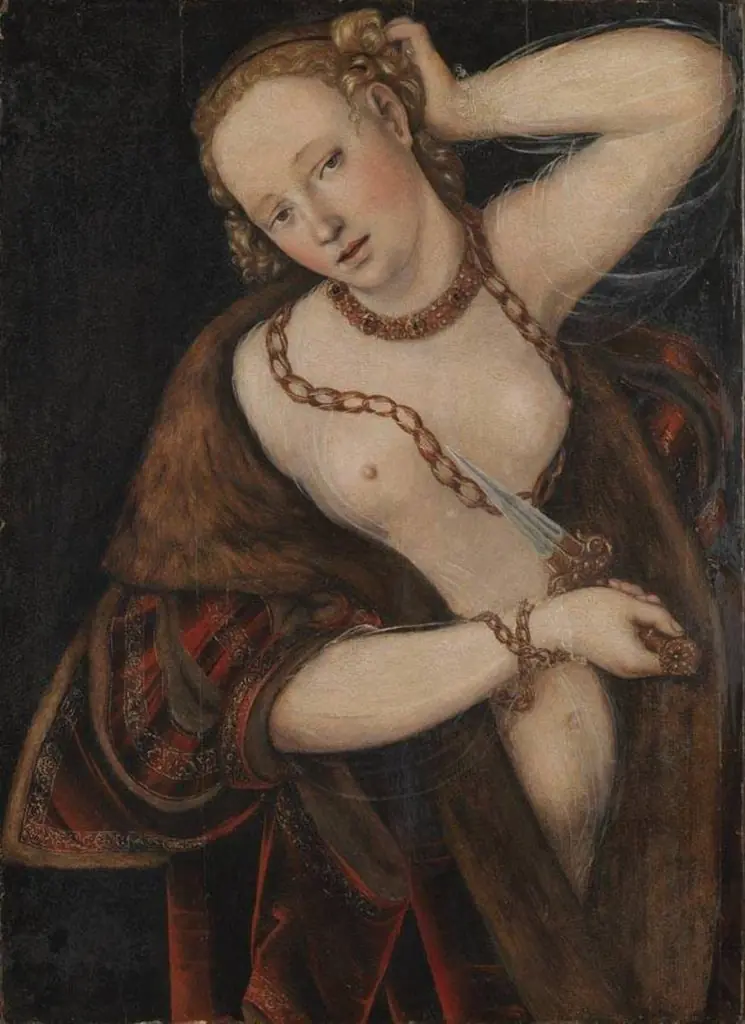
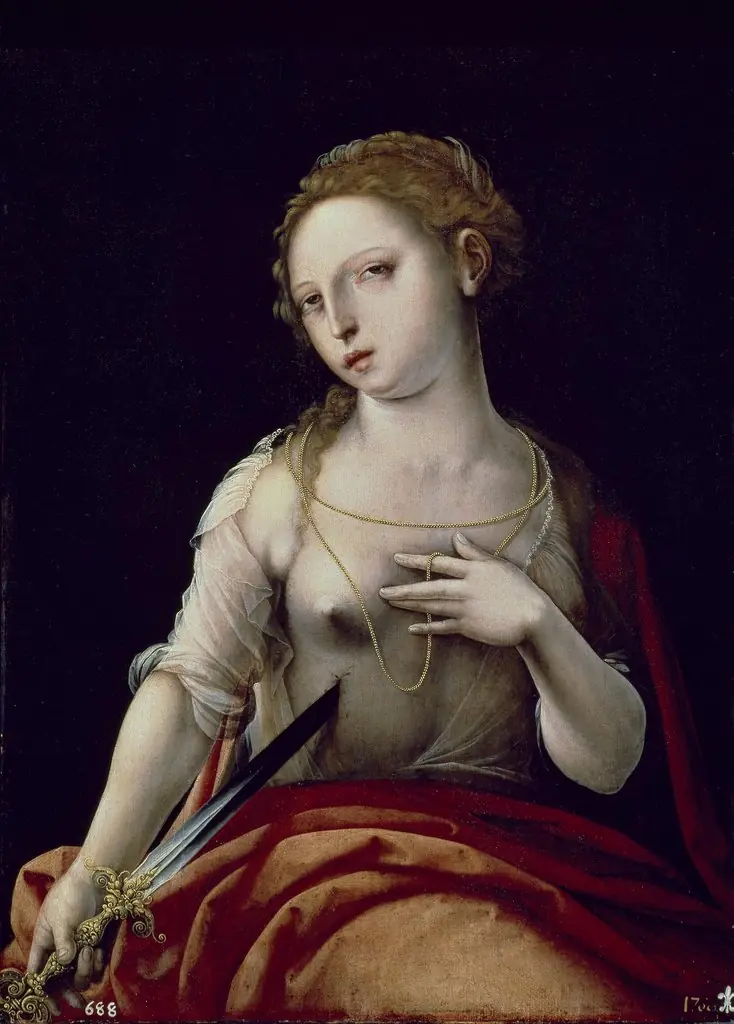
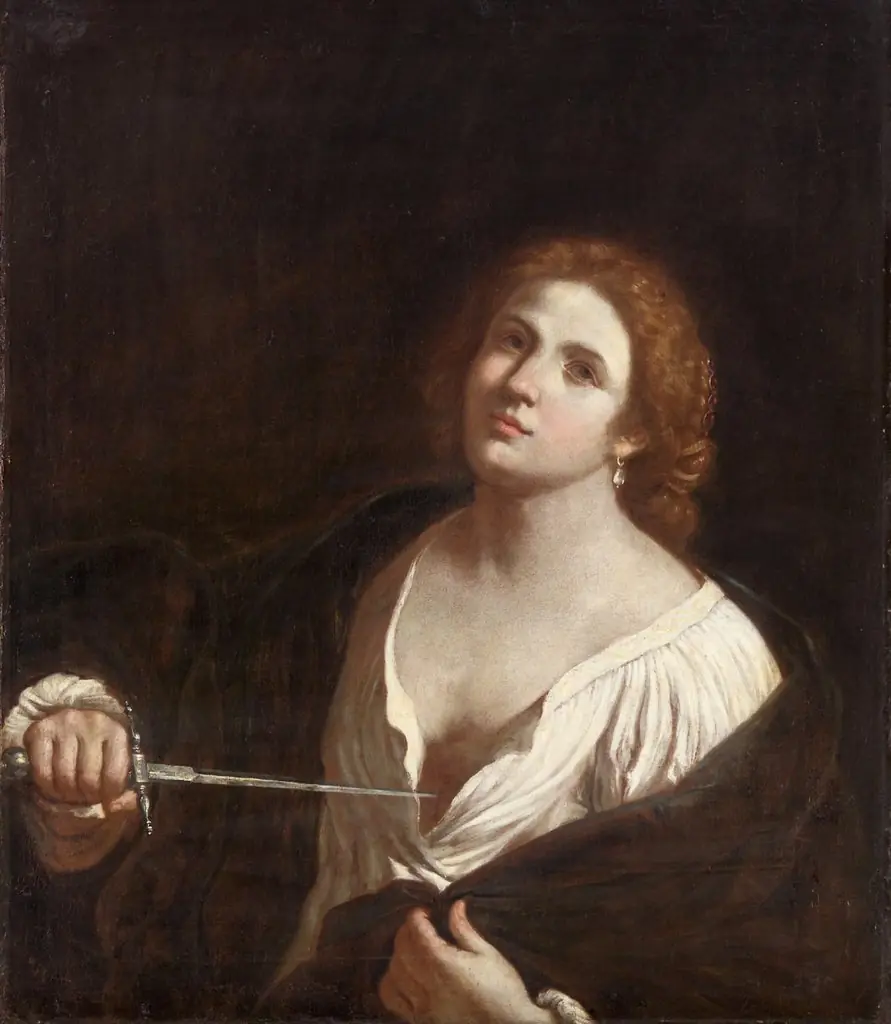
The painting depicts Lucretia, the legendary Roman noblewoman whose suicide became a foundational episode in Roman moral and political history. The composition shows her alongside a knife, the instrument of her self-inflicted death, which serves as the principal iconographic attribute identifying the figure and signaling the moment of her suicide. As a work of history painting, the canvas dramatizes the act of self-destruction rather than merely presenting a portrait, drawing on the long visual tradition of representing Lucretia as an emblem of chastity, virtue, and tragic resolve.
Produced in Venice in 1570, the image reflects the period's continued engagement with classical exempla, in which Lucretia's story functioned both as a moral lesson on female honor and as a catalyst for the overthrow of tyranny.
Technique & Style
An oil painting executed on canvas, this work exemplifies Venetian history painting through its stark chiaroscuro and dramatic narrative composition. The formal handling emphasizes the figure's poised tension and the knife's precise rendering, while the material application reveals layered glazes typical of 16th-century Venetian technique.
History & Provenance
Painted in 1570 in Venice, the oil-on-canvas Lucretia depicts the suicide of Lucretia and was created by a Venetian artist. The work subsequently passed through the collection of Bartolomeo della Nave, and was later owned by Archduke Leopold Wilhelm of Austria, before entering the holdings of the Kunsthistorisches Museum, where it is currently held.
The painting is held in the collection of the Kunsthistorisches Museum in Vienna. Its ownership history includes possession by Bartolomeo della Nave and Archduke Leopold Wilhelm of Austria before entering the museum's holdings. The work, created in Venice in 1570, depicts the suicide of Lucretia using oil on canvas.
Overview
The oil painting titled “Lucretia” depicts a solitary female figure positioned centrally, illuminated against a deep, shadowy backdrop. She holds a knife in her right hand, poised as if ready to act, while her gaze lifts upward. Her attire consists of a white, lace‑trimmed top and a brown fur shawl draped over her left shoulder, rendered with careful attention to folds and texture.
Context
The painting belongs to a tradition of 17th‑century European works that revisited classical themes, often using Lucretia as a moral exemplar. Its composition, with a single figure illuminated against a dark field, aligns with the Baroque emphasis on emotional intensity and theatrical lighting.
Artist & collection