Artwork
Tarquin and Lucretia
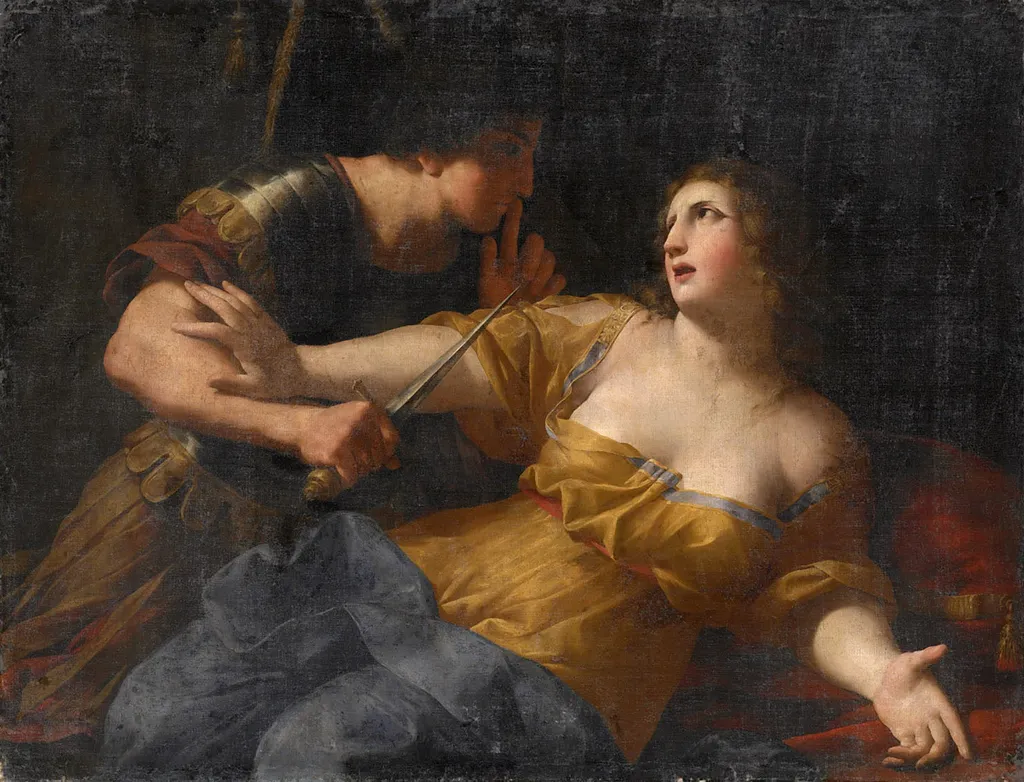
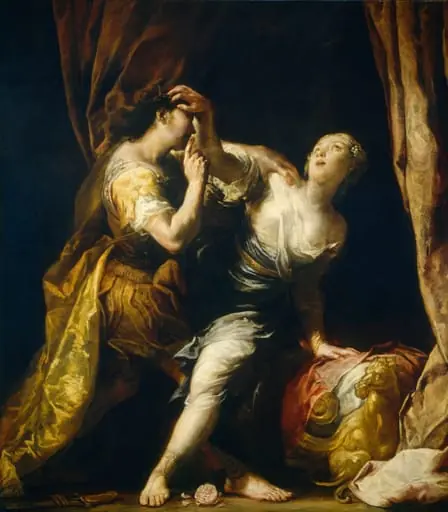
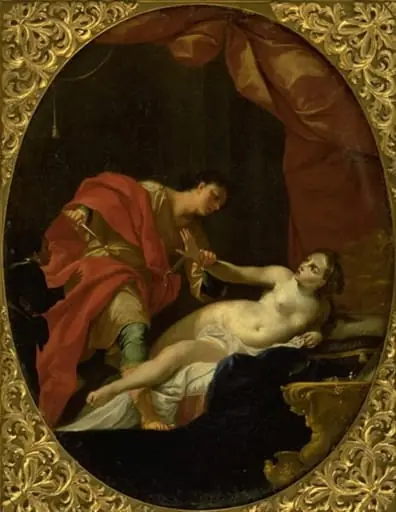
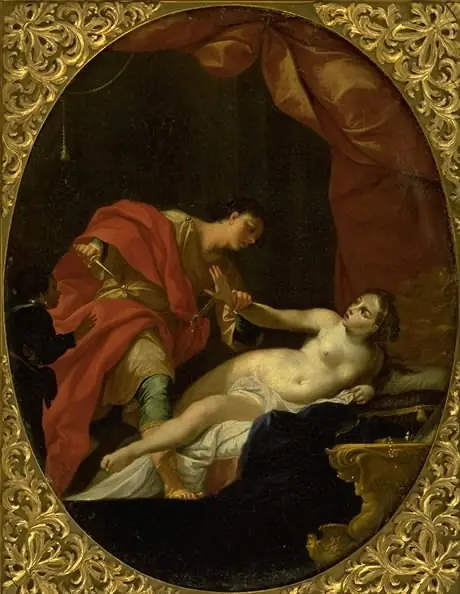
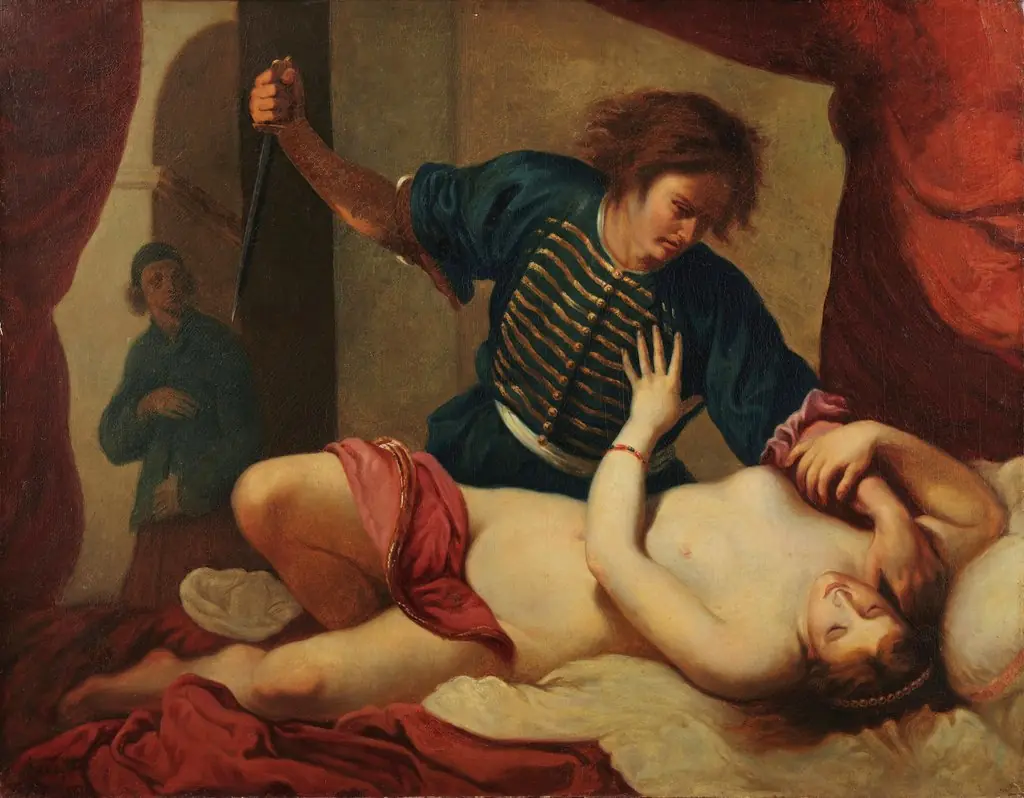
Tarquin and Lucretia is an oil painting by the Early Baroque Italian artist Giovanni Francesco Romanelli. It dates from 1638 and is held in the collection of the Kunsthistorisches Museum.
About this work
Subject & Meaning
The scene functions as a moral exemplum warning against tyranny and lust, aligning with Counter-Reformation emphasis on chastity and civic virtue.
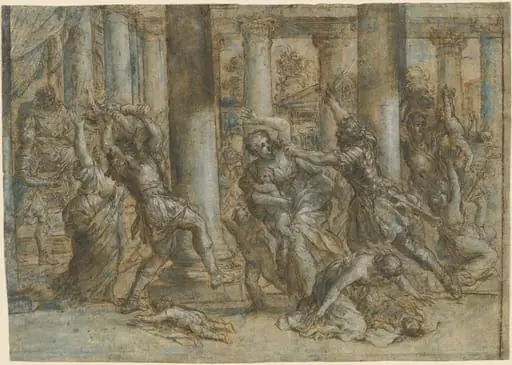
The painting depicts the classical episode of the rape of Lucretia, an event from Roman history in which Sextus Tarquinius, son of the last king of Rome, rapes the chaste Lucretia, precipitating the expulsion of the Tarquin dynasty. Romanelli’s composition shows Tarquin, identifiable by his armor and drawn sword, threatening Lucretia as she resists at her draped bedchamber. Lucretia’s exposed breast and tearful expression underscore the violence of the assault and her moral virtue under duress.
The scene functions as a moral exemplum warning against tyranny and lust, aligning with Counter-Reformation emphasis on chastity and civic virtue.
Technique & Style
The painting is executed in oil on canvas. The support dimensions are 106 cm in height by 140 cm in width. Romanelli’s handling emphasizes the dramatic moment through controlled chiaroscuro and smooth modeling of figures, aligning with mid-seventeenth-century Roman academic practice.
The composition directs attention to Lucretia’s pale, contorted figure against darker surroundings, reinforcing the narrative’s tension. Stylistic traits include crisp drapery folds and restrained anatomical tension, typical of Romanelli’s engagement with classicizing tendencies within the broader Baroque context.
History & Provenance
The oil painting Tarquin and Lucretia was created by Giovanni Francesco Romanelli in 1638. Classified as a history painting, the work depicts the rape of Lucretia and measures 106 cm in height by 140 cm in width. The piece is currently held in the collection of the Kunsthistorisches Museum.
No specific details regarding the original commission, the initial patron, or the intermediate ownership chain prior to its museum acquisition are provided in the available records.
The painting Tarquin and Lucretia by Giovanni Francesco Romanelli is held in the collection of the Kunsthistorisches Museum. Created in 1638, the work depicts the historical subject of the rape of Lucretia. The provided sources confirm its location within this specific museum but do not list a specific inventory number or detail any past exhibitions.
Context
The Tarquin and Lucretia painting by Giovanni Francesco Romanelli, created in 1638, exemplifies the dramatic narratives of the history painting genre that dominated 17th-century European art. Depicting the legendary rape of Lucretia, the work reflects the Baroque era's emphasis on emotional intensity and moral storytelling, aligning with contemporary artistic conventions explored in scholarly analyses of Romanelli's oeuvre. Its presence in the Kunsthistorisches Museum's collection underscores its significance within institutional art historical frameworks and Baroque painting traditions.
Legacy
Tarquin and Lucretia by Giovanni Francesco Romanelli influenced Baroque narrative painting through its dramatic depiction of sexual violence and martyrdom. The work's intense psychological portrayal informed later artists' approaches to historical subjects involving female vulnerability, particularly during the 17th century's shift toward emotionally charged compositions. Its presence in the Kunsthistorisches Museum collection cemented its role as a reference point for studies of Roman history in institutional contexts.
The painting's legacy persists in academic discussions of gender dynamics in art history, where it is frequently cited in analyses of how early modern artists interpreted classical texts through visual storytelling. This legacy reflects evolving scholarly interpretations of historical trauma and power structures in European visual culture.
Overview
Tarquin and Lucretia is a 1638 oil painting by Italian Baroque artist Giovanni Francesco Romanelli, depicting a pivotal moment from Roman antiquity.
Artist & collection
Artist
Giovanni Francesco Romanelli (Viterbo, 1610 – Viterbo, 9 November 1662) was a major Italian painter of the Baroque period, celebrated for his use of bright, vivid colors and also for his clarity of detail.