Artwork
Madonna of Humility
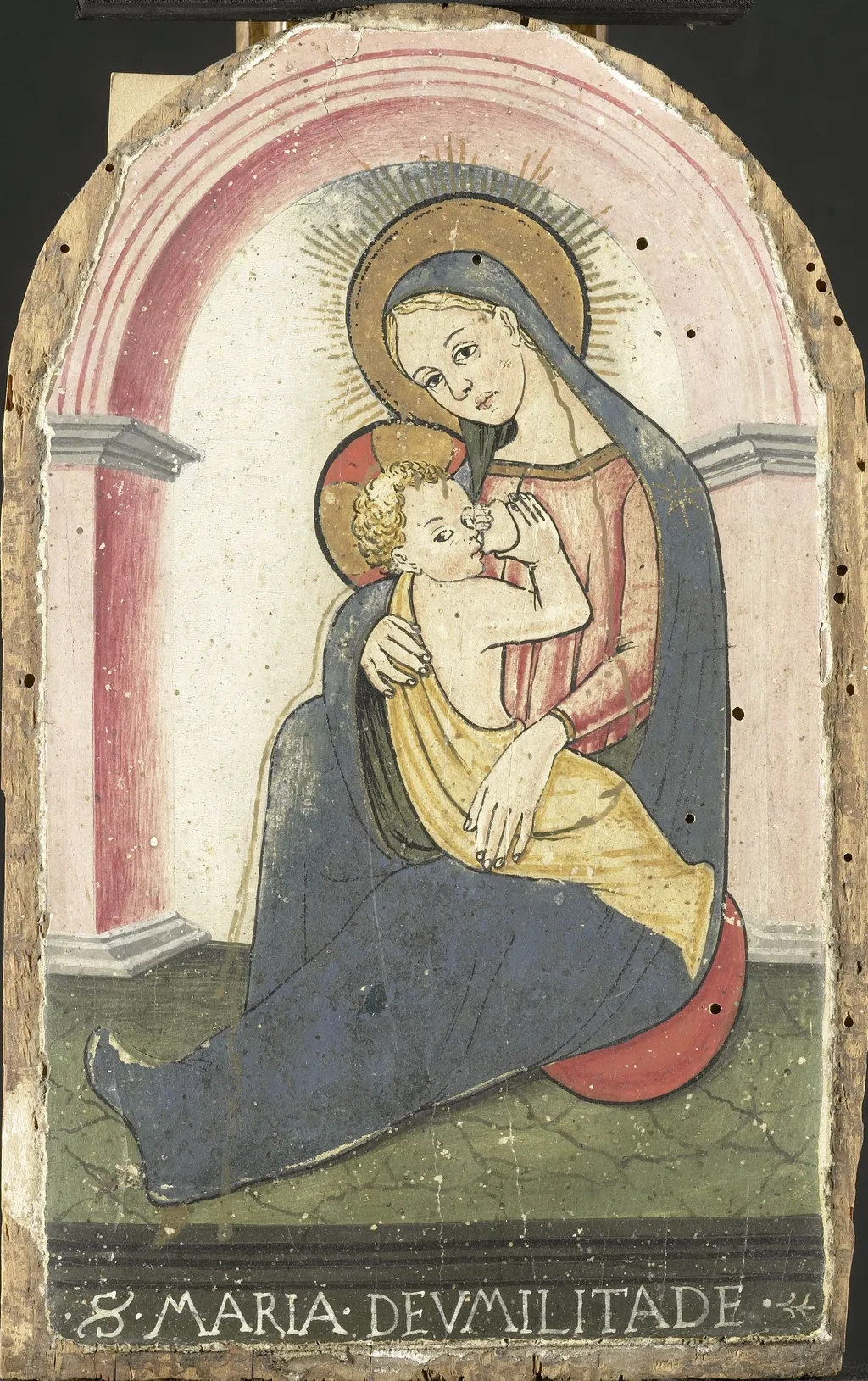
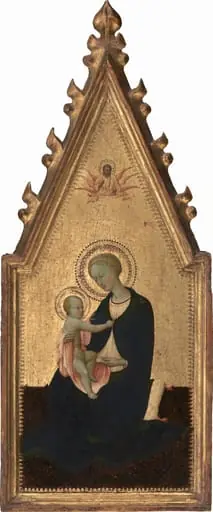
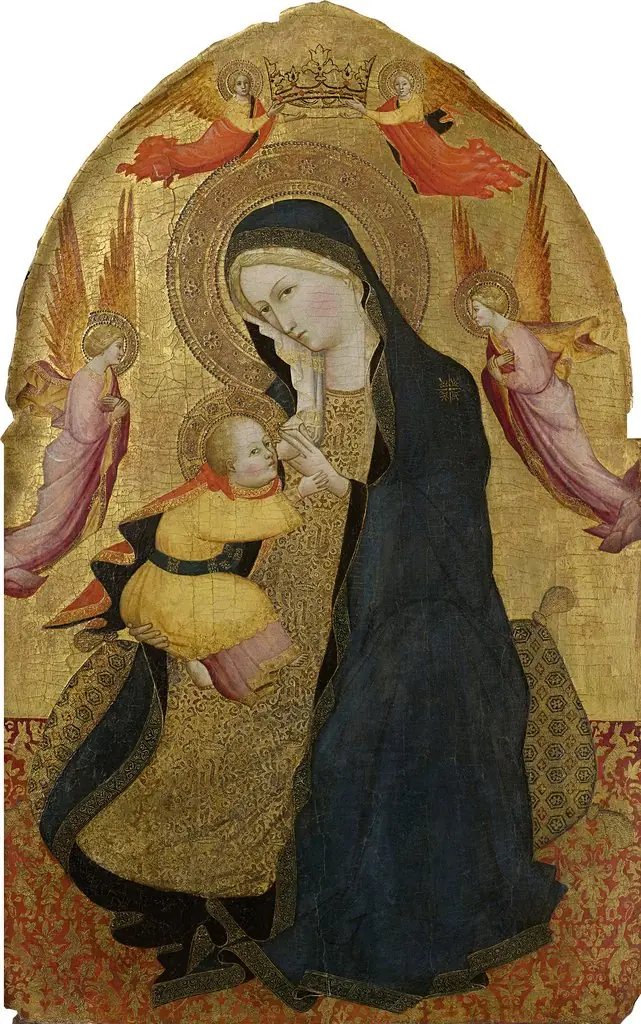
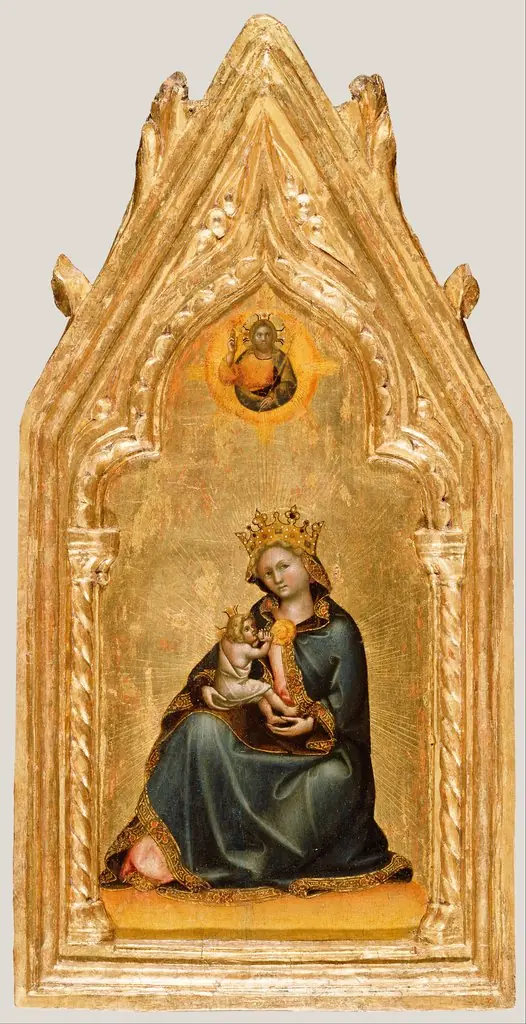
Madonna of Humility is a tempera painting. It dates from 1920 and is held in the collection of the Rijksmuseum.
About this work
Subject & Meaning
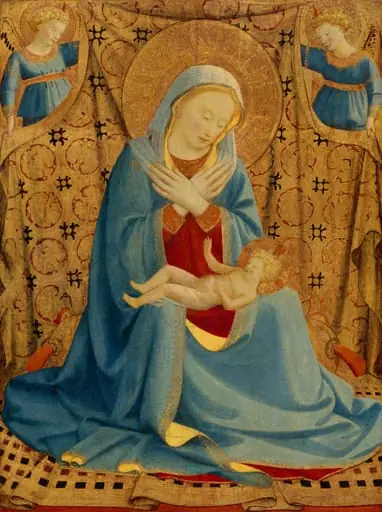
The composition features Mary with waist-length blond hair and an aureola, breastfeeding the Christ Child in the manner of the Nursing Madonna.
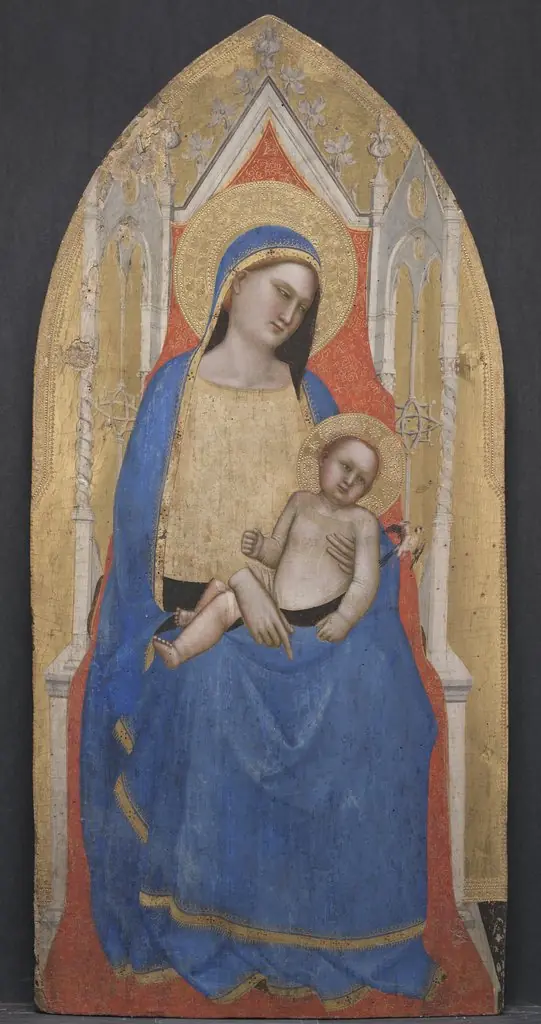
This tempera panel depicts the Madonna of Humility, a specific iconographic type showing the Virgin Mary seated directly on the ground or a low cushion rather than an elevated throne, emphasizing her humility. The composition features Mary with waist-length blond hair and an aureola, breastfeeding the Christ Child in the manner of the Nursing Madonna. This act of lactation serves as a potent symbol of Christ's humanity and the Virgin's role as the nurturing mother.
The figures are framed within an arcade, a common architectural element in such religious works. By portraying the Mother of God in a moment of intimate, physical care while seated at ground level, the artwork visually represents the theological concept of divine condescension and the accessible nature of the sacred.
Technique & Style
The work is executed in tempera on a wooden panel, a support typical of early Italian devotional painting, and measures roughly 26 × 24 cm (height × width) as recorded in the cataloguing data. Its creation dates to 1920 in Florence, reflecting a revival of tempera technique in the early twentieth century. The composition follows the traditional Madonna‑of‑Humility motif, depicting the Virgin seated on the ground with the infant Christ, surrounded by an aureole, halo and nursing attributes that emphasize humility and maternal care.
The painting’s formal qualities include a restrained palette, delicate modeling of figures, and a linear emphasis that aligns with the stylistic conventions of religious art in the Rijksmuseum collection. As a museum‑held object, it is handled with conservation precautions appropriate to tempera on panel.
History & Provenance
The work titled Madonna of Humility was created in Florence in 1920 as a tempera painting on panel. Its subject follows the traditional motif of the Virgin Mary nursing the Christ Child, a composition traced to earlier humility depictions. The earliest recorded owners were Otto Lanz, who transferred the piece to Anna Theresia Elisabeth Lanz‑Willi, and subsequently to Hans Posse.
The painting entered the collections of the Rijksmuseum and the Stichting Nederlands Kunstbezit, and was also associated with the Führermuseum. Its inception is recorded as 1920‑00‑00, with documented dimensions of roughly 26 × 16.5 cm.
Overview
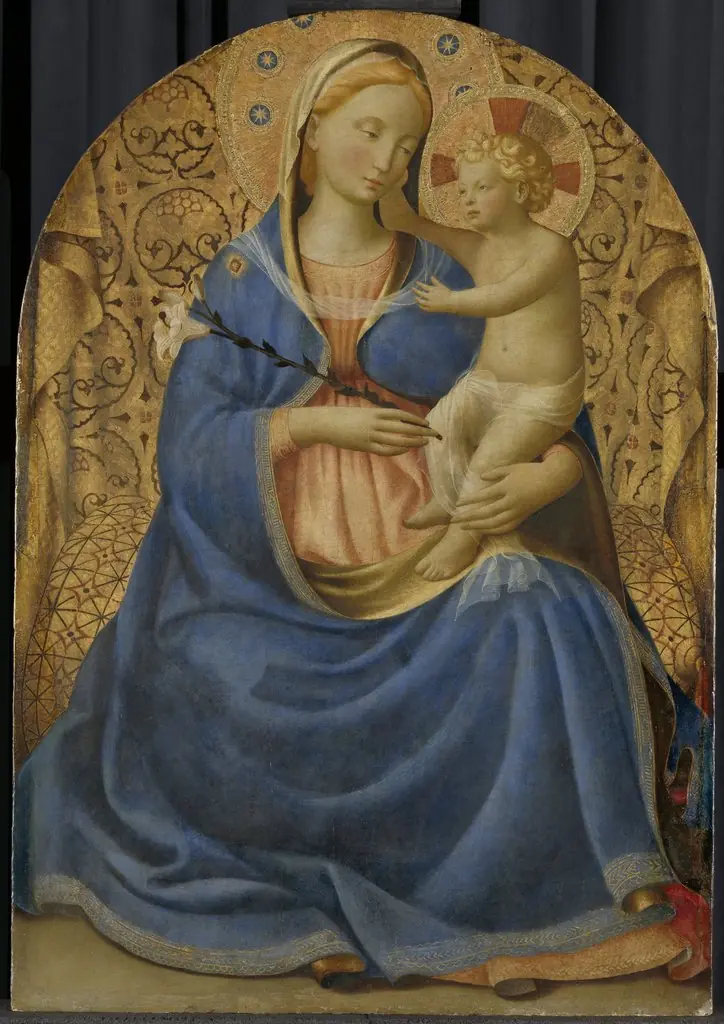
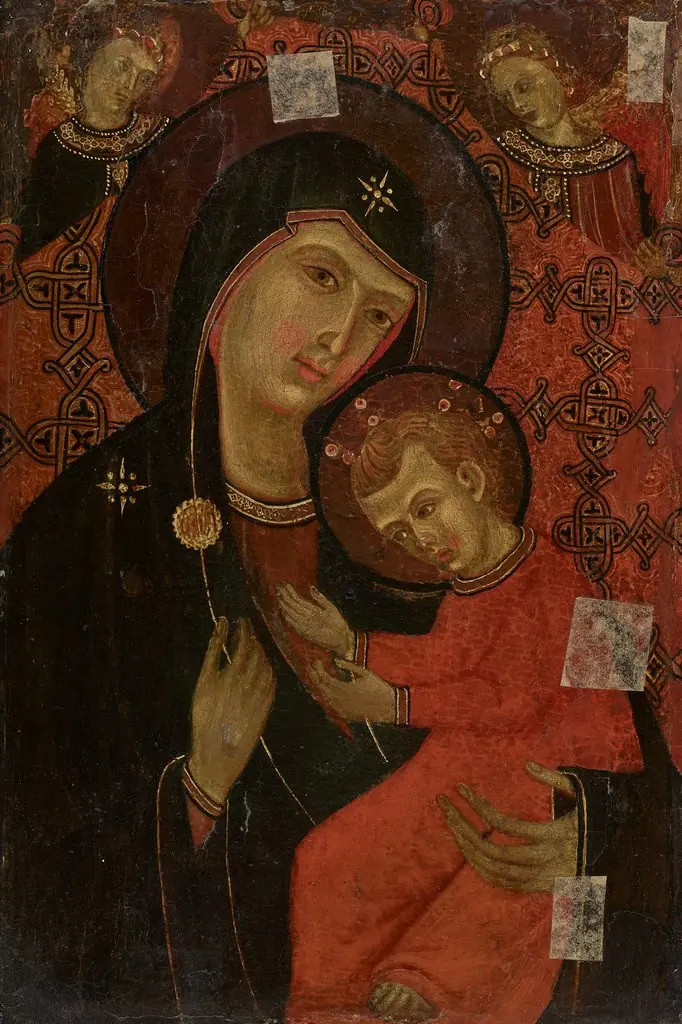
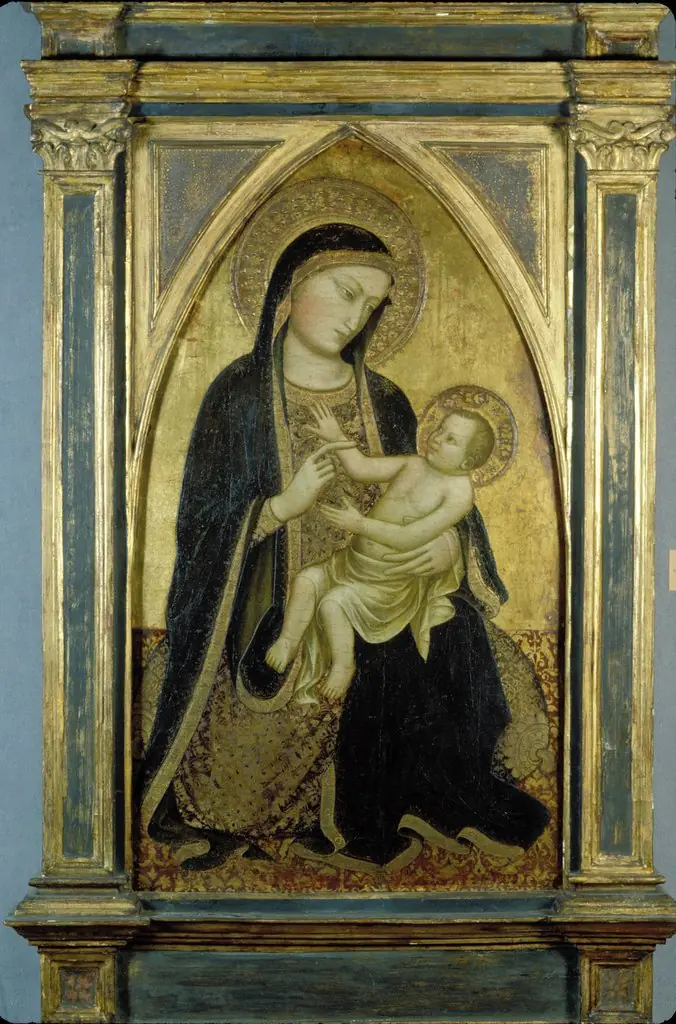
This tempera painting, titled Madonna of Humility, presents a devotional image of the Virgin Mary with the infant Jesus. The composition highlights a tender moment between mother and child, characterized by a sense of calm and piety. The work exemplifies a common theme in religious art, emphasizing Mary's role as a nurturing figure and the humanity of Christ.
Artist & collection

![Madonna of Humility, The Blessing Christ, Two Angels, and a Donor [obverse], by Andrea di Bartolo](https://artifactworldgallery.com/img/andrea-di-bartolo--madonna-of-humility-the-blessing-christ-two-angels-and-a-don--d37c382429905539-w320.webp)