Artwork
Mare de Déu i Sant Joan Evangelista
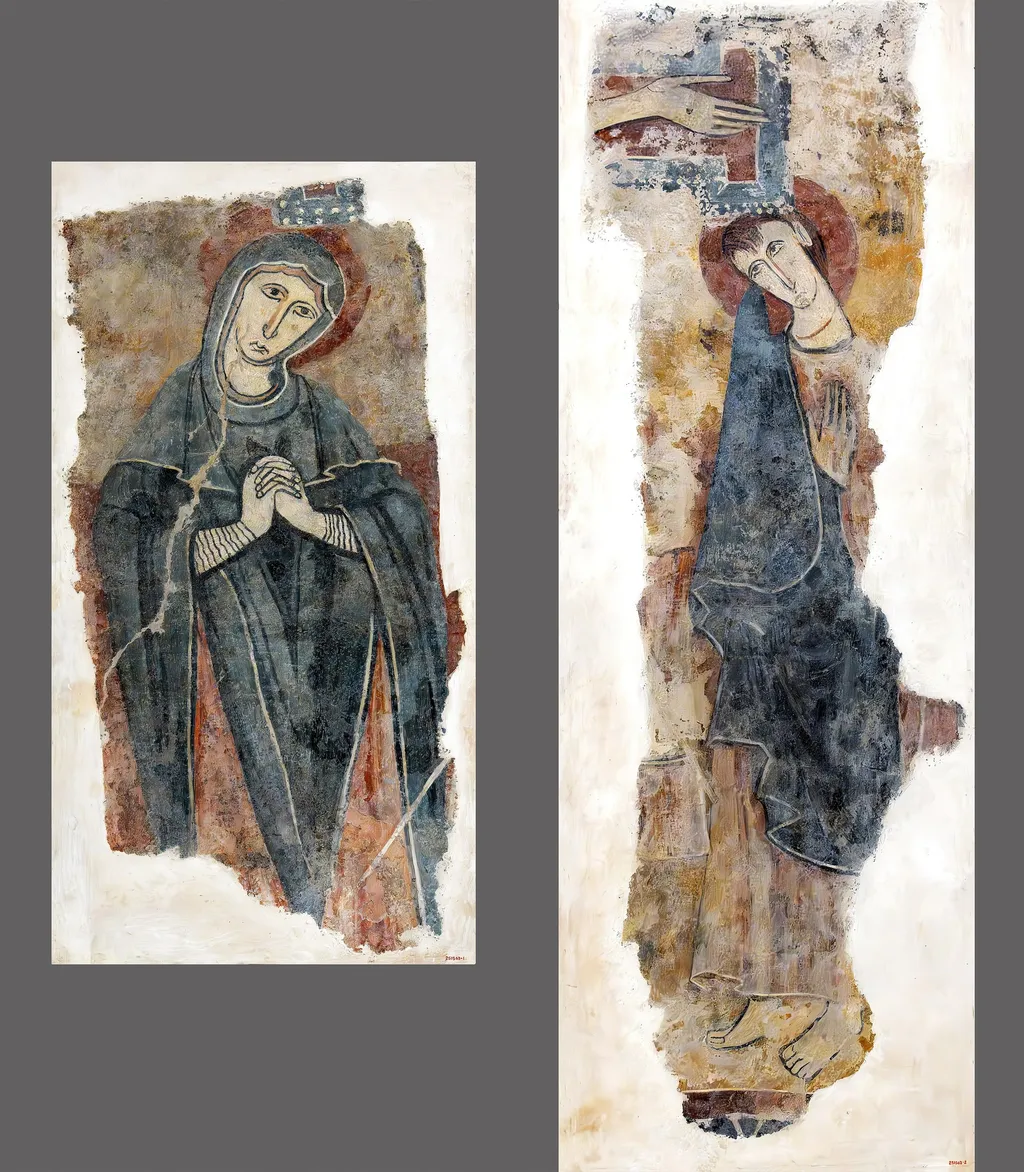
Mare de Déu i Sant Joan Evangelista is a fresco painting by the Romanesque artist Unknown. It dates from 1150 and is held in the collection of the Museu Nacional d'Art de Catalunya.
About this work
Overview
The work titled Mare de Déu i Sant Joan Evangelista is a fresco comprising two separate panels. Each panel presents a solitary figure: a cloaked woman on the left and a similarly dressed man on the right, both rendered in a flat, linear manner typical of medieval visual language.
Subject & Meaning
The left figure, a crowned woman in a dark robe with her hands pressed together, is identified as the Virgin Mary. The right figure, a male saint with a halo, is Saint John the Evangelist, shown with his head thrown back and arms outstretched, a conventional gesture of divine inspiration.
Technique & Style
Executed in true fresco, pigments were applied to wet lime plaster, allowing the colors to become integral to the wall surface. The composition relies on earthy browns and beiges, bold outlines, and minimal modeling, reflecting the stylized aesthetic of late medieval devotional art.
History & Provenance
The piece belongs to the medieval period when fresco painting was a dominant medium for ecclesiastical decoration. Its precise origin, patronage, and subsequent movements are not recorded in the available data, limiting further historical tracing.
Context
Fresco cycles featuring the Virgin and John the Evangelist were common in churches and chapels, serving as visual aids for worshippers. The stark, two‑panel format would have been positioned to flank an altar or niche, reinforcing theological themes of intercession and revelation.
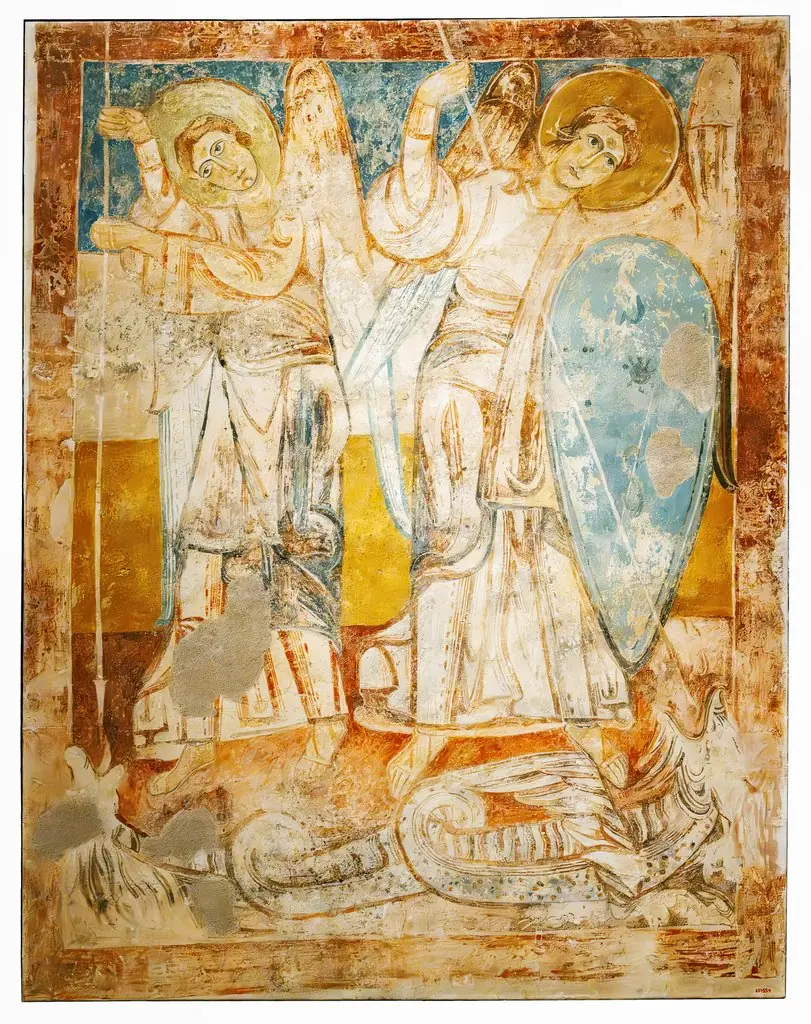
Artist & collection









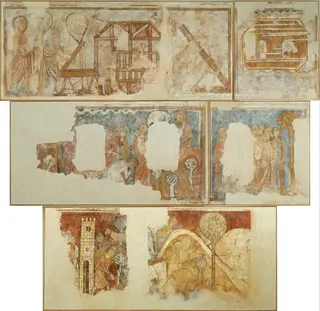 Mural paintings with Old Testament scenes
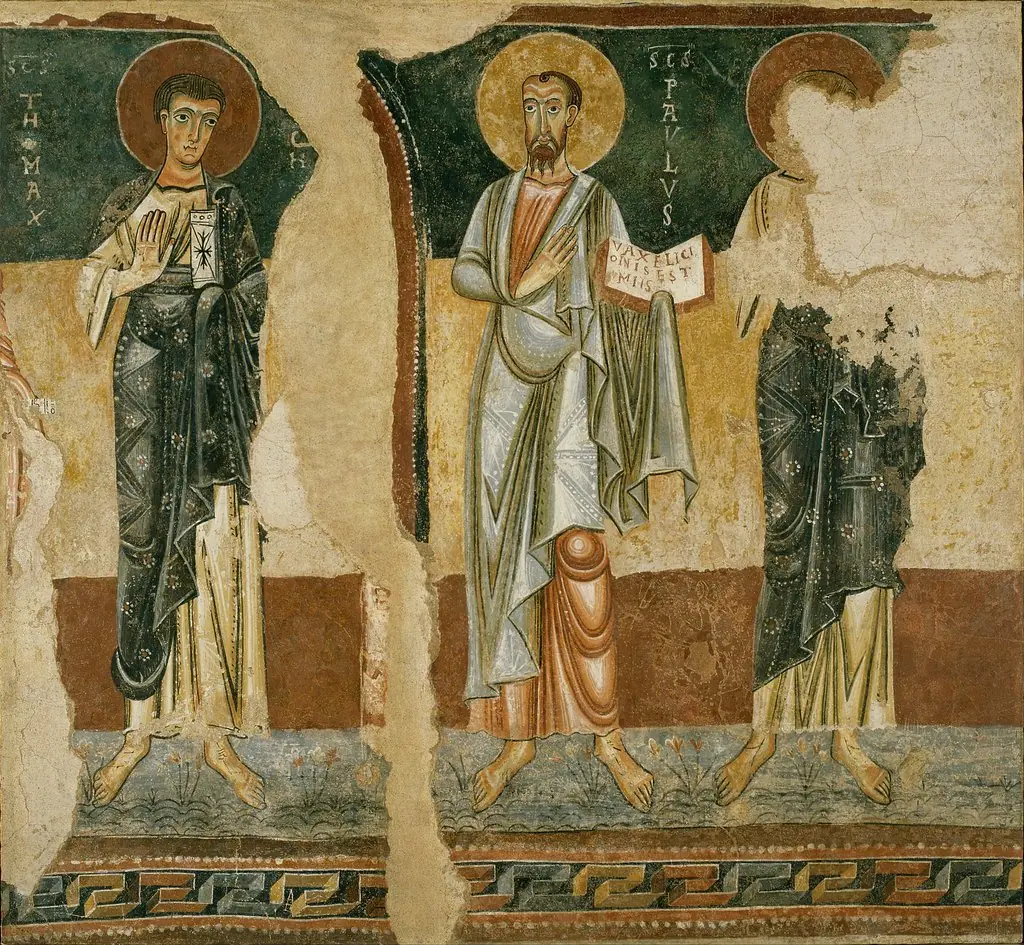 Apostles from Orcau
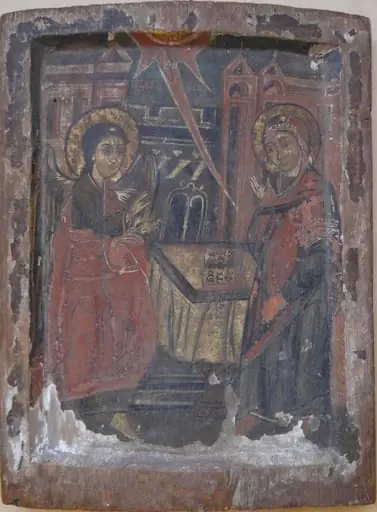 Buna Vestire
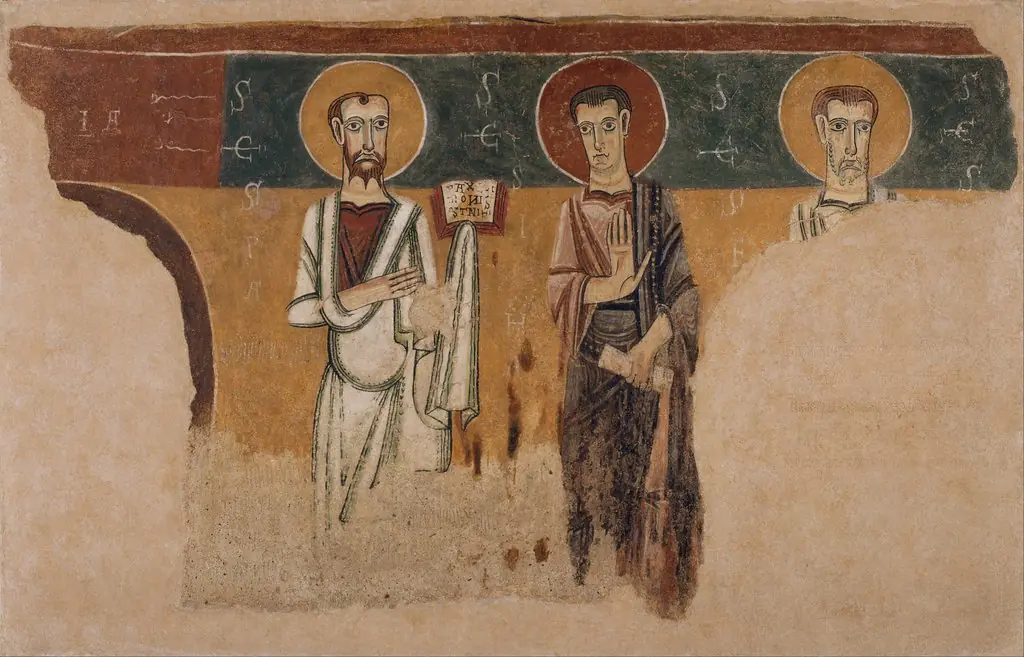 The Apostles of Argolell
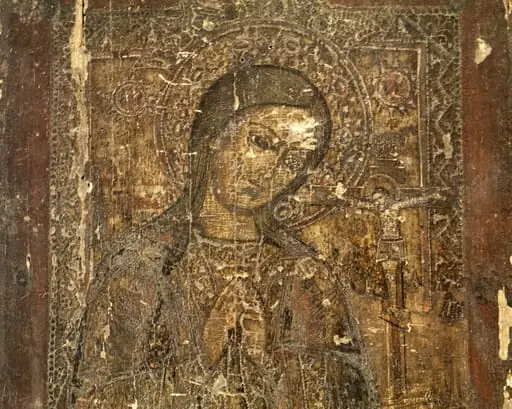 Icoana denumită și "Maica Domnului jalnică" sau îndurerată, o redă pe Maica Domnului în prim plan, cu mâinile împreunate, privind în depărtare către Fiul Ei răstignit pe cruce. Imaginea planurilor este inversată, accentul căzând pe durerea Mamei la moartea lui Iisus, redat în planul îndepărtat, răstignit pe dealul Golgotei. Fecioara Maria, cu capul ușor înclinat spre stânga, are părul despletit, căzând pe umeri, ovalul feței rotunjit, nas subțire și drept, gura mică, ochi migdalați, mari, sprâncenele arcuite, mâinile împreunate la piept.În jurul capului aureolă cu motive geometrice incizate, la fel coroana ce depășește linia de delimitare a chenarului, deasupra aureolei . Tunica are cu mâneci larg cu borduri cu motive geometrice. La baza crucii Răstignirii craniul lui Adam. Pământul sugerat de benzi de culoare alb-gălbui, negru și verde. Chenar dublu, la interior motive geometrice: zigzaguri, puncte și motive fitomorfe. Siclitadele Maicii Domnului în chenare circulare pe fondul aurit. În stânga inscripție parțial indescifrabilă, din care se poate deduce doar numele Mariei(Precista) Bordura marginală(și foița metalică incizată) specifică icoanelor de tip krashnuskha, realizate în centrele de la Holui și Mstera.
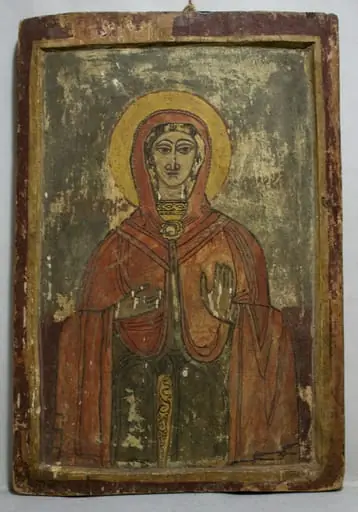 Sfânta Cuvioasă Paraschiva este redată 3/4, frontal, într.o manieră naivă, specific țărănească. Chip oval, trăsăturile feței accentuate, ochii conturați cu negru, privirea îndreptată lateral, scrâncenele mult arcuite, nările mari, gura mică. Mâna stângă o ține la piept, dreapta ridicată în semnde binecuvântare. Înveșmântată cu un maforion roșu pal, cu decorațiuni vagi, albe, stola verde cu galben, porțiune decorată cu motive fitomorfe.Nimb galben cu linia de contur albă. Fond grena în partea de jos, gri în cea superioară. Chenar dublu, galben + grena.
 Fecioara cu Iisus