Artwork
Martyrdom of Saint Ursula and her companions
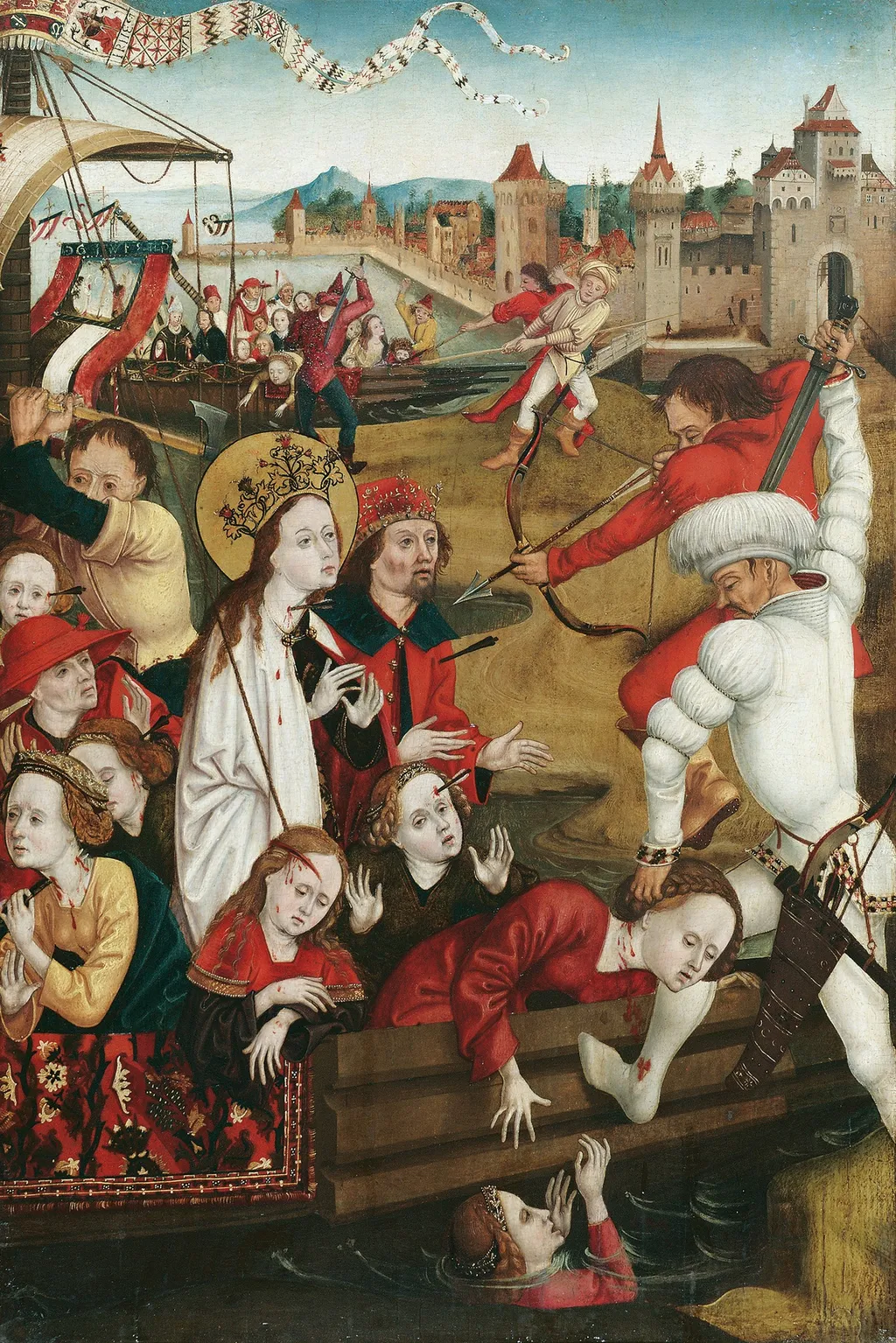
Martyrdom of Saint Ursula and her companions is an unspecified painting by the Northern Renaissance artist Unknown. It dates from 1475 and is held in the collection of the Kunsthistorisches Museum.
About this work
Overview
Held in the Belvedere, Kunsthistorisches Museum in Vienna, the work visualizes the legendary massacre of Saint Ursula and her followers.
The Martyrdom of Saint Ursula and her companions is a religious painting dated to 1475 by an anonymous artist. Held in the Belvedere, Kunsthistorisches Museum in Vienna, the work visualizes the legendary massacre of Saint Ursula and her followers. The composition captures a violent, crowded scene at a riverbank before a walled city, combining detailed figural suffering with precise, enamel-like handling that characterizes its distinctive visual presence.
Subject & Meaning
The painting depicts the legendary martyrdom of Saint Ursula, a Romano-British Christian princess, and her companions. According to hagiographic tradition, Ursula and her retinue undertook a pilgrimage that ended in Cologne, where they were besieged by Huns. The central haloed female figure in white robes represents Ursula, marked by blood at her neck, signifying her refusal to marry the Hun leader and her subsequent execution. The women in contemporary dress displaying wounds and gestures of suffering represent her companions, who chose death over abandoning their faith. The armed men actively attacking the group with swords, bows, and a poleaxe embody the barbarian forces. A donor portrait appears in the lower left corner, reflecting pious patronage, while a banderole with script unfurling across the upper portion provides a textual anchor to the narrative.
History & Provenance
Created in 1475, the painting is classified within the religious genre. The work eventually entered the collection of the Belvedere, Kunsthistorisches Museum in Vienna, where it remains today. The sources do not provide a detailed ownership chain or specific exhibition history for this specific panel, though the broader cult of Saint Ursula generated widespread artistic commissions and reliquary veneration across Europe, particularly in Cologne, from the medieval period onward.
Context
The painting emerges from a rich visual and textual tradition surrounding the cult of Saint Ursula. The narrative was popularized by the Legenda aurea, a widely circulated collection of hagiographies written by Jacopo da Varagine from around 1260 until his death in 1298. Historically, the legend originated from a fifth-century Latin epigraph found in the Church of St Ursula in Cologne, which mentioned only unnamed virgin martyrs. The specific number of companions, often cited as eleven thousand, likely arose from a misreading of the Latin undecimilia, where the Roman numeral XI was erroneously interpreted as eleven thousand. This numerical exaggeration was further fueled by the discovery of a burial ground in eighth-century Cologne, from which thousands of skeletons were exhumed and identified as the saint's companions. The subject was a mainstay of European religious art, famously treated by Hans Memling in 1489 on the Reliquary of St. Ursula in Bruges, and later by Vittore Carpaccio in his Venetian cycle of the 1490s.
Legacy
The martyrdom of Saint Ursula and her companions maintained a profound cultural afterlife, extending well beyond fifteenth-century painting. The saint's example of courage and purity inspired Saint Angela Merici to found the Ursuline Order in 1535, an congregation dedicated to the education and spiritual formation of young women. The legend's reach even extended to cartography, as Christopher Columbus named the Virgin Islands after Ursula and her companions. The narrative continued to captivate artists into the early seventeenth century, evidenced by later interpretations such as Caravaggio's final known painting, as well as reproductive engravings by printmakers like Johann Sadeler I after designs by Peter Candid.
Artist & collection









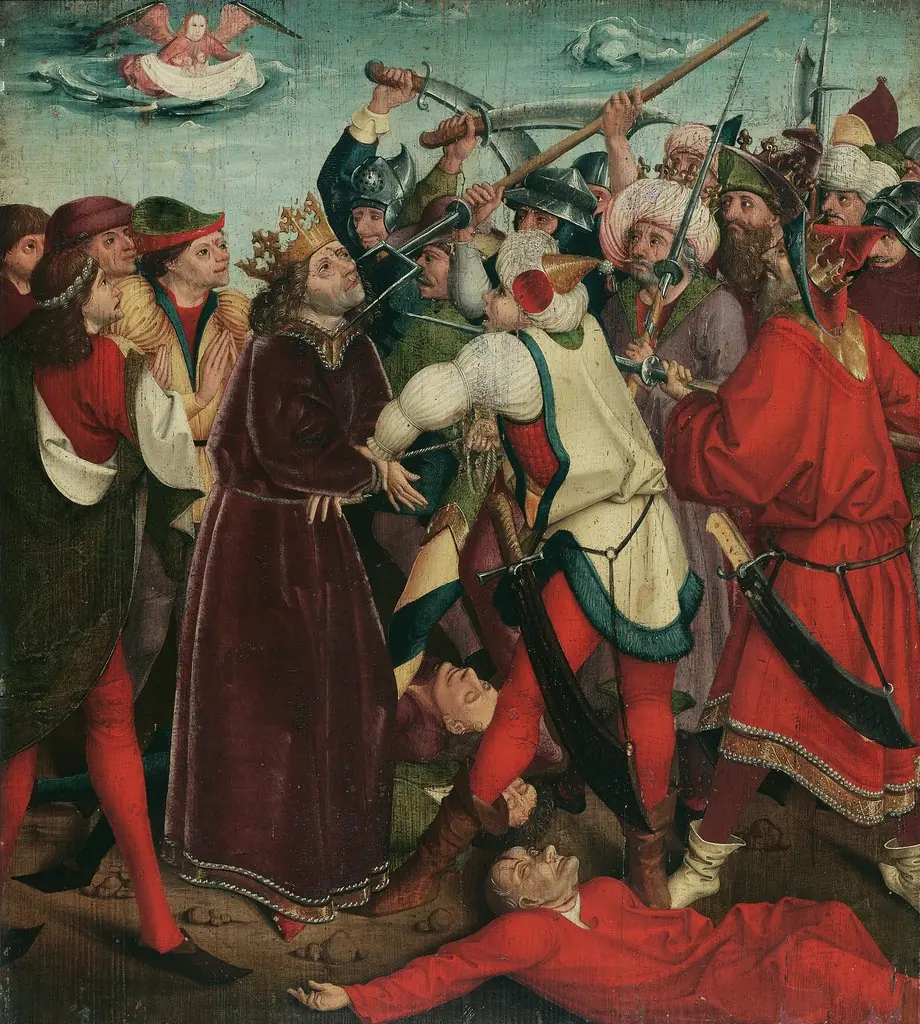 Martyrium des hl. Oswald in der Schlacht
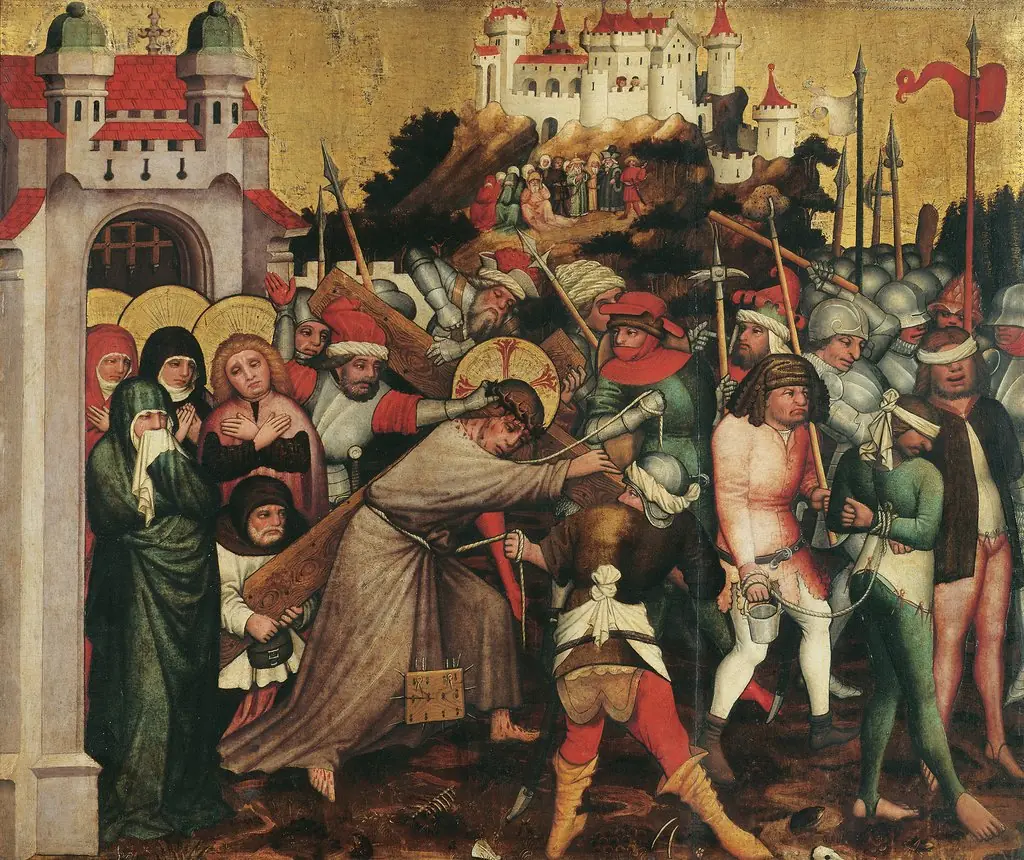 Christ carrying the cross
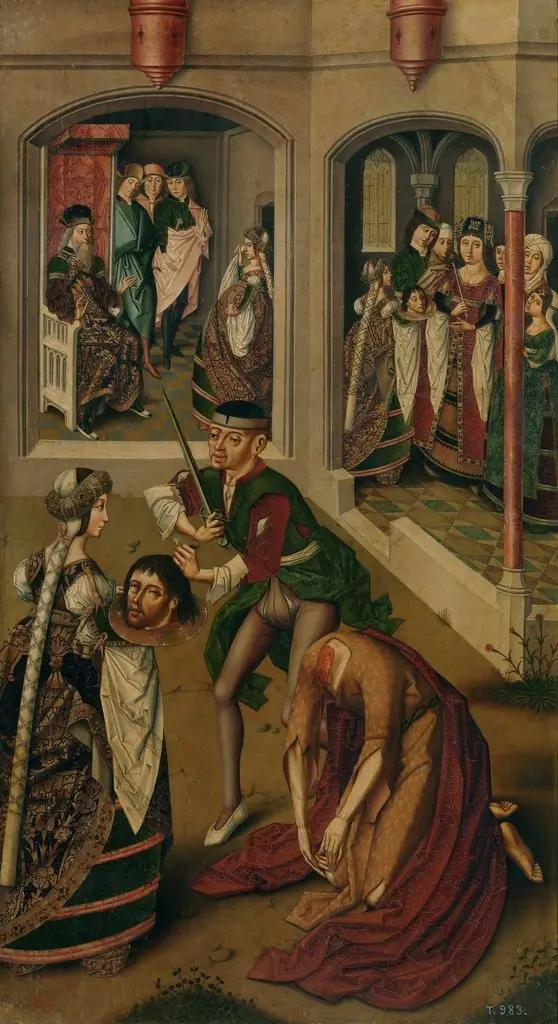 The Beheading of Saint John the Baptist
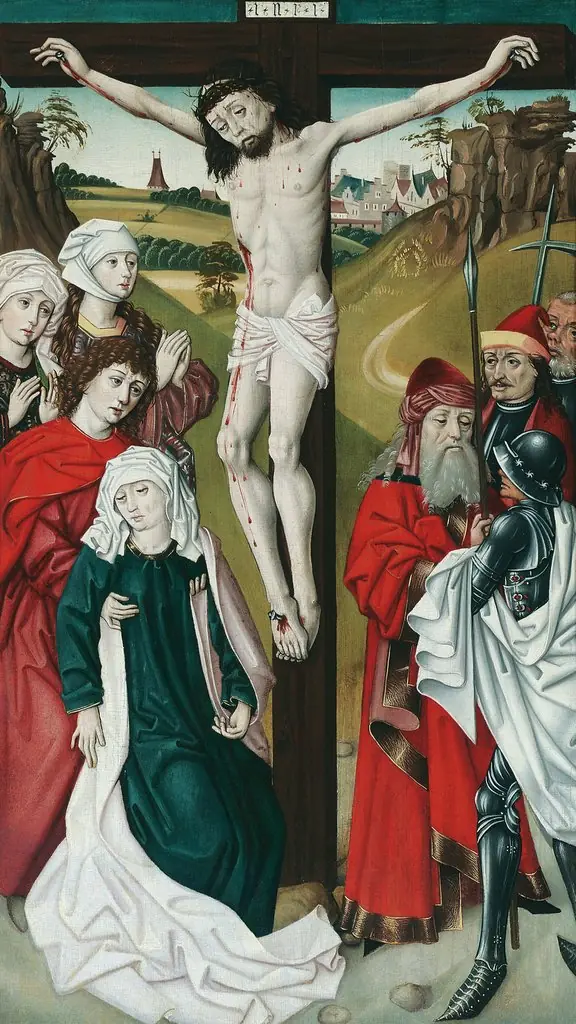 Kreuzigung Christi
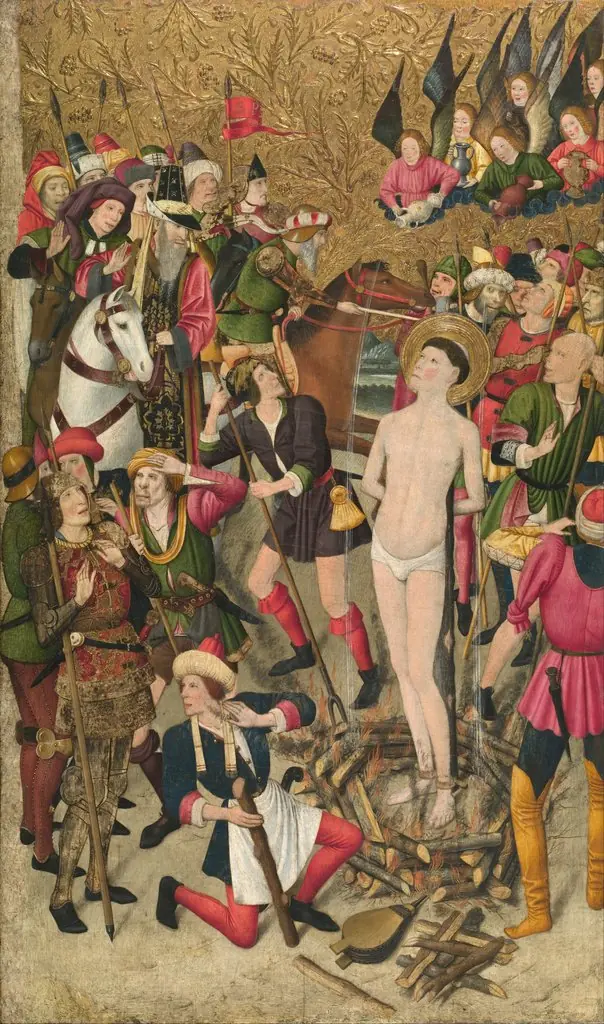 Saint Vincent at the Stake
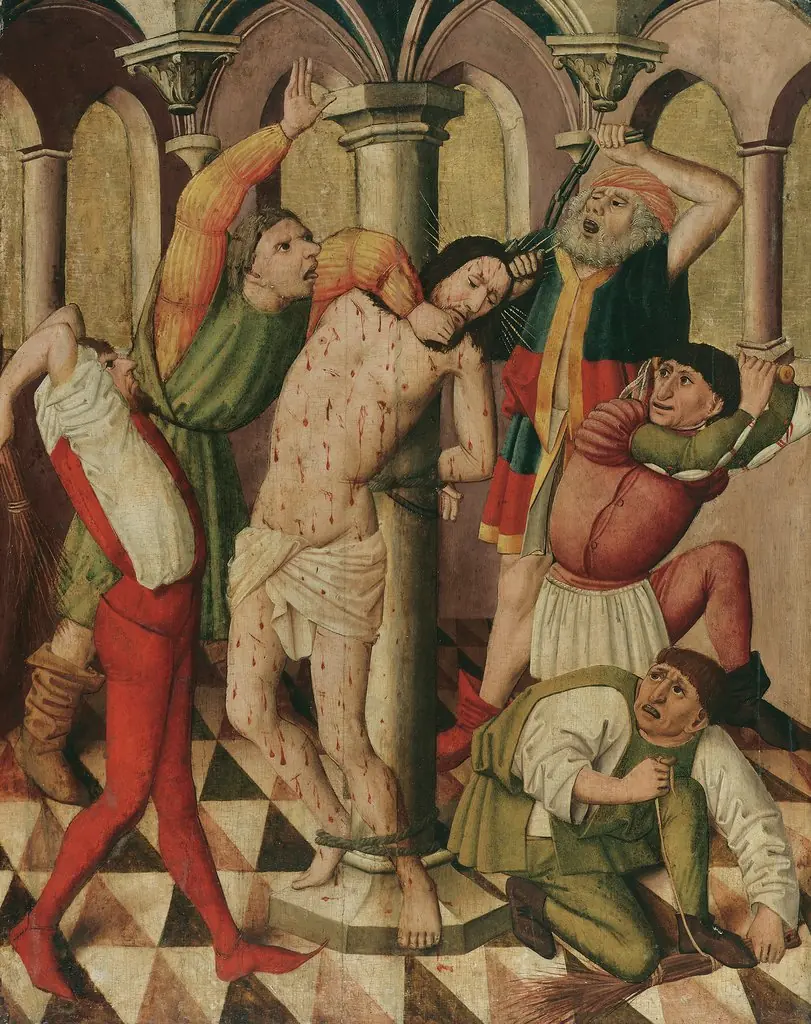 Geißelung Christi
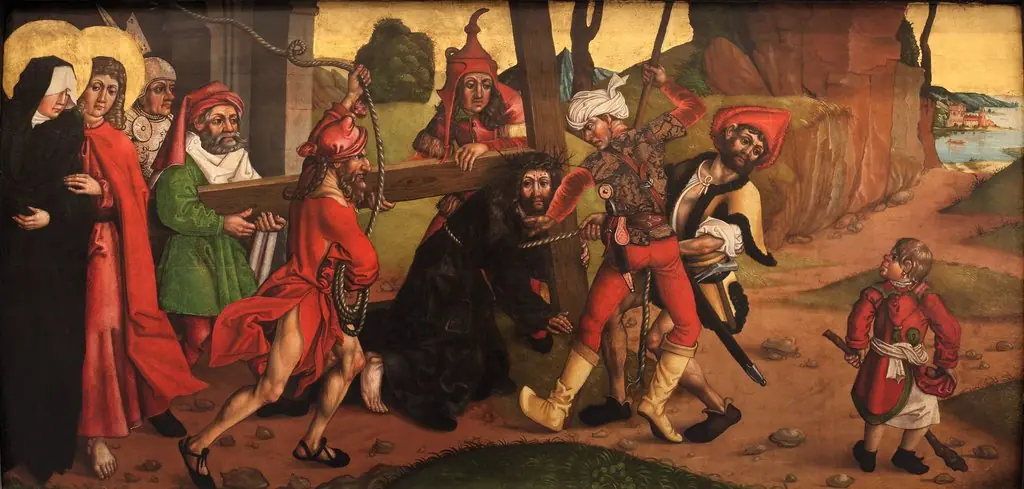 The carrying of the cross
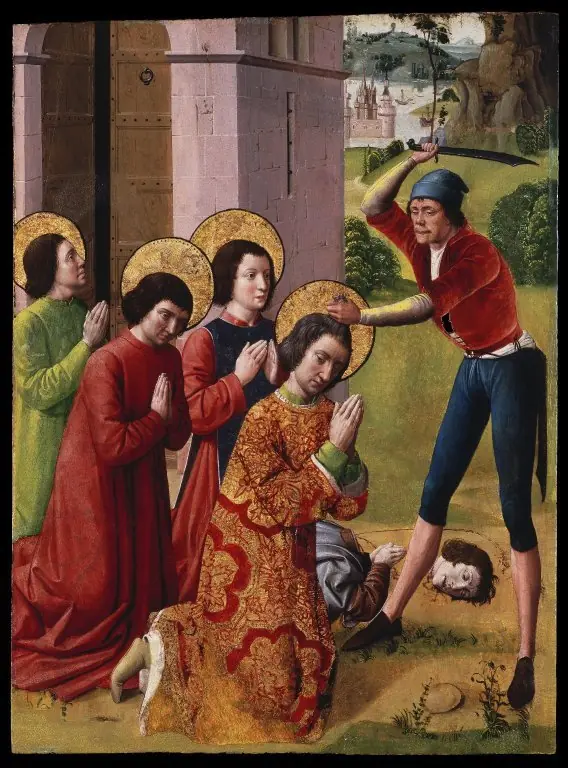 Martyrdom of Saints Cosmas and Damian with their Three Brothers, part of an altarpiece
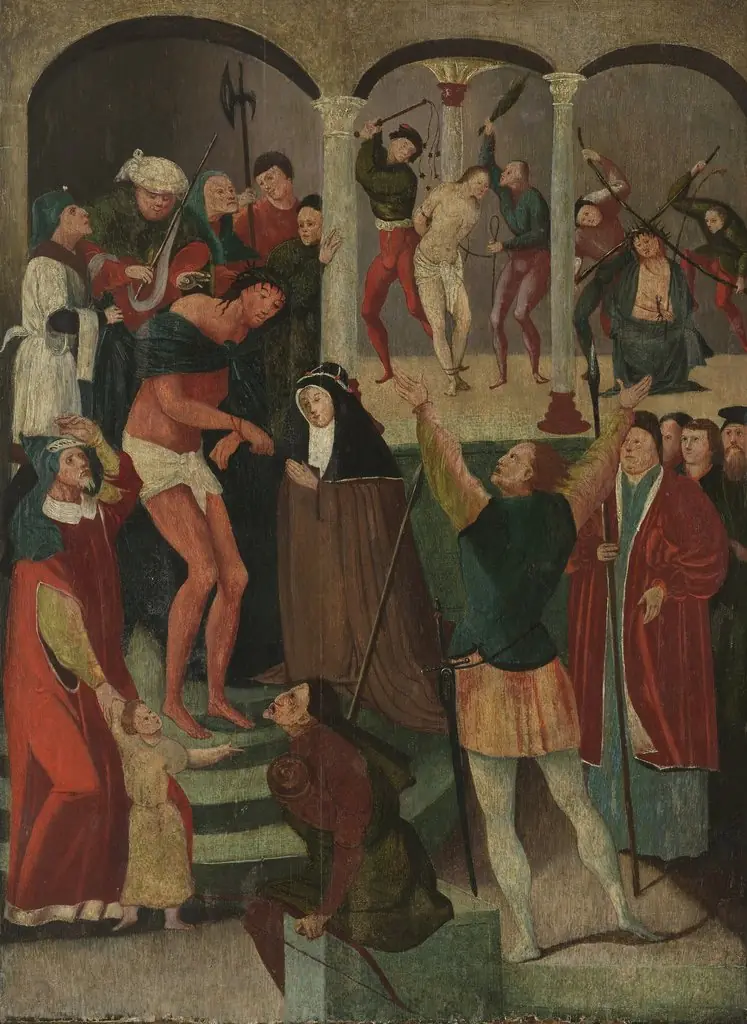 Ecce homo
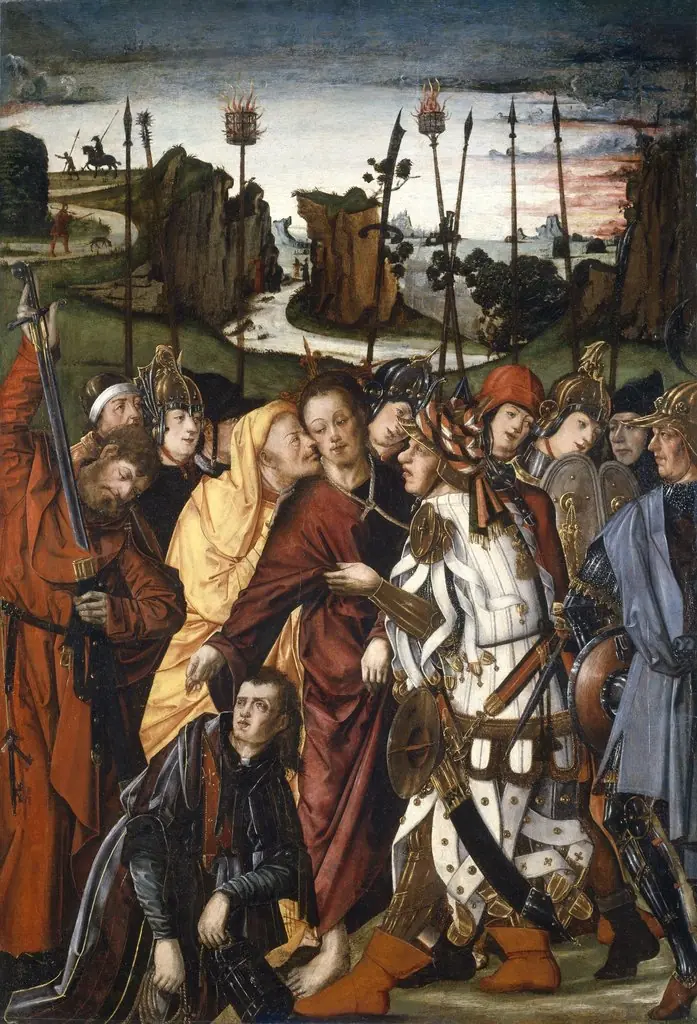 The Taking of Christ