Artwork
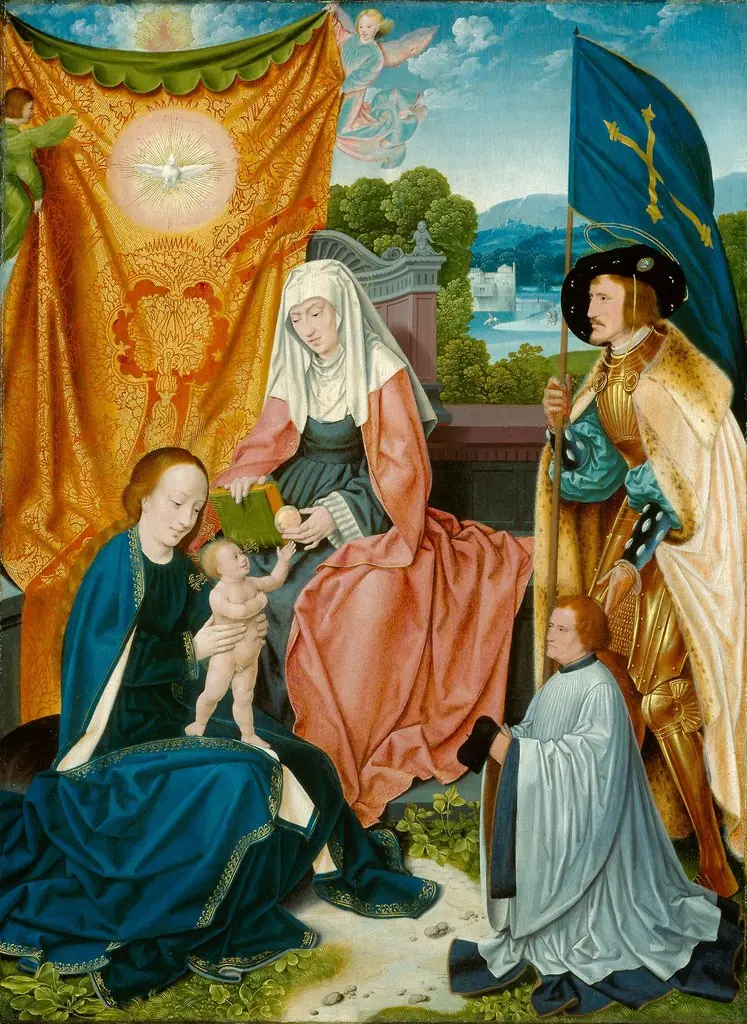
Memorial tablet of Jacob Jan van Assendelft (1396-1478) and his wife Haesgen van Outshoorn (?-1471)
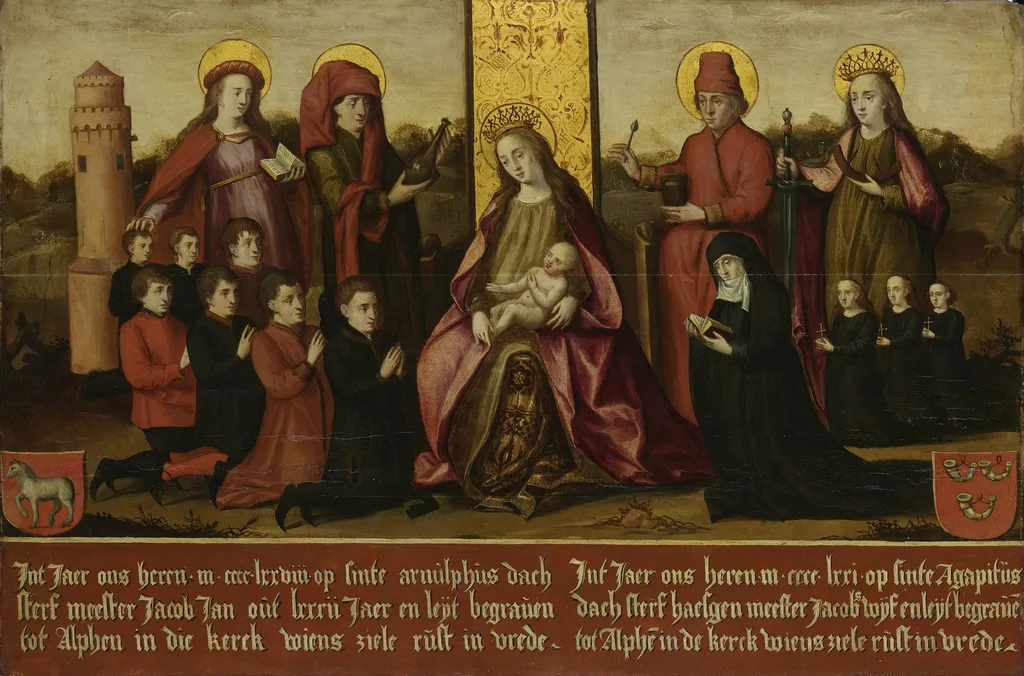
Memorial tablet of Jacob Jan van Assendelft (1396-1478) and his wife Haesgen van Outshoorn (?-1471) is an oil painting by the Northern Renaissance artist Unknown. It dates from 1500 and is held in the collection of the Rijksmuseum.
About this work
Technique & Style
The Memorial tablet of Jacob Jan van Assendelft and his wife Haesgen van Outshoorn is an anonymous religious painting executed in oil paint on a wood panel support. Created in 1500, the work measures 60.5 cm in height and 90.5 cm in width. Classified as a religious genre piece, the artwork's formal qualities are defined by its use of oil medium applied to the rigid panel surface, characteristic of the period's memorial portraiture.
History & Provenance
No specific commissioner, workshop attribution, or detailed creation history beyond the 1500 inception date is established in the available sources.
The memorial tablet was created in 1500, executed in oil paint on panel as an anonymous religious work. It is held in the Rijksmuseum collection, associated with the Royal Dutch Antiquarian Society.
Prior ownership is recorded through Maria S.T. de Wildt, Frans de Wildt, and Johanna Elisabeth de Wildt, indicating a documented provenance chain linking the panel to these private owners before its transfer to the museum.
No specific commissioner, workshop attribution, or detailed creation history beyond the 1500 inception date is established in the available sources.
The memorial tablet is held in the Rijksmuseum, Amsterdam, where it is inventoried as object SK-C-1667. It entered the museum’s holdings through the transfer of the Maria S.T. de Wildt bequest, which also included works from the collection of Frans de Wildt and Johanna Elisabeth de Wildt.
The painting has not been recorded in any major loan exhibitions in the available sources.
Overview
The Memorial tablet of Jacob Jan van Assendelft and his wife Haesgen van Outshoorn is an oil painting depicting a scene of devotion centered around a woman and infant, set against a detailed, symbolic backdrop.
Subject & Meaning
The primary figures are a woman in a red robe and golden crown holding a baby in light cloth, surrounded by kneeling and standing individuals in medieval attire, some holding religious or symbolic objects (books, staff). The scene likely represents a religious or allegorical tableau, potentially alluding to the Holy Family or a similar sacred narrative, with the mourned subjects (Jacob Jan van Assendelft and Haesgen van Outshoorn) possibly being commemorated through association with these figures.
Context
The work reflects the religious and commemorative art practices of its time, blending sacred themes with the patron's desire for posthumous remembrance, common among the nobility and upper classes of the period.
Legacy
While specific influence or widespread recognition of this piece is not detailed, it contributes to the broader understanding of late medieval/early Renaissance artistic techniques, particularly in the use of chiaroscuro and symbolic composition in memorial art.
Artist & collection









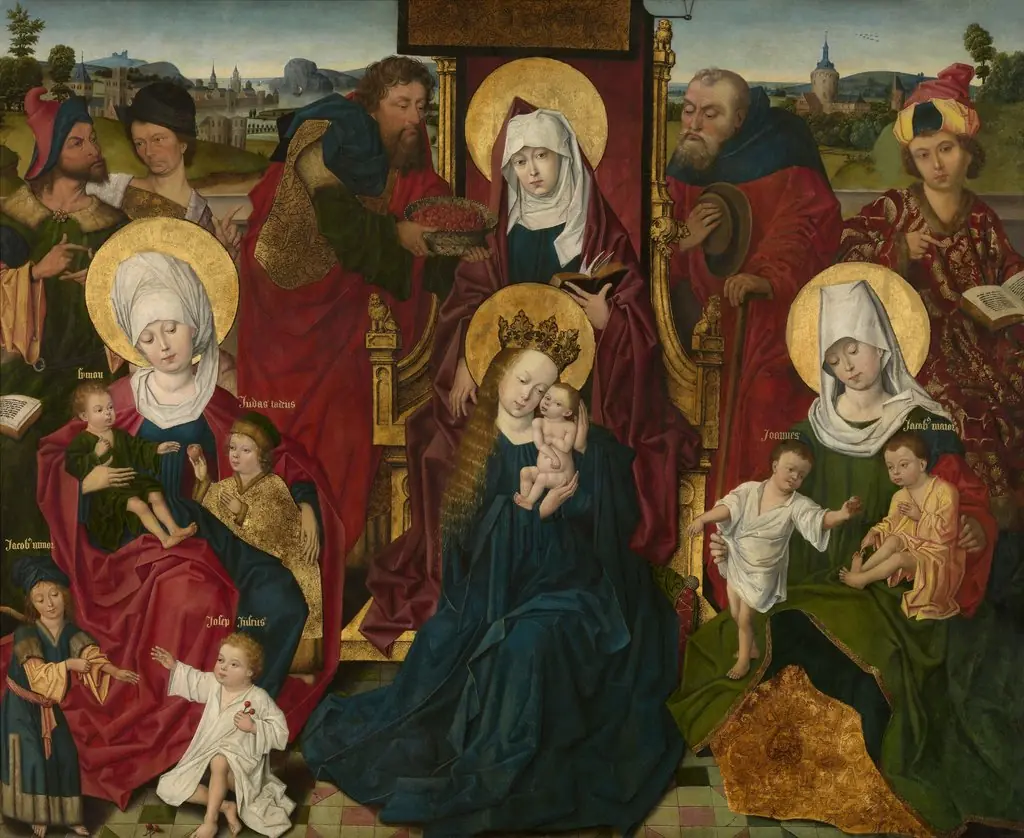
- Holy Kinship
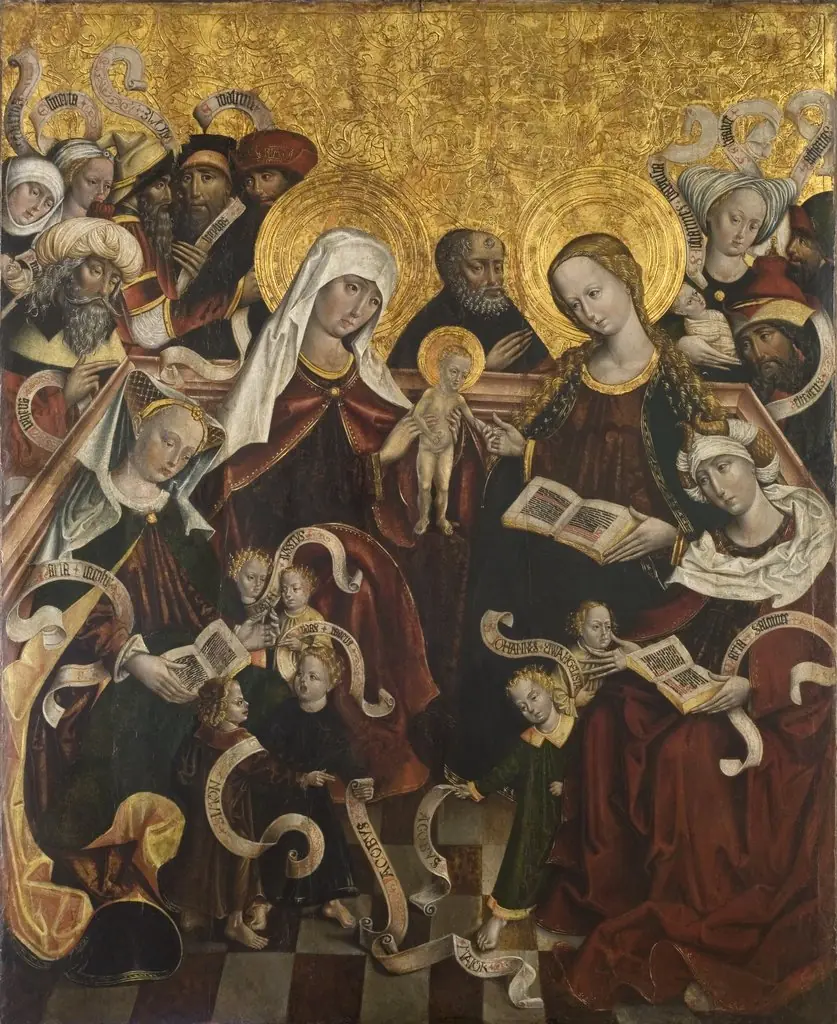 Family of the Virgin Mary, from Ołpiny
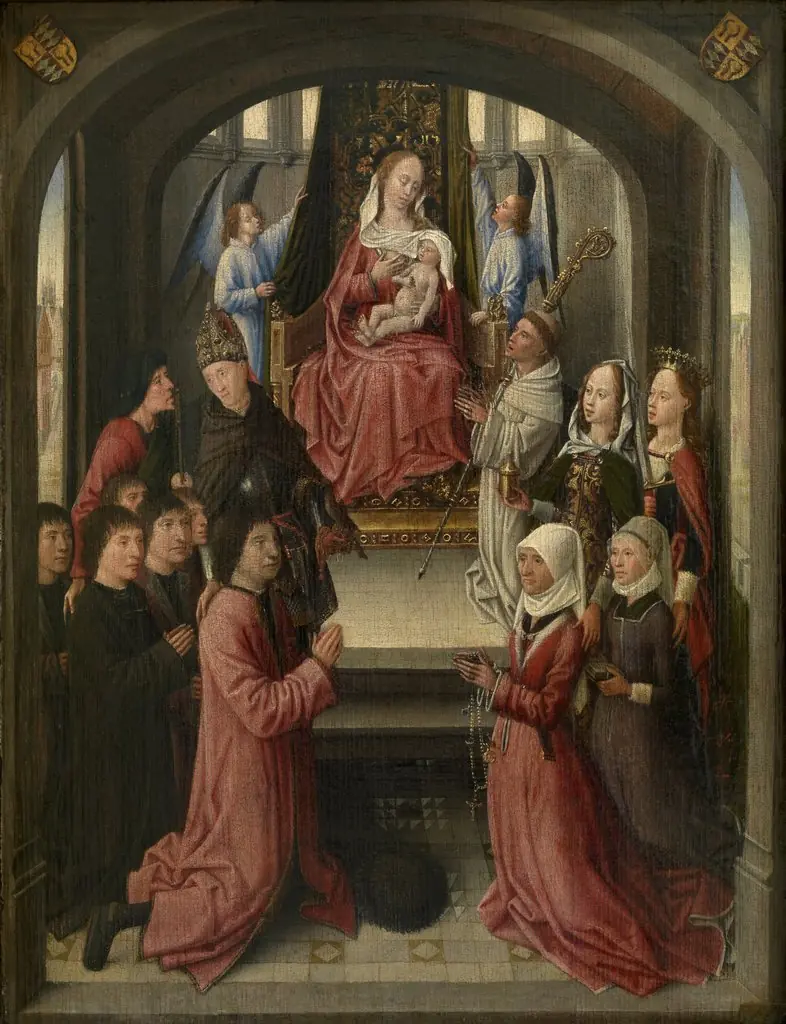 Lactatio of Saint Bernard of Clairvaux with Donors
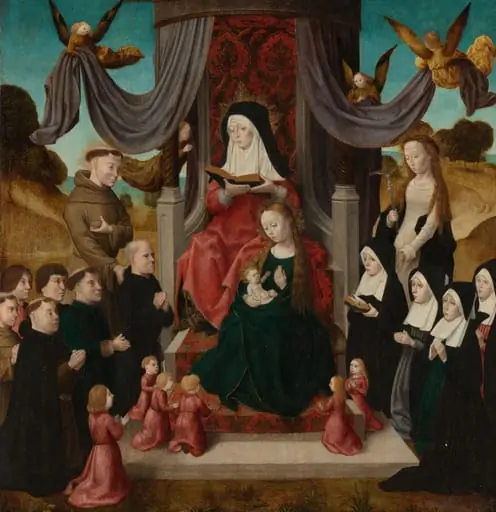 Virgin and Child with Saint Anne and Saints Francis and Lidwina, with Donors (Anna Selbdritt)
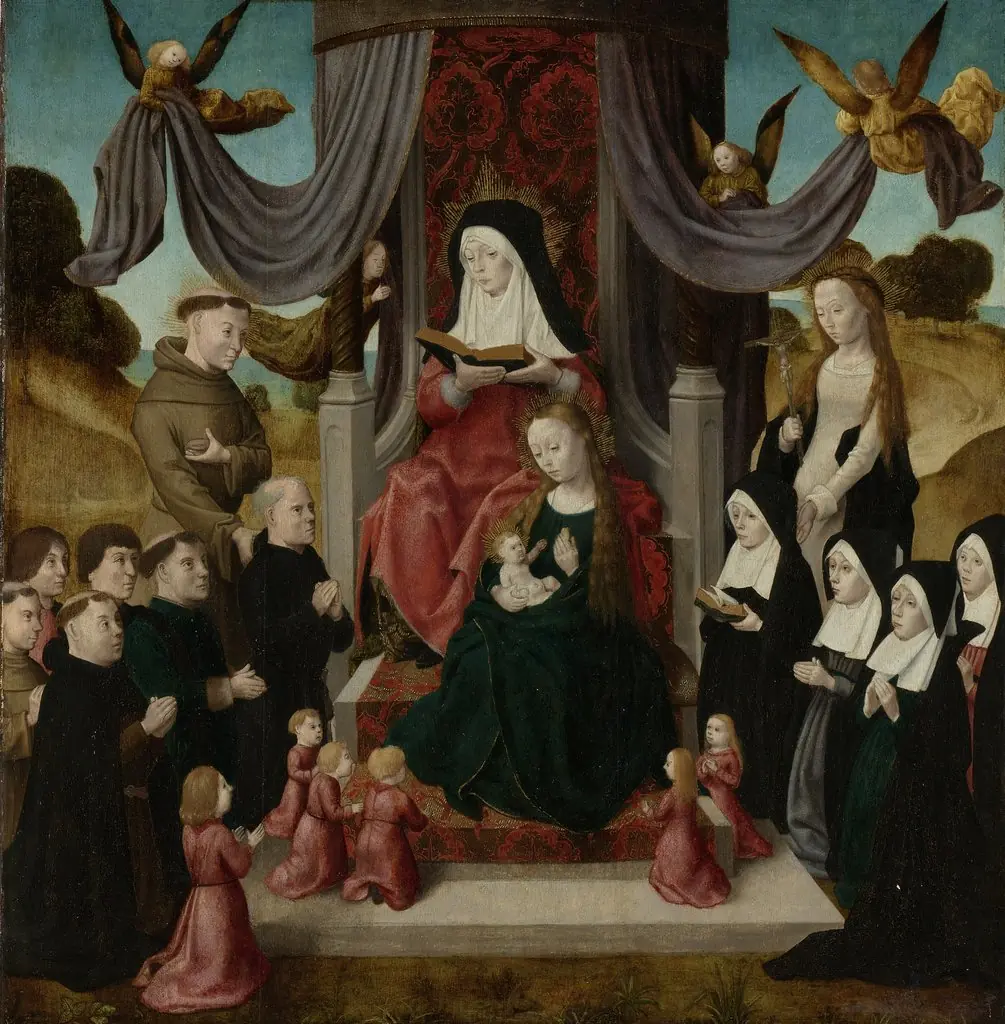 The Virgin and Child with St Anne, donors and Sts Francis and Lidwina
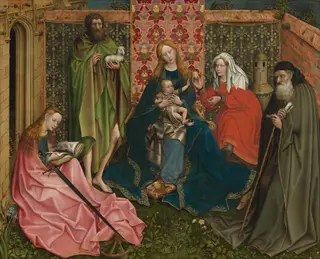 Madonna and Child with Saints in the Enclosed Garden
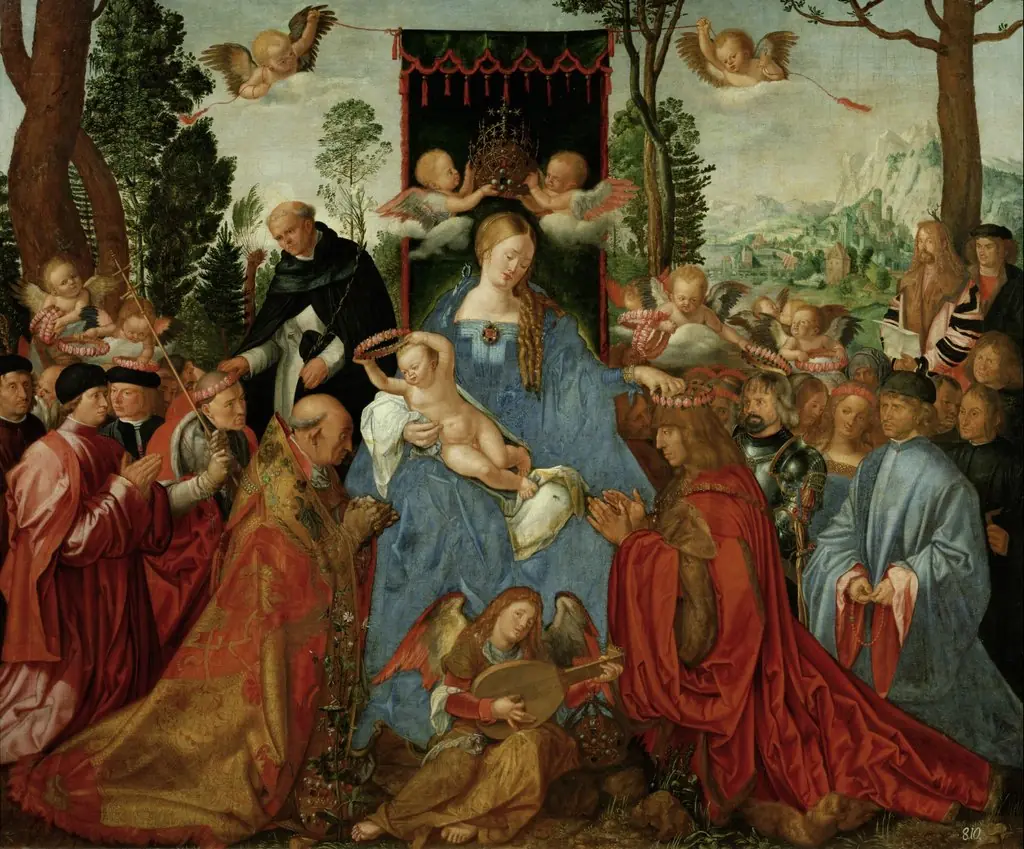 Rosenkranzfest
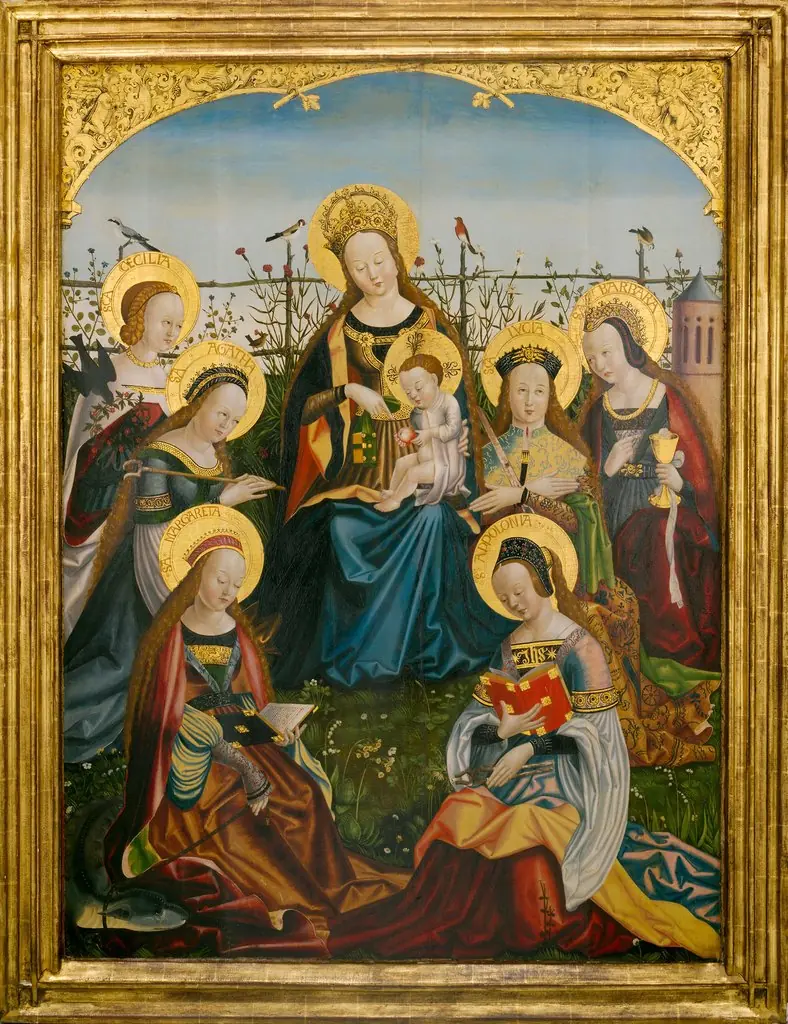 Triptych of the Virgin and Child with Saints
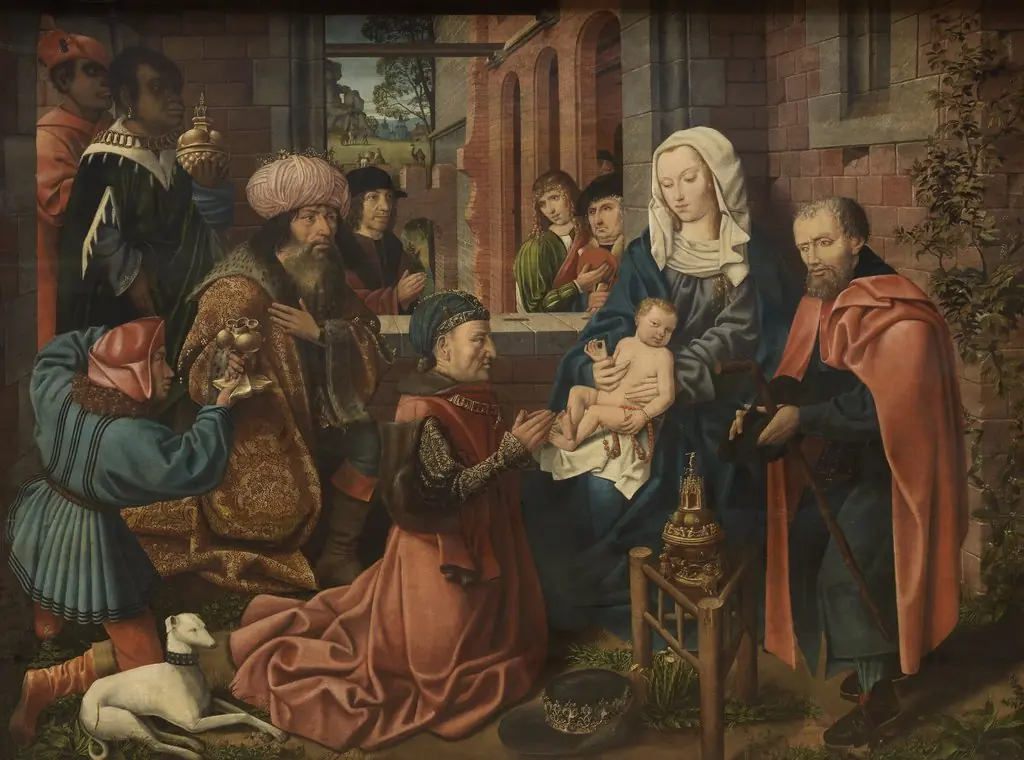 The Adoration of the Magi
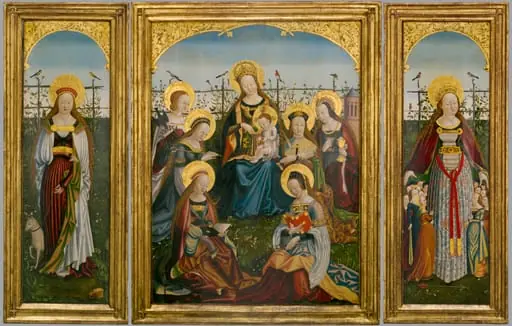 Triptych of the Virgin and Child with Saints
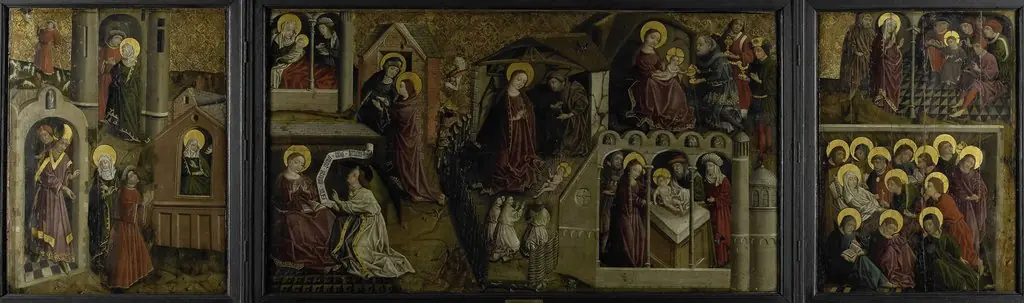 Triptych with Scenes from the Life of the Virgin
 Virgin and Child with Saint Anne, Saint Gereon, and a Donor