Artwork
Monastic Decree
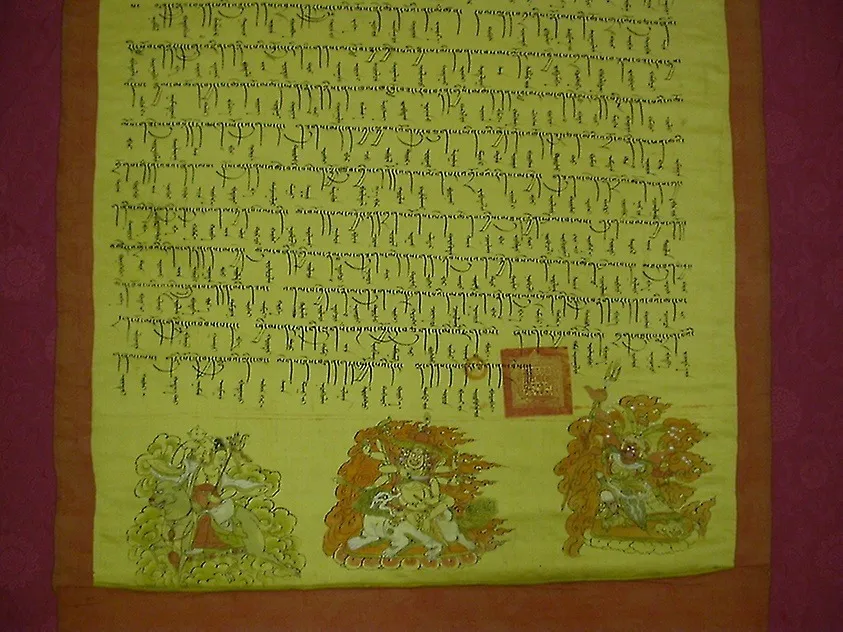
Monastic Decree is an unspecified painting by the Realist artist Unknown. It dates from 1850 and is held in the collection of the Art Institute of Chicago.
About this work
Overview
This painting features a uniform yellow field covered with densely arranged black script, forming rows of text that are difficult to decipher.
This painting features a uniform yellow field covered with densely arranged black script, forming rows of text that are difficult to decipher. Below the text, three vividly colored figures, human and animal, are depicted in red, orange, and green tones. The composition is highly detailed yet deliberately obscure, with no clear focal point.
The relationship between the script and imagery suggests a ritual or doctrinal function, though its precise purpose remains ambiguous.
Subject & Meaning
The lower images appear to depict narrative scenes involving figures and animals, possibly representing moral or spiritual parables common in monastic traditions. The unreadable text may serve as a liturgical incantation, doctrinal instruction, or invocation, intended for ritual use rather than public comprehension. The combination implies a sacred context where visual and textual elements function together as symbolic conduits, not as literal storytelling.
Technique & Style
The work employs flat, unmodulated color with minimal shading, emphasizing symbolic form over naturalism. The figures are stylized, rendered in bold, saturated hues against a neutral background. Script is applied in uniform, repetitive lines, suggesting hand-copying by a scribe.
Details are intricate but deliberately constrained, prioritizing ritual precision over aesthetic expressiveness, aligning with devotional artistic conventions of its origin.
History & Provenance
The painting likely originated in a monastic setting where texts and images were produced for internal use, possibly in a Tibetan, Southeast Asian, or Central Asian Buddhist community. Its survival suggests it was preserved within a religious institution, not displayed publicly. No documented ownership history exists, and its creation date cannot be determined from available evidence, though its style points to a pre-modern era.
Context
Within monastic traditions, such works often served as visual aids for meditation or ritual performance, where the meaning was transmitted orally by trained practitioners. The illegibility of the text may have been intentional, reinforcing the authority of the monastic order to interpret sacred content. Similar artifacts are found in temple archives, used not for instruction but for consecration and spiritual containment.
Legacy
This painting remains an enigmatic artifact, valued more for its material and ritual presence than for its legible content. It contributes to scholarly understanding of how sacred knowledge was encoded in visual form, where obscurity functioned as a marker of spiritual authority. It has not influenced later artistic movements but continues to be studied as a case of non-literate religious communication.
Artist & collection









- Untitled
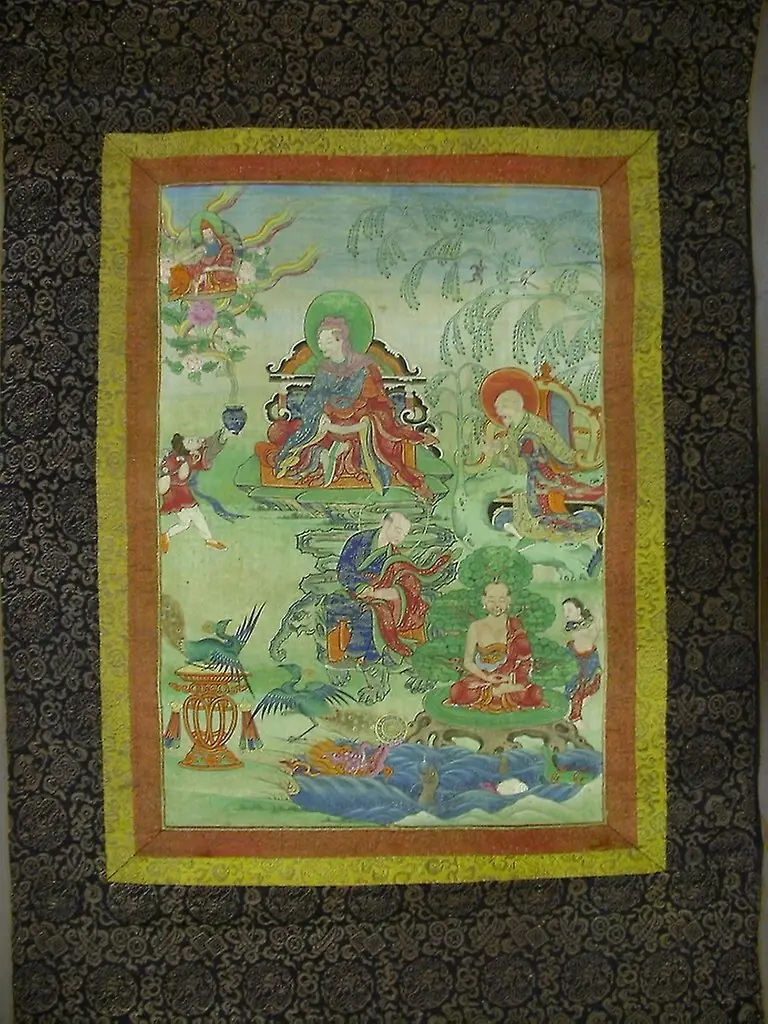 Painted Banner (Thangka) from a Set of Seven Honoring Gayadhara, a Sakya Pandit from India
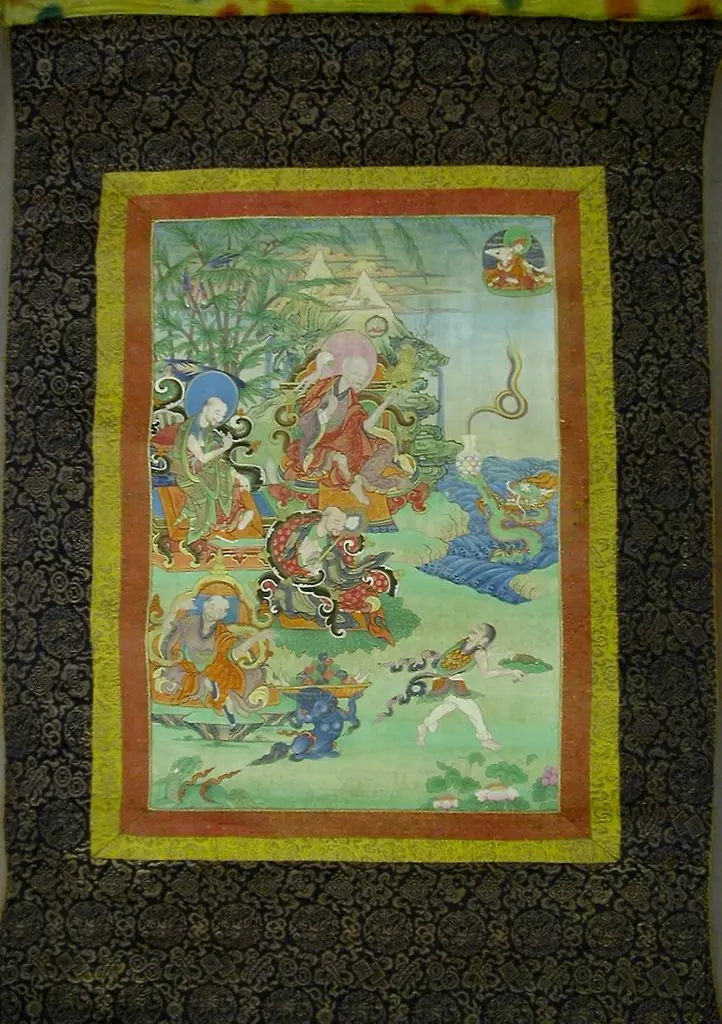 Painted Banner (Thangka) from a Set of Seven Honoring Gayadhara, a Sakya Pandit from India
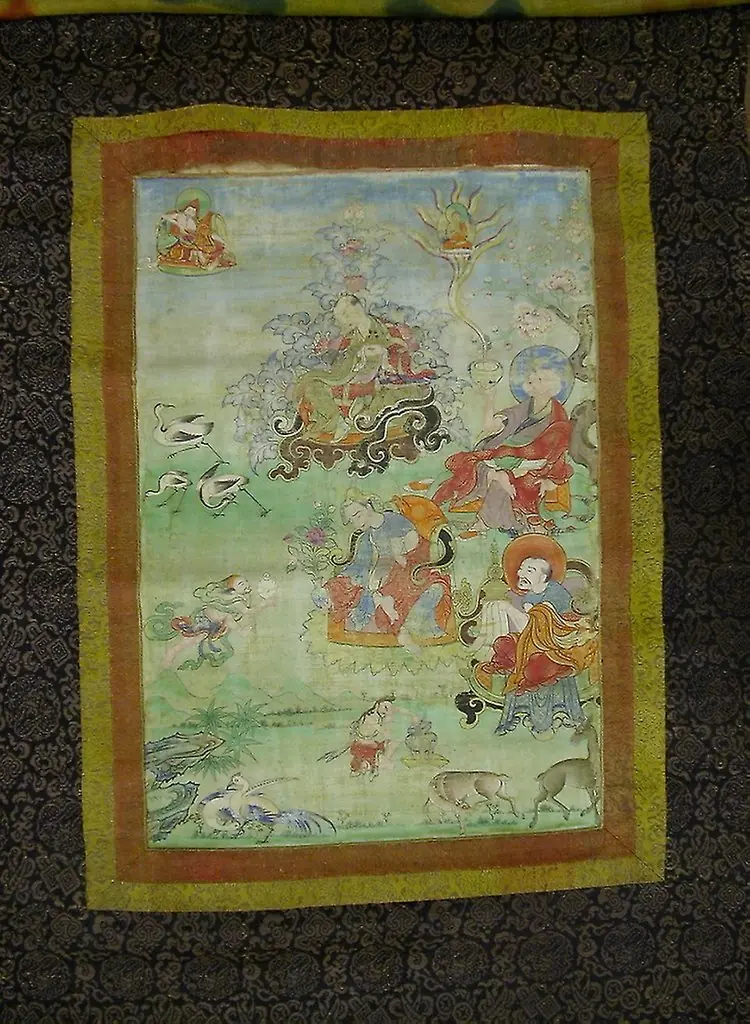 Painted Banner (Thangka) from a Set of Seven Honoring Gayadhara, a Sakya Pandit from India
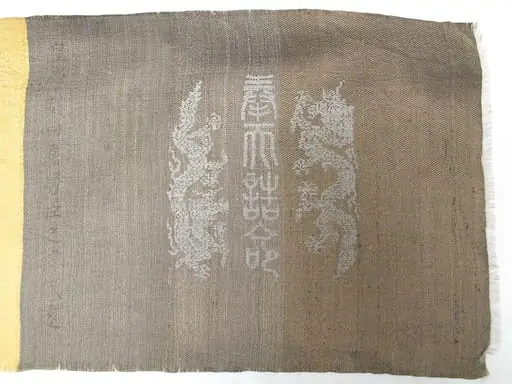
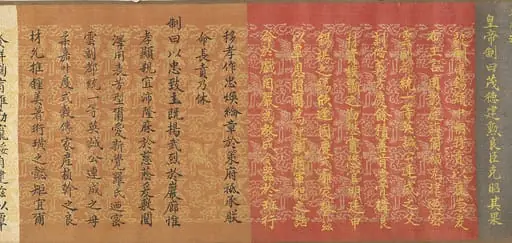 清 佚名 楷書英連成父母 誥命 卷|Scroll of Commission
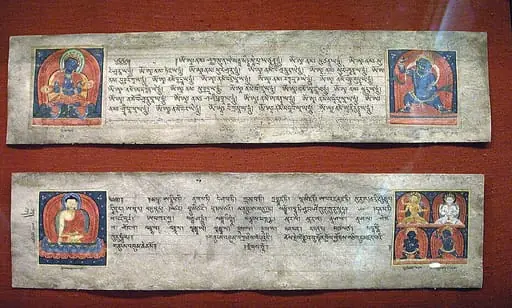 Untitled
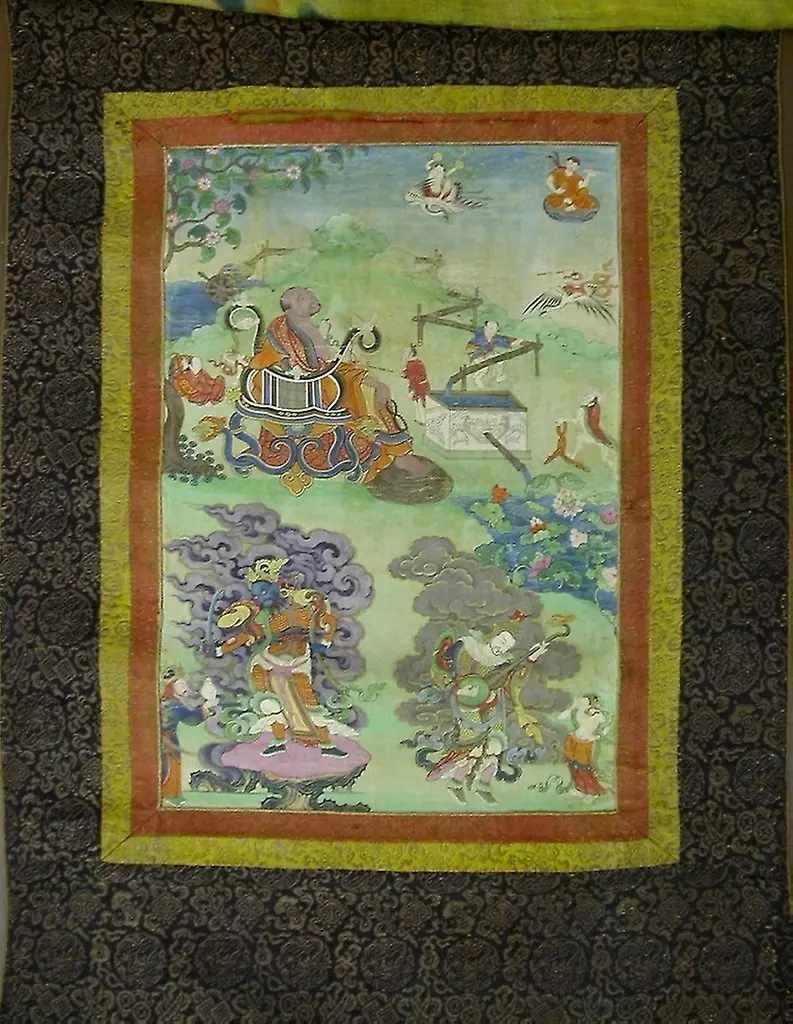 Painted Banner (Thangka) from a Set of Seven Honoring Gayadhara, a Pandit from India
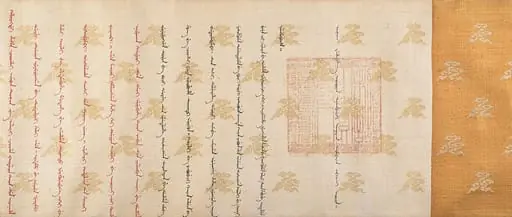 Untitled
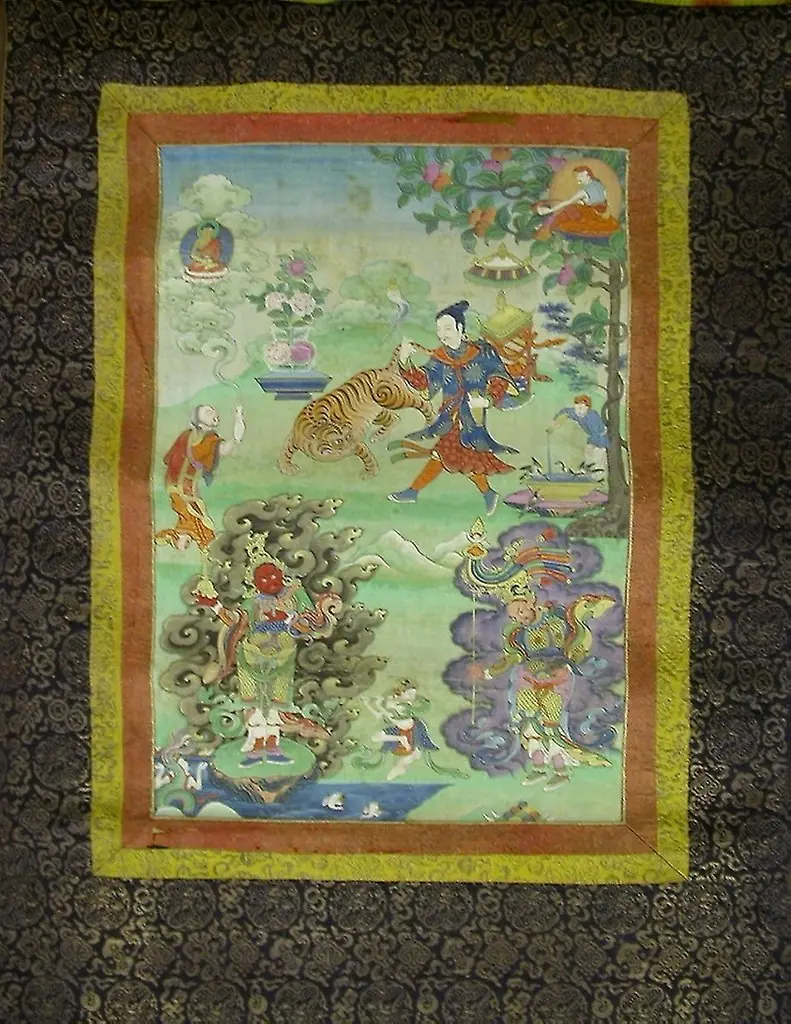 Painted Banner (Thangka) from a Set of Seven Honoring Gayadhara, a Sakya Pandit from India
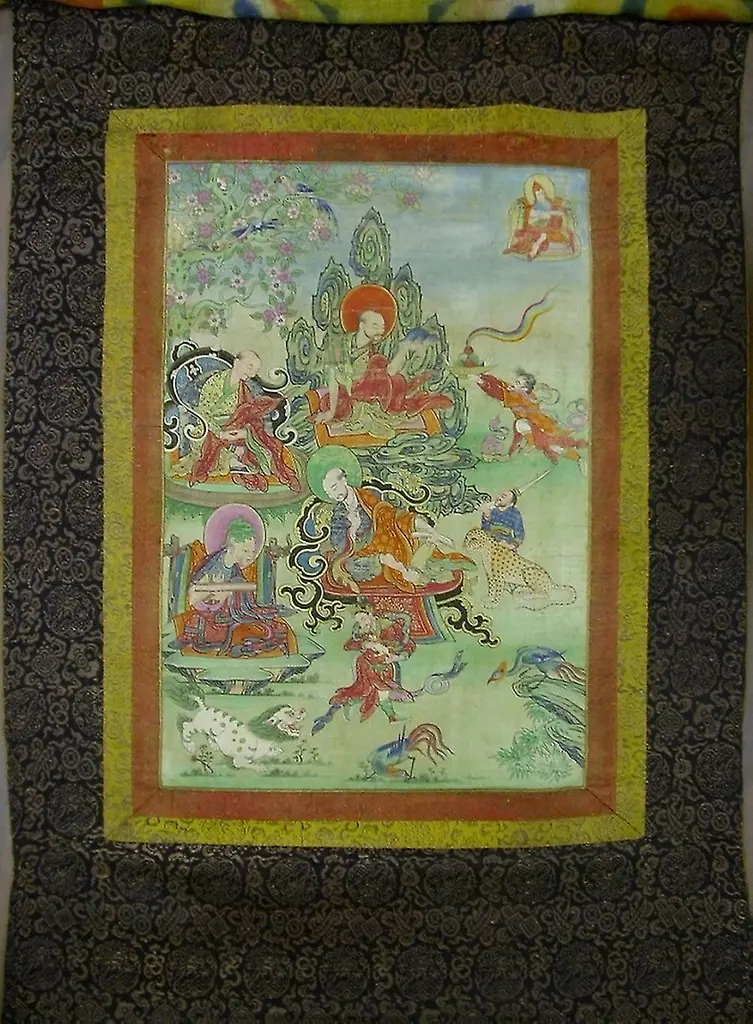 Painted Banner (Thangka) from a Set of Seven Honoring Gayadhara, a Sakya Pandit from India
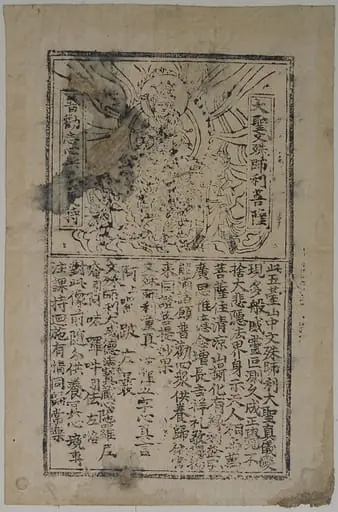 大聖文殊師利菩薩圖 冊頁|Bodhisattva Manjushri (Wenshu)
 Text, Folio 63 (recto), from a Manuscript of the Perfection of Wisdom in Eight Thousand Lines (Ashtasahasrika Prajnaparamita-sutra)