Artwork
Painted Banner (Thangka) from a Set of Seven Honoring Gayadhara, a Pandit from India
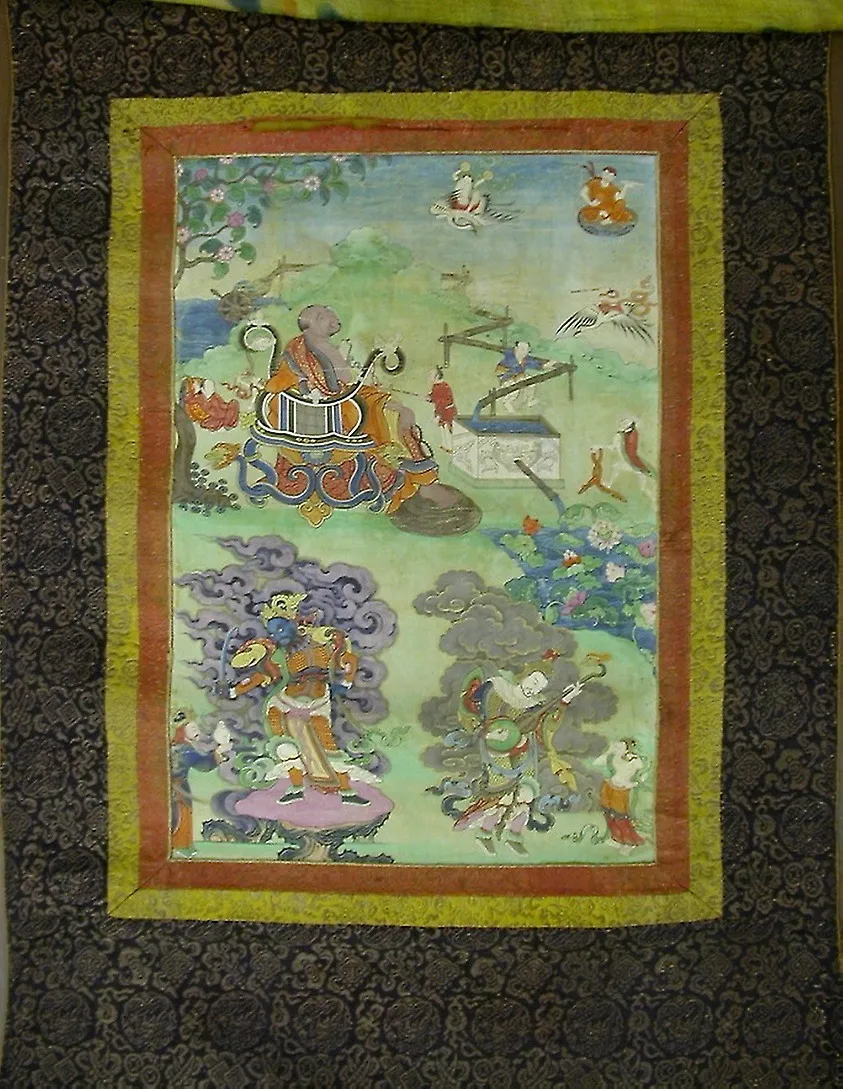
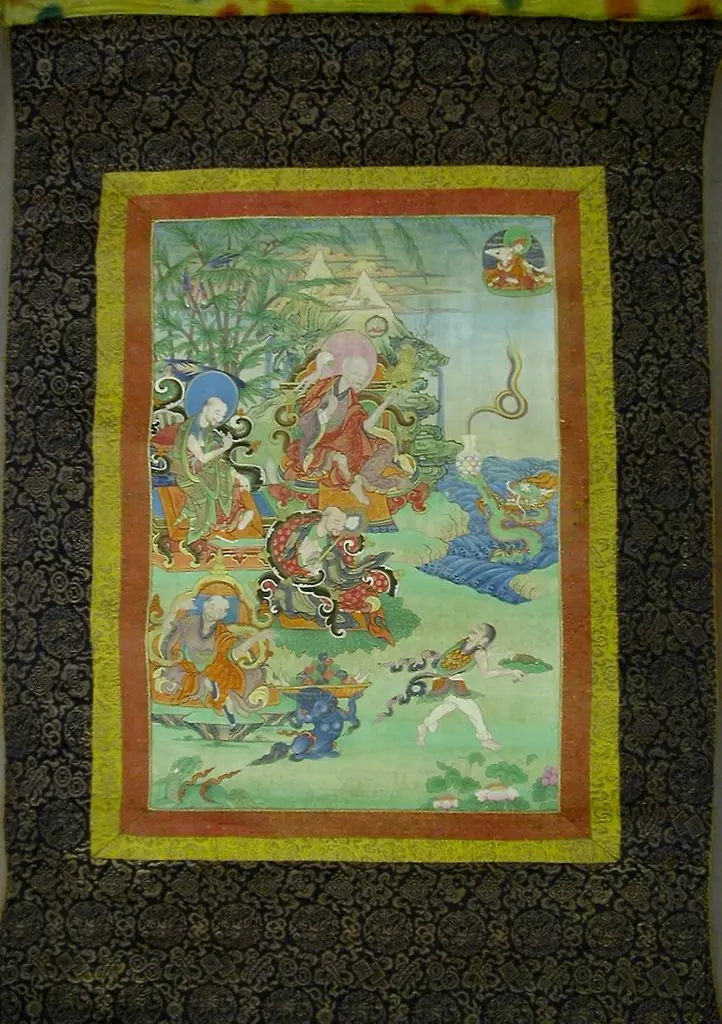
Painted Banner (Thangka) from a Set of Seven Honoring Gayadhara, a Pandit from India is an unspecified painting by the Yōga artist Unknown. It dates from 1850 and is held in the collection of the Art Institute of Chicago. This painted banner, part of a seven-piece set, honors Gayadhara, an 11th-century Indian Buddhist scholar and teacher.
About this work
Overview
Executed in vibrant mineral pigments on cotton, it depicts a celestial assembly centered on Gayadhara seated in meditation.
This painted banner, part of a seven-piece set, honors Gayadhara, an 11th-century Indian Buddhist scholar and teacher. Executed in vibrant mineral pigments on cotton, it depicts a celestial assembly centered on Gayadhara seated in meditation. The composition teems with figures, flora, and aerial beings, all rendered in saturated hues of red, blue, green, and gold, conveying spiritual dynamism rather than static reverence.
Subject & Meaning
Gayadhara, depicted in orange monastic robes and holding a ritual staff, is the focal point of a divine gathering. Surrounding him are disciples, celestial beings floating on clouds, and symbolic animals and plants, all representing his spiritual authority and the transmission of tantric teachings. The airborne figures suggest supernatural presence, reinforcing his role as a bridge between earthly practice and transcendent wisdom.
Technique & Style
The banner employs traditional Tibetan thangka techniques: fine brushwork, layered pigments, and gold outlining to define forms. Figures are stylized with elongated proportions and intricate detailing in garments and headdresses. The background is densely populated with symbolic elements, floral motifs, birds, and swirling clouds, creating rhythmic movement that guides the viewer’s eye through the sacred narrative.
History & Provenance
Created in Tibet during the 11th or 12th century, the banner was likely commissioned for ritual use in a monastery or lineage ceremony. It formed part of a set honoring Gayadhara’s lineage, used in teachings or initiations. Its survival suggests it was carefully preserved, possibly within a monastic collection, before entering modern institutional custody.
Context
This work emerged during a period of intense Buddhist revival in Tibet, when Indian masters like Gayadhara were revered as key transmitters of Vajrayana teachings. Thangkas like this served both devotional and pedagogical functions, visually encoding complex doctrines for monastic audiences. The inclusion of flying figures reflects tantric cosmology, where enlightened beings transcend physical limits.
Legacy
As one of seven banners in a liturgical set, this piece exemplifies the integration of Indian Buddhist iconography with Tibetan artistic conventions. It preserves a visual record of early Himalayan monastic culture and the transmission of esoteric lineages. Though the artist remains unknown, the banner’s craftsmanship reflects a highly trained atelier tradition that sustained Buddhist visual culture for centuries.
Artist & collection









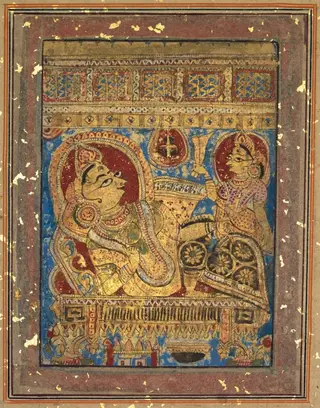 Painting from a Kalpa-sutra: Queen Trishala Reclining
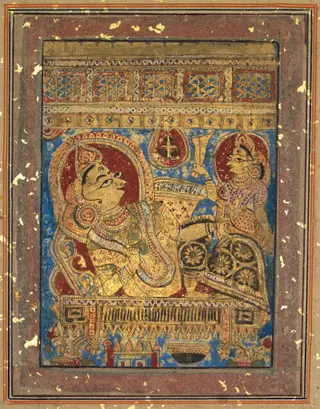 Painting from a Kalpa-sutra: Queen Trishala Reclining
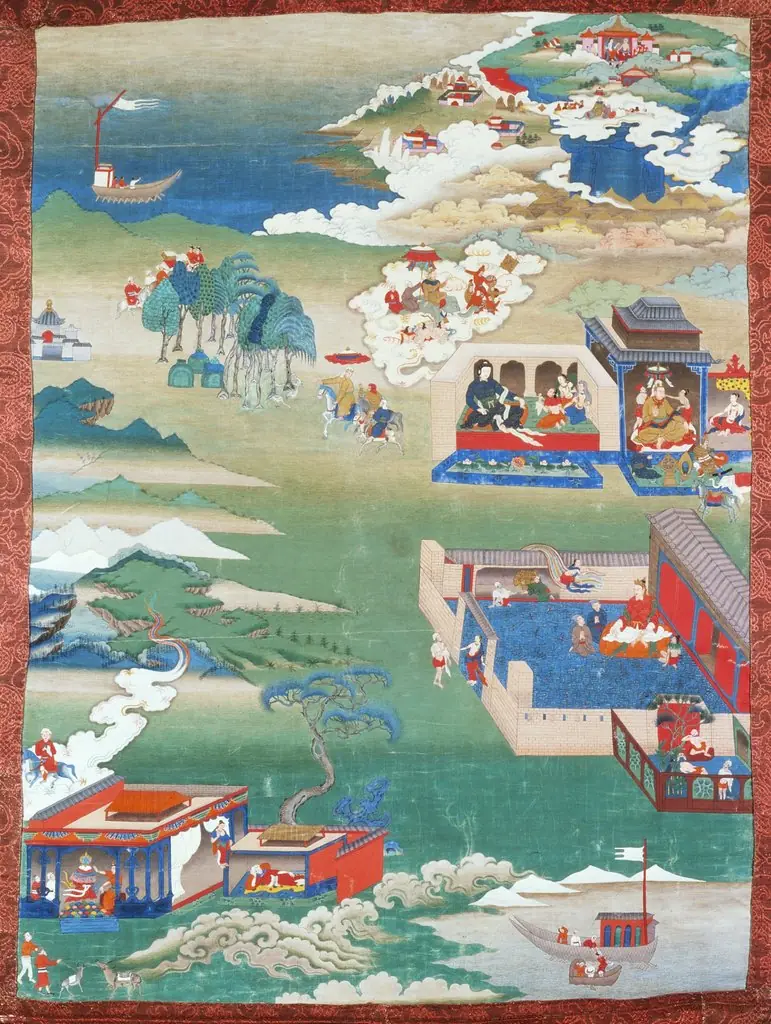 The Story of King Mandhatar; The Story of King Candraprabha; The Tale of the Island of Vadaradvipa, Painting from an Avadana Kalpalata Jataka Series
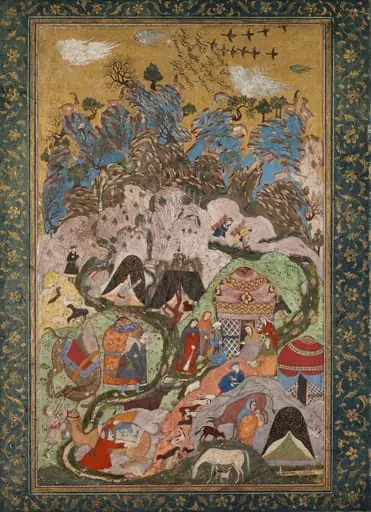 Encampment in the Mountains
![The Guardian Generals of the Directions (Lokapalas) Dhritarashtra (East) [top] and Virudhaka (South) [bottom], by Unknown](https://artifactworldgallery.com/img/unknown--the-guardian-generals-of-the-directions-lokapalas-dhritarash--26a8da85b3fb4c5a-w320.webp) The Guardian Generals of the Directions (Lokapalas) Dhritarashtra (East) [top] and Virudhaka (South) [bottom]
The Guardian Generals of the Directions (Lokapalas) Dhritarashtra (East) [top] and Virudhaka (South) [bottom]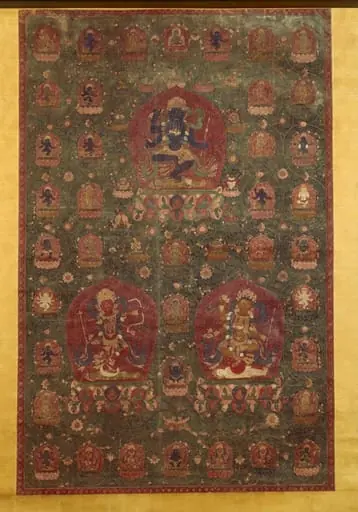 Mandala