Artwork
八字文殊菩薩像|Monju Bosatsu with Eight Sacred Sanskrit Syllables
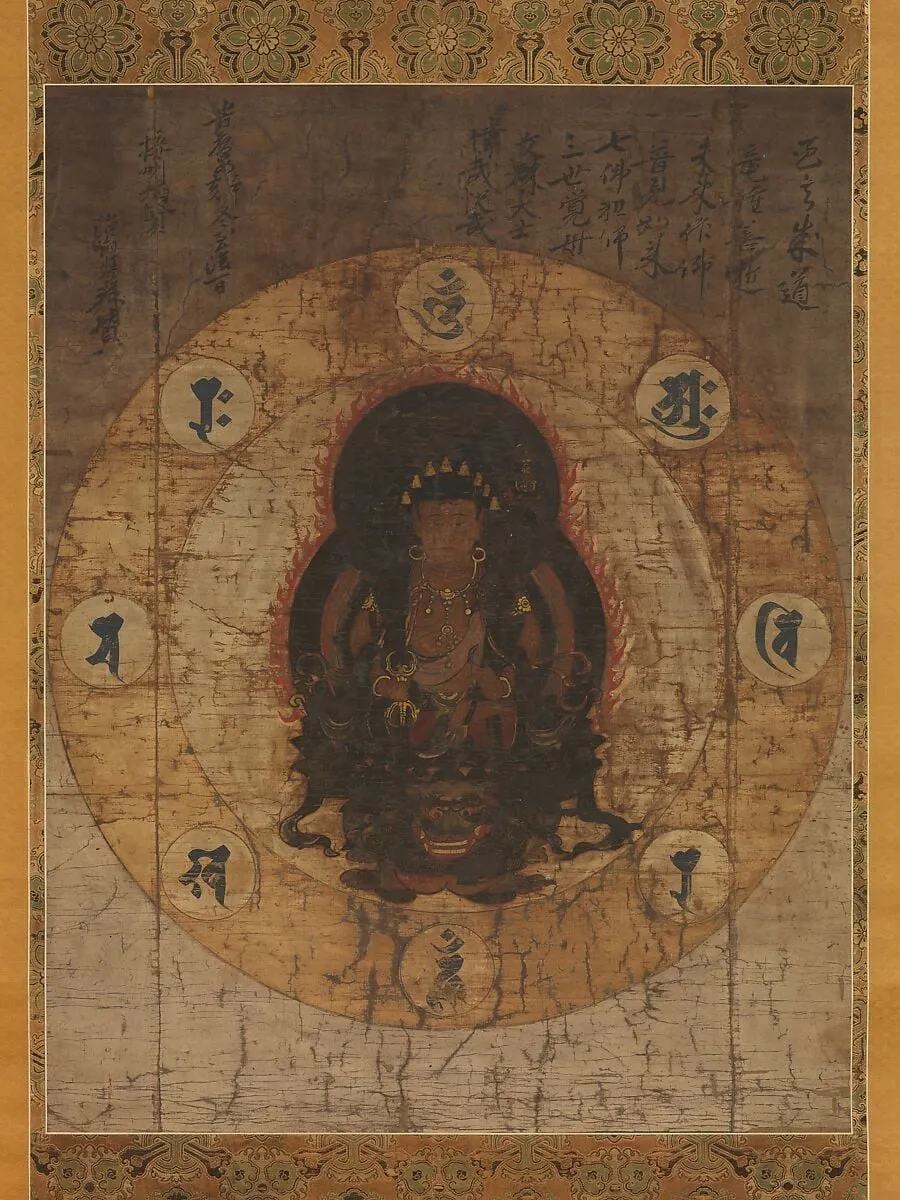
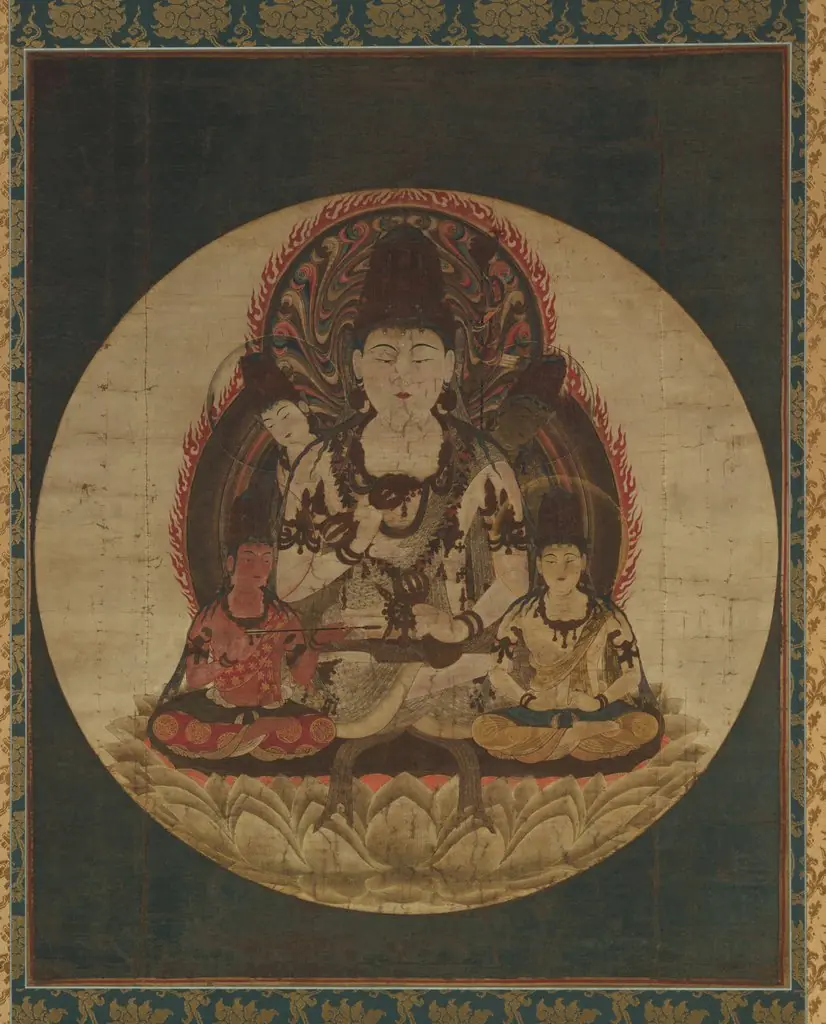
八字文殊菩薩像|Monju Bosatsu with Eight Sacred Sanskrit Syllables is an ink painting. It dates from 1363 and is held in the collection of the Metropolitan Museum of Art. This Japanese painting depicts Monju Bosatsu, a revered figure in Buddhist tradition.
- Accession no.
- 12.134.15
- Credit line
- Rogers Fund, 1912
About this work
Subject & Meaning
Created in 1363, this Japanese hanging scroll depicts Monju Bosatsu (the Bodhisattva of Wisdom), a central figure in Buddhism.
Created in 1363, this Japanese hanging scroll depicts Monju Bosatsu (the Bodhisattva of Wisdom), a central figure in Buddhism. The composition features the deity accompanied by a lion, an animal traditionally serving as the bodhisattva's mount and a symbol of the power of Buddhist teachings to roar over false doctrines. As a religious work rendered in ink and color on silk, the image functions as an object of veneration, visually manifesting the spiritual presence of the bodhisattva.
The specific title references eight sacred Sanskrit syllables, indicating that the painting's iconography is likely structured around esoteric mantras associated with Monju, intended to invoke wisdom and protection for the practitioner.
Technique & Style
This devotional image is executed as a hanging scroll in ink and color on silk, a format and medium combination typical of Japanese Buddhist painting of the period. The work measures 103.8 cm in height by 63.8 cm in width, presenting the bodhisattva Manjushri accompanied by a lion mount. The use of silk as a support allowed for fine linear definition and the layering of pigment washes, while the hanging-scroll mounting would have permitted the painting to be unrolled for ritual viewing and stored rolled when not in use.
No information about the specific pigments, brush technique, current condition, or stylistic school is provided in the available sources.
History & Provenance
The hanging scroll known as Monju Bosatsu with Eight Sacred Sanskrit Syllables was created in Japan in the year 1363. The work is attributed to an anonymous painter, with no specific commissioning patron or artist name recorded in the available historical data. Executed in ink and color on silk, the piece depicts the Bodhisattva Manjushri accompanied by a lion and sacred Sanskrit syllables.
The artwork is currently held in the collection of the Metropolitan Museum of Art, where it is classified as a religious painting. While the precise circumstances of its original commission remain undocumented, the work's inception is firmly dated to 1363, situating it within the historical context of Japanese religious art from the fourteenth century.
The hanging scroll titled 八字文殊菩萨像|Monju Bosatsu with Eight Sacred Sanskrit Syllables, dated 1363, is housed in the collection of the Metropolitan Museum of Art in New York. The museum’s catalogue identifies the work as part of its Asian painting holdings, noting its dimensions of 103.8 cm by 63.8 cm and its origin in Japan. An explicit inventory or accession number is not specified in the available documentation. The sources do not mention any recorded exhibition or loan history for the piece.
Overview
This Japanese painting depicts Monju Bosatsu, a revered figure in Buddhist tradition. Rendered as a hanging scroll using ink and color on silk, the artwork presents a serene, golden-hued deity. Monju is shown seated upon a lion, encircled by eight distinct Sanskrit syllables.
The composition emphasizes both the spiritual wisdom of the bodhisattva and the symbolic elements that convey deeper religious significance.
Context
This artwork functions as a sacred image within Japanese Buddhist practice. Its creation reflects the tradition of depicting bodhisattvas, enlightened beings who postpone their own nirvana to help others achieve enlightenment. Such paintings served as focal points for meditation and devotion, allowing practitioners to connect with the wisdom and compassion embodied by figures like Monju Bosatsu.
Artist & collection

- 八字文殊曼荼羅図|Mandala of the Bodhisattva Monju (Manjushri) of the Eight Syllables
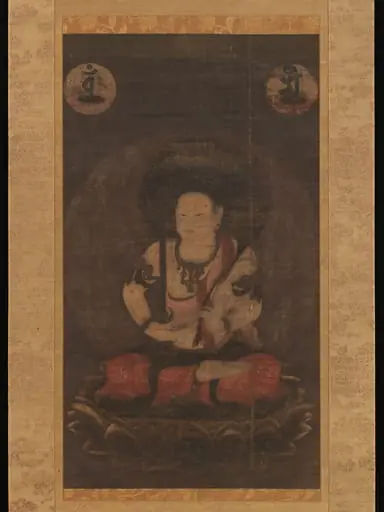 五髻文殊菩薩像|The Bodhisattva Monju (Manjushri) with Five Topknots
 唐(?) 佚名 佛畫八幅 散頁|Eight Buddhist Paintings
 伝託磨為遠筆 月光菩薩像 「金胎仏画帖」断簡|Gakkō Bosatsu, from “Album of Buddhist Deities from the Diamond World and Womb World Mandalas” (“Kontai butsugajō”)
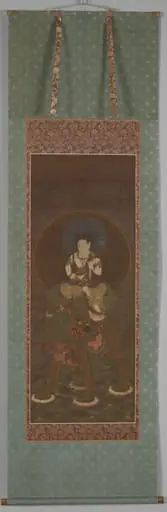 Monju with Five Hair Knots
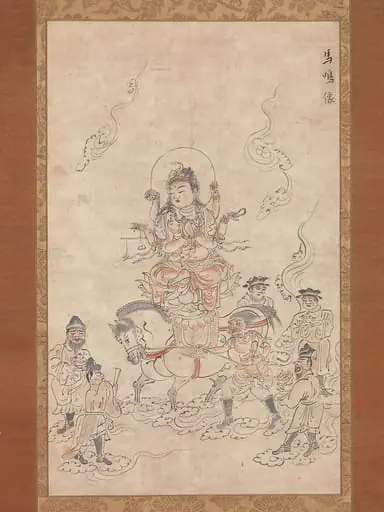 馬鳴菩薩図像|Iconographic Drawing of the Bodhisattva Memyō (Ashvaghosha)