Artwork
Nukhi Talao Mt Aboo
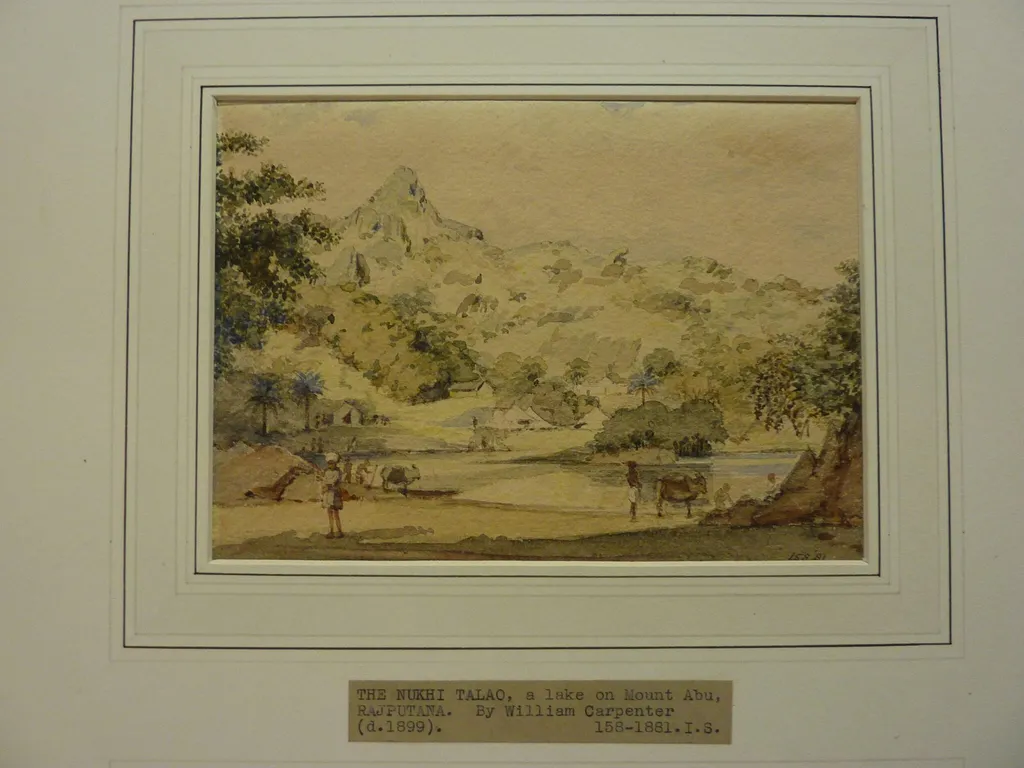
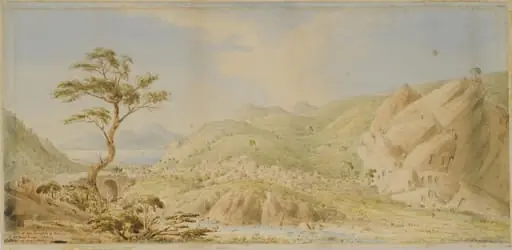
Nukhi Talao Mt Aboo is a paint painting by Unknown. It dates from 1850 and is held in the collection of the Victoria and Albert Museum. This painting captures Nukhi Talao, a natural lake on Mount Abu in Rajasthan, rendered in a quiet, observational style.
About this work
Overview
It portrays the lake’s still waters surrounded by vegetation and distant hills, with human figures and livestock gathered near its edge.
This painting captures Nukhi Talao, a natural lake on Mount Abu in Rajasthan, rendered in a quiet, observational style. It portrays the lake’s still waters surrounded by vegetation and distant hills, with human figures and livestock gathered near its edge. The work was acquired by the museum in 1881 from William Carpenter, who had collected it during his time in India. Its inclusion in the collection reflects a late 19th-century interest in documenting regional landscapes and daily life.
Subject & Meaning
The scene presents a tranquil moment of rural life, with people and animals interacting naturally with the landscape. No dramatic narrative is implied; instead, the focus lies in the quiet coexistence of humans, cattle, and shelter tents by the water. This suggests an emphasis on place and routine rather than event or symbolism, aligning with observational traditions in Indian topographical art of the period.
Technique & Style
The artist employs loose, visible brushwork to suggest texture in foliage, water, and terrain, avoiding idealized precision. A muted palette of greens, browns, and soft blues grounds the scene in naturalism. Light is rendered subtly, without strong chiaroscuro contrasts, favoring even illumination that enhances the calm atmosphere.
The composition is balanced, with the lake as a central reflective element drawing the eye across the landscape.
History & Provenance
The painting entered the museum’s collection in 1881 after being purchased from William Carpenter, a British artist and collector active in India. The acquisition was documented under inventory numbers IS.54-1881 through IS.193-1881, indicating it may have been part of a group of works acquired together. Carpenter’s role as a collector and his familiarity with Indian subjects lend context to the painting’s origin and its journey into institutional care.
Context
Created during British colonial rule, the painting reflects a growing European interest in recording Indian landscapes and vernacular life. While not part of a formal school, its style aligns with amateur and travel-oriented watercolor traditions that emerged among colonial residents. Such works served both documentary and aesthetic purposes, offering glimpses of places unfamiliar to audiences in Britain.
Legacy
The painting remains a quiet record of a specific place and time, valued for its unembellished depiction of Mount Abu’s environment. It contributes to the museum’s holdings of 19th-century Indian topographical art, offering insight into how non-elite landscapes were visually preserved. Its modest scale and untheatrical approach distinguish it from more ornate or romanticized contemporaries.
Artist & collection









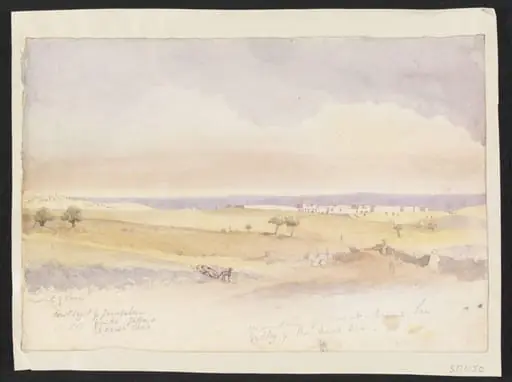
- First sight of Jerusalem from the Jaffa & El Arish road
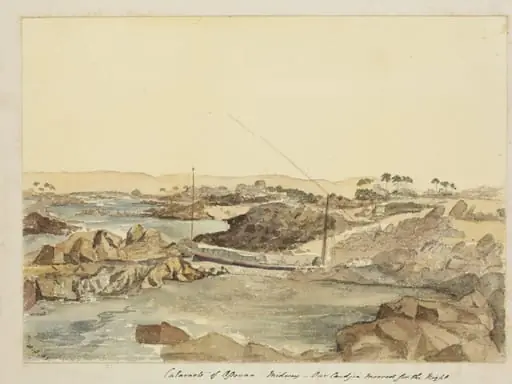 `Cataracts of Assouan. Midway. - Our Candjia Moored for the Night - On the Nile'
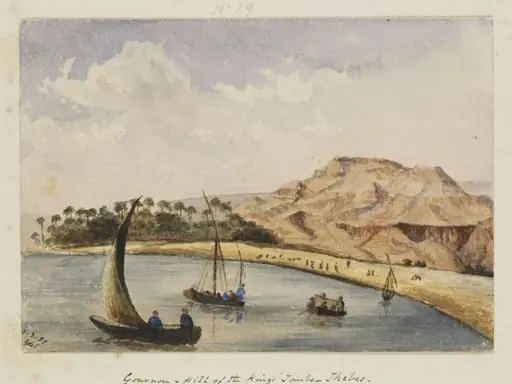 `Gournou & Hill of the Kings' Tombs - Thebes'
 Landscape near Algiers
 The Valley of Ajalon
 Sutherland Album
 The Stepping-stones near Bettws-y-Coed, North Wales
 A Sepibo Village
 An Engine for raising Water from the Nile
 Asnæs Skov, Bay at Kalundborg Fjord
 View of the Bosphorus with warships
 Αρχαία ερείπια κοντά στο Δαφνί