Artwork
One of fifty Burmese drawings.
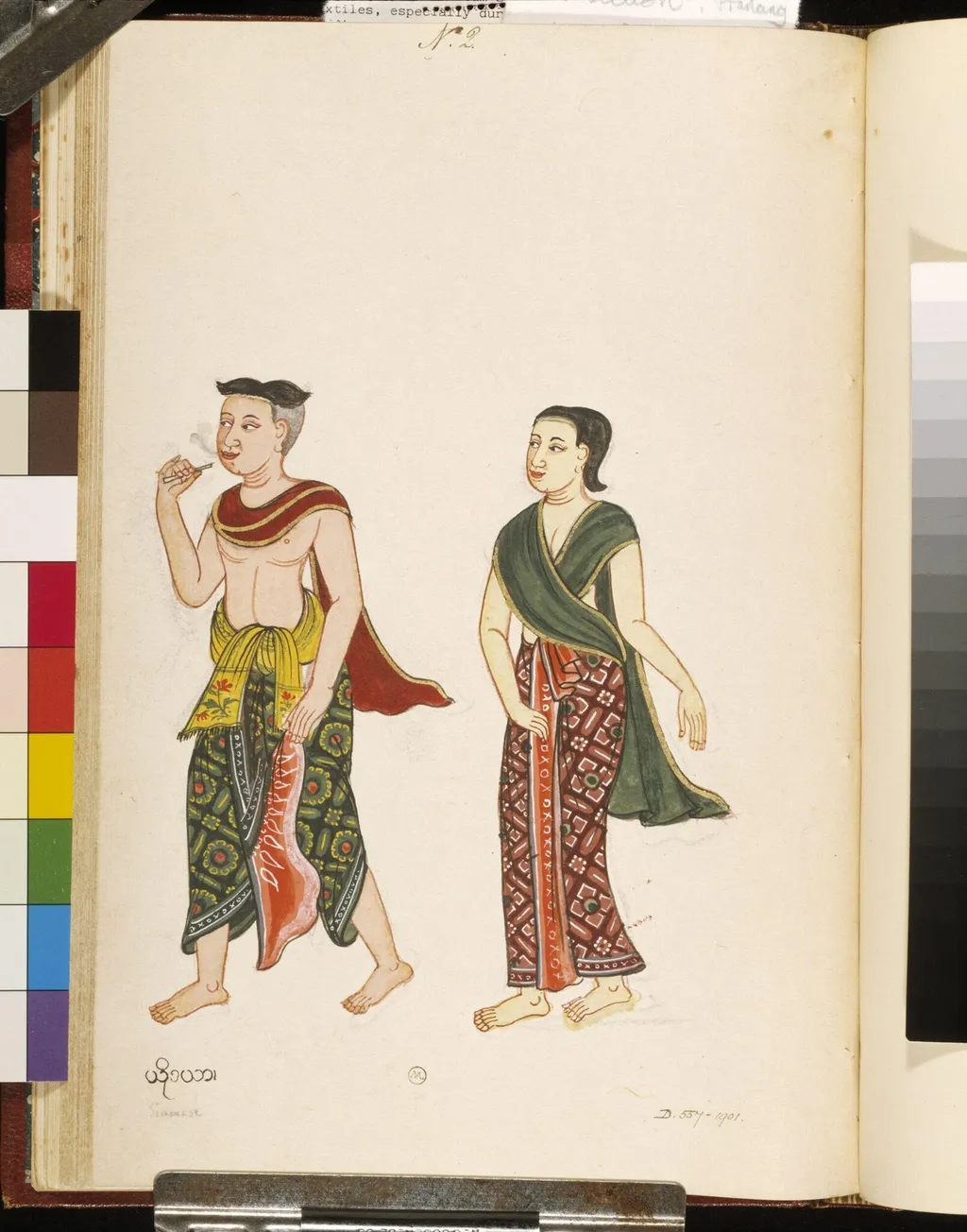
One of fifty Burmese drawings. is a paint painting by the Impressionist artist Unknown. It dates from 1887 and is held in the collection of the Victoria and Albert Museum. This drawing is one of fifty watercolor illustrations compiled into a leather-bound album around 1887 in Burma.
About this work
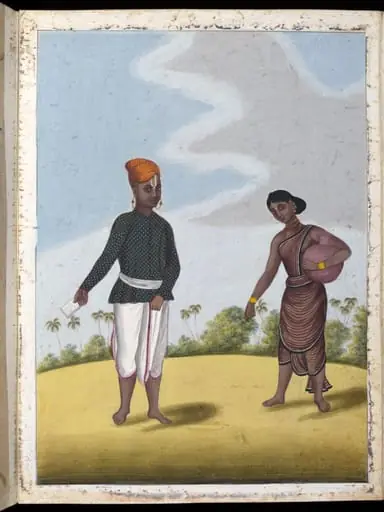
This small drawing shows a Thai man and woman dressed in traditional clothes. The outfit has long sleeves, a sash, and a tall headdress with gold trim.
It’s part of a set of 50 pictures made for British collectors in Burma around 1887. The artist used bright colors and fine lines to capture details like jewelry and fabric patterns.
Look for more of these at the Victoria and Albert Museum.
Overview
This drawing is one of fifty watercolor illustrations compiled into a leather-bound album around 1887 in Burma.
This drawing is one of fifty watercolor illustrations compiled into a leather-bound album around 1887 in Burma. Created for British collectors, the set documents regional figures through precise, colorful depictions. Unlike the established Company Painting schools in India, such commissions were rare elsewhere in Southeast Asia, making this album an unusual example of localized artistic response to colonial demand.
Subject & Meaning
The image portrays a Thai man and woman in traditional attire, distinguished by long-sleeved garments, sashes, and tall, gold-trimmed headdresses. These figures were likely selected to represent cultural difference to British viewers, serving as ethnographic records rather than portraits of specific individuals. The inclusion of such figures in an album indexed by category, elephants, horses, people, suggests a taxonomic impulse common among colonial collectors.
Technique & Style
The artist employed fine brushwork and vivid pigments to render intricate details of clothing, jewelry, and textile patterns. While the composition lacks Western perspective, the clarity of line and emphasis on surface decoration reflect an adaptation of European visual conventions. The small scale and controlled detail indicate a deliberate, meticulous approach suited to private, portable albums rather than public display.
History & Provenance
The album was assembled in Burma circa 1887, likely under the commission of a British officer or official. It includes a four-page English-language index, organized by subject, indicating the collector’s intent to classify and preserve cultural observations. The binding and presentation suggest it was intended as a curated keepsake, not a commercial product, distinguishing it from mass-produced Company paintings in India.
Context
While Company Painting flourished in India under East India Company patronage, similar traditions did not take root in Burma or other parts of Southeast Asia. This album stands as an exception, reflecting localized artistic practice responding to a specific colonial interest in documenting regional dress and customs. Its existence hints at informal networks of patronage beyond formal colonial institutions.
Legacy
The album remains a rare surviving example of Burmese artistic engagement with colonial collectors. Its preservation in institutions like the Victoria and Albert Museum underscores its value as a material record of cross-cultural interaction. The drawings offer insight into how local artists navigated foreign expectations while maintaining distinct visual conventions.
Artist & collection









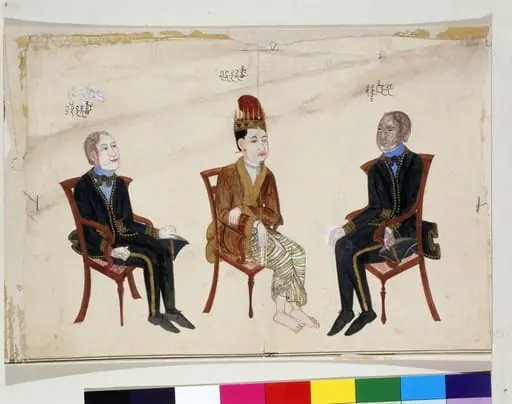 One of three drawings recording the mission of friendship led by Sir Arthur Phayre and his meeting with the envoy of King Mindon of Burma in Calcutta, 1854.
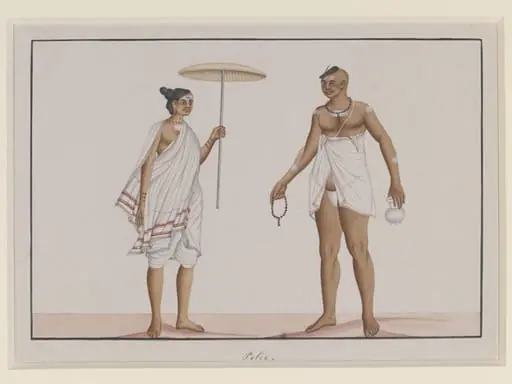 A Brahmin and his wife
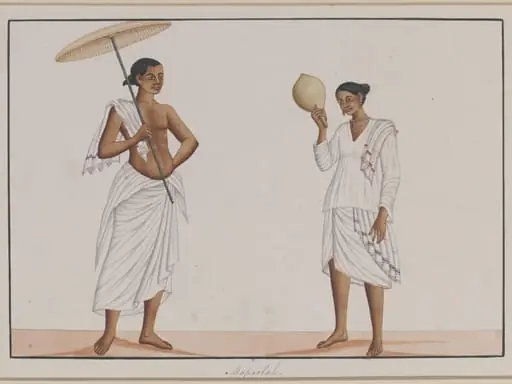 Malayali Muslims of the Mopla caste
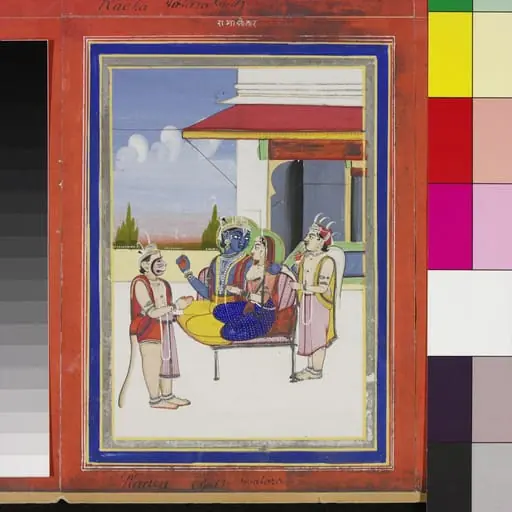 Vishnu as Rama avatar
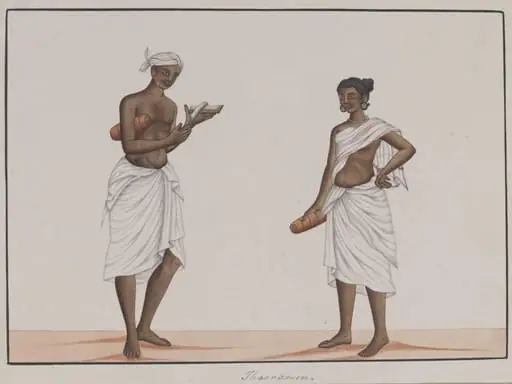 A man and woman carrying rolled mats
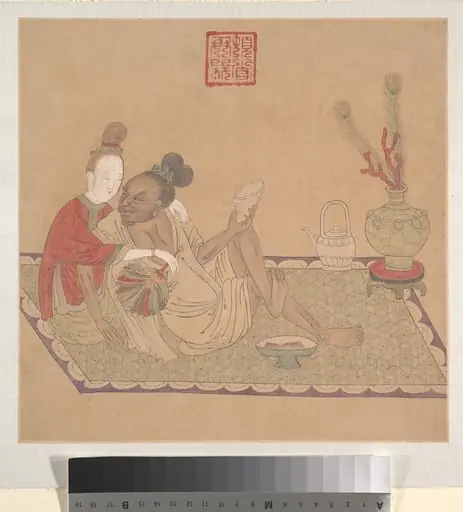 Untitled
 A Brahmin messenger and his wife
 A fisherman and his wife
 7 seated men making bidis (cigarettes)