Artwork
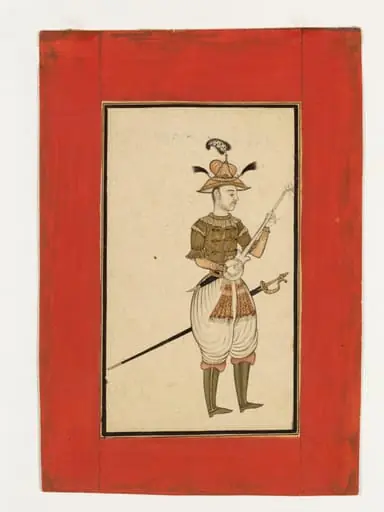
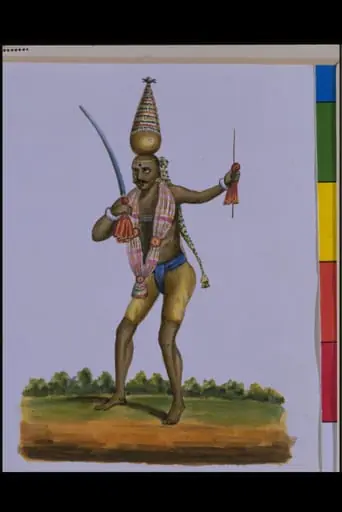
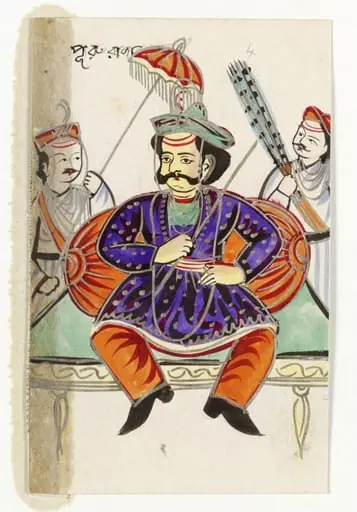
One of sixty-three drawings from an Album depicting Sinhalese occupations and castes.
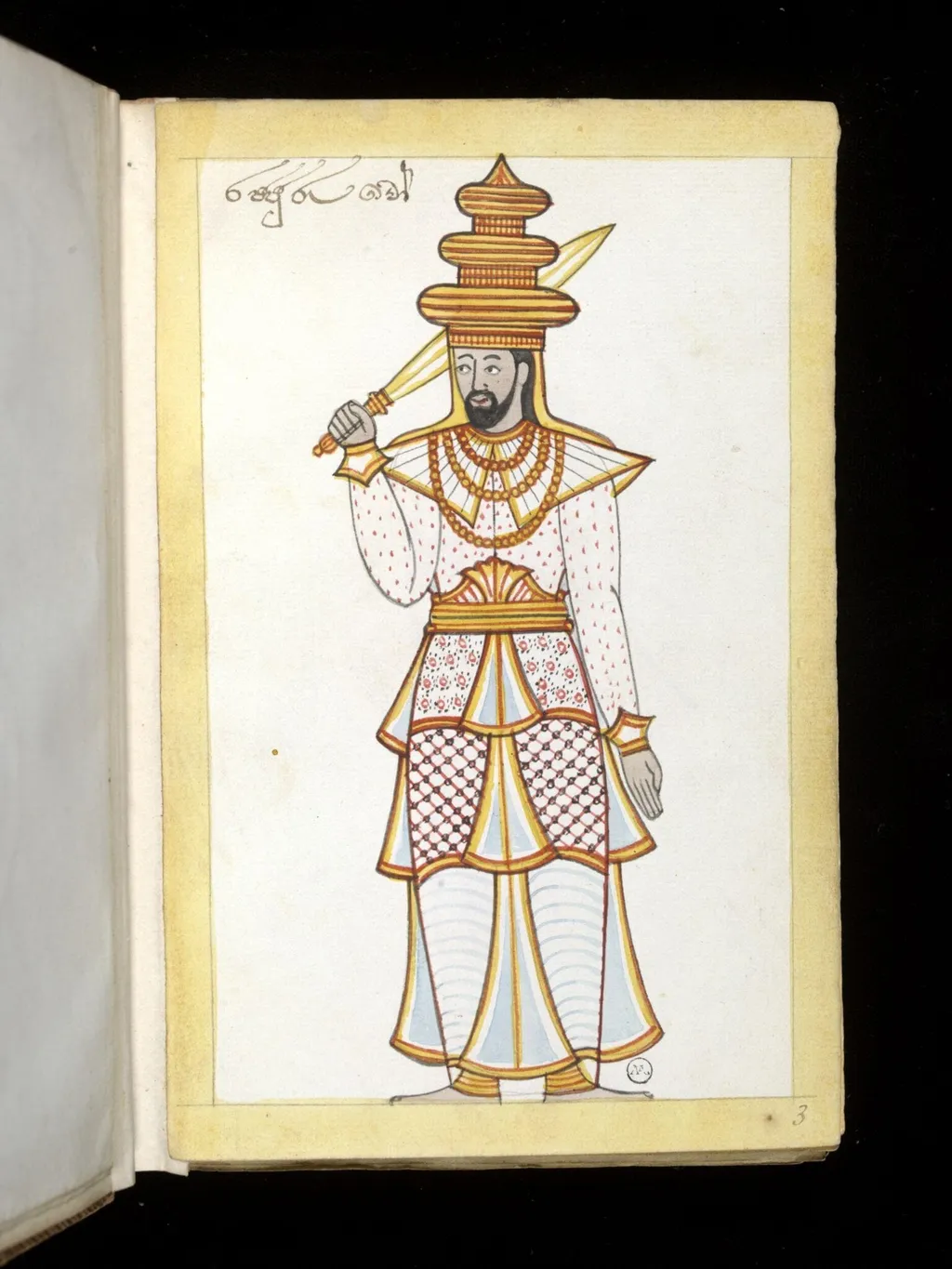
One of sixty-three drawings from an Album depicting Sinhalese occupations and castes. is a paint painting by the Patna School of Painting artist Unknown. It dates from 1830 and is held in the collection of the Victoria and Albert Museum.
About this work
Look up the Victoria and Albert Museum to see more of these rare Company-style paintings.
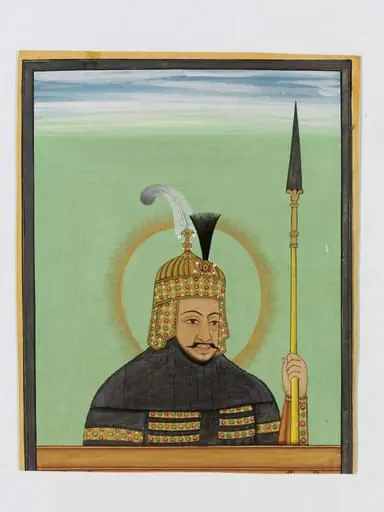
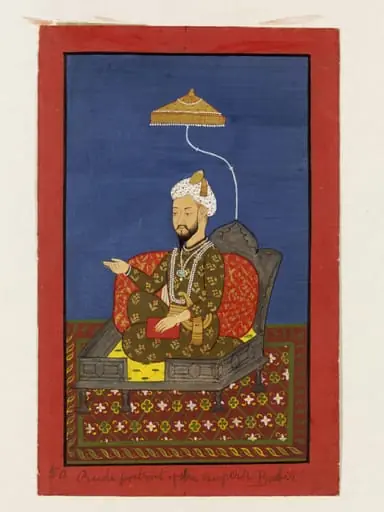
This watercolour shows a crowned Sinhalese king sitting on a carved wooden throne. He wears a long, gold-trimmed robe and holds a fan in one hand. A gold halo glows behind his head.
The artist made this for Mr Wells around 1830. Oddly, kings no longer ruled Sri Lanka by then. The British had ended the monarchy in 1818.
Look up the Victoria and Albert Museum to see more of these rare Company-style paintings.
Overview
This watercolour, part of a set of sixty‑three coloured drawings documenting Sinhalese occupations and castes, was produced in Sri Lanka around 1830. Executed in the Company‑style that blended European motifs with local techniques, it portrays a crowned Sinhalese figure seated on an elaborately carved wooden throne, dressed in a gold‑trimmed robe and holding a fan, with a luminous halo behind his head.
Subject & Meaning
Although the image presents a regal king, the Sri Lankan monarchy had been abolished in 1818, and the royal family had been pensioned and relocated to India. The depiction therefore reflects a nostalgic or exoticized vision of a vanished court, catering to British curiosity about the island’s former political order.
Technique & Style
The work is a watercolour on paper, employing the Company‑painting idiom that Indian artists developed for British patrons. While it incorporates European compositional devices such as a halo and formal pose, the handling of colour, pattern, and the rendering of the wooden throne draw directly from early‑19th‑century Sri Lankan painting traditions.
History & Provenance
Created by a local artist for a patron identified as Mr Wells, the drawing entered the collection of the Victoria and Albert Museum in 1869 through a donation by Robert Wells, who was likely the original commissioner or a relative. The album of which it forms a part was assembled to illustrate the social structure of the island for a British audience.
Context
The early nineteenth century saw a surge of British interest in Ceylon, spurred by travel narratives such as James Cordiner’s 1807 description of the island and Samuel Daniell’s 1808 illustrated volume. Works like this watercolour contributed to the visual archive that shaped European perceptions of Sri Lankan society and its former monarchy.
Artist & collection