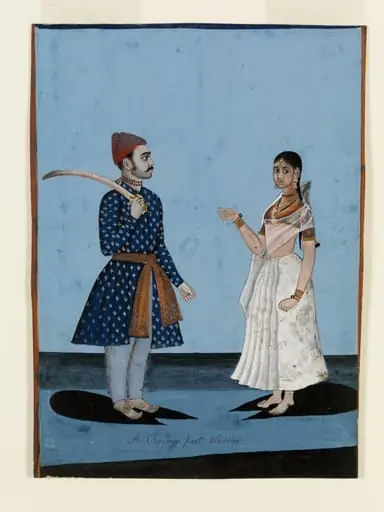
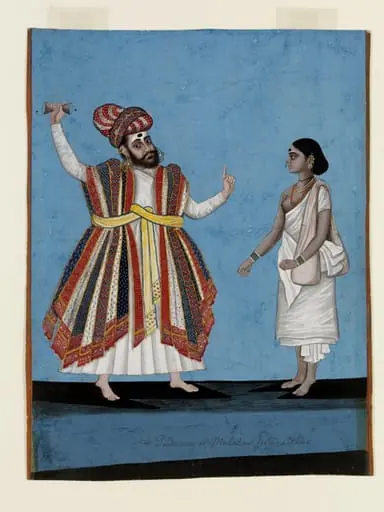
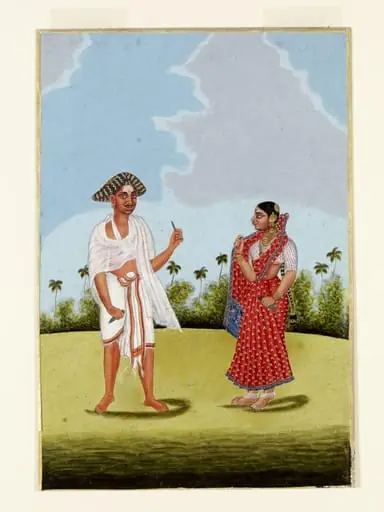
Artwork
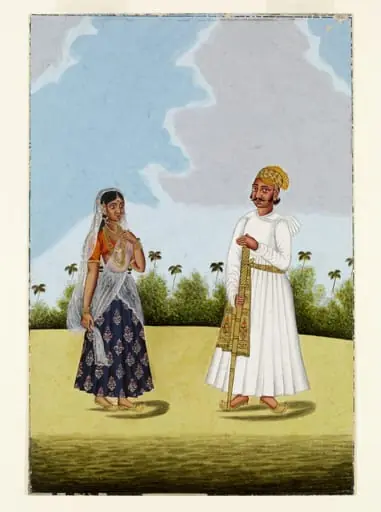
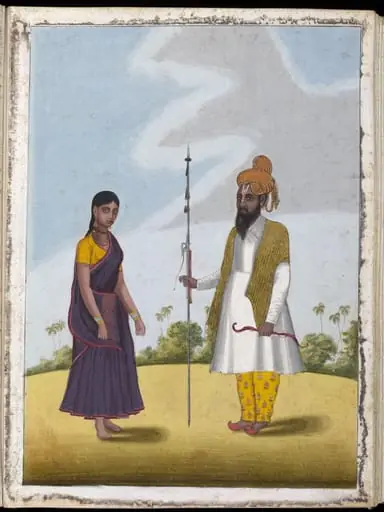
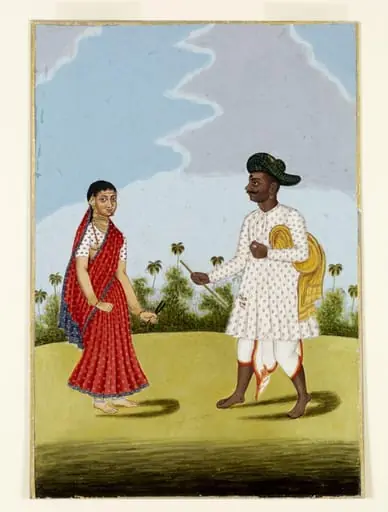
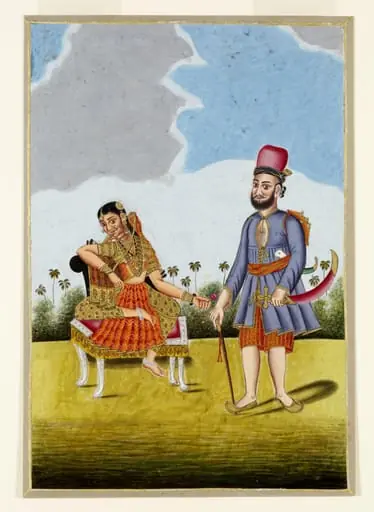
One of six paintings of occupations
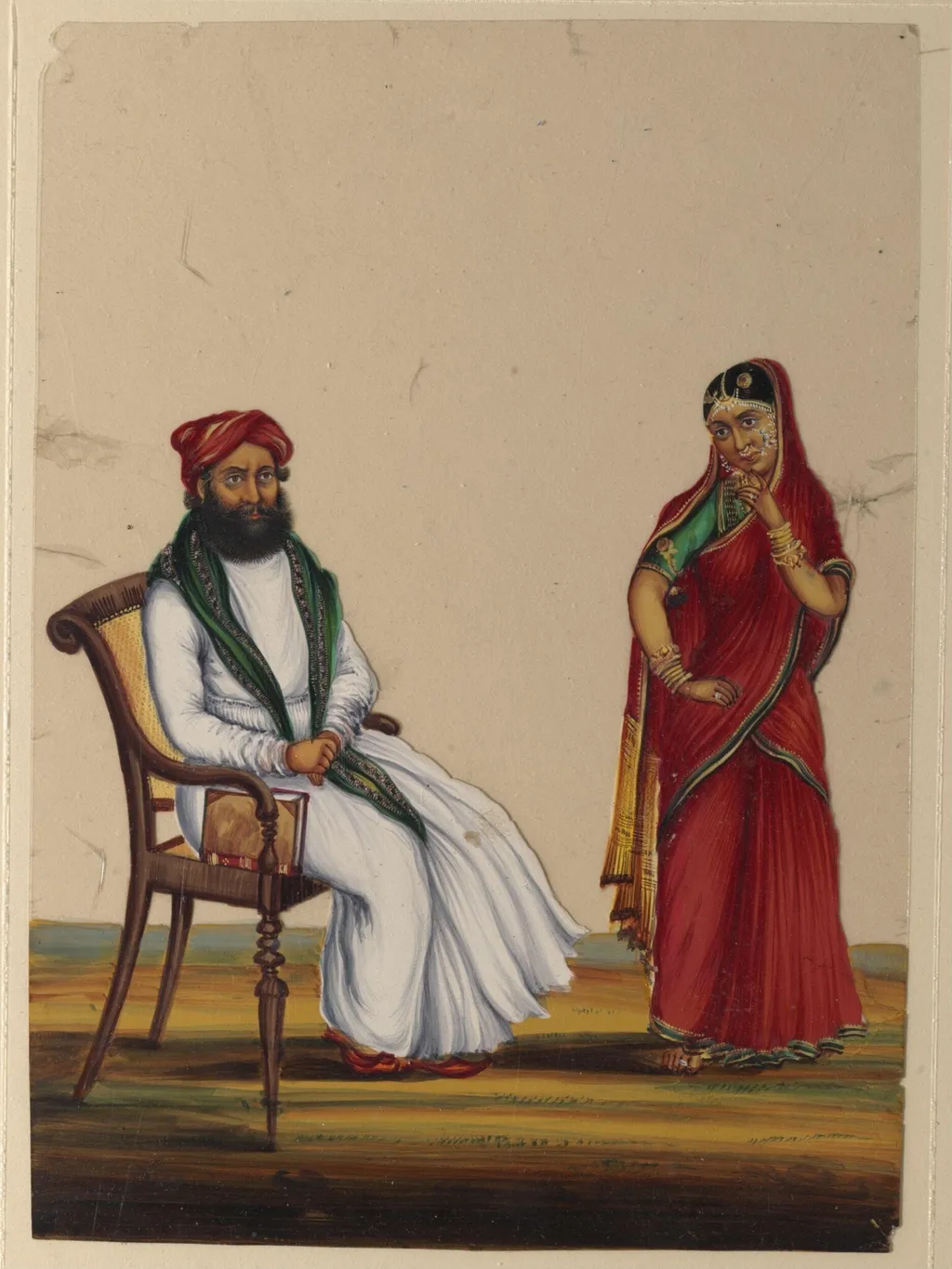
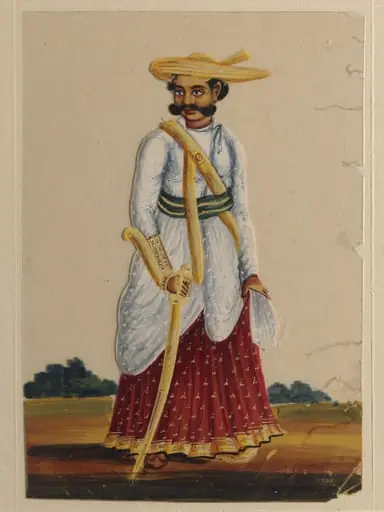
One of six paintings of occupations is a gouache painting by the Patna School of Painting artist Unknown. It dates from 1850 and is held in the collection of the Victoria and Albert Museum. This gouache on mica painting is one of six works in a series documenting everyday professions in late 18th-century India.
About this work
Overview
This gouache on mica painting is one of six works in a series documenting everyday professions in late 18th-century India. It portrays a munshi, a scholar or teacher, alongside his wife in a modest interior setting. Unlike grand historical or religious subjects common at the time, this series focuses on ordinary individuals, offering a quiet record of social roles through domestic scenes.
Subject & Meaning
The munshi, a respected figure in Mughal and colonial-era society, is depicted not at work but in repose with his spouse, suggesting the domestic sphere as an extension of his intellectual identity. His wife’s presence underscores the familial context of scholarly life. Together, they represent a quiet dignity tied to education and literacy, values central to the cultural fabric of the period.
Technique & Style
Executed in gouache on thin sheets of mica, the painting employs opaque watercolors to achieve crisp, luminous detail. The surface’s slight translucency enhances the softness of skin tones and fabric textures. Figures are rendered with delicate lines and flattened perspective, reflecting regional miniature traditions adapted for European collectors who sought ethnographic accuracy in portraiture.
History & Provenance
The series was likely commissioned by British officials or East India Company personnel during the 1790s, a period when interest in Indian social customs grew among colonial administrators. These works were collected as visual documents, often bound into albums. The specific provenance of this painting remains unrecorded, but similar pieces survive in British and Indian institutional collections.
Context
This painting emerged during a time when Indian artists, particularly in Patna and Murshidabad, adapted traditional miniature techniques to meet colonial demand for ethnographic imagery. Rather than idealizing royalty, these works captured artisans, clerks, and laborers, a shift that reflected both changing patronage and a growing curiosity about the diversity of Indian society under colonial rule.
Legacy
The series stands as an early example of documentary portraiture in South Asian art, preserving visual records of non-elite life that were rarely prioritized in formal art traditions. Today, these works are studied for their anthropological value and their role in bridging indigenous artistic practices with colonial collecting habits, offering insight into cross-cultural visual exchange.
Artist & collection