Artwork
Page from Tales of a Parrot (Tuti-nama): text page
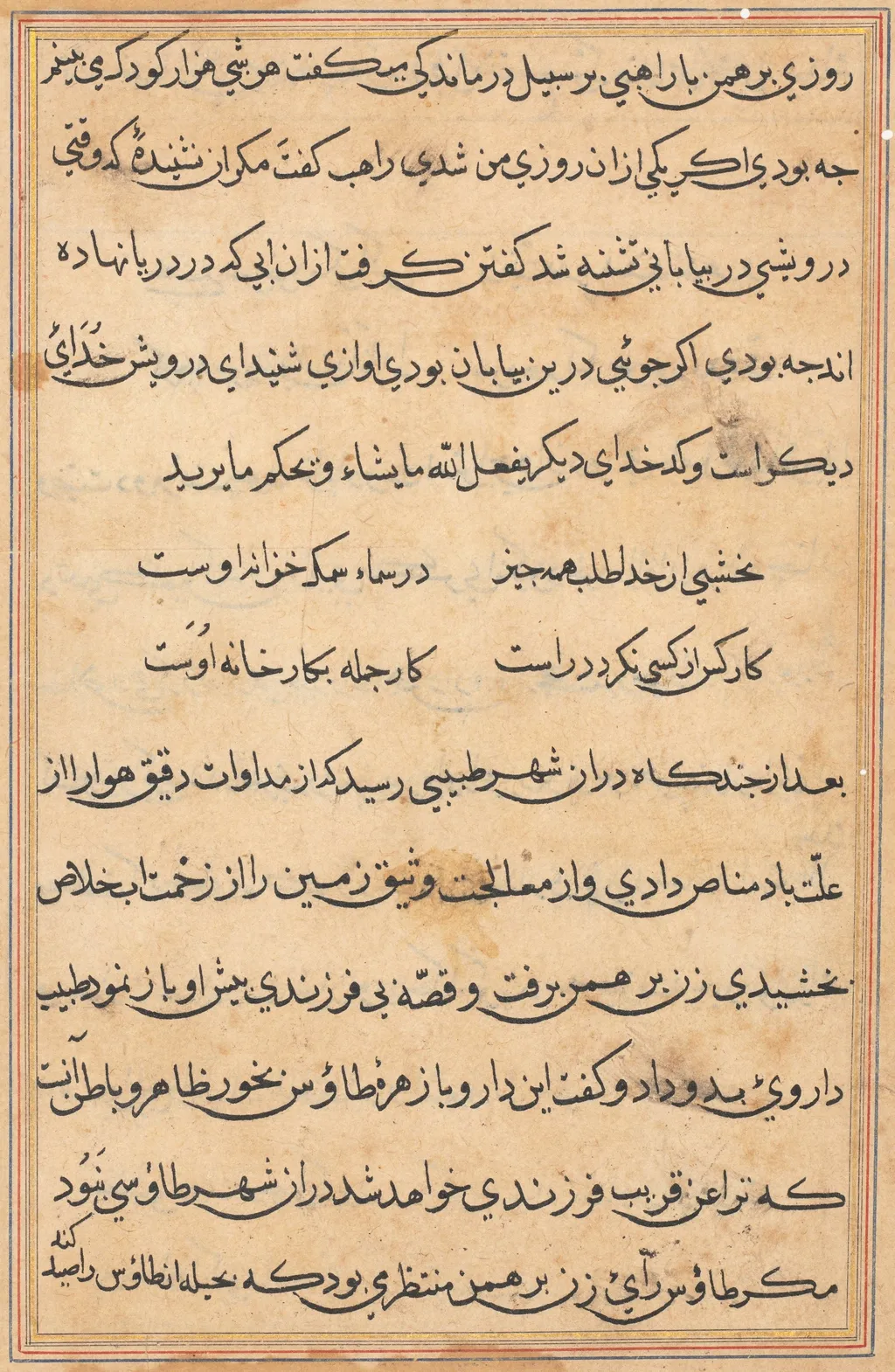
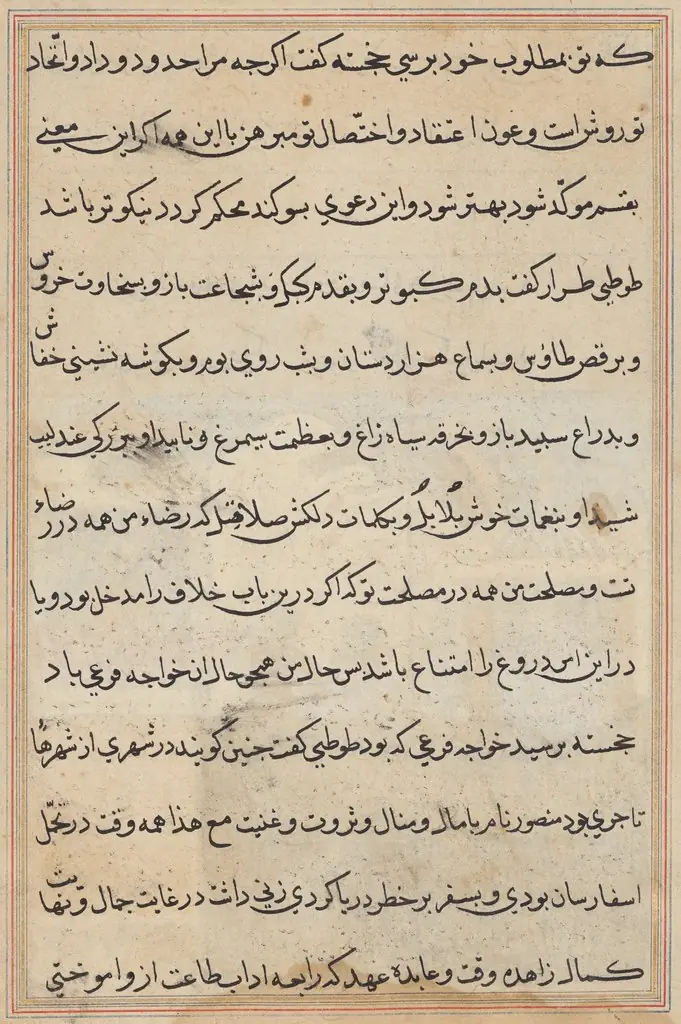
Page from Tales of a Parrot (Tuti-nama): text page is an unspecified painting. It dates from 1560 and is held in the collection of the Cleveland Museum of Art. This object is a single folio from the 1560 Persian manuscript known as Tales of a Parrot (Tuti‑nama).
About this work
The use of a light brown background and a simple border suggests a focus on the text itself, rather than elaborate illustrations or decorations.
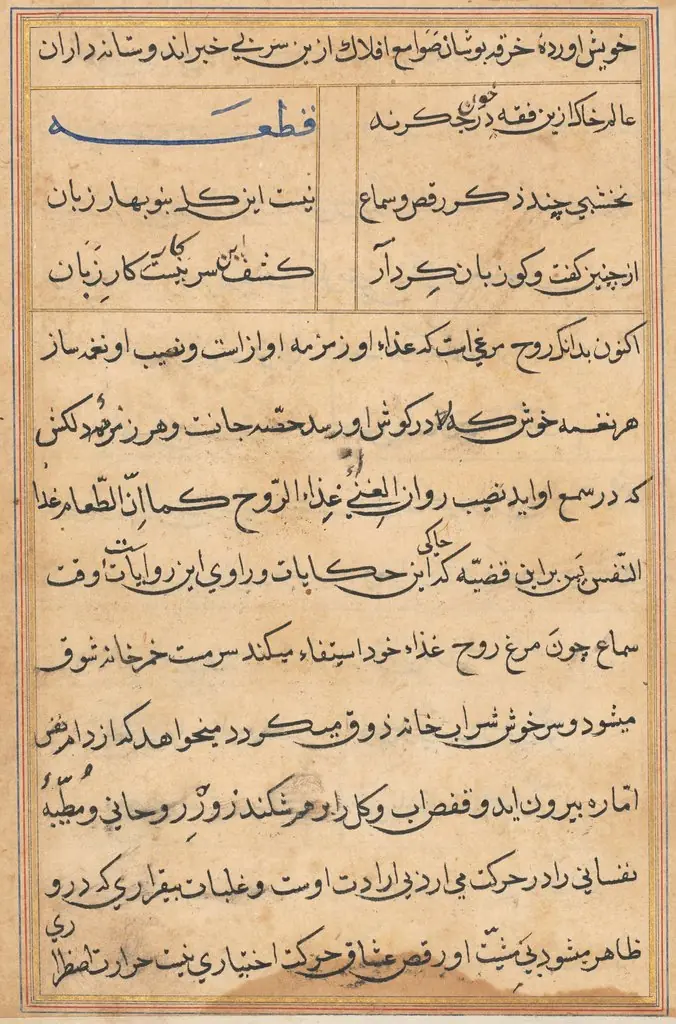
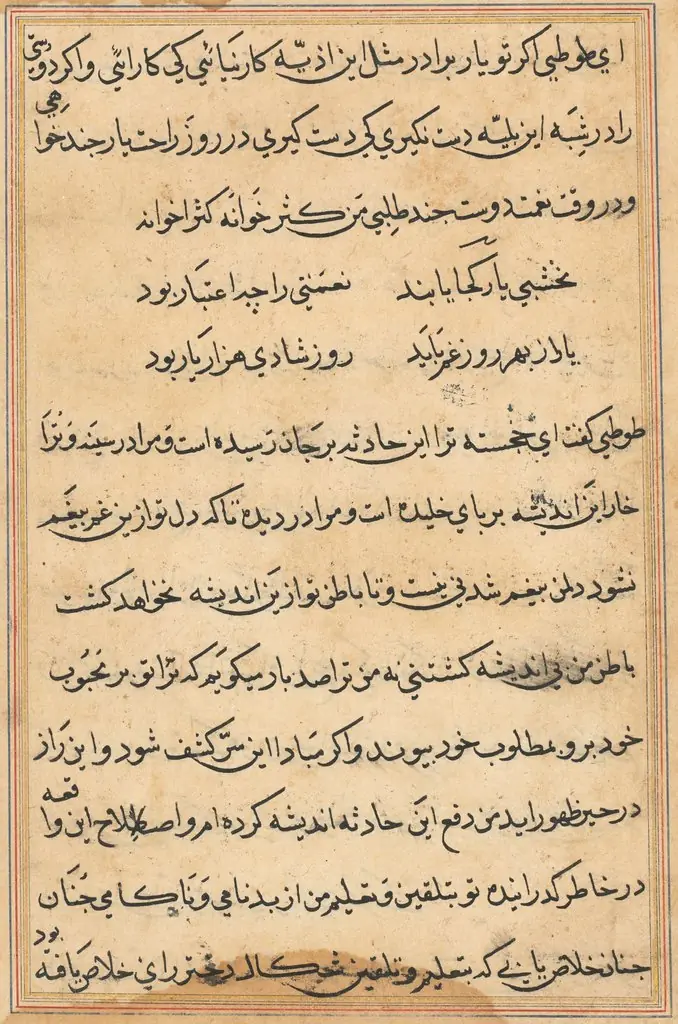
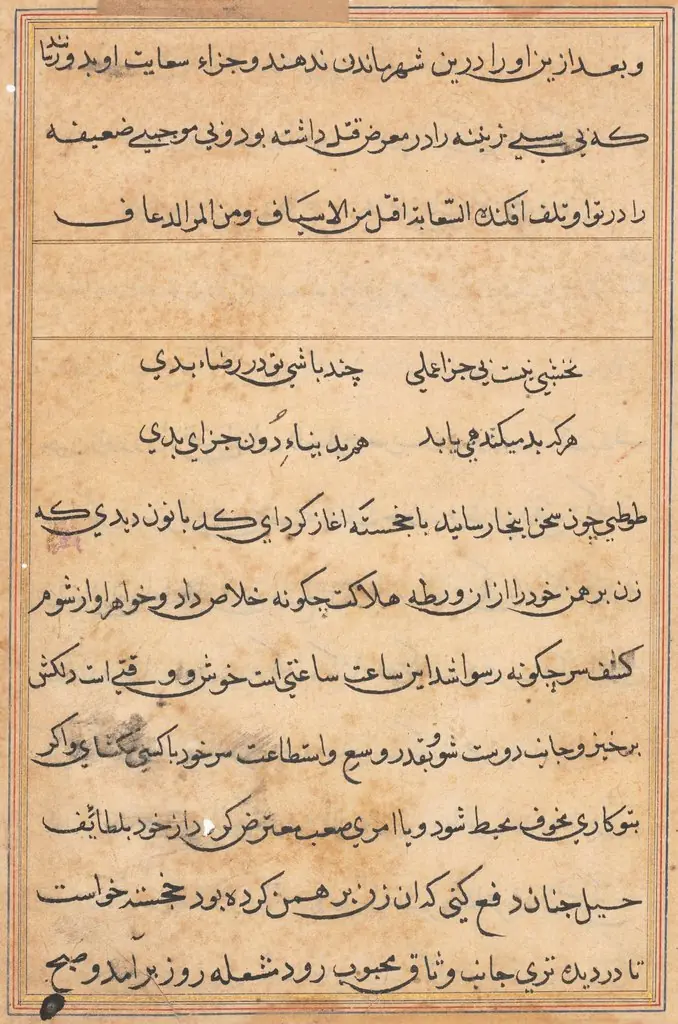
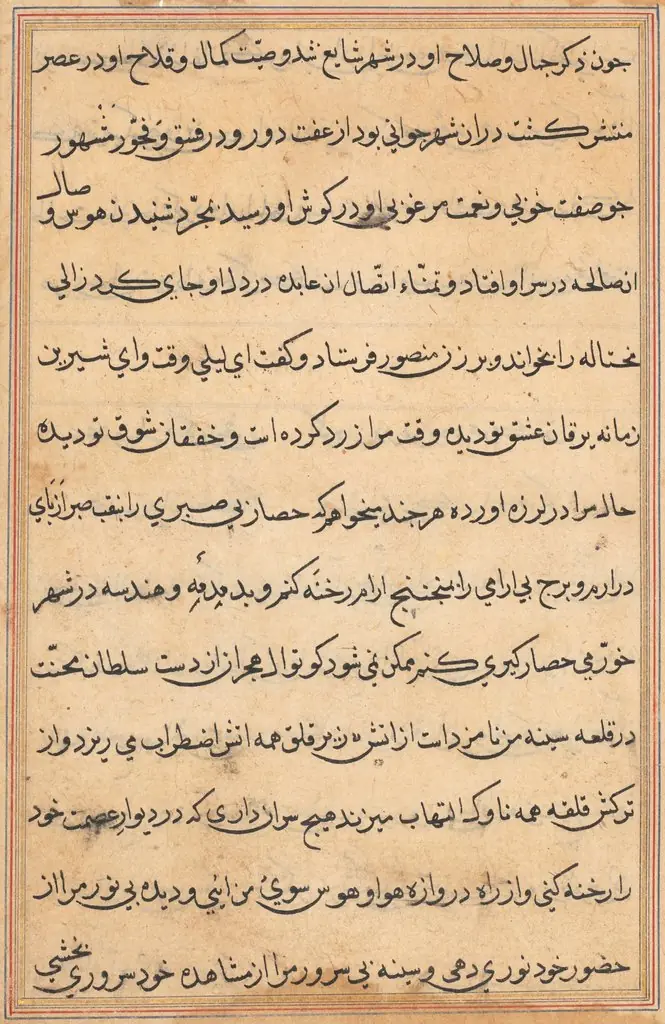
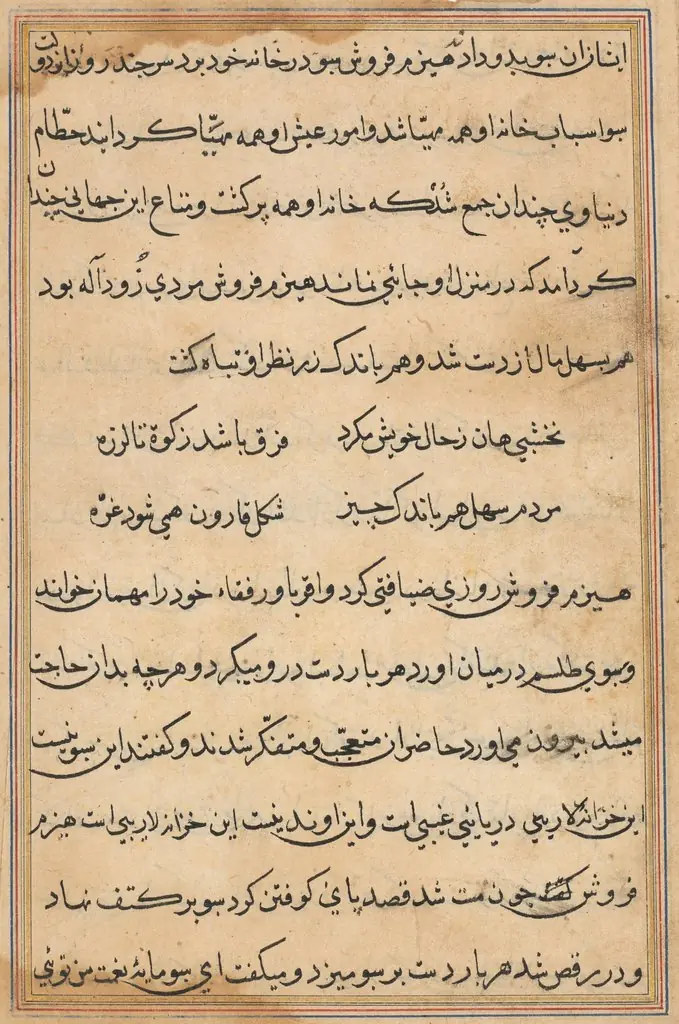
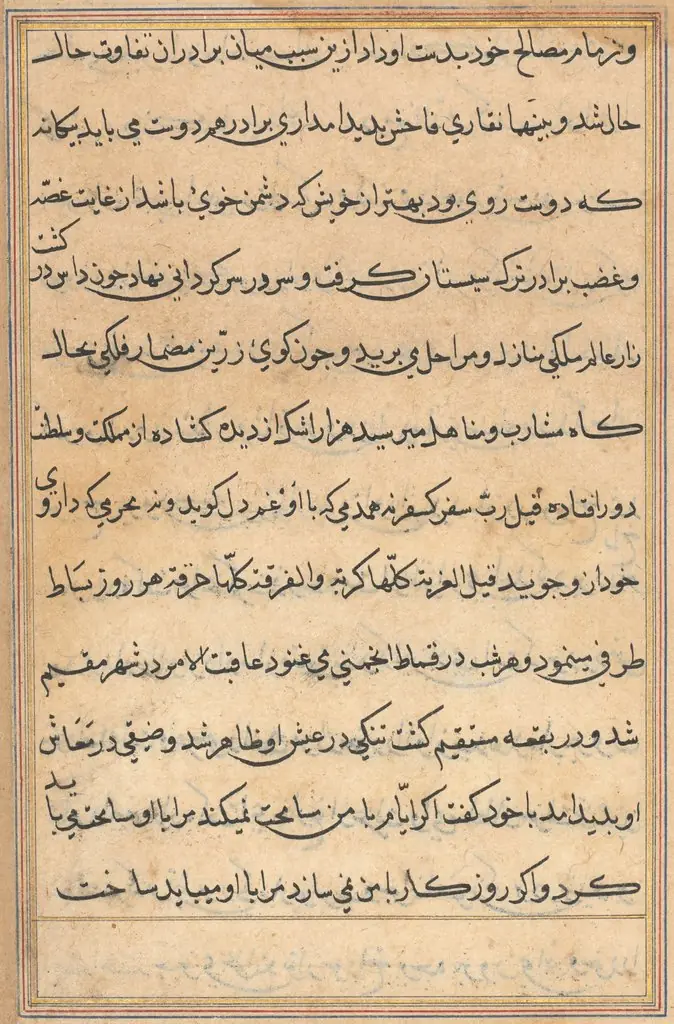
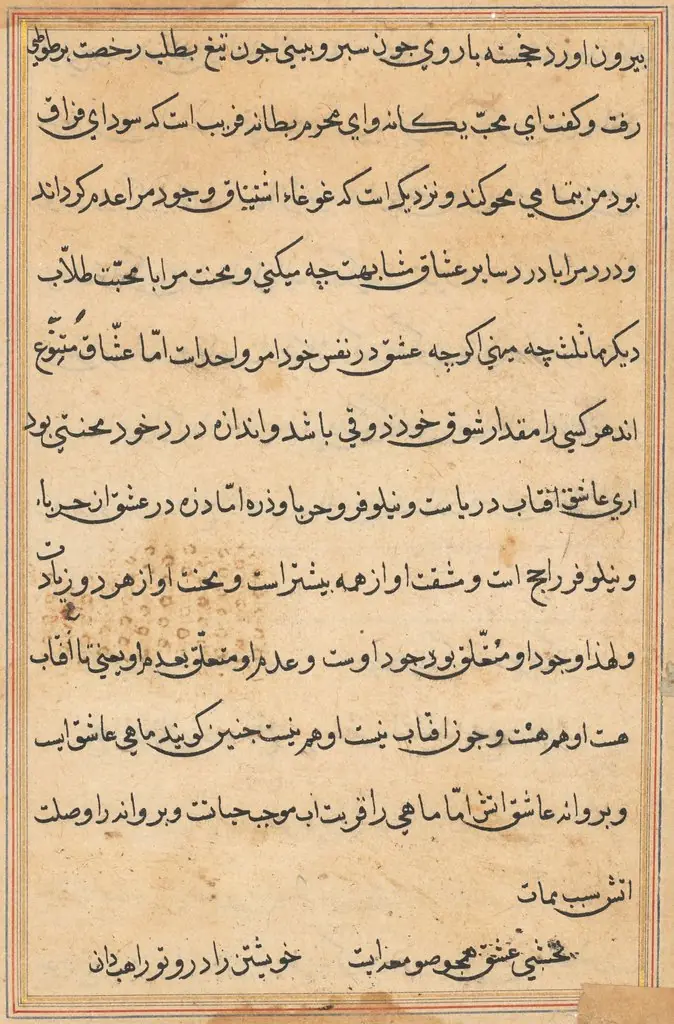
This painting is a page from "Tales of a Parrot" (Tuti-nama), created in 1560. It features a text page with black script on a light brown background, outlined by a thin border of red, yellow, and blue lines. The text is written in a flowing script, with some words or phrases underlined or highlighted in a slightly darker ink.
The page appears to be part of a larger manuscript, possibly a collection of stories or poems. The use of a light brown background and a simple border suggests a focus on the text itself, rather than elaborate illustrations or decorations.
The Cleveland Museum of Art holds this piece, which was made for Prince Salim. To learn more about the artistic techniques used in this painting, look up the term "sfumato".
History & Provenance
The page from Tales of a Parrot (Tuti-nama) dates to 1560, produced within the Mughal Empire during the early phase of manuscript production under that court. The work is classified as a painting and is attributed to an unknown artist, with no documented patron or commissioner identified in the available records. It is now held in the collection of the Cleveland Museum of Art, where it is catalogued under accession number 1962.279.139.b. The chain of ownership prior to its acquisition by the museum is not detailed in the sourced information.
The text page from the Tales of a Parrot (Tuti-nama), created in 1560, is held by the Cleveland Museum of Art in Cleveland. The museum assigns this work the accession number 1962.279.139.b. It was made within the Mughal Empire and remains part of the institution's collection.
Context
The miniature originates from a 1560 manuscript page in the Tuti-nama series, a didactic work composed in Persian during the Mughal period that illustrated moral tales through animal allegories. Its presence in a Cleveland Museum of Art collection underscores the transregional transmission of Persian artistic traditions to Western institutions. Scholarly attention to such folios has emphasized their role in mapping the evolution of courtly visual language in early modern Islamic art, situating them within broader discourses on manuscript production and cross-cultural exchange.
Overview
This object is a single folio from the 1560 Persian manuscript known as Tales of a Parrot (Tuti‑nama). It consists of a page of running black script set against a light brown ground, framed by a narrow decorative line in red, yellow and blue. The page is part of a larger codex that contains narrative or poetic material.
Subject & Meaning
The text on the folio presents a segment of the collection’s stories, a tradition of moral and romantic tales transmitted in Persian courts. The emphasis on the written word, rather than illustrative embellishment, reflects the manuscript’s function as a literary source for an elite audience.
Technique & Style
The calligraphy is executed in a fluid, cursive hand, with occasional words rendered in a slightly darker ink to indicate emphasis. The background paper retains a natural light brown hue, while a thin border of three colored lines, red, yellow, blue, provides a modest visual frame without competing with the script.
Artist & collection

- Page from Tales of a Parrot (Tuti-nama): text page
 Page from Tales of a Parrot (Tuti-nama): text page
 Page from Tales of a Parrot (Tuti-nama): text page
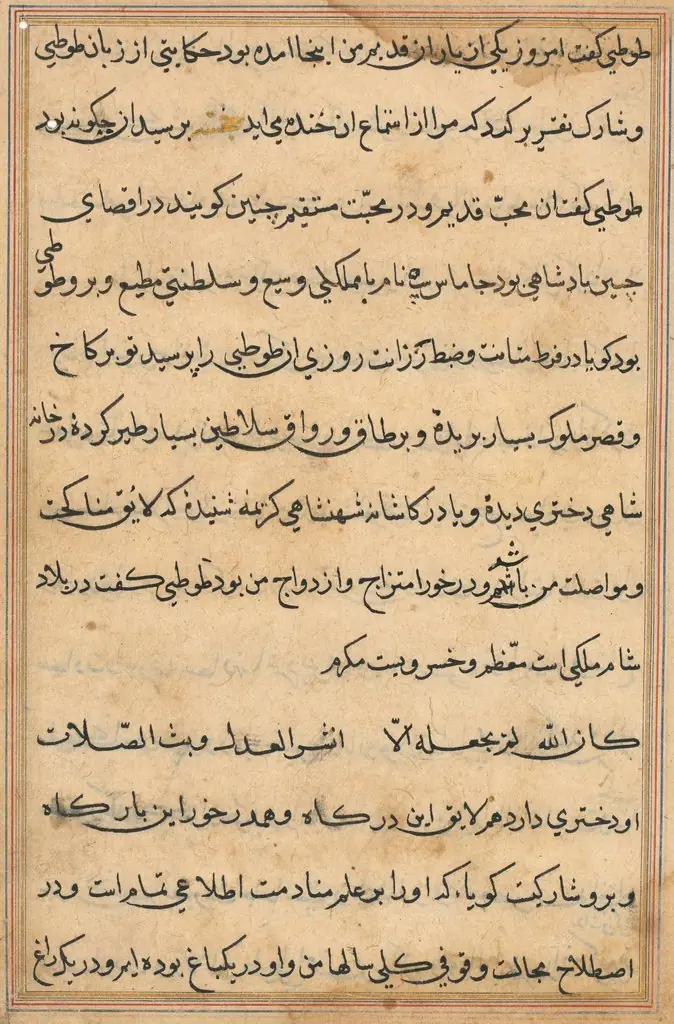 Page from Tales of a Parrot (Tuti-nama): text page
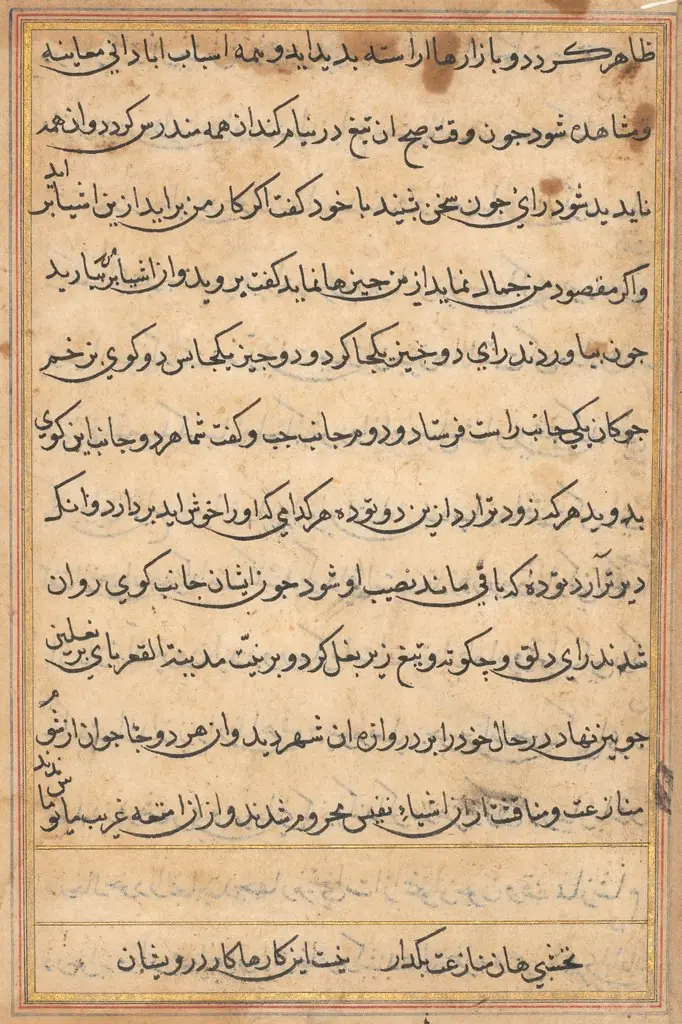 Page from Tales of a Parrot (Tuti-nama): text page
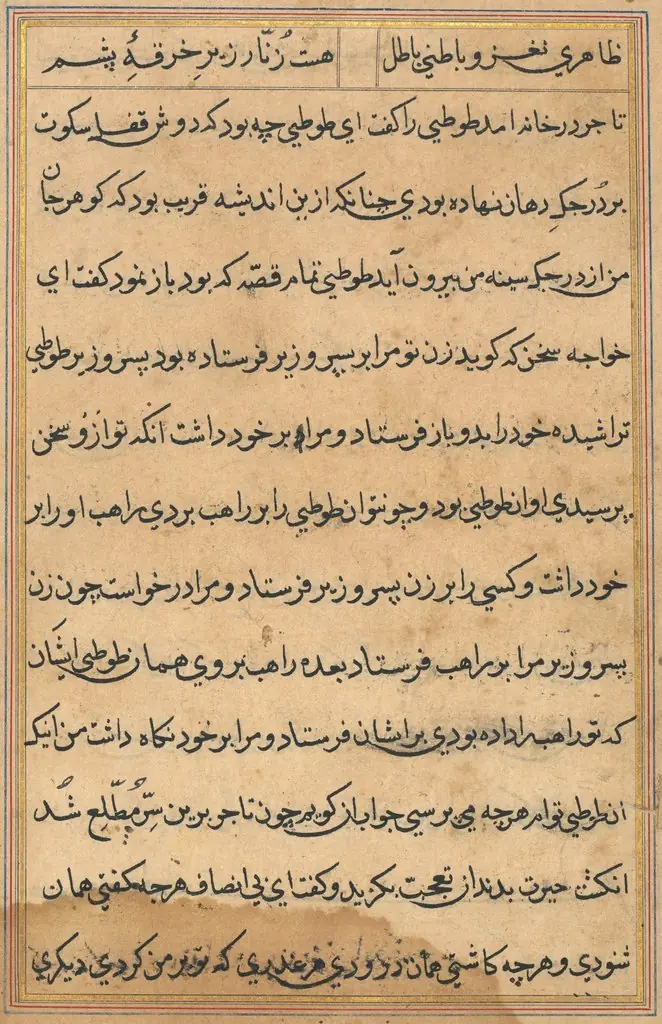 Page from Tales of a Parrot (Tuti-nama): text page
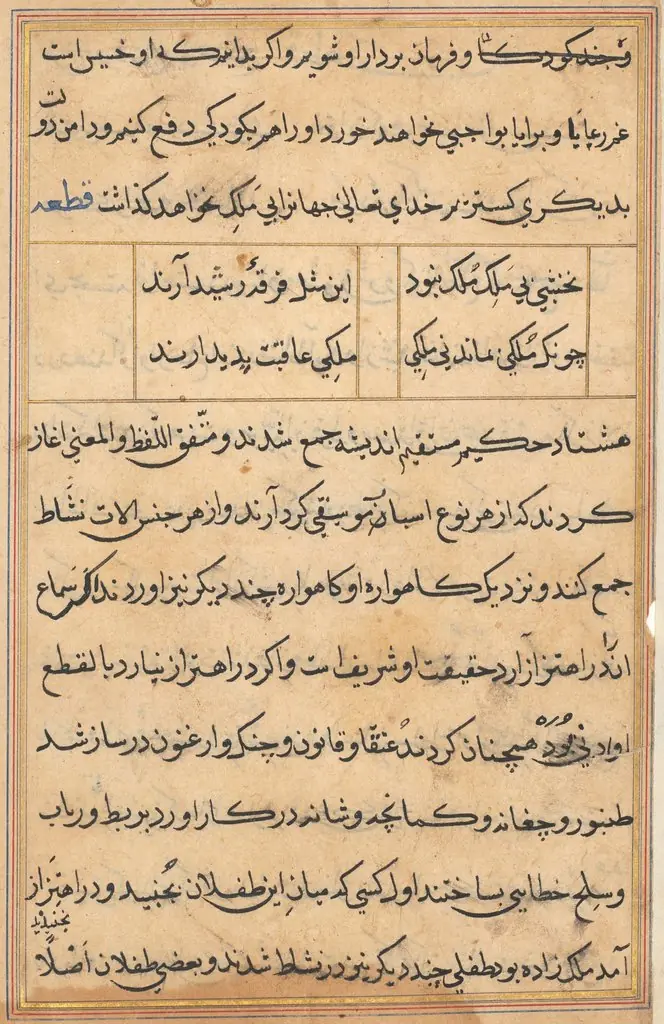 Page from Tales of a Parrot (Tuti-nama): text page
 Page from Tales of a Parrot (Tuti-nama): text page
 Page from Tales of a Parrot (Tuti-nama): text page
 Page from Tales of a Parrot (Tuti-nama): text page
 Page from Tales of a Parrot (Tuti-nama): text page
 Page from Tales of a Parrot (Tuti-nama): text page