Artwork
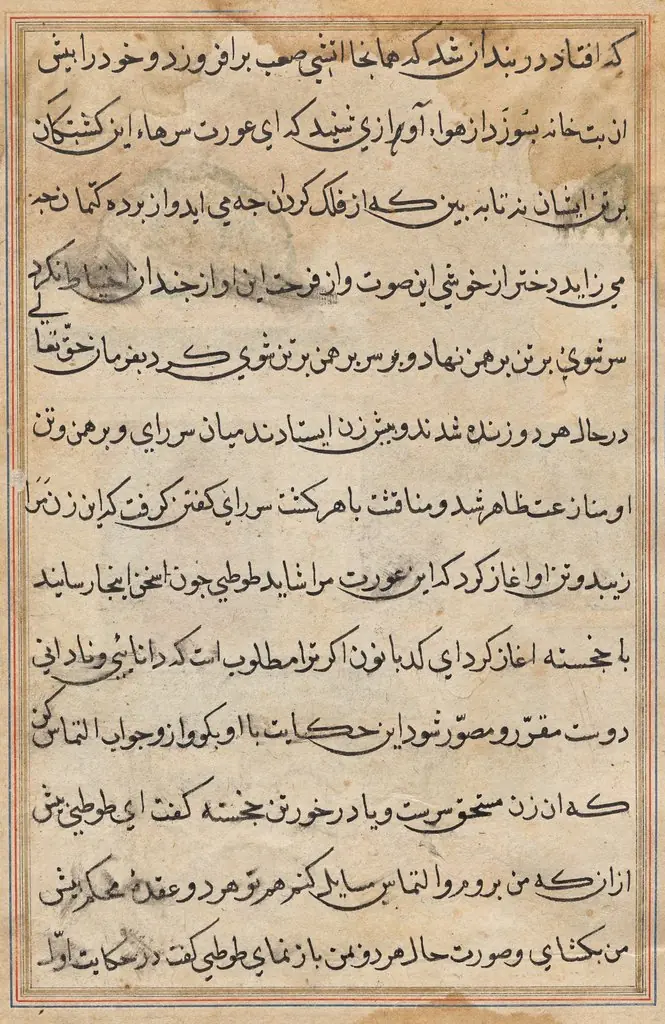
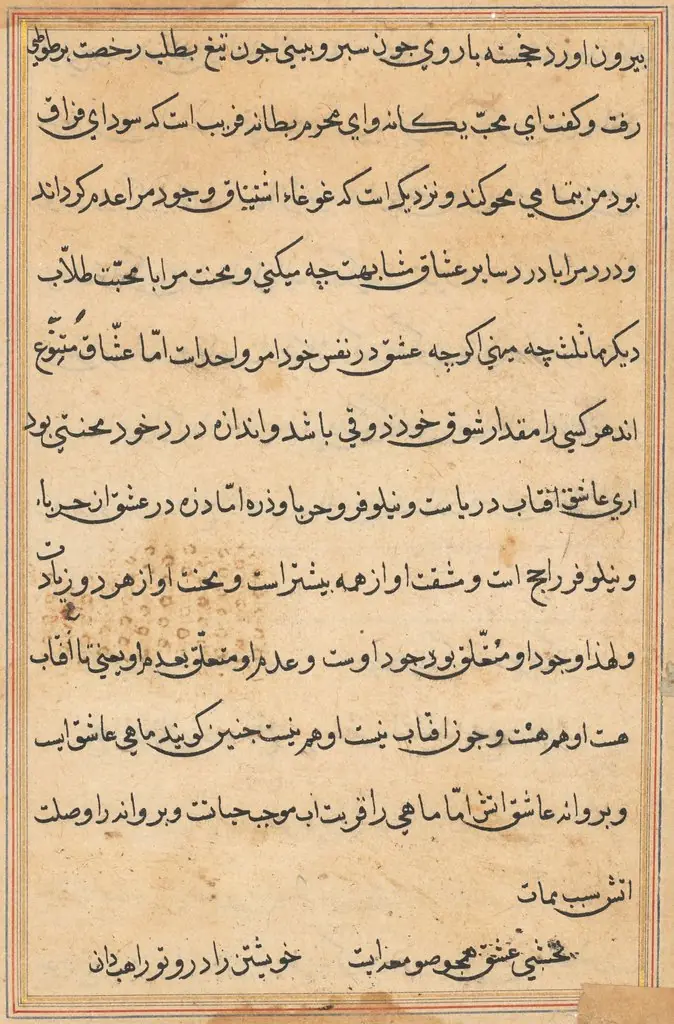
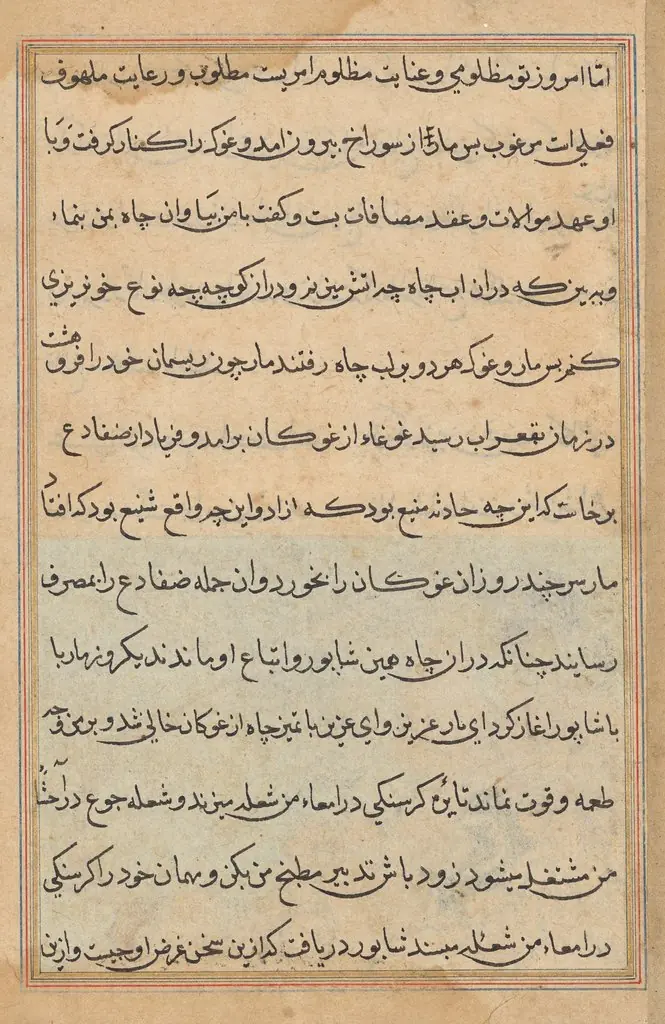
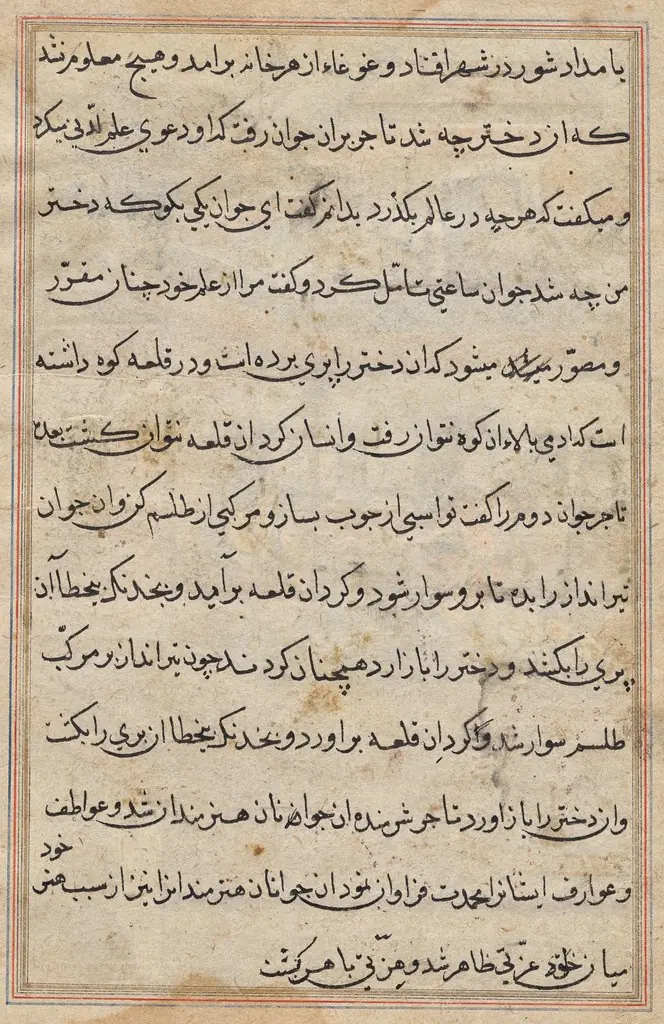
Page from Tales of a Parrot (Tuti-nama): text page
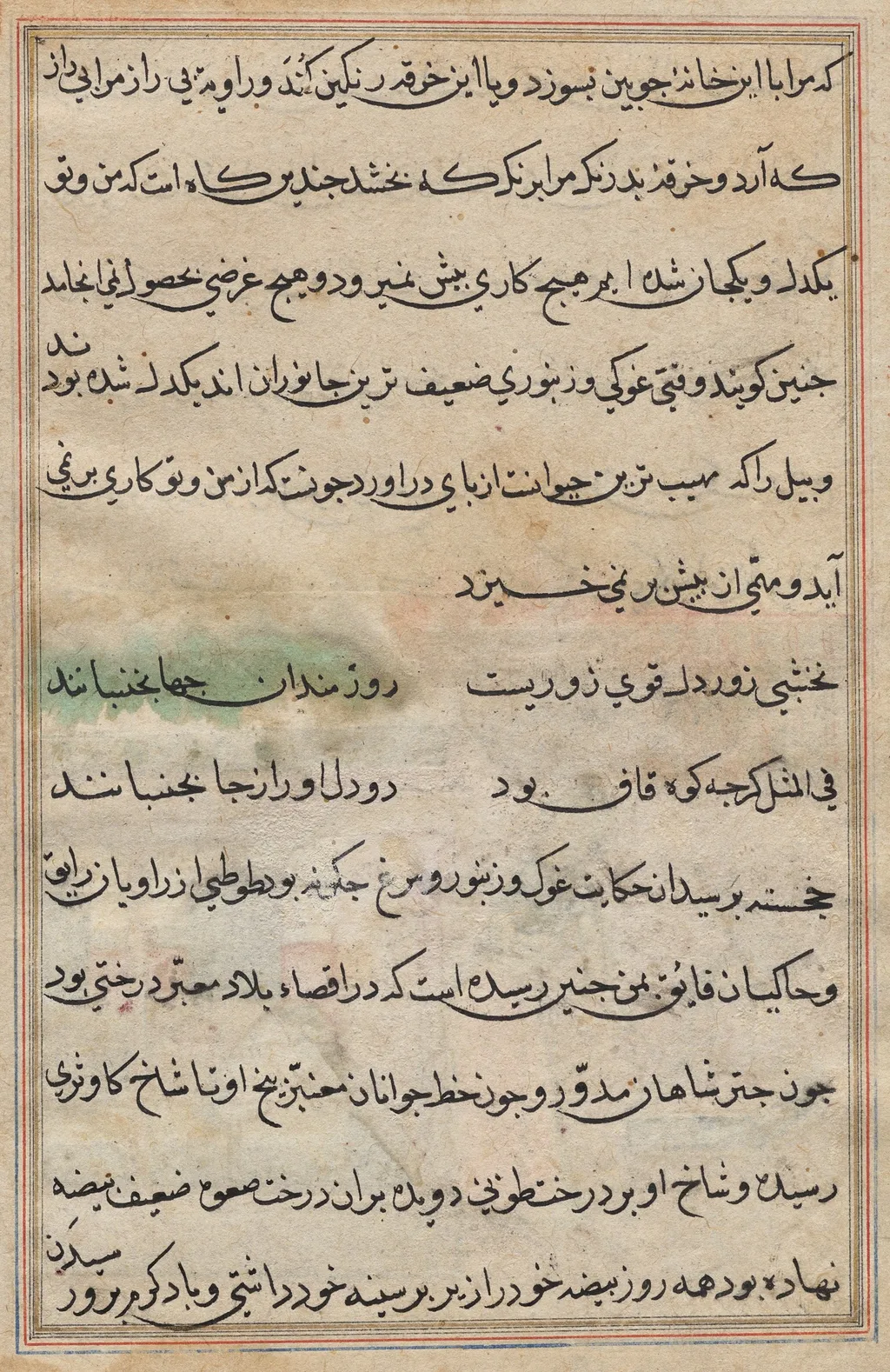
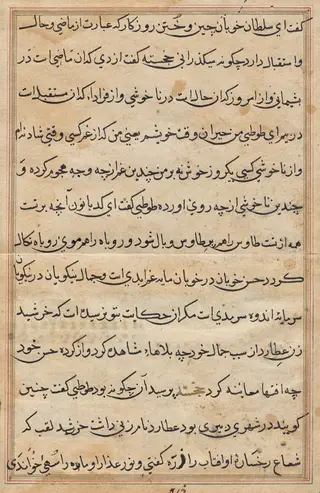
Page from Tales of a Parrot (Tuti-nama): text page is an unspecified painting. It dates from 1560 and is held in the collection of the Cleveland Museum of Art. The object is a single painted page from the Persian manuscript Tales of a Parrot (Tuti‑nama).
About this work
History & Provenance
The work is attributed to an unknown artist, reflecting the collaborative nature of manuscript production during this period.
This text page from the Tales of a Parrot (Tuti-nama) was created in 1560 within the Mughal Empire. The work is attributed to an unknown artist, reflecting the collaborative nature of manuscript production during this period. It currently resides in the collection of the Cleveland Museum of Art, where it is cataloged under the accession number 1962.279.248.b. While the specific circumstances of its original commission and the detailed chain of ownership prior to its museum acquisition are not recorded in the available sources, its inception date and place of creation are firmly established.
Legacy
The manuscript page from the Tuti-nama, created in 1560 during the Mughal period, exemplifies the narrative style of Persian miniature painting and influenced later Indian book arts through its compositional clarity and didactic use of text-image integration. Its presence in the Cleveland Museum of Art collection has facilitated scholarly study of Mughal artistic exchange, reinforcing its reputation as a representative example of 16th-century manuscript production.
The work's legacy is underscored by its inclusion in exhibitions on Persianate art and its citation in studies of cross-cultural transmission of visual storytelling techniques.
Overview
The object is a single painted page from the Persian manuscript Tales of a Parrot (Tuti‑nama). The surface is dominated by dense black calligraphy arranged in horizontal lines, each line flowing with curved, looping forms. A narrow red border encloses the text, while faint green and blue smudges appear sporadically, likely the result of accidental pigment stains.
Subject & Meaning
The inscribed verses belong to a narrative tradition in which a parrot recounts stories, a motif common in Persian literary culture. The text, rendered in an elegant script, conveys the tale’s moral and entertainment value, reflecting the manuscript’s role as both a literary work and a decorative object for elite audiences.
Technique & Style
The page was executed with ink on paper, the ink applied in a continuous, fluid hand that gives the script a rhythmic, dance‑like quality. The thin red border was painted separately, providing a visual frame that accentuates the black lettering. Minor green and blue discolorations suggest either pigment overflow or later handling, adding a subtle, accidental patina to the surface.
Context
Persian illustrated books of the 16th‑18th centuries often combined literary content with elaborate calligraphy and decorative borders. Tales of a Parrot fits within this tradition, where storytelling and visual embellishment were intertwined to enhance the reader’s experience. The use of a vivid red margin reflects contemporary aesthetic preferences for contrast and visual hierarchy.
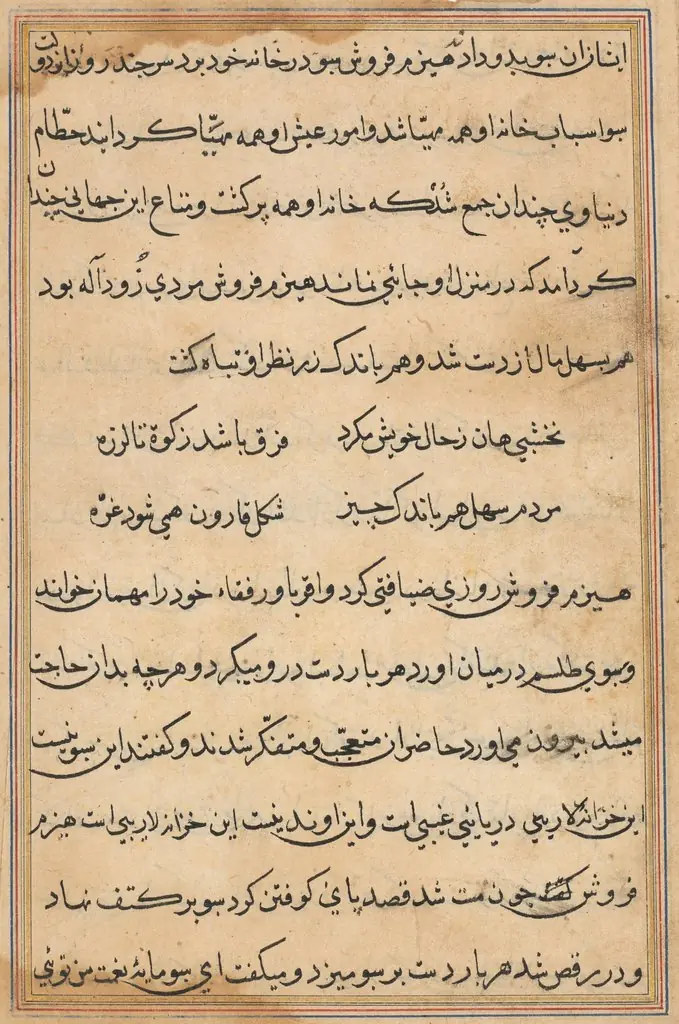
Artist & collection

- Page from Tales of a Parrot (Tuti-nama): text page
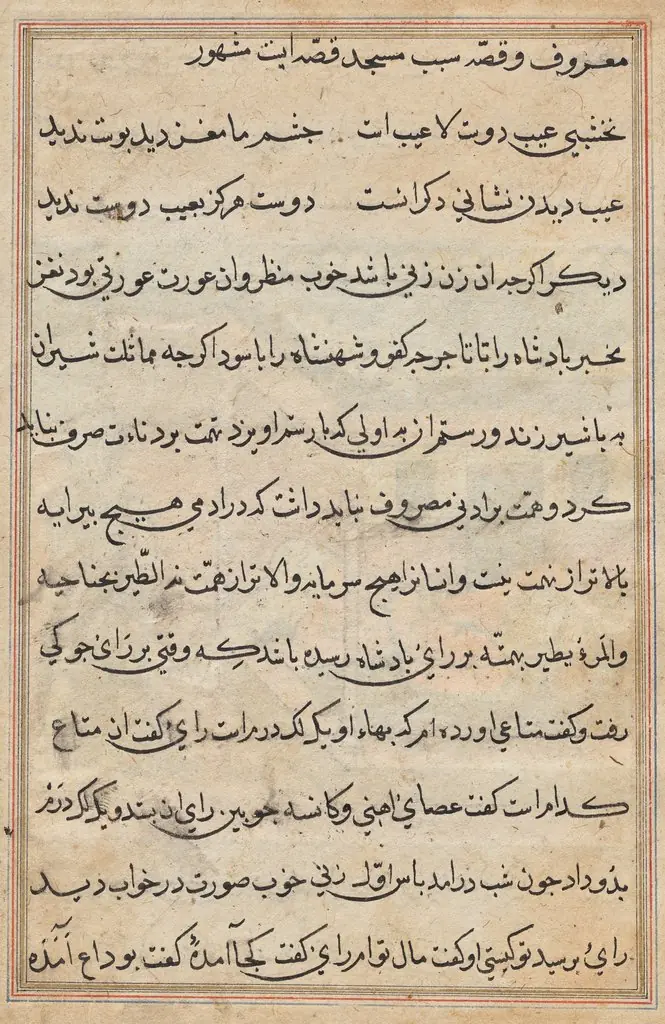 Page from Tales of a Parrot (Tuti-nama): text page
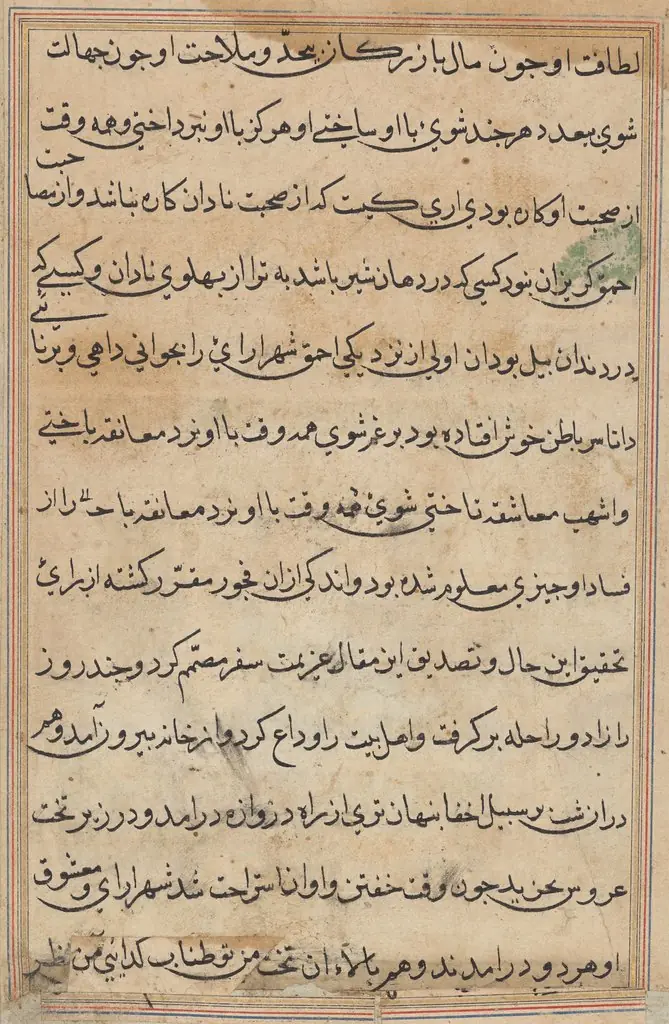 Page from Tales of a Parrot (Tuti-nama): text page
 Page from Tales of a Parrot (Tuti-nama): text page
 Page from Tales of a Parrot (Tuti-nama): text page
 Page from Tales of a Parrot (Tuti-nama): text page
 Page from Tales of a Parrot (Tuti-nama): text page
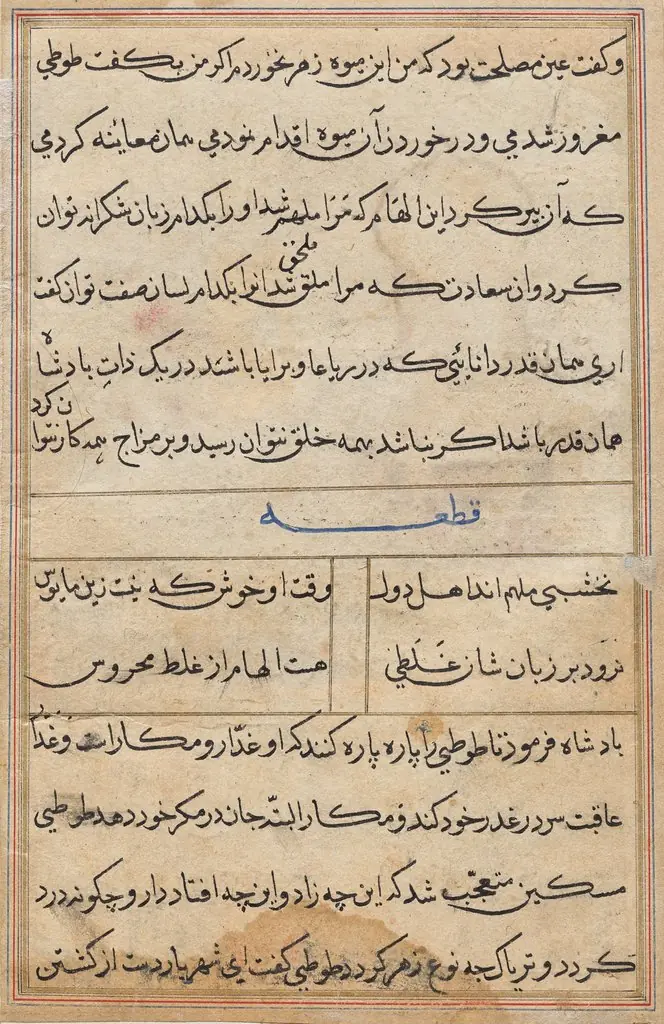 Page from Tales of a Parrot (Tuti-nama): text page
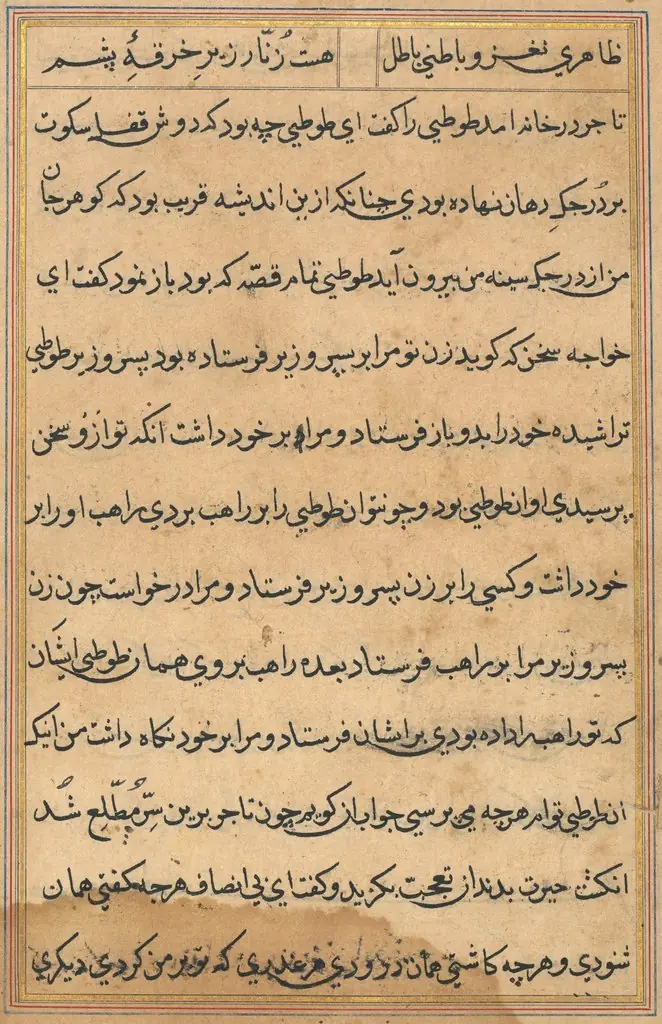 Page from Tales of a Parrot (Tuti-nama): text page
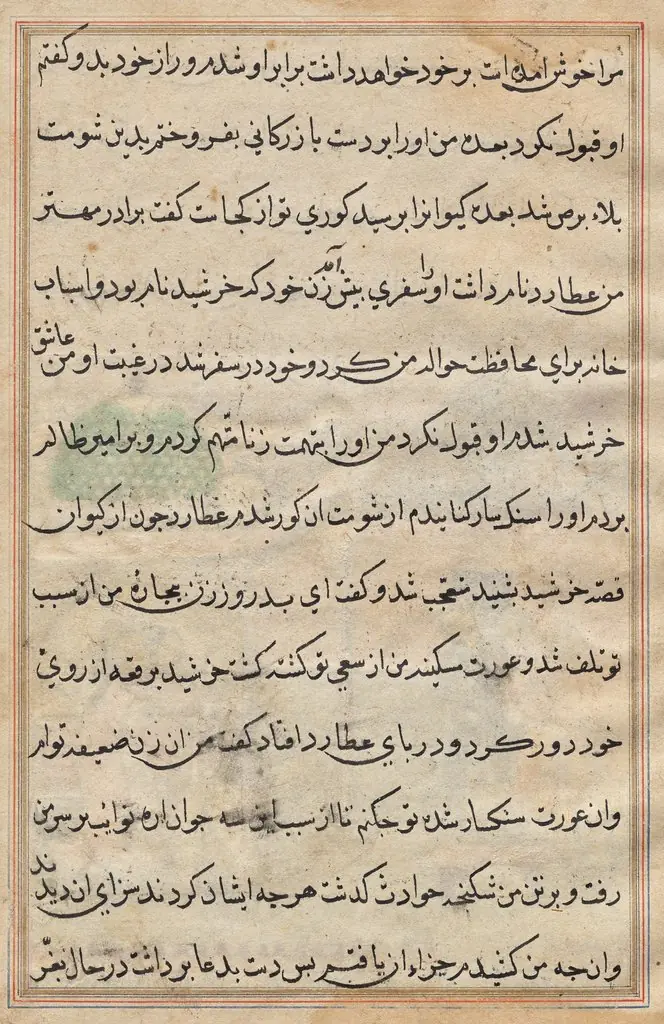 Page from Tales of a Parrot (Tuti-nama): text page
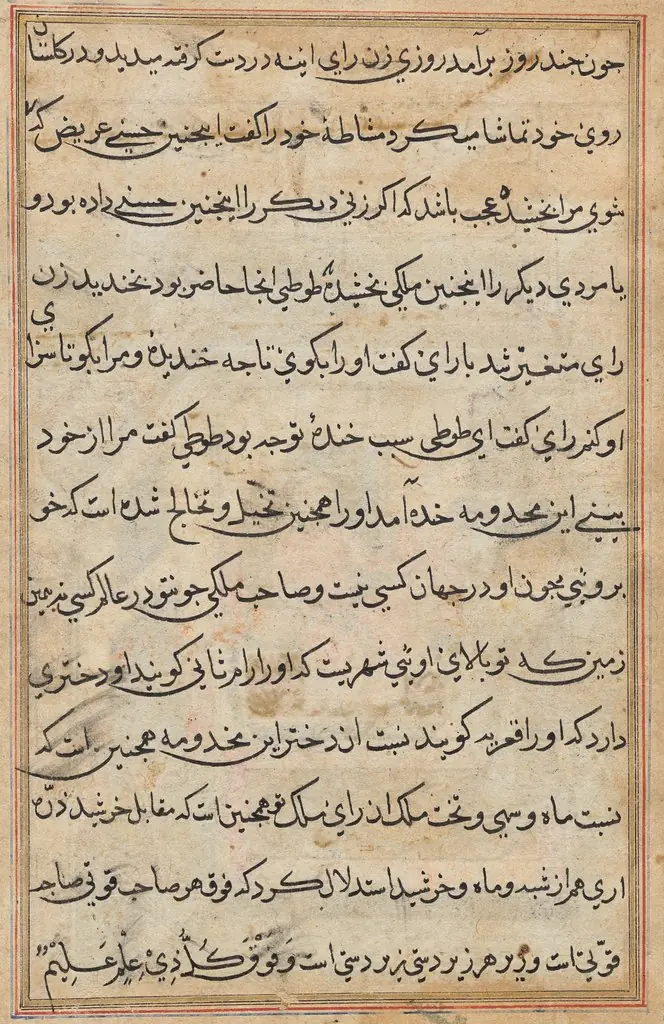 Page from Tales of a Parrot (Tuti-nama): text page
 Page from Tales of a Parrot (Tuti-nama): text page