Artwork
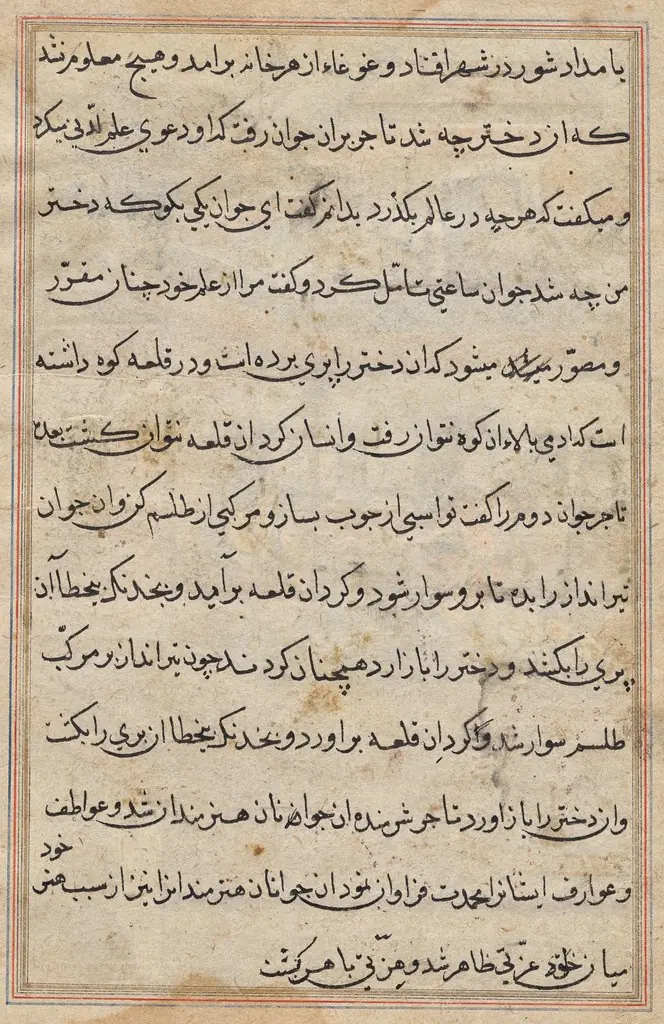
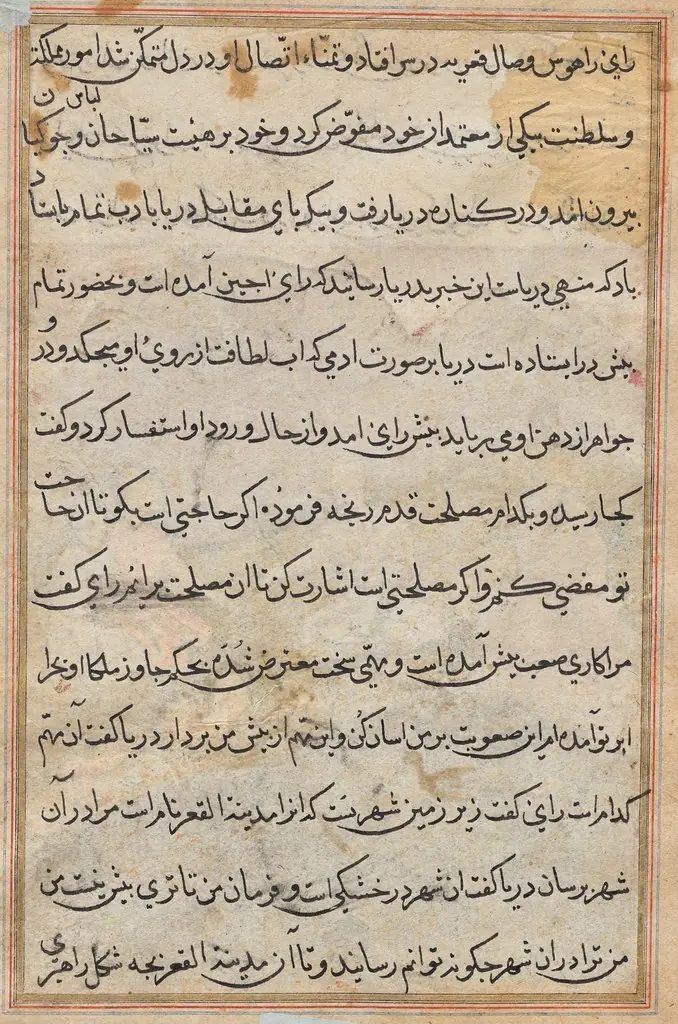
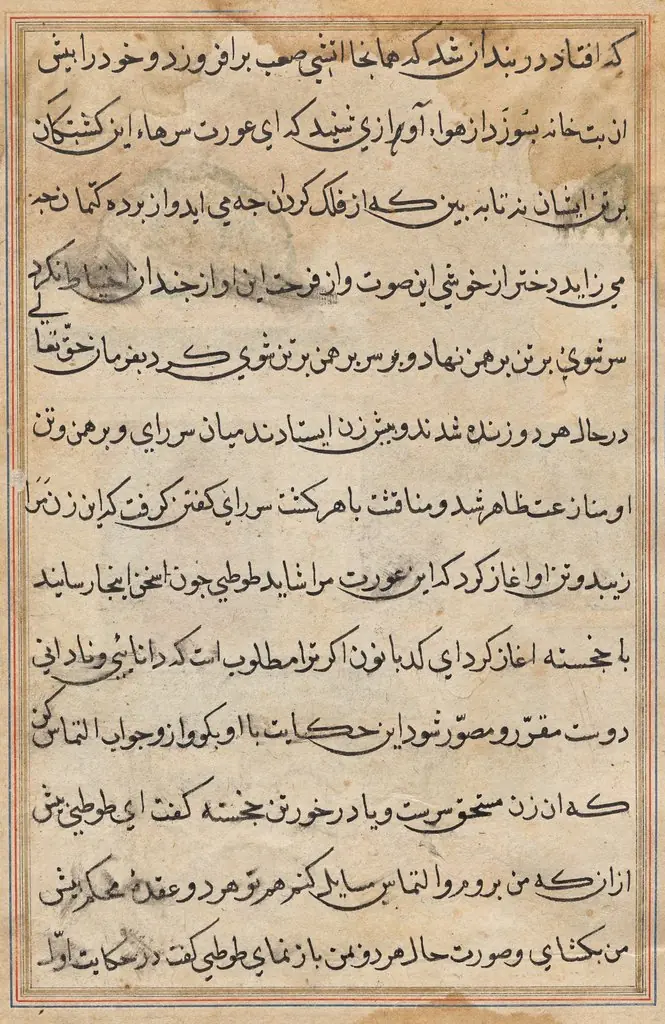
Page from Tales of a Parrot (Tuti-nama): text page
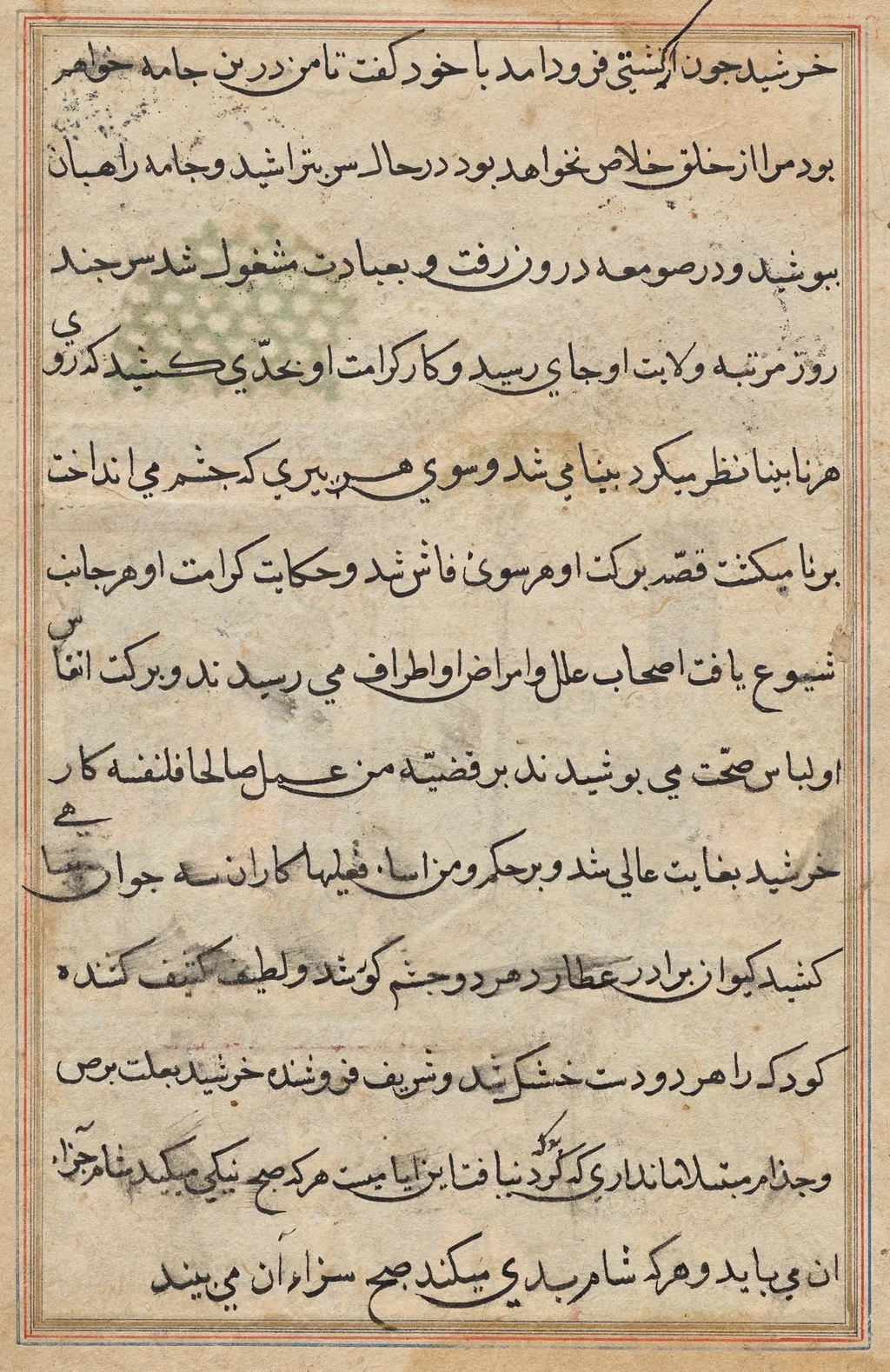
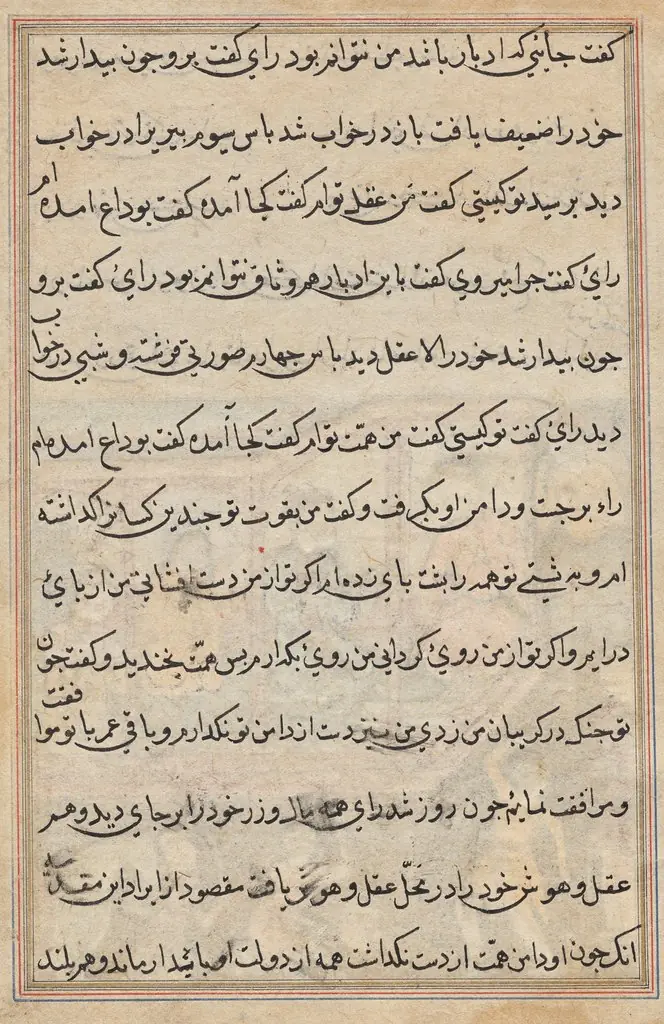
Page from Tales of a Parrot (Tuti-nama): text page is an unspecified painting. It dates from 1560 and is held in the collection of the Cleveland Museum of Art. This object is a single folio from the Persian manuscript Tales of a Parrot (Tuti‑nama).
About this work
Subject & Meaning
This is a text page from the Tuti-nama, a Persian narrative cycle of moral tales popular at the Mughal court in which a parrot imparts wisdom.
This is a text page from the Tuti-nama, a Persian narrative cycle of moral tales popular at the Mughal court in which a parrot imparts wisdom. As a text folio it carries the written narrative rather than figurative illustration, and within the manuscript it serves a didactic function, transmitting ethical lessons through illustrated literature. The work was created circa 1560 in the Mughal Empire and is held in the Cleveland Museum of Art.
Technique & Style
The page is executed in ink on paper and was produced in 1560 within the Mughal Empire, reflecting the conventions of manuscript production of that period. The composition presents text in a measured layout consistent with Persianate manuscript design. The work is held in the Cleveland Museum of Art, where it is catalogued under accession number 1962.279.213.a.
History & Provenance
The page was produced in 1560 within the Mughal Empire and is attributed to an unknown artist. It is held in the collection of the Cleveland Museum of Art under accession number 1962.279.213.a. No earlier ownership history, commission details, or documented exhibitions prior to its acquisition by the museum are recorded in the available sources.
Legacy
The page's survival offers rare insight into Mughal manuscript production, where text and miniature painting were integrated. Its presence in a U.S. collection highlights the dispersal of Indian artistic materials following colonial-era acquisitions. The work's attribution to the Mughal imperial workshop underscores evolving scholarly understandings of collaborative authorship in 16th-century Persianate art, though its anonymous maker reflects broader patterns of workshop-based creation.
Contemporary scholarship engages with its material and stylistic qualities to contextualize cross-cultural exchanges between Persianate traditions and Indian patronage networks.
Overview
This object is a single folio from the Persian manuscript Tales of a Parrot (Tuti‑nama). The page is rendered entirely in black ink, the calligraphy filling the surface in tightly spaced, flowing Arabic script. A narrow red line runs along the edge, framing the text, while the paper itself shows a muted, aged tone with faint discolorations near the top.
Context
Tales of a Parrot belongs to a broader corpus of Persian narrative literature that often employed animal narrators to convey ethical teachings. Such manuscripts were typically commissioned by elite patrons for private reading, and their production involved skilled scribes, calligraphers, and occasionally miniature painters.
Artist & collection

- Page from Tales of a Parrot (Tuti-nama): text page
 Page from Tales of a Parrot (Tuti-nama): text page
 Page from Tales of a Parrot (Tuti-nama): text page
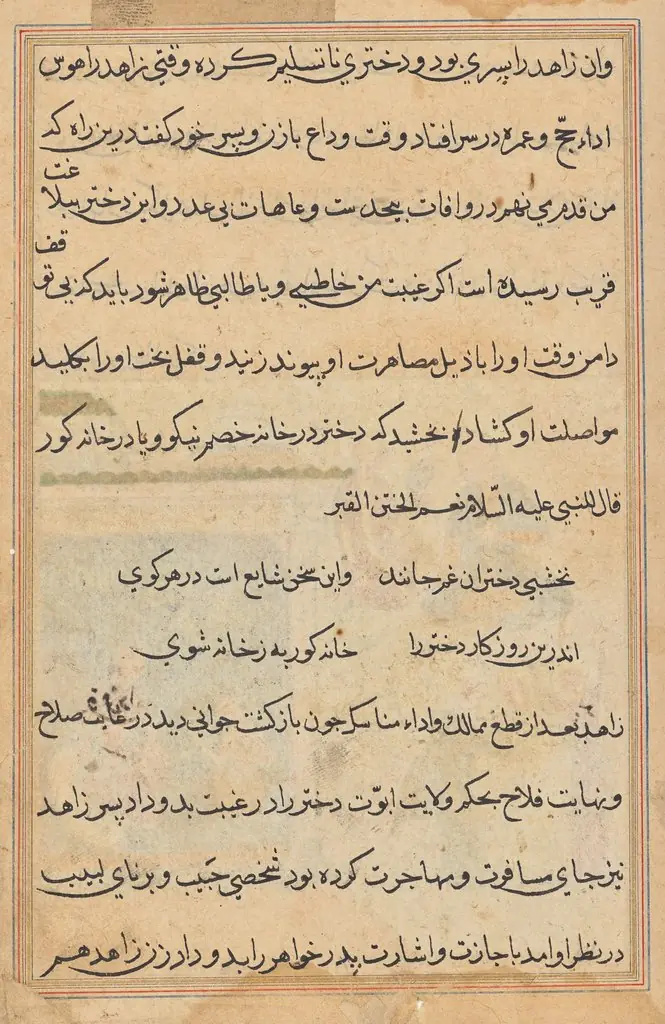 Page from Tales of a Parrot (Tuti-nama): text page
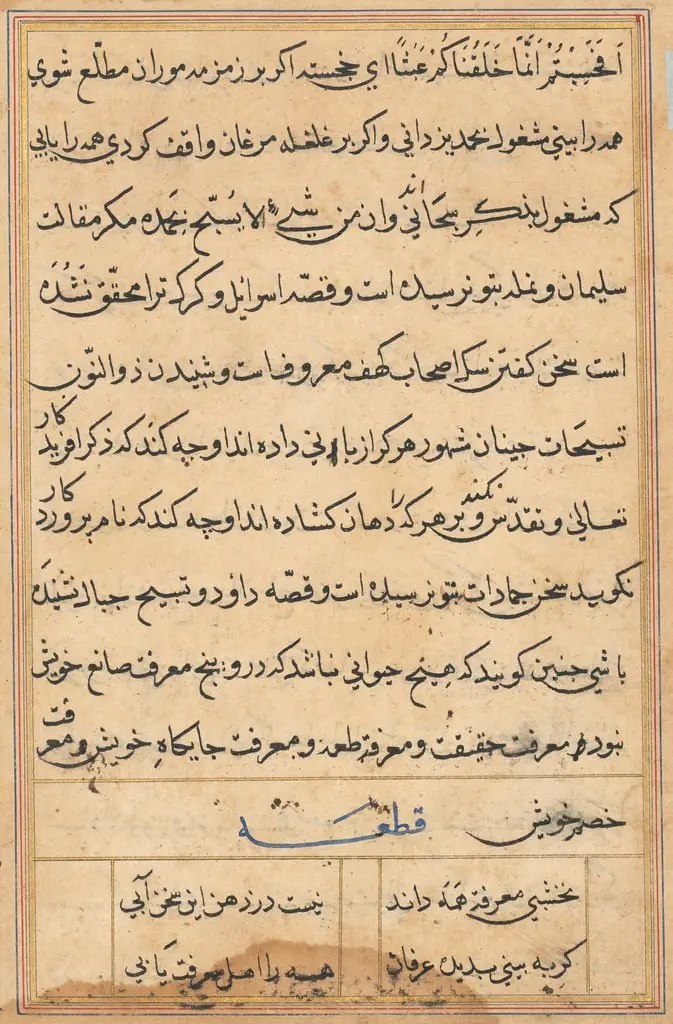 Page from Tales of a Parrot (Tuti-nama): text page
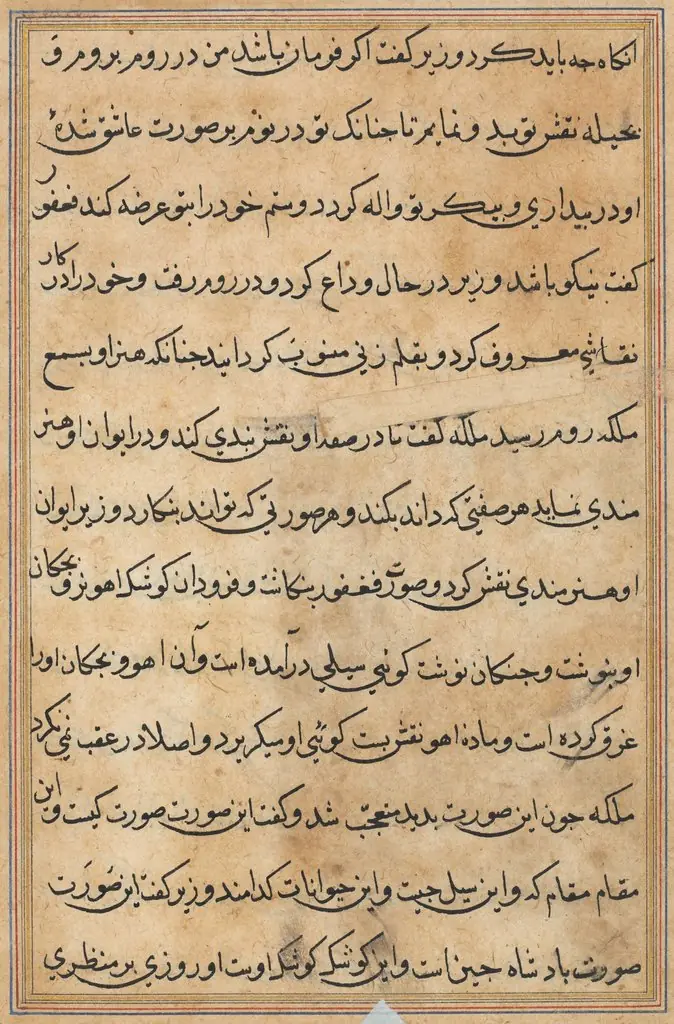 Page from Tales of a Parrot (Tuti-nama): text page
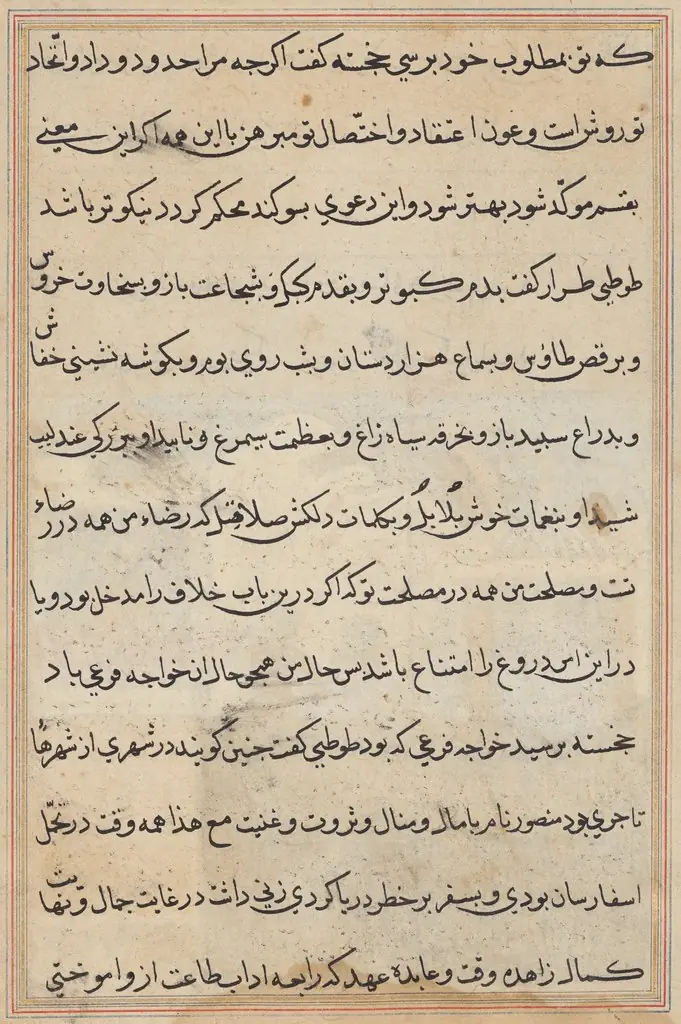 Page from Tales of a Parrot (Tuti-nama): text page
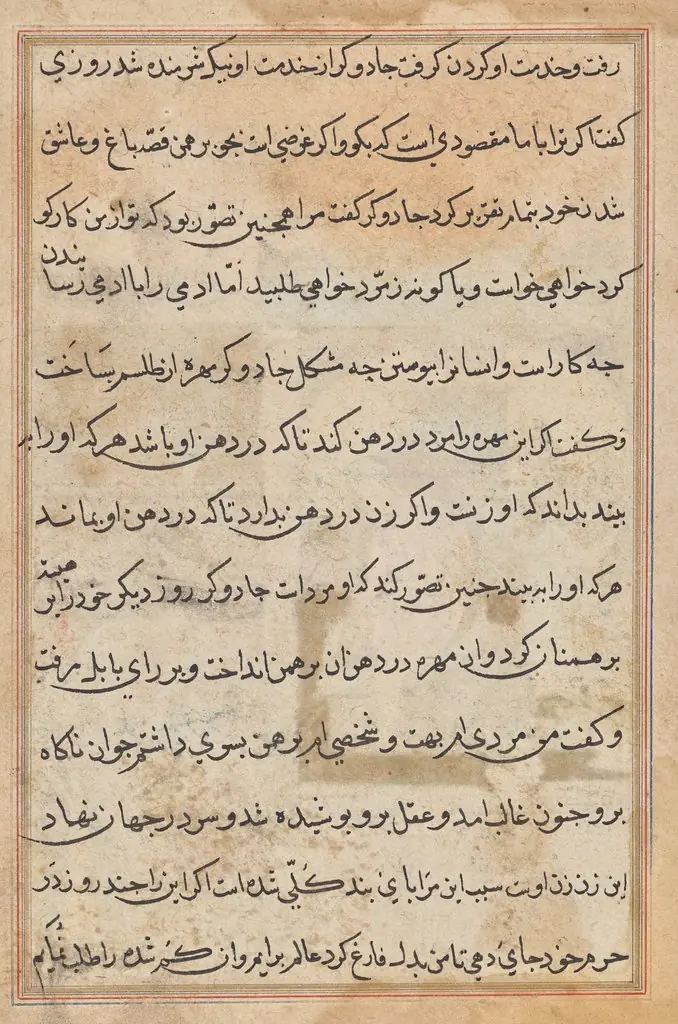 Page from Tales of a Parrot (Tuti-nama): text page
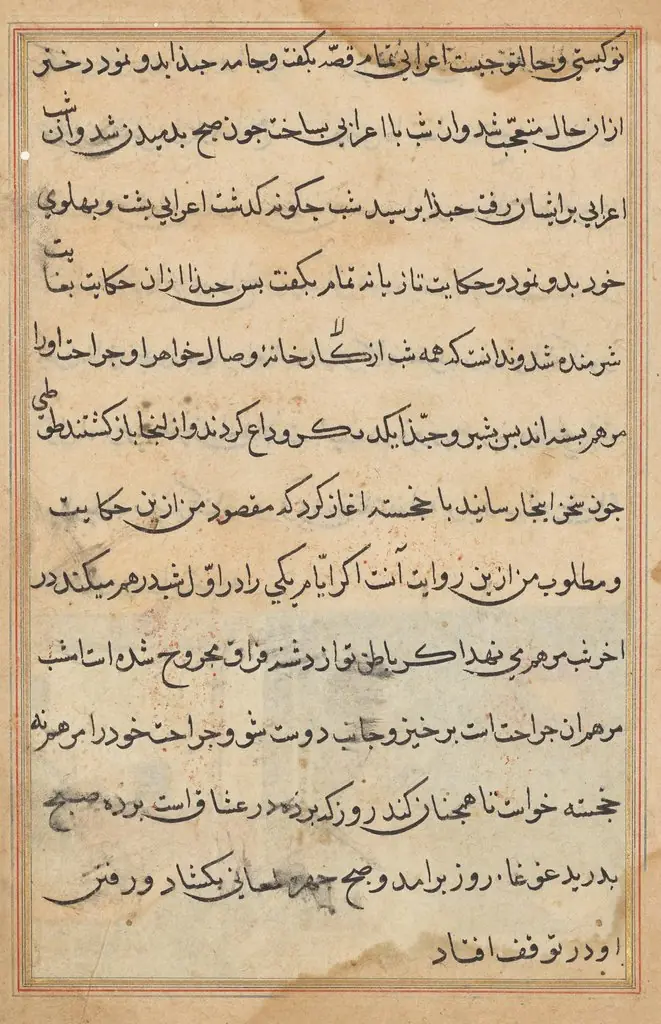 Page from Tales of a Parrot (Tuti-nama): text page
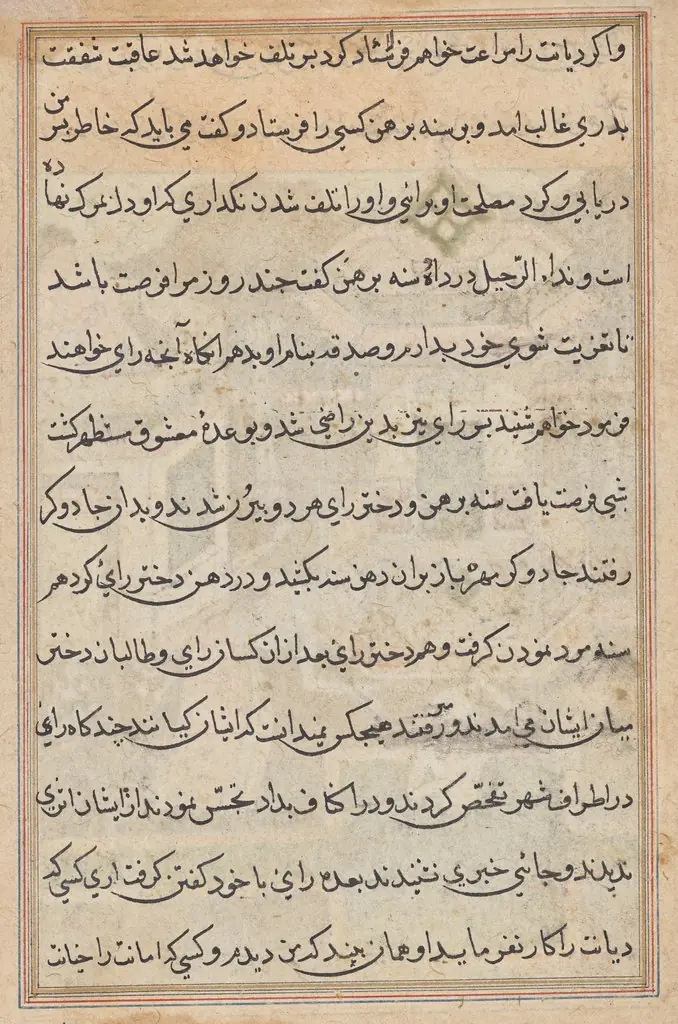 Page from Tales of a Parrot (Tuti-nama): text page
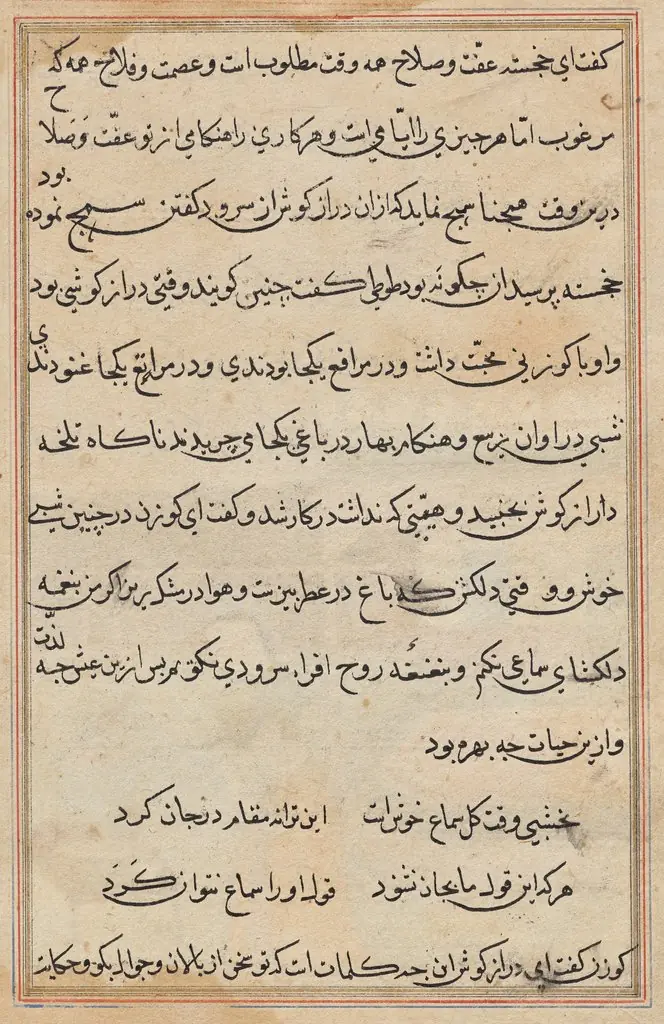 Page from Tales of a Parrot (Tuti-nama): text page
 Page from Tales of a Parrot (Tuti-nama): text page