Artwork
Peonies and Rocks
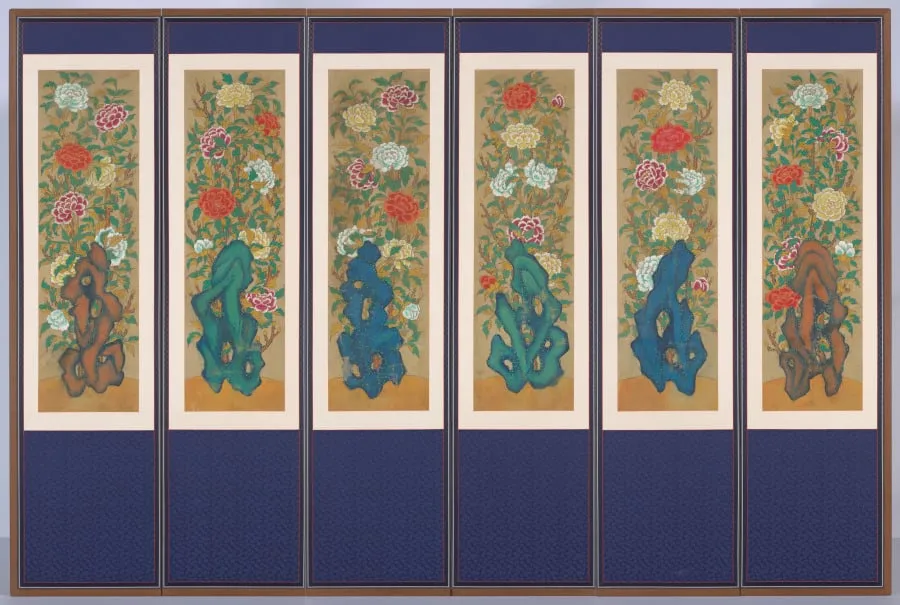
Peonies and Rocks is an unspecified painting by the Korean Minhwa artist Unknown. It dates from 1904 and is held in the collection of the Cleveland Museum of Art. This ink painting depicts peonies spilling over rugged stones, rendered with strong, unmodulated lines and minimal shading.
- Accession no.
- 2022.60
- Credit line
- Gift of The Honorable Joseph P. Carroll, KM, and Roberta Carroll, M.D.
About this work
Overview
This ink painting depicts peonies spilling over rugged stones, rendered with strong, unmodulated lines and minimal shading. Emerging in late nineteenth-century Korea, such compositions appealed to middle-class households seeking symbolic decoration. The work reflects a shift toward graphic, stylized floral imagery that prioritized visual impact over naturalism.
Subject & Meaning
Peonies, long associated with prosperity in East Asian culture, were chosen for their lush, full blooms and association with abundance. Paired with enduring rocks, they conveyed stability and fortune. In domestic settings, these paintings functioned as visual charms, intended to attract wealth and auspiciousness into the home during a period of social change.
Technique & Style
The artist employed bold, black ink lines to define each petal and rock edge, avoiding gradations or soft modeling. This approach creates a flattened, almost cut-paper effect, emphasizing form over texture. The composition is deliberately asymmetrical, with flowers cascading dynamically over the rocks to enhance visual energy and movement.
History & Provenance
Produced during a time of growing middle-class patronage, such works were widely reproduced and displayed in urban Korean homes. They reflect the commercialization of traditional motifs, adapted for secular domestic spaces rather than scholarly or aristocratic contexts. Their popularity coincided with broader shifts in artistic production and consumption.
Context
This painting belongs to a broader trend in late Joseon Korea where floral subjects, once reserved for elite literati, became accessible to merchants and artisans. The emphasis on bold design aligned with popular tastes and print culture, making symbolic imagery more widely available outside courtly traditions.
Legacy
The stylistic choices in this work influenced later generations of Korean painters who continued to adapt nature motifs for modern households. Its graphic clarity helped bridge traditional ink painting with emerging popular aesthetics, leaving a mark on 20th-century Korean decorative arts.
Artist & collection









 Untitled
 Birds and Flowers
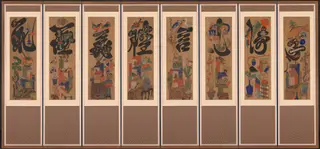 Munja-Chaekgeori Screen (Character-Books Screen)
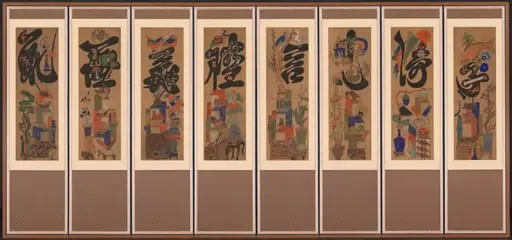 Munja-Chaekgeori Screen (Character-Books Screen)
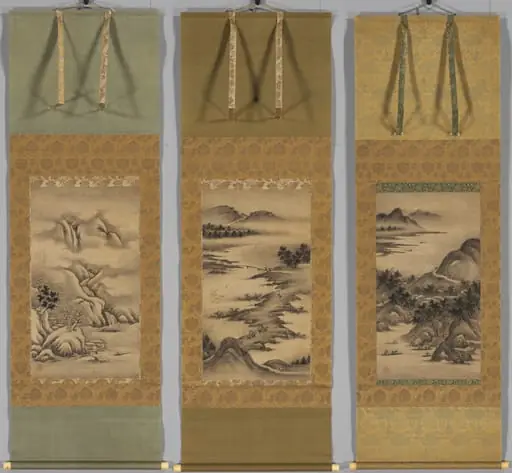 Seasonal Landscapes
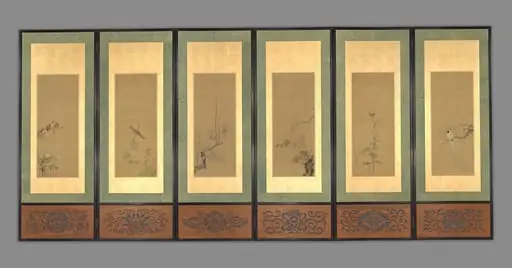 狩野探幽・狩野尚信・清原雪信 花鳥図屏風|Birds and Flowers
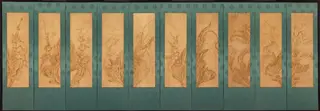 Birds and Flowers
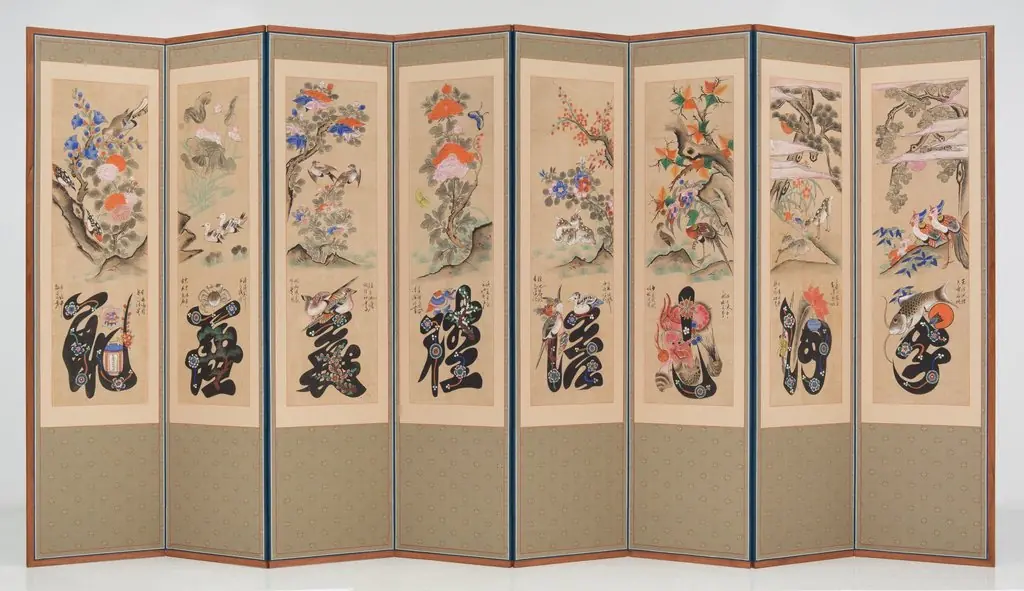 Munjado with Flowers and Birds
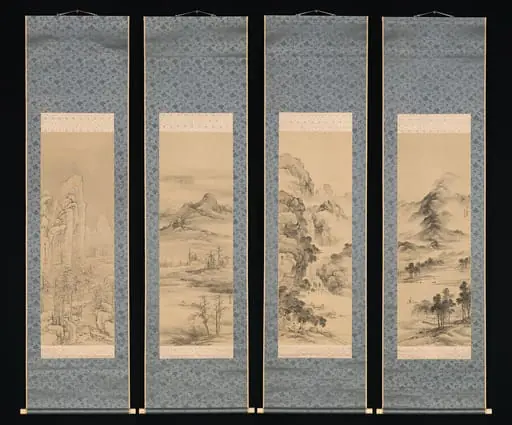 山本梅逸筆 四季山水図|Landscapes of the Four Seasons
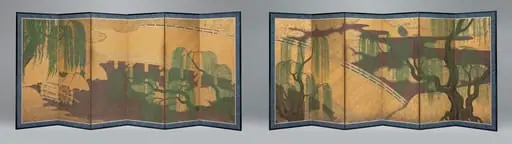 Willow Bridge and Waterwheel
 Irises
- Peonies