Artwork
狩野探幽・狩野尚信・清原雪信 花鳥図屏風|Birds and Flowers
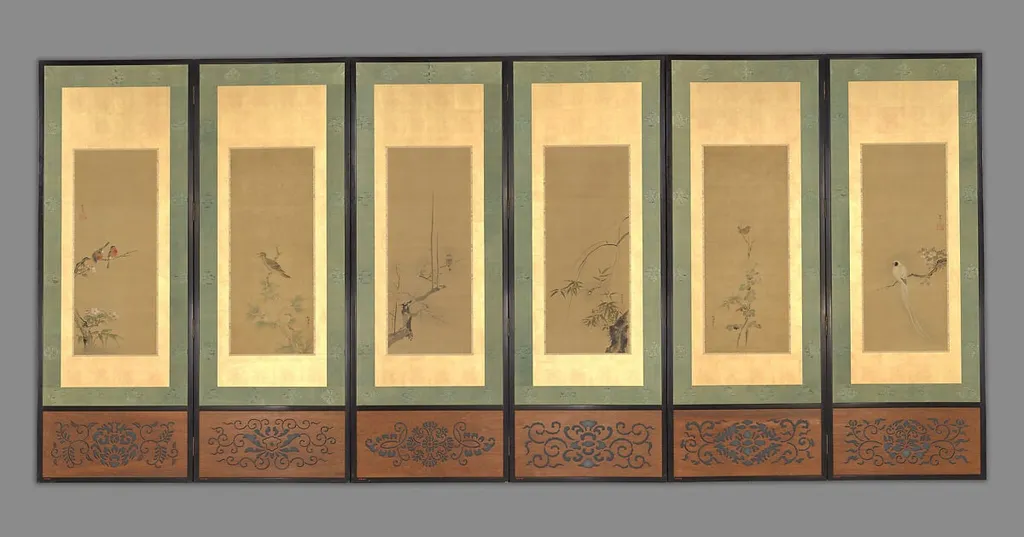
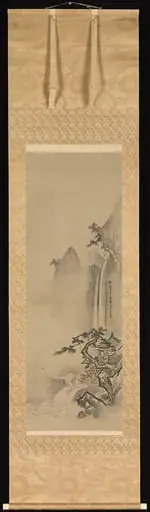
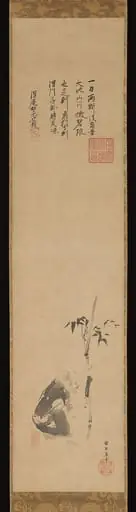
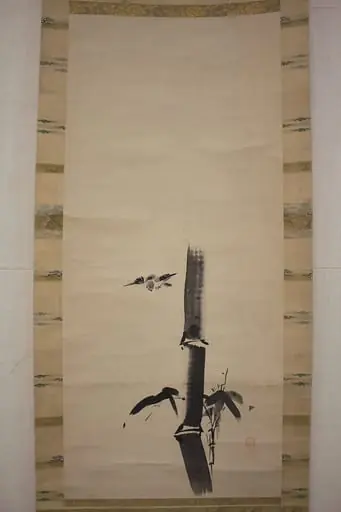
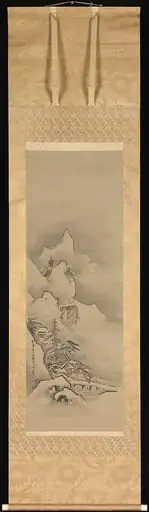
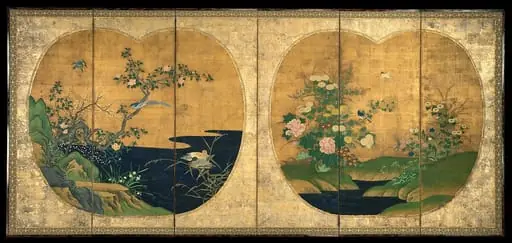
狩野探幽・狩野尚信・清原雪信 花鳥図屏風|Birds and Flowers is an ink painting by the Baroque artist Kano Tan'yū. It dates from 1650 and is held in the collection of the Metropolitan Museum of Art. This six-panel folding screen, titled Birds and Flowers, is a collaborative work created around 1650.
About this work
Subject & Meaning
The composition serves as a traditional representation of nature, consistent with the Kano school's approach to screen painting during the Edo period.
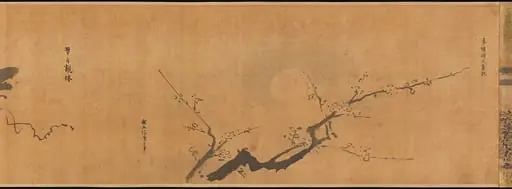
The work depicts flowers as its primary subject, presented across a six-panel folding screen format. Created in 1650 by Kano Tan'yū, Kano Naonobu, and Kiyohara Yukinobu, the piece utilizes ink and color on silk to render these botanical forms. While the genre is broadly categorized as landscape, the specific iconography focuses on floral imagery.
The composition serves as a traditional representation of nature, consistent with the Kano school's approach to screen painting during the Edo period.
Technique & Style
Birds and Flowers is executed as a six-panel folding screen using ink and color on silk, a support and medium combination characteristic of high-status Japanese painting of the mid-seventeenth century. The work measures 177.8 cm in height and 395 cm in width, giving each panel a broad horizontal field suited to the paired composition of birds and flowering plants. The folding-screen format allowed the painted silk surface to be displayed in its entirety, presenting the floral motifs as a continuous decorative cycle across the joined panels.
The use of silk as a support, paired with polychrome ink, reflects the collaborative Kano-school practice of combining monochrome brushwork with selective color application.
History & Provenance
The six-panel folding screen Birds and Flowers is held in the collection of the Metropolitan Museum of Art, as recorded in the Wikidata entry for the work.
No accession number, acquisition details, or exhibition history is documented in the available sources.
Overview
This six-panel folding screen, titled Birds and Flowers, is a collaborative work created around 1650. It features intricate depictions of birds among flowering branches, rendered in ink and color on silk. Notably, three artists contributed to its creation: Kano Tan'yū, Kano Naonobu, and Kiyohara Yukinobu.
The inclusion of a female artist, Kiyohara Yukinobu, on a prominent piece from 17th-century Japan is a distinctive aspect of this painting.
Context
This screen represents a significant collaboration within the Kano school, a prominent lineage of Japanese painters. The involvement of Kiyohara Yukinobu alongside male artists Kano Tan'yū and Kano Naonobu is particularly noteworthy. During the 17th century, it was uncommon for women artists to receive public recognition on major commissions, making her contribution to this large-scale work a rare historical instance.
Artist & collection