Artwork
Portrait of Anna Filatova, a Merchant's Wife
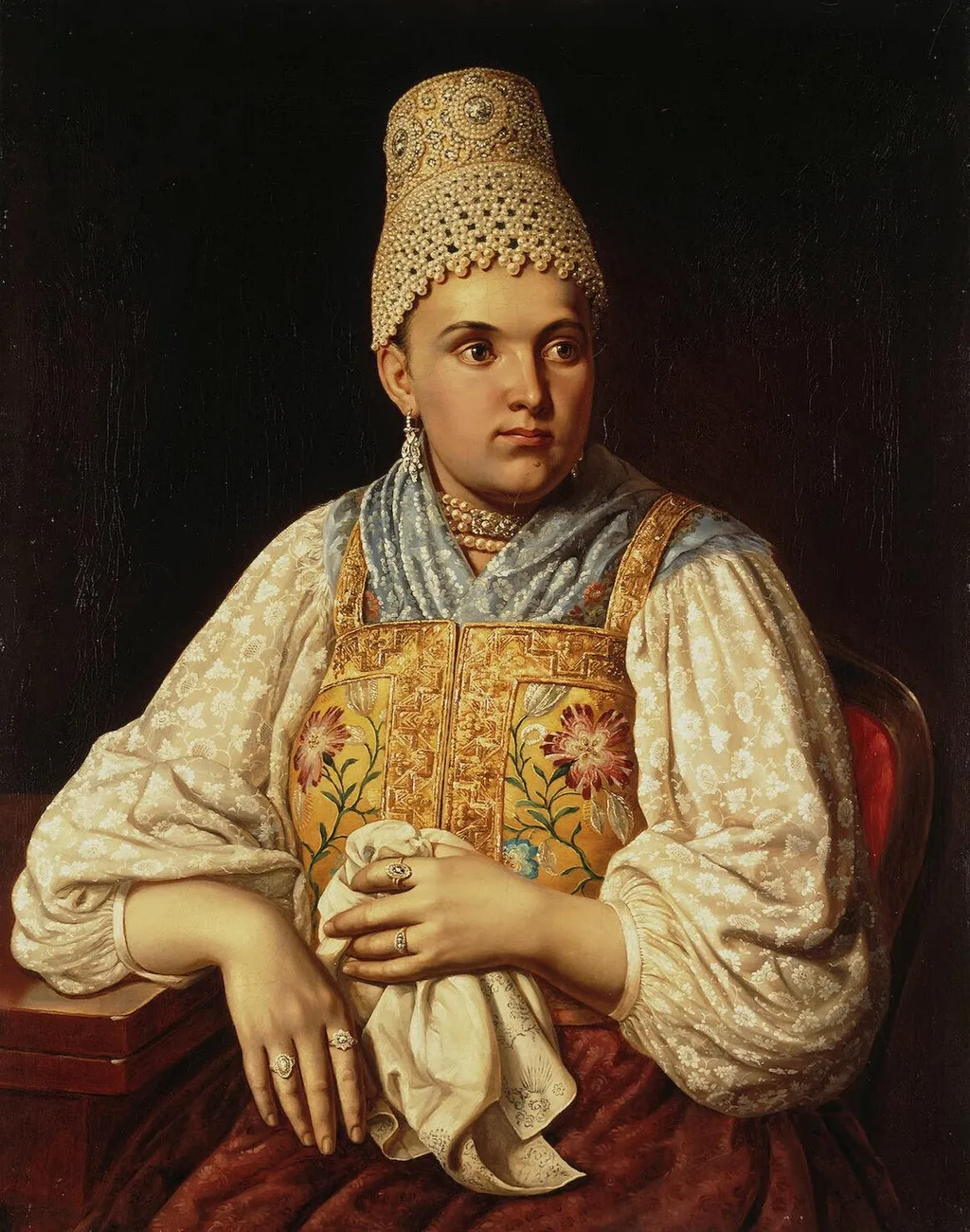
Portrait of Anna Filatova, a Merchant's Wife is an oil painting by the Russian Icon artist Unknown. It dates from 1840 and is held in the collection of the Hermitage Museum.
About this work
Overview
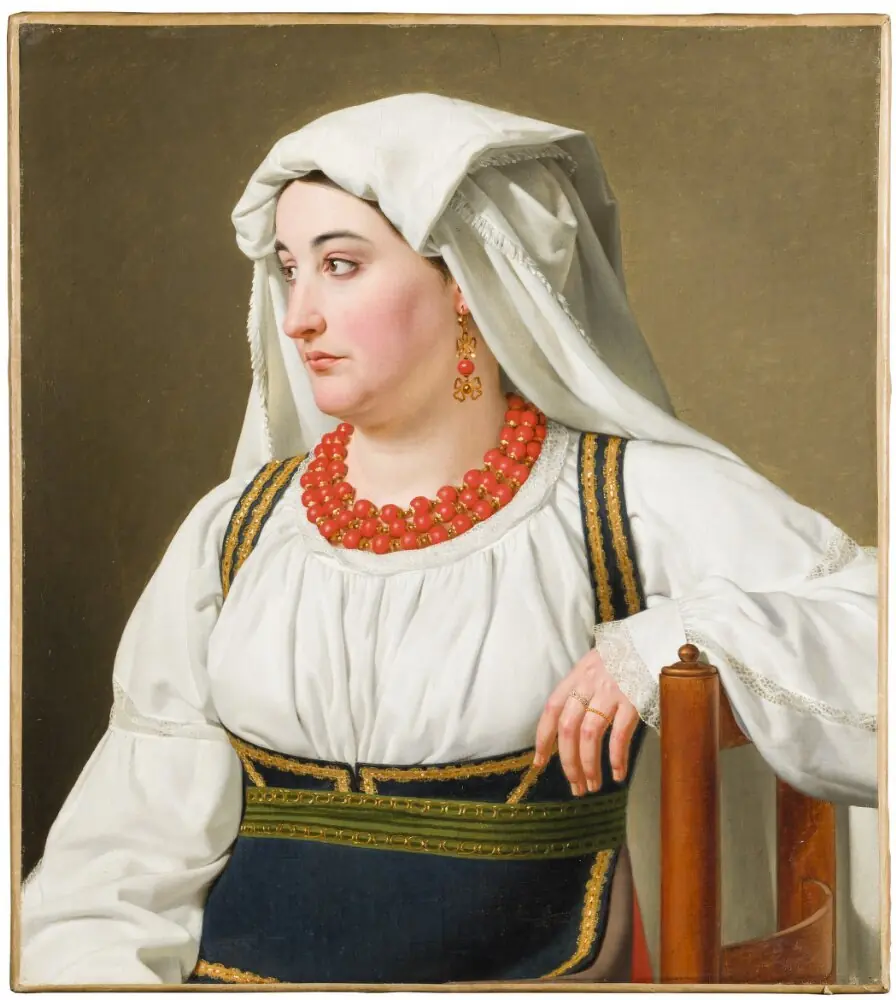
This oil painting presents a formal portrait of Anna Filatova, the wife of a Russian merchant, rendered with meticulous attention to texture and light. She is seated, hands gently clasped, facing the viewer with calm composure. The composition emphasizes her refined bearing through controlled lighting and precise rendering of fabric and adornments, suggesting status without overt grandeur.
Subject & Meaning
Anna Filatova is depicted not as a noblewoman but as a member of the prosperous merchant class, whose wealth was newly acquired in 19th-century Russia.
Anna Filatova is depicted not as a noblewoman but as a member of the prosperous merchant class, whose wealth was newly acquired in 19th-century Russia. Her attire, elaborate embroidery, pearls, and lace, signals economic success and cultural aspiration. The direct gaze and restrained posture convey dignity rather than flamboyance, reflecting the values of self-possession prized in her social circle.
Technique & Style
The artist employs chiaroscuro to model the face and hands, isolating them against a dark background and enhancing their three-dimensionality. Fine brushwork captures the translucency of lace, the sheen of silk, and the glint of metal jewelry. The palette is rich yet restrained, with gold and red accents drawing the eye without overwhelming the subject’s quiet presence.
History & Provenance
Painted in the late 19th century, the work originated in a private Russian collection, likely commissioned by Filatova’s family. It remained in domestic hands until the early 20th century, when it entered a regional museum collection. Documentation confirms her identity through family records and contemporary merchant inventories, distinguishing it from idealized aristocratic portraits of the era.
Context
During this period, Russian merchants increasingly commissioned portraits to assert their social standing, often emulating aristocratic conventions while retaining elements of their own cultural identity. Unlike court painters, artists serving this clientele focused on tangible markers of wealth, textiles, jewelry, and domestic elegance, rather than symbolic allegory or mythological reference.
Legacy
The portrait stands as a representative example of non-noble portraiture in late Imperial Russia, illustrating how economic change reshaped visual culture. Its preservation offers insight into the aesthetics of self-representation among the urban bourgeoisie, bridging the gap between traditional nobility and emerging middle-class identity in a rapidly modernizing society.
Artist & collection









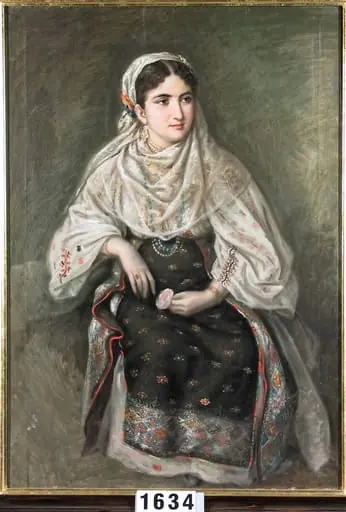 Portret de femeie din Câmpulung (Doamna Georgescu)
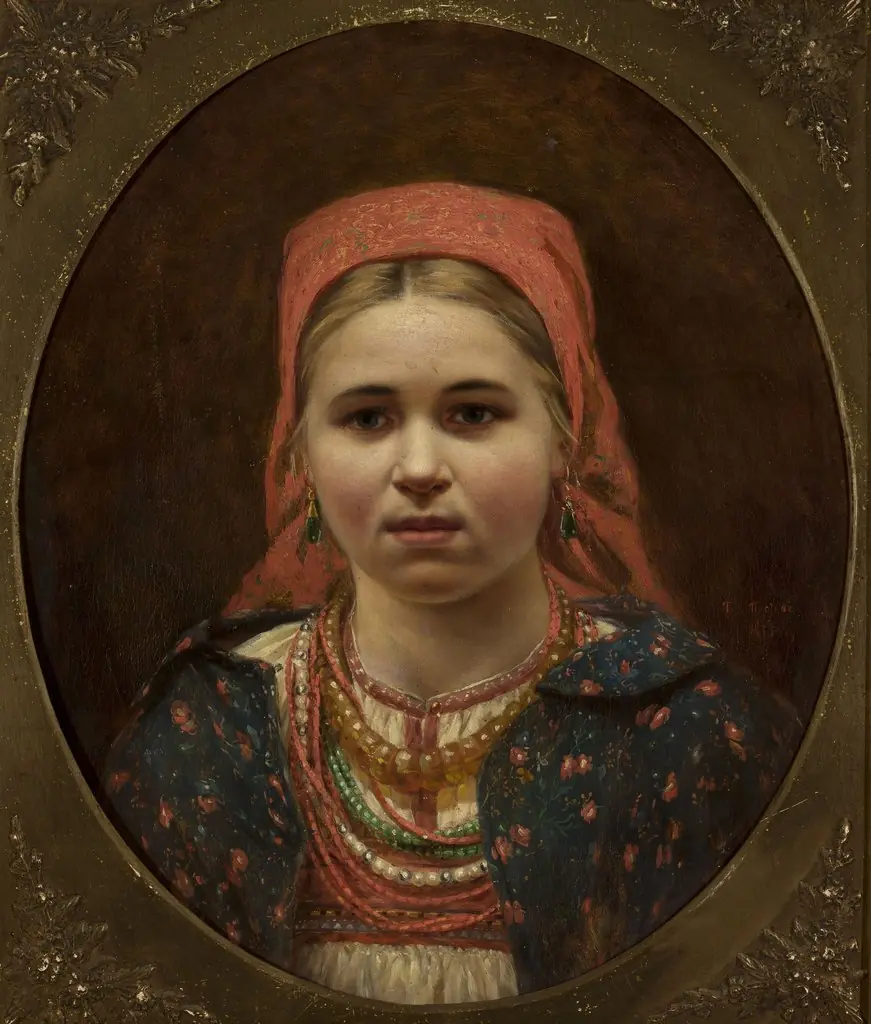 Portrait of a girl in a folk attire
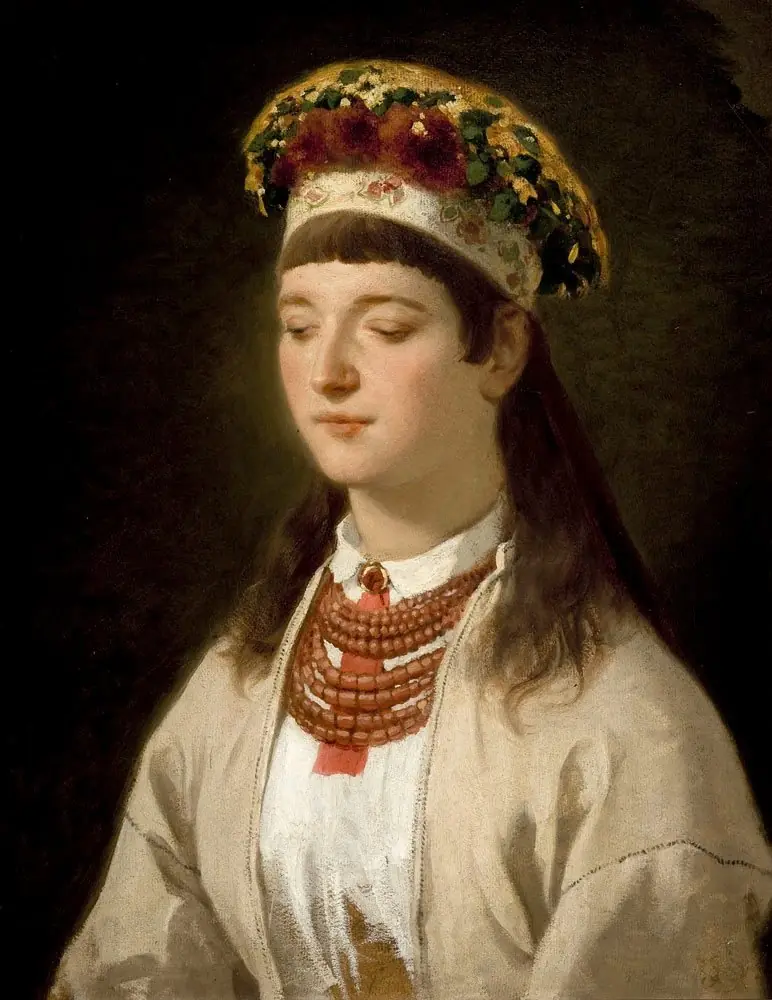 Panna młoda z Wróblewic
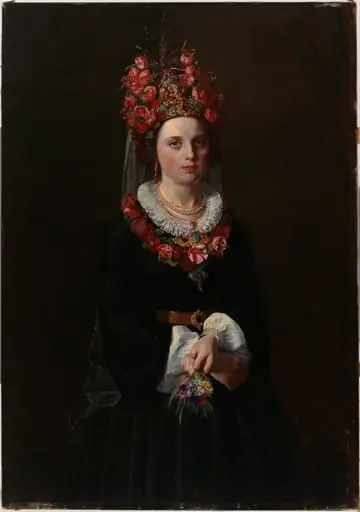 Ahvenanmaalainen talonpoikaismorsian
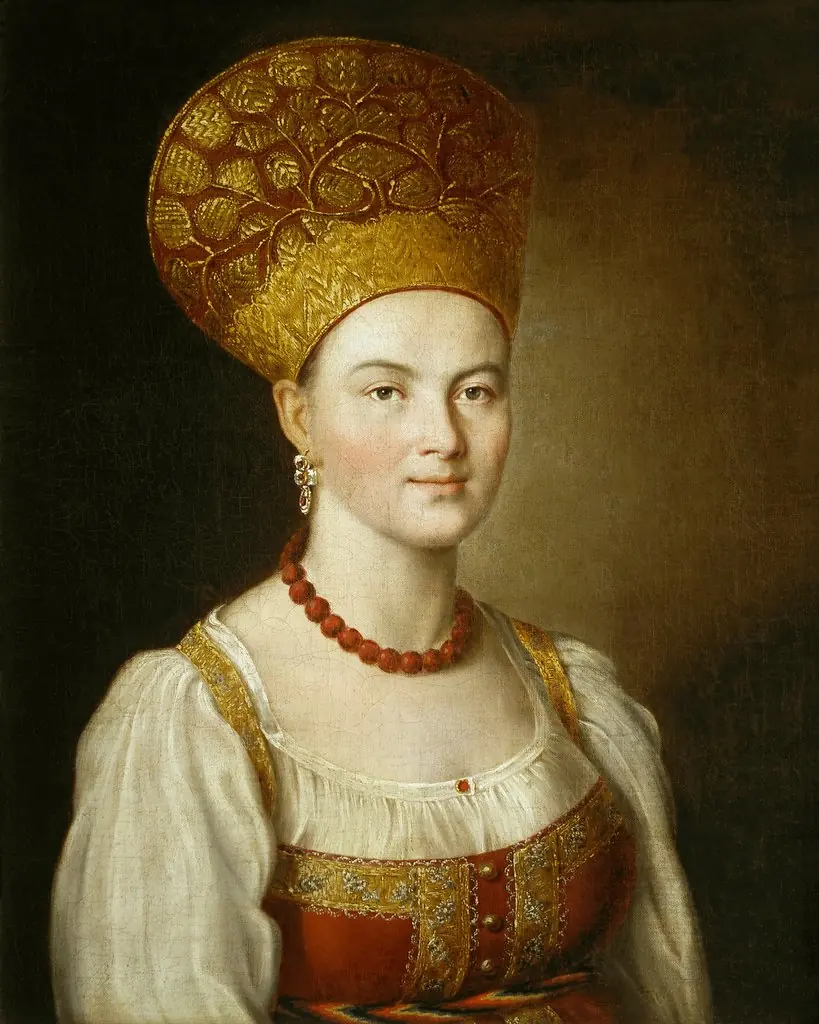 Portrait of an Unknown Woman in Russian Costume
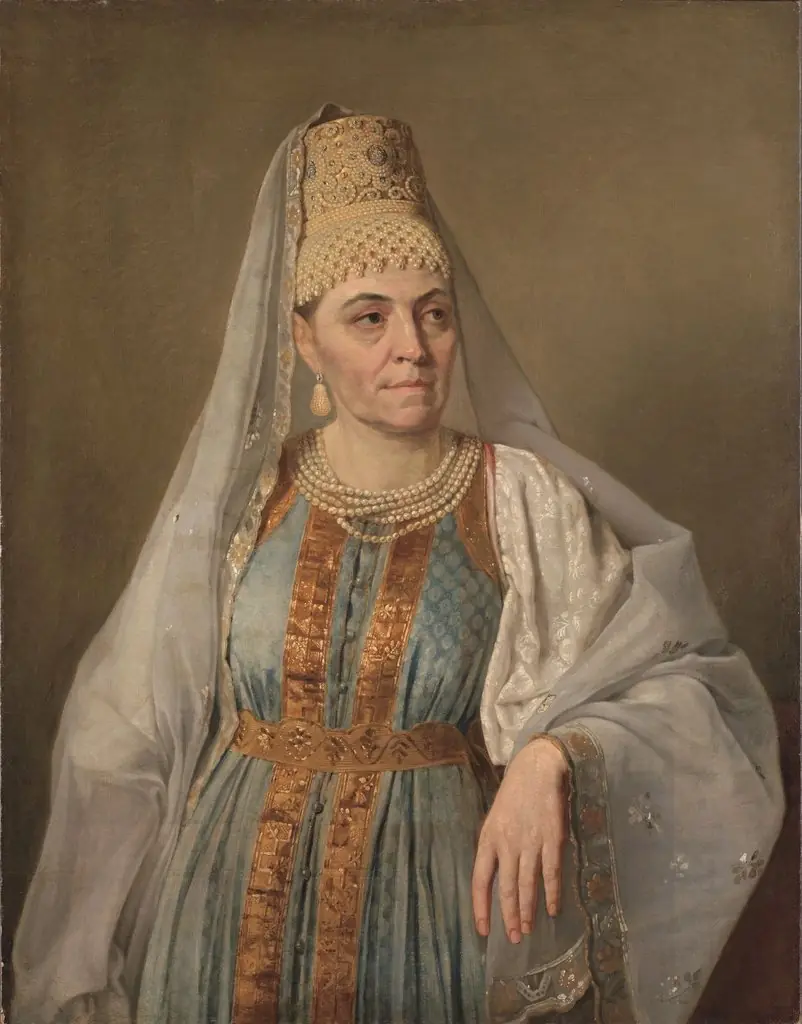 Портрет М.А. Венециановой в русском наряде
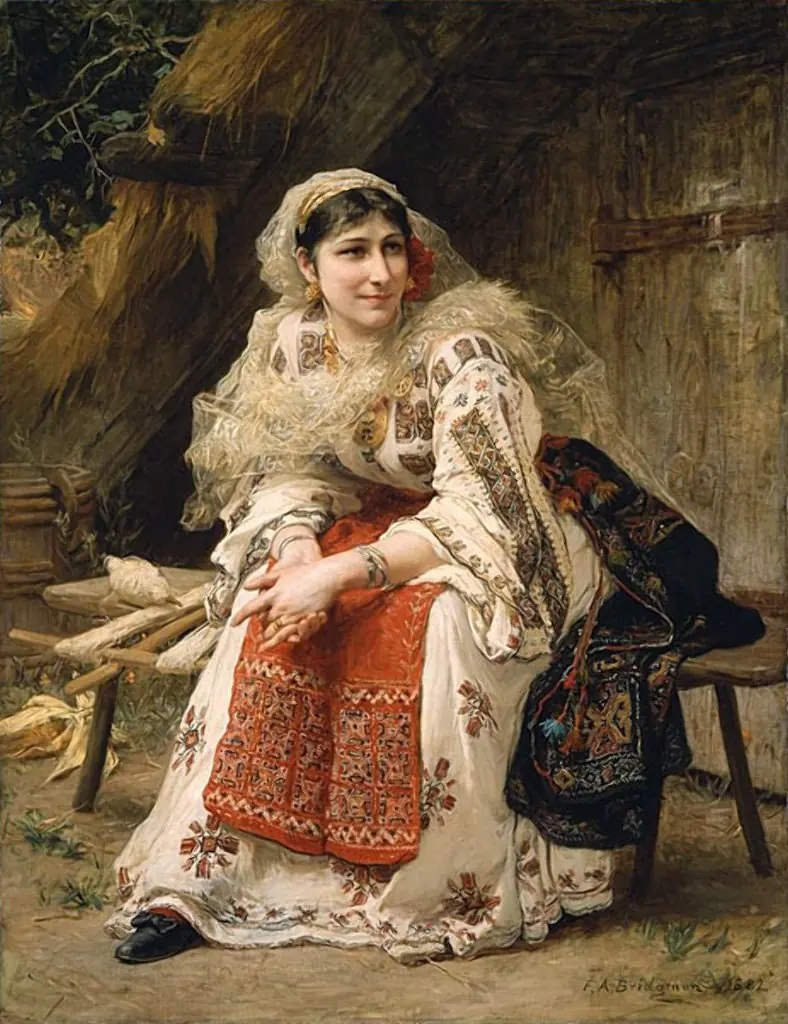 Armenian Woman.
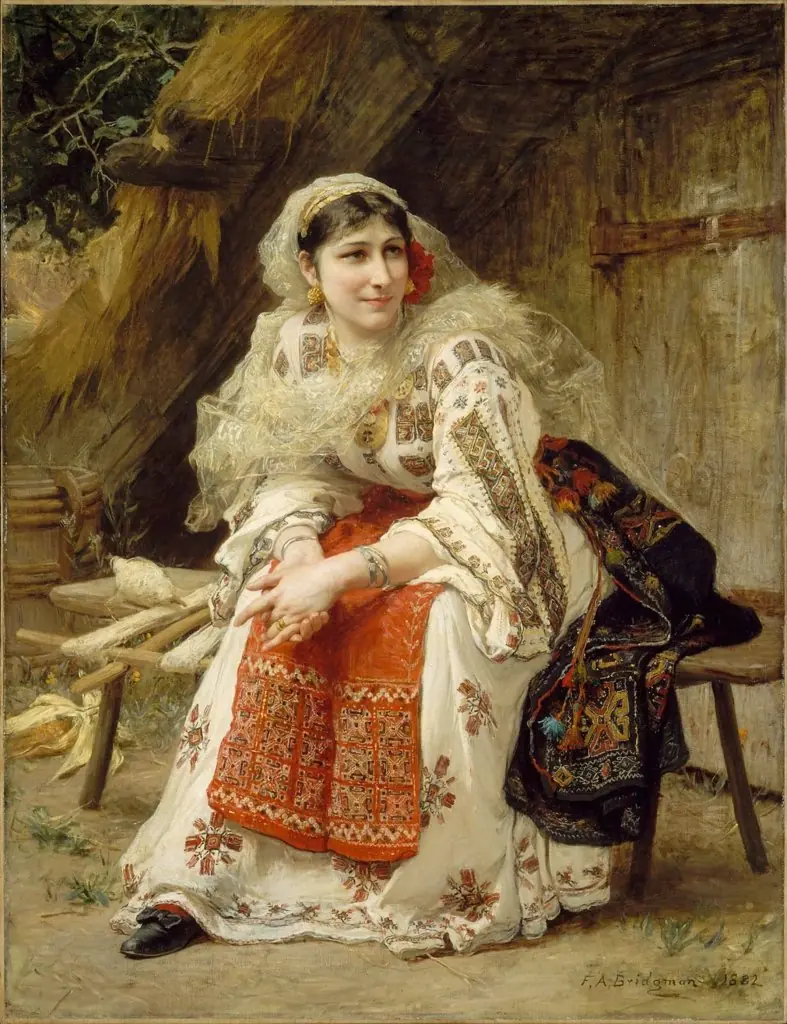 Romanian Woman
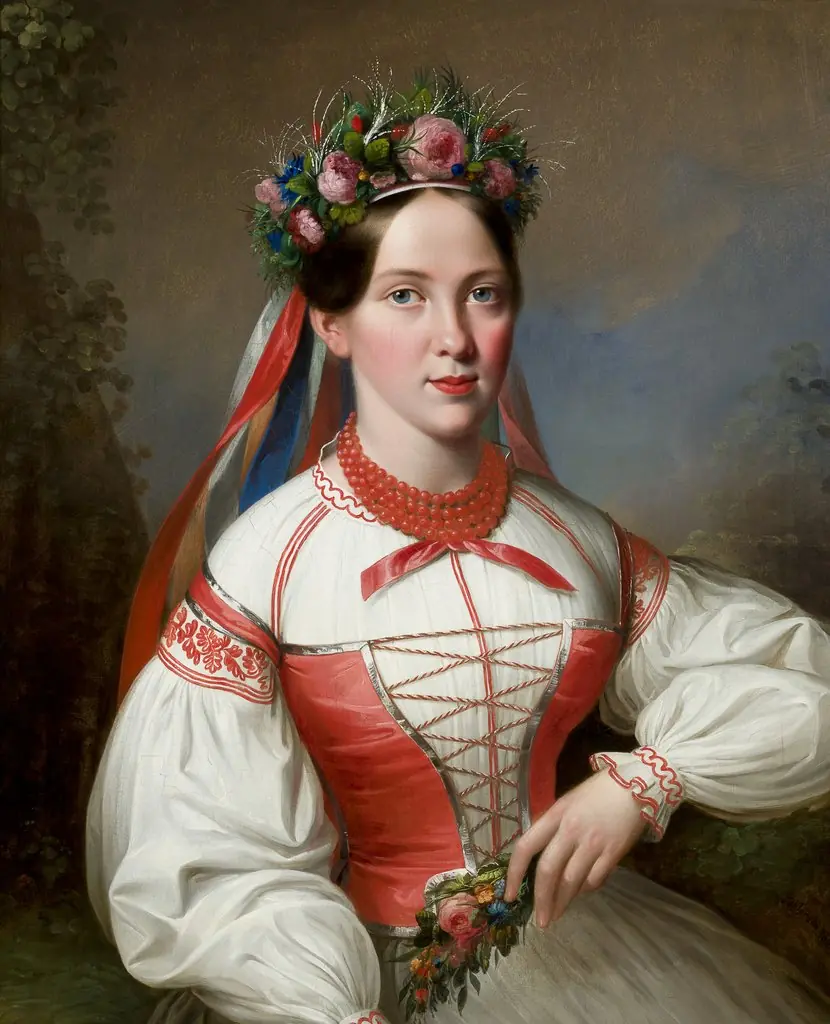 A Krakovian Woman
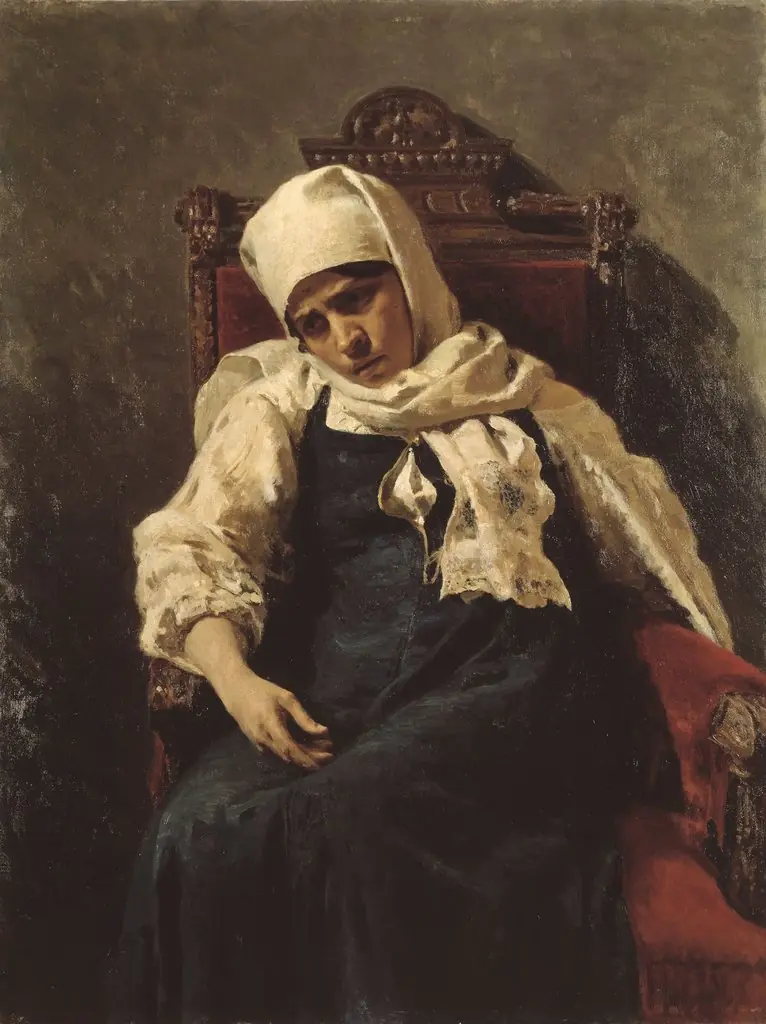 Portrait of actress Pelageya Antipevna Strepetova in the role of Elizabeth
 ’Una Ciociara’ – Portrait of a Roman Country Woman
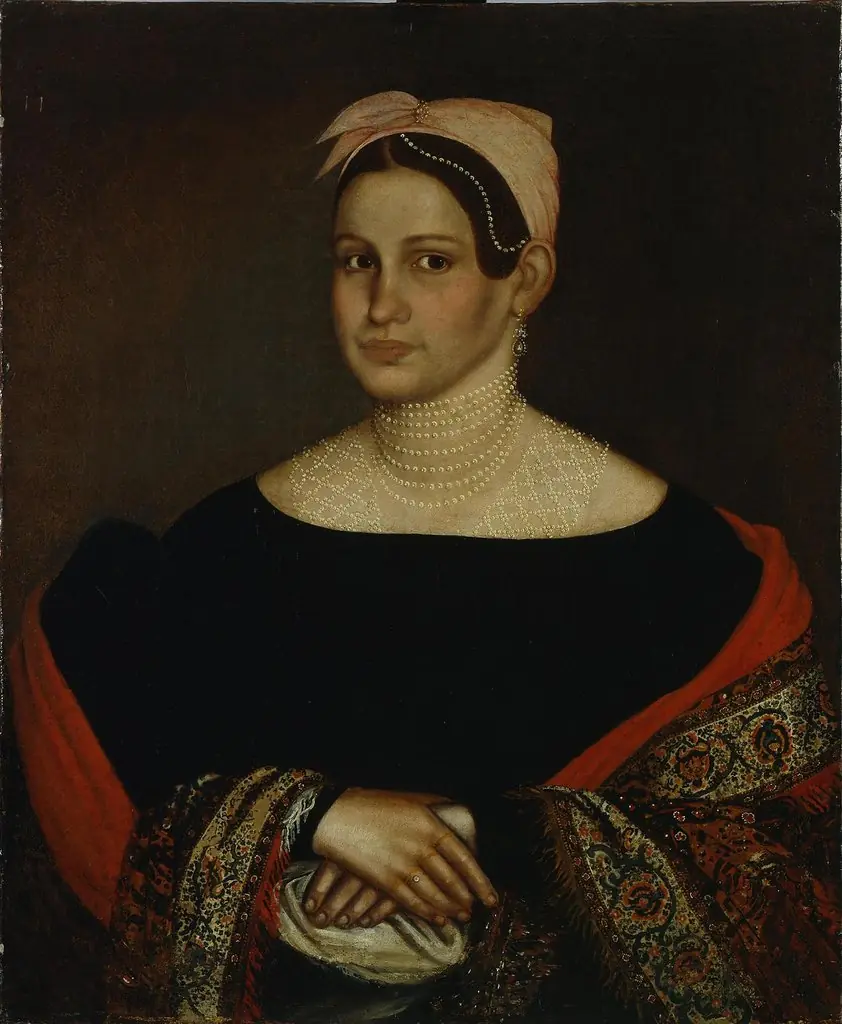
- Portrait of a Merchant Wife in a Low-cut Black Dress with Puffed Sleeves