Artwork
Portrait of Count Nikolai Repnin-Volkonsky with His Family
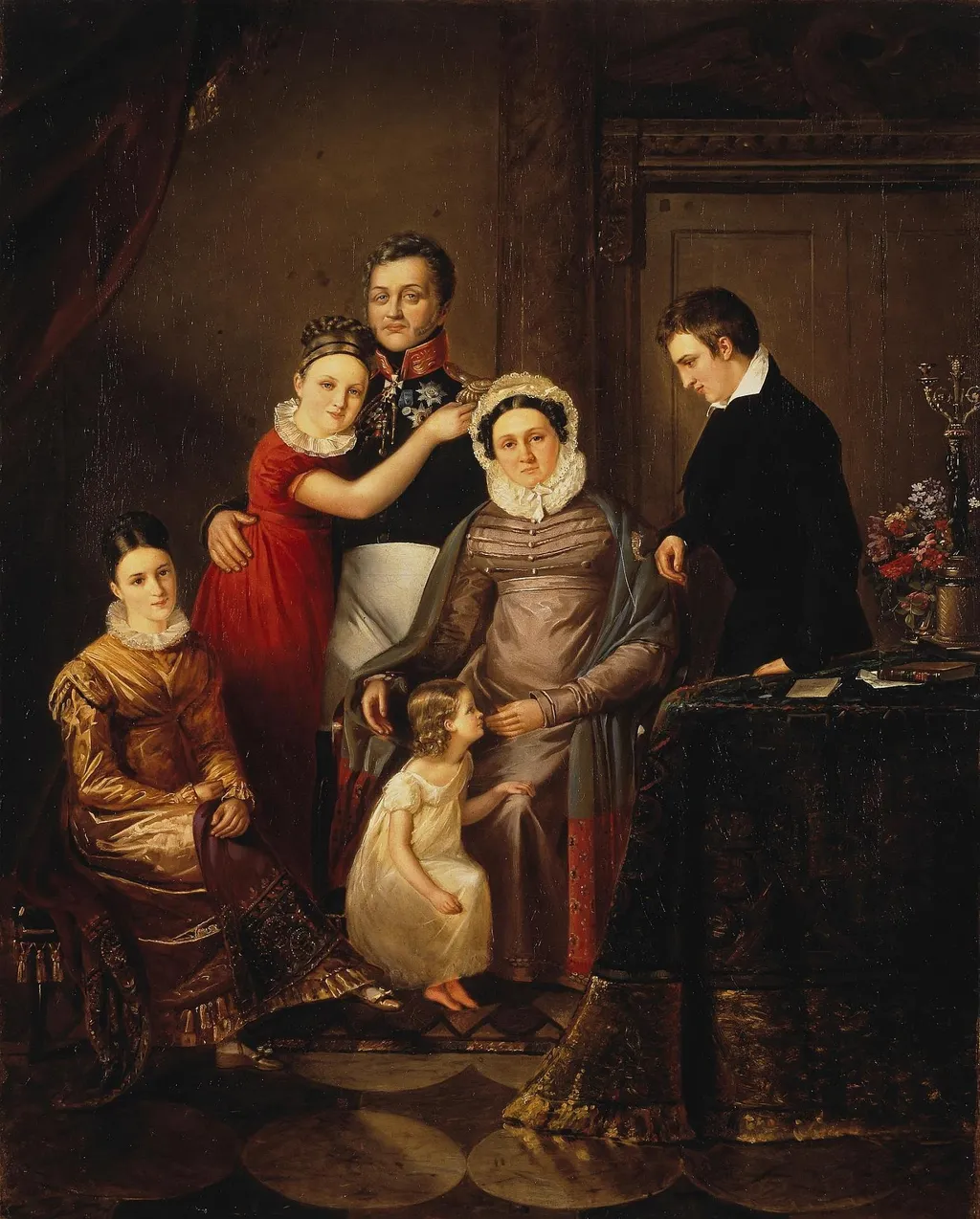
Portrait of Count Nikolai Repnin-Volkonsky with His Family is an oil painting. It dates from 1825 and is held in the collection of the Hermitage Museum.
About this work
Subject & Meaning
The painting portrays Count Nikolai Repnin-Volkonsky together with his family, presenting a multi-figure group portrait centered on domestic and kinship bonds.
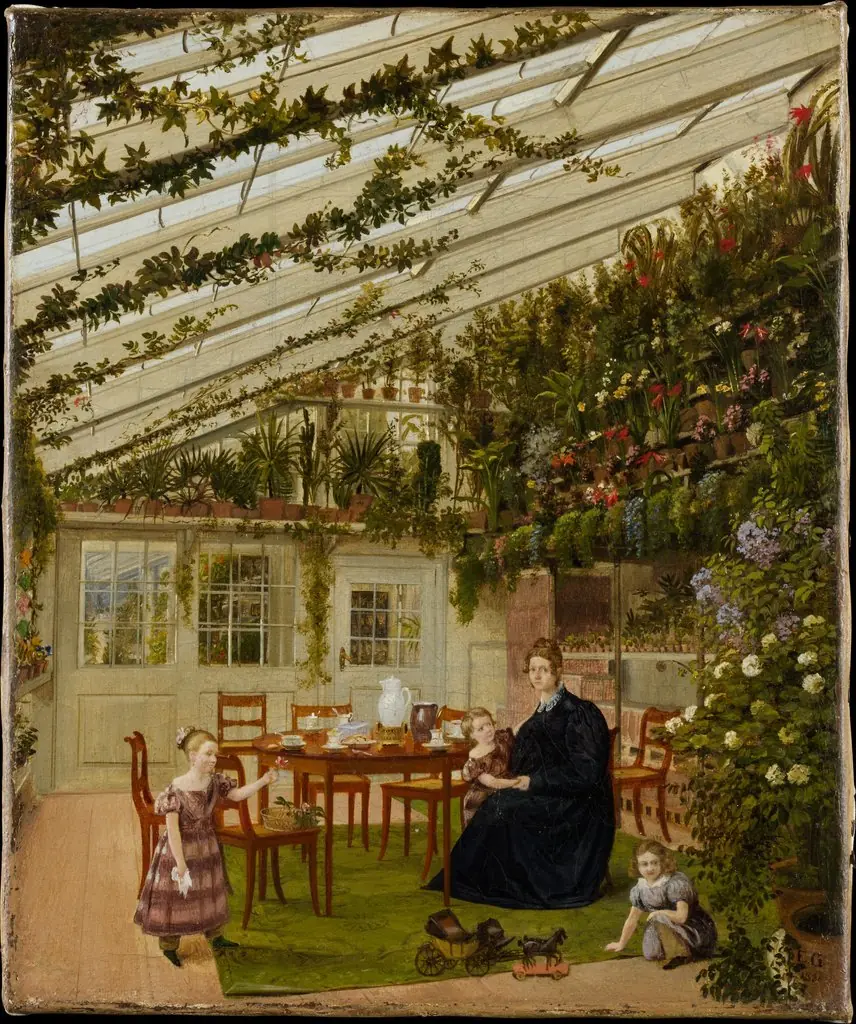
The painting portrays Count Nikolai Repnin-Volkonsky together with his family, presenting a multi-figure group portrait centered on domestic and kinship bonds. According to the cataloguing of the work, the depicted figures include a man, a woman, a daughter, and a child, situating the composition as a record of an aristocratic household rather than a single sitter. Surrounding objects noted in the inventory, a vase with a bouquet, a tablecloth, a candlestick, and items of clothing and dress, frame the family group and lend the scene the character of a formal interior gathering.
Painted in oil on canvas in 1825 and made in Russia, the work now resides in the Hermitage Museum, where it functions both as a likeness of the Repnin-Volkonsky family and as a document of early nineteenth-century Russian noble domestic iconography, in which floral still-life elements and candlelight conventionally signified refinement, hospitality, and continuity of lineage.
History & Provenance
The painting Portrait of Count Nikolai Repnin-Volkonsky with His Family is held in the collection of the Hermitage Museum in Russia. Created in 1825, this oil-on-canvas portrait depicts the count alongside his family members, including a woman and children, arranged with domestic elements such as a vase and candlestick. While the specific inventory or accession number is not detailed in the available records, the work is cataloged within the museum's holdings as a significant example of early 19th-century Russian portraiture.
The piece remains part of the permanent collection, reflecting the Hermitage's extensive archive of family portraits from the Imperial era.
Legacy
The painting entered the Hermitage Museum's collection soon after its creation, ensuring its continued public presence and scholarly interest. As a dated work of 1825, it stands as one of the few surviving Russian family portraits from the period, offering insight into aristocratic representation in the early nineteenth century. Its attribution to an unidentified master has prompted discussion of artistic anonymity and patronage, while its display within the Hermitage and inclusion in special exhibitions have reinforced its reputation as a significant example of the genre.
Consequently, the portrait remains a reference point for studies of Russian portraiture and the evolution of collective memory regarding the Russian nobility.
Overview
This oil painting, titled Portrait of Count Nikolai Repnin-Volkonsky with His Family, presents a formal group depiction of five individuals. The composition captures the Count, a military figure, alongside two women, a young girl, and a boy, all posed within a distinguished indoor setting. The artwork serves as a testament to the family's social position and the conventions of early 19th-century portraiture, emphasizing their collective presence.
Technique & Style
The artist utilized oil paint to create this detailed family portrait. A notable aspect of the work is the deliberate application of soft illumination, which meticulously highlights the varied textures of the fabrics and the individual features of each sitter's face. This careful modulation of light against the darker background ensures that the figures and their elaborate clothing are rendered with distinctness and a sense of three-dimensionality.
Artist & collection

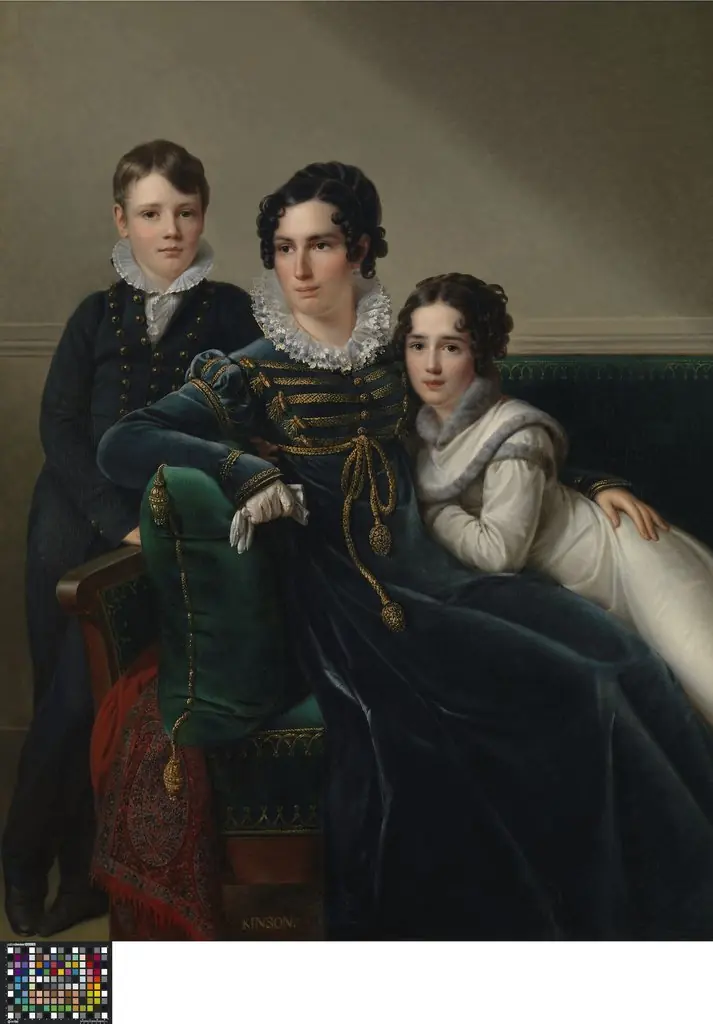
- Portret van een vrouw met haar twee kinderen
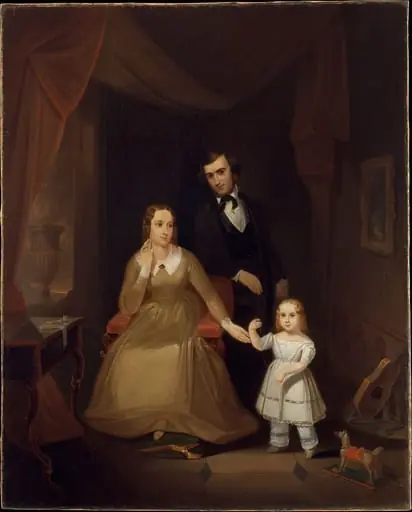 The Williamson Family
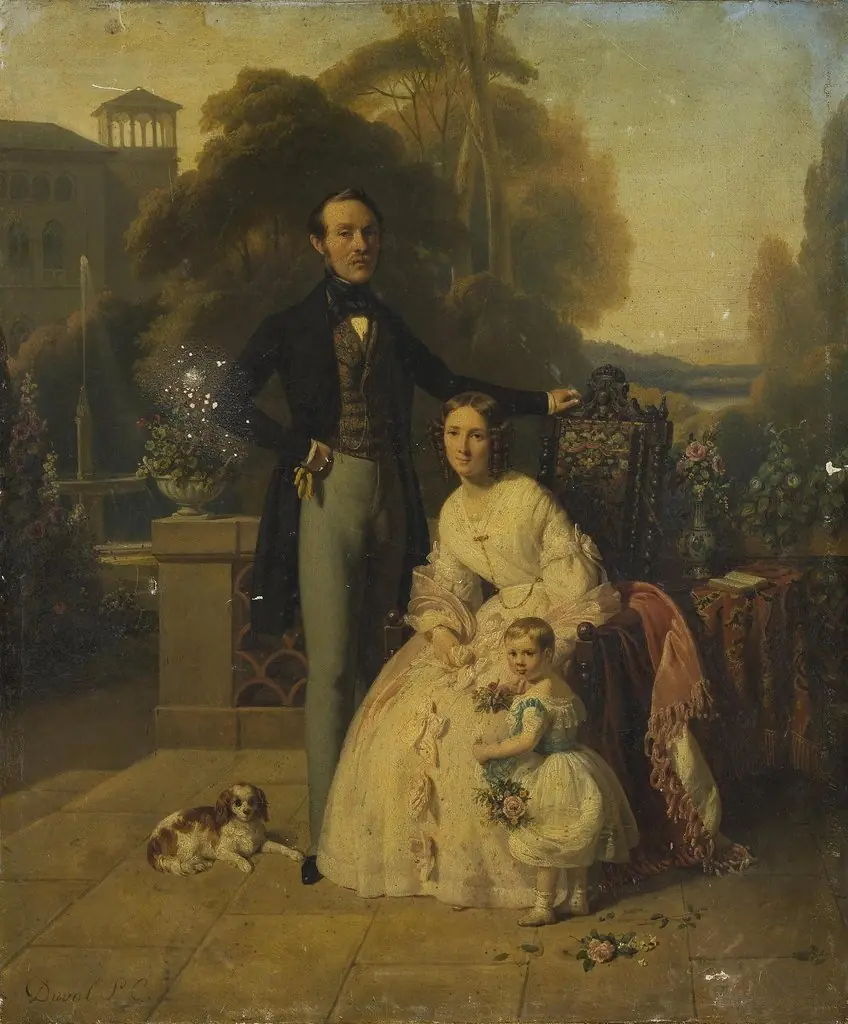 Family Portrait
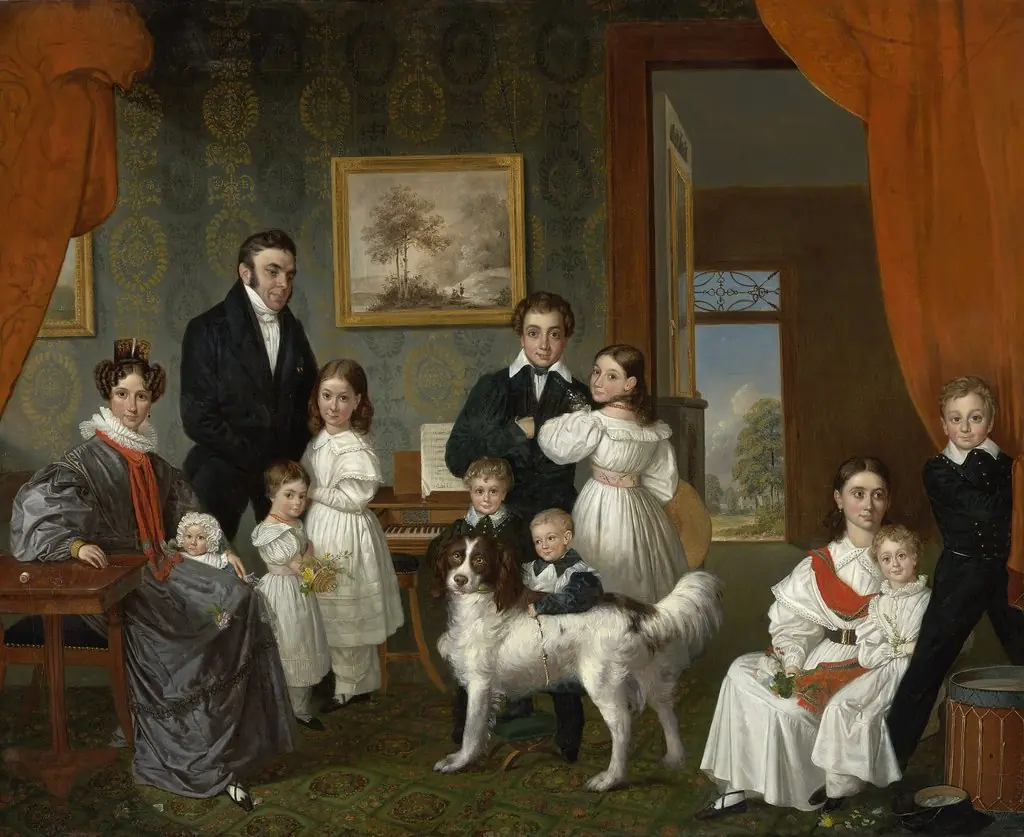 Portrait of the Baud family in their country house in Voorburg
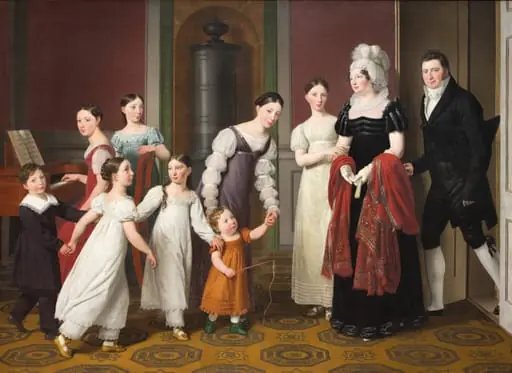 The Nathanson Family
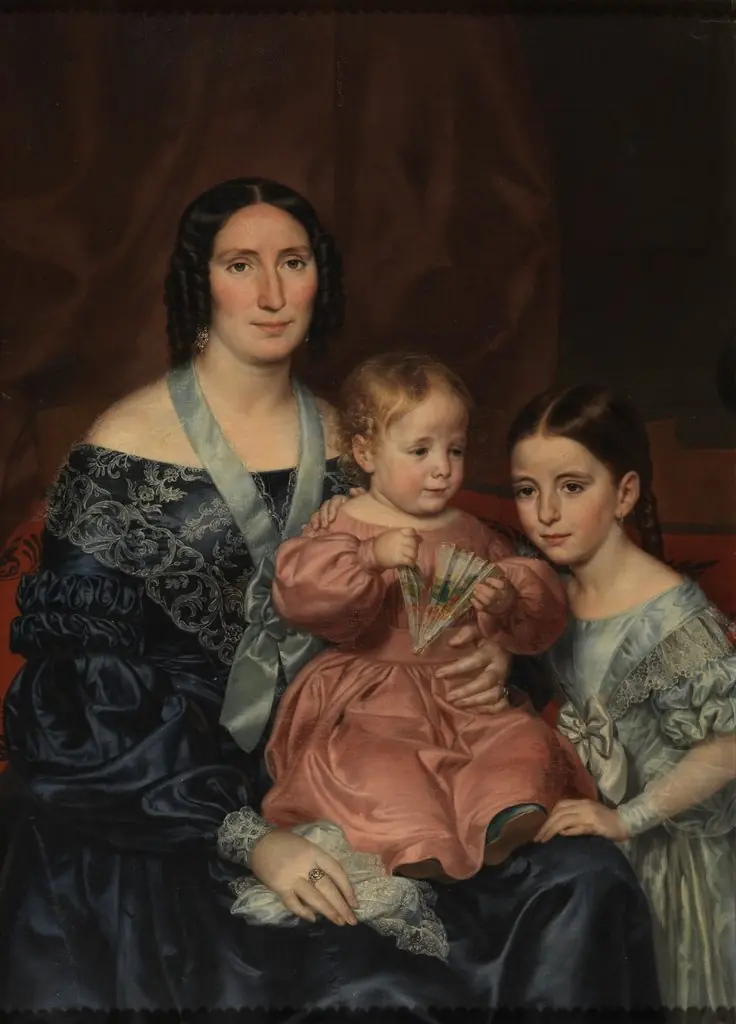 The Barrio Family
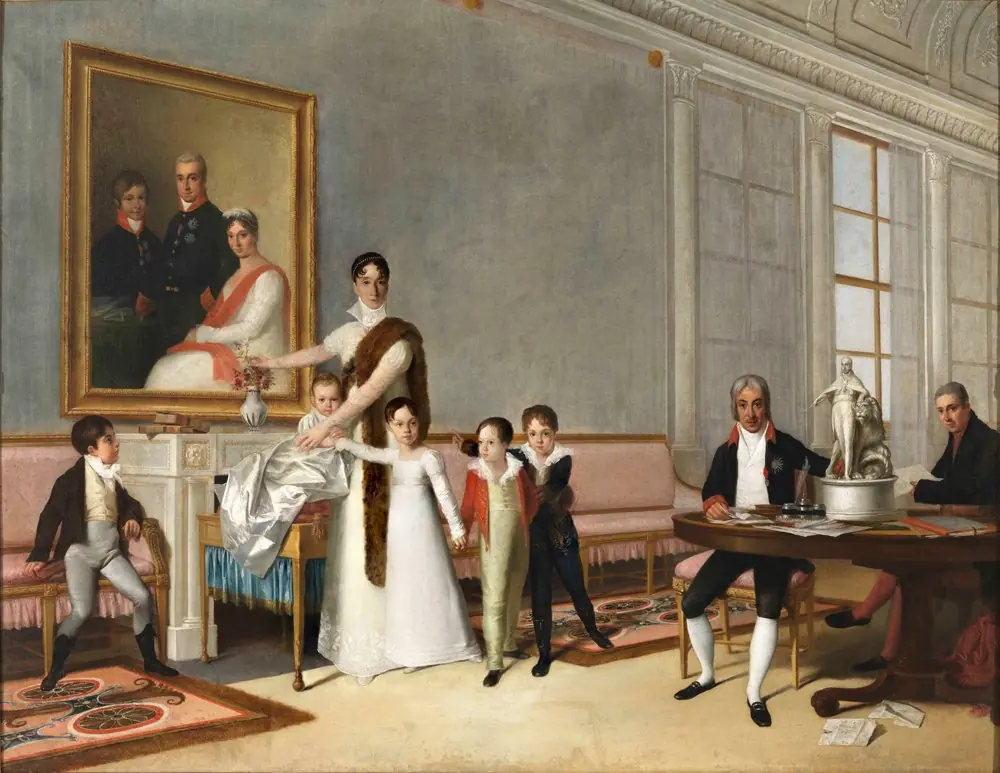 Portrait of the Family of the 1st Viscount of Santarém
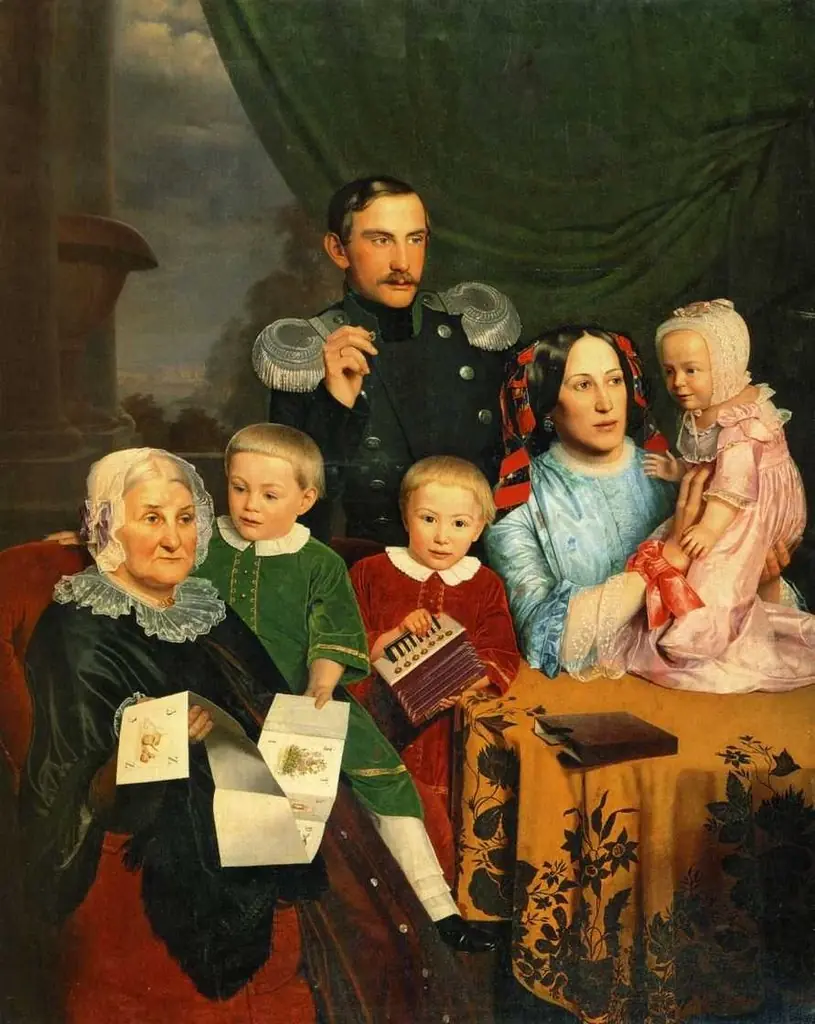 Family portrait
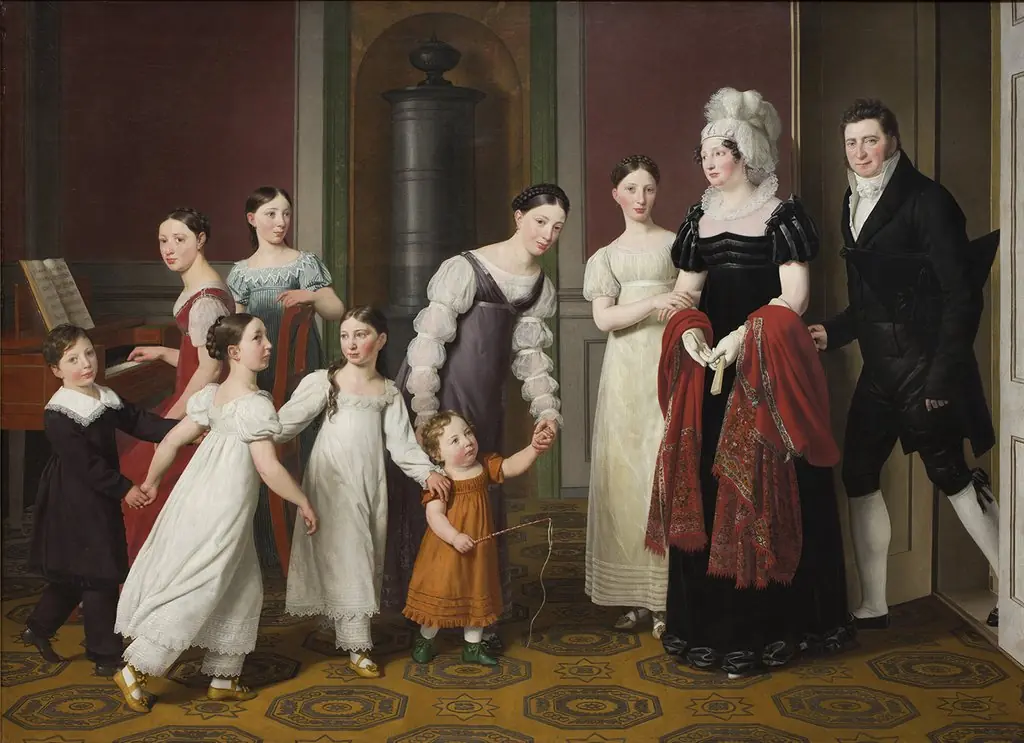 Familien Nathanson
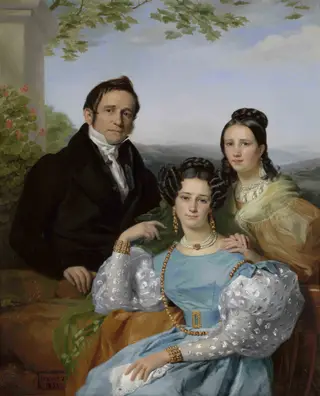 Portret van Théodore-Joseph Jonet en zijn twee dochters
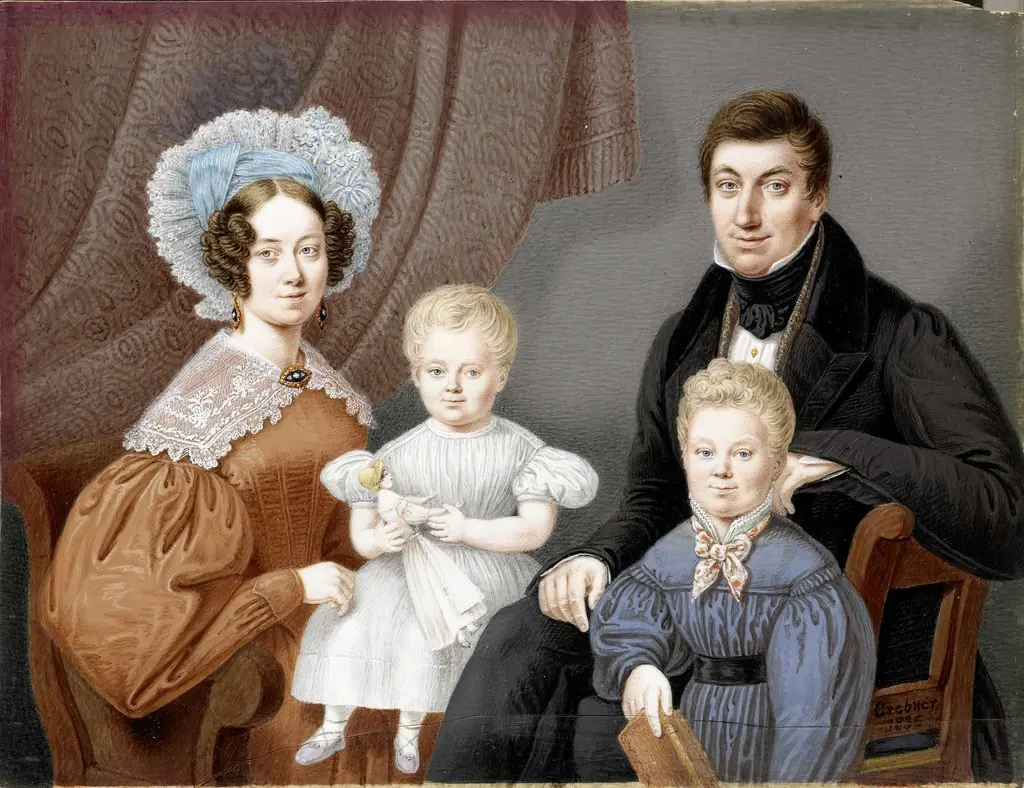 the Diederichs family
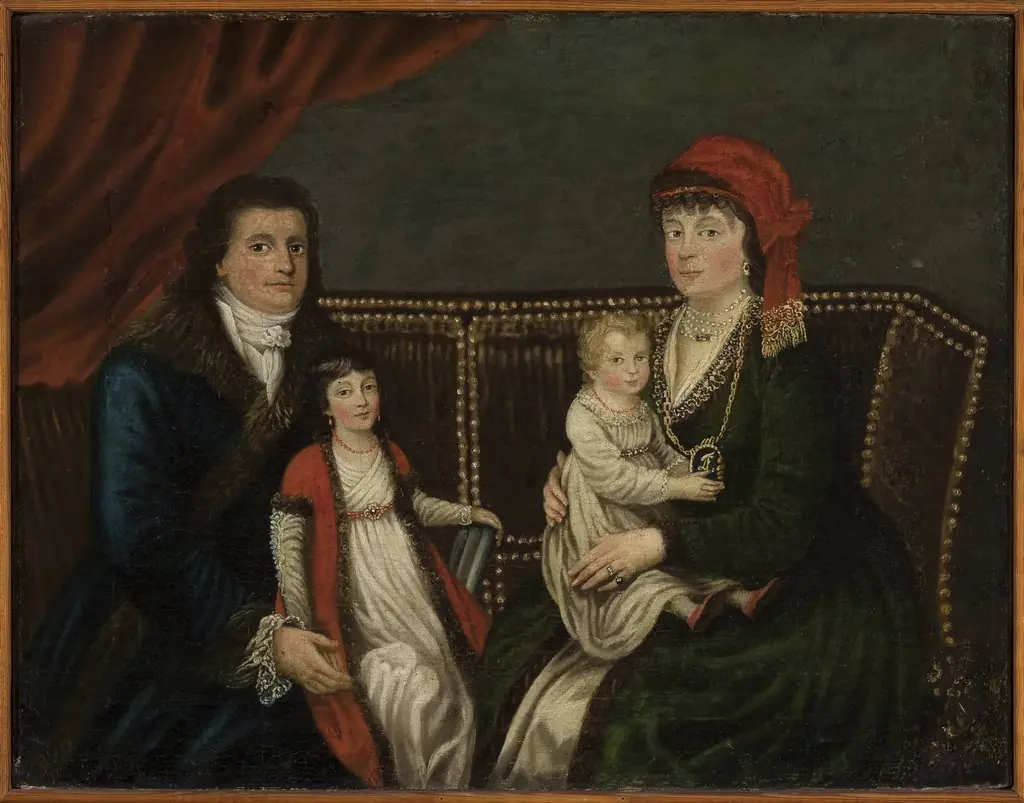 Portrait of the Lafontaine family, Leopold (1756–1812), surgeon, with his wife Teresa née Korneli (1768–1827) and daughters, Zofia (?–1831) and Wiktoria (1800–1849)
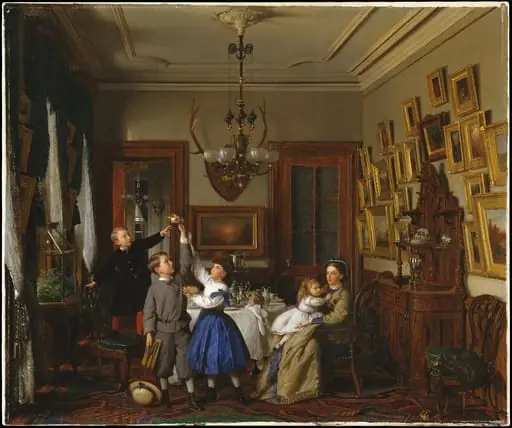 The Contest for the Bouquet: The Family of Robert Gordon in Their New York Dining-Room
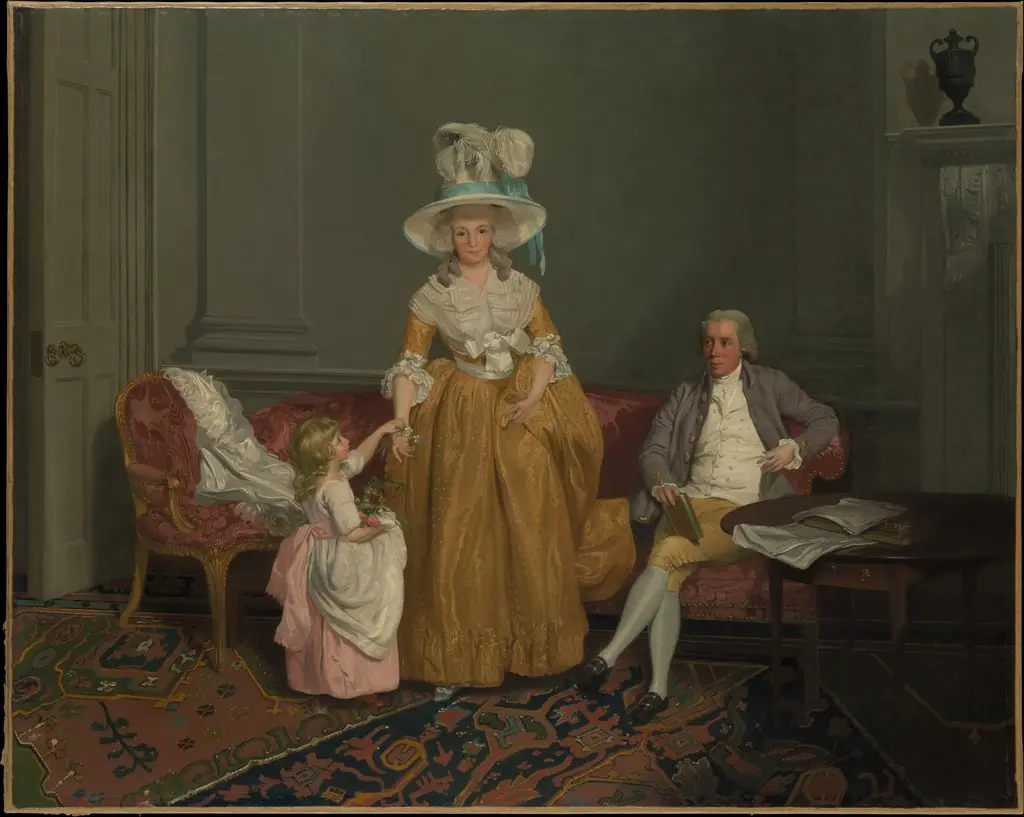 The Saithwaite Family
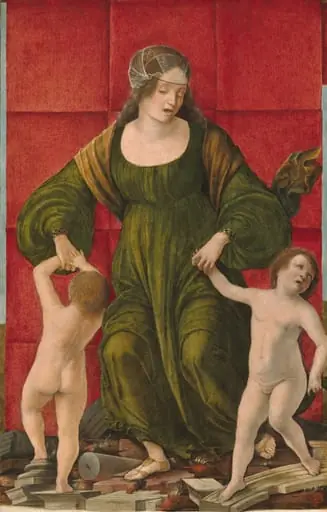 The Wife of Hasdrubal and Her Children
 Madame Georges Charpentier and her Children
 Family Group of Four on Sofa
 Family Group
 Everhard Jabach (1618–1695) and His Family
 The Family of Mr. Westfal in the Conservatory