Artwork
Portrait of James I with The Three Brothers
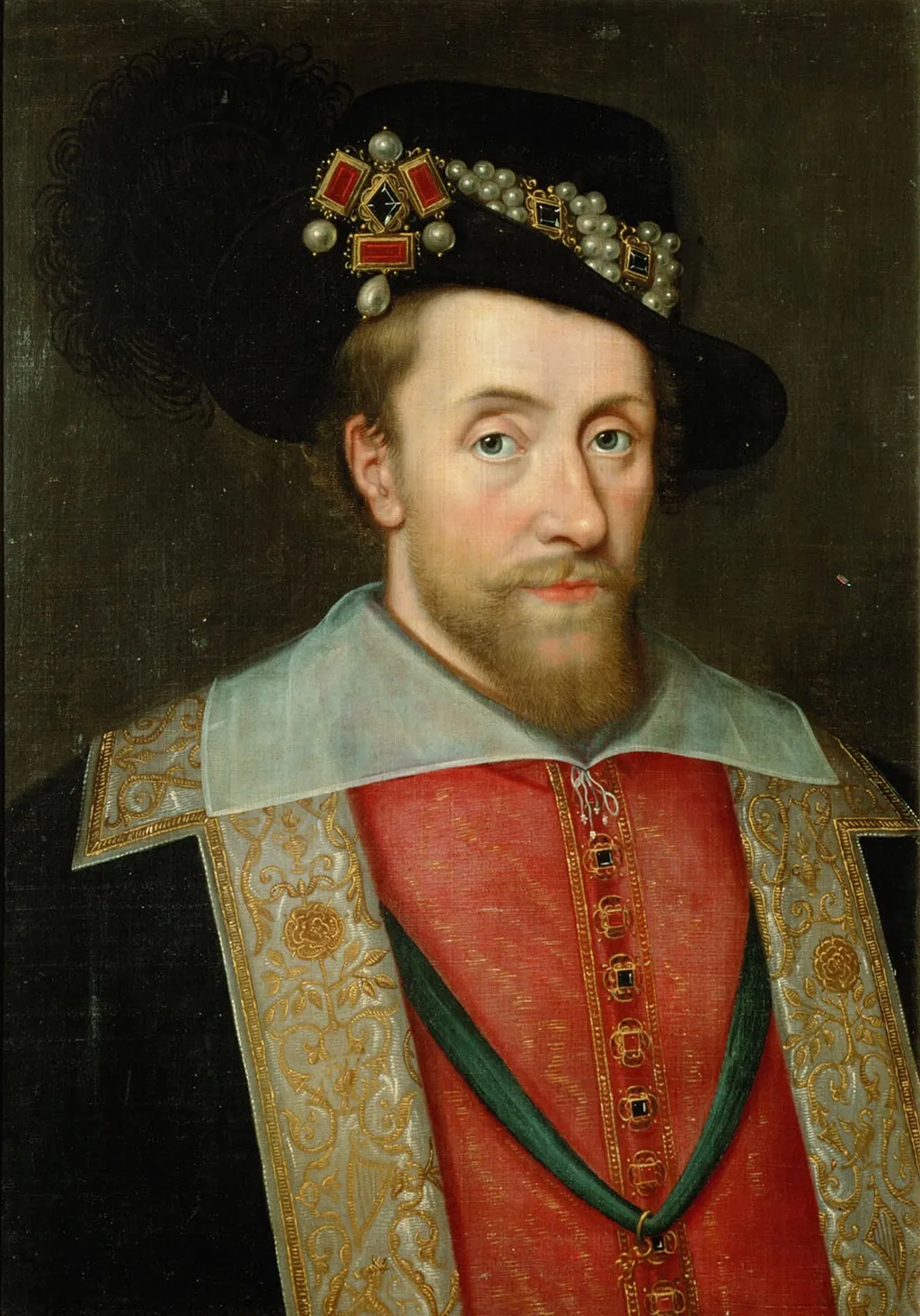
Portrait of James I with The Three Brothers is an oil painting by the Early Baroque Italian artist Unknown. It dates from 1600 and is held in the collection of the Kunsthistorisches Museum. The oil painting depicts a dignified male sitter, identified as James I, rendered in a formal pose.
About this work
Subject & Meaning
The inclusion of the brothers functions symbolically to emphasize the stability of the Stuart lineage and the monarch's role as head of an extended family.
The painting shows James VI and I accompanied by three young men identified as his brothers, a composition that underscores dynastic continuity and royal authority. The inclusion of the brothers functions symbolically to emphasize the stability of the Stuart lineage and the monarch's role as head of an extended family. This iconography aligns with contemporary expectations of portraiture that conveyed political legitimacy through visual representation of kinship.
The work's formal qualities, such as its oil paint medium and portrait genre, reinforce its function as a state portrait rather than a private likeness.
Technique & Style
Created in 1600, the work is an oil painting executed on a canvas support. The piece measures 67 cm in height and 47 cm in width. It functions as a portrait depicting James VI and I alongside The Three Brothers. The style is attributed to a hand possibly following John de Critz the Elder.
History & Provenance
The work is an oil painting on canvas dated to the year 1600. It is attributed as possibly being executed after John de Critz the Elder. The subject matter depicts James VI and I alongside the figures known as The Three Brothers. Currently, the painting is held within the collection of the Kunsthistorisches Museum in Vienna.
Portrait of James I with The Three Brothers is part of the Kunsthistorisches Museum's collection, catalogued under its standard accessioning system as a museum-held painting. The work is recorded in the museum's inventory with dimensions of 67 cm in height and 47 cm in width, reflecting its physical scale within the collection. It has been exhibited as part of the museum's display of Baroque portraiture, specifically within curated presentations focusing on the reign of James I and Stuart-era diplomatic imagery.
The painting was featured in a 2018 exhibition titled 'Stuart Portraits: Power and Representation' at the Kunsthistorisches Museum, highlighting its significance within the broader context of early modern European portraiture.
The work is attributed to an anonymous follower of John de Critz the Elder and is classified within the museum's holdings as a 17th-century oil portrait. Its provenance is documented through the Kunsthistorisches Museum's collection records, which note its inclusion in the imperial collection by the early 17th century. The museum's exhibition history underscores its role in scholarly interpretations of Jacobean visual culture, with the work appearing in multiple thematic displays on royal iconography and Habsburg diplomatic relations.
Context
The portrait of James I with The Three Brothers was painted in 1600 and is classified as an oil on canvas portrait. It depicts James VI and I alongside three male figures, likely representing his brothers or close relatives. The work is attributed to an anonymous hand possibly influenced by or associated with John de Critz the Elder, reflecting the decorative and symbolic style characteristic of early Jacobean court portraiture.
Its formal composition and emblematic grouping of figures suggest a political intent to reinforce dynastic unity within the Stuart monarchy. The painting is part of the collection at the Kunsthistorisches Museum in Innsbruck, where it has been studied in relation to other portraits of James I and the broader tradition of Habsburg and Stuart visual diplomacy. Scholars have noted its significance as an early example of portraiture used to convey imperial and royal authority through familial symbolism.
Overview
The oil painting depicts a dignified male sitter, identified as James I, rendered in a formal pose. He wears a richly embroidered red doublet, a wide white ruff, a black sash, and a black hat topped with a jeweled band. A subtle secondary figure, known as the Three Brothers, is concealed behind the sash, adding a concealed narrative element to the composition.
Legacy
The painting remains a reference point for scholars studying early Stuart iconography and the technical application of chiaroscuro in portraiture. Its subtle narrative device continues to attract interest for the way it integrates personal and political storytelling within a single visual field.
Artist & collection









 Portrait of Ottheinrich, Prince of Pfalz
 Portrait of Louis II, king van Hungary
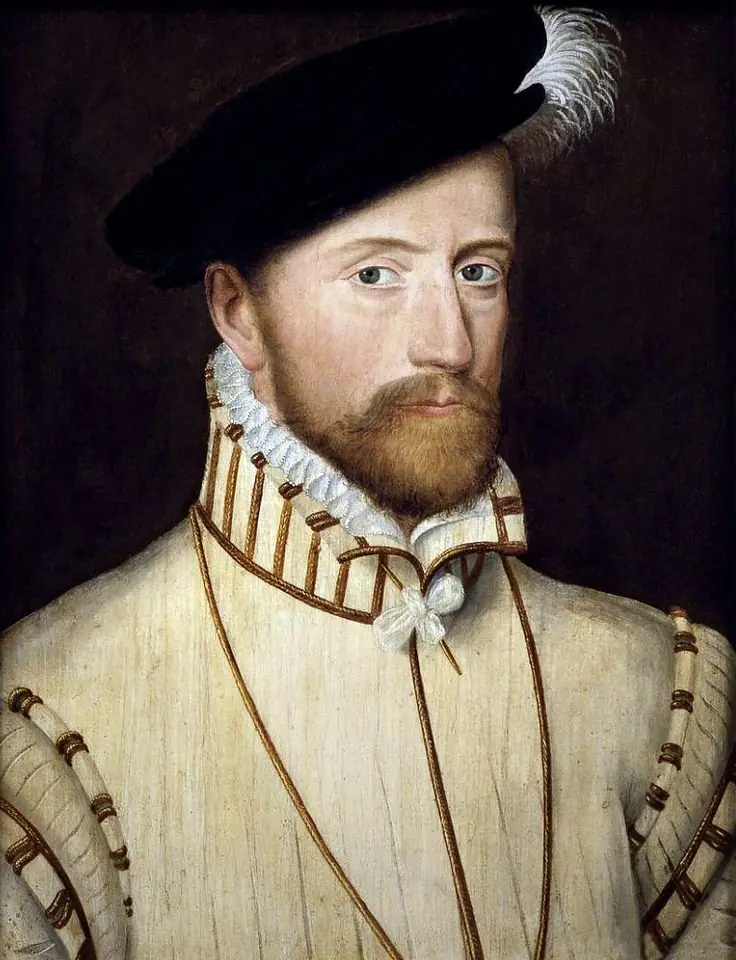 Jacques d'Albon, seigneur de Saint-André (ca. 1505-1562), Marschall von Frankreich
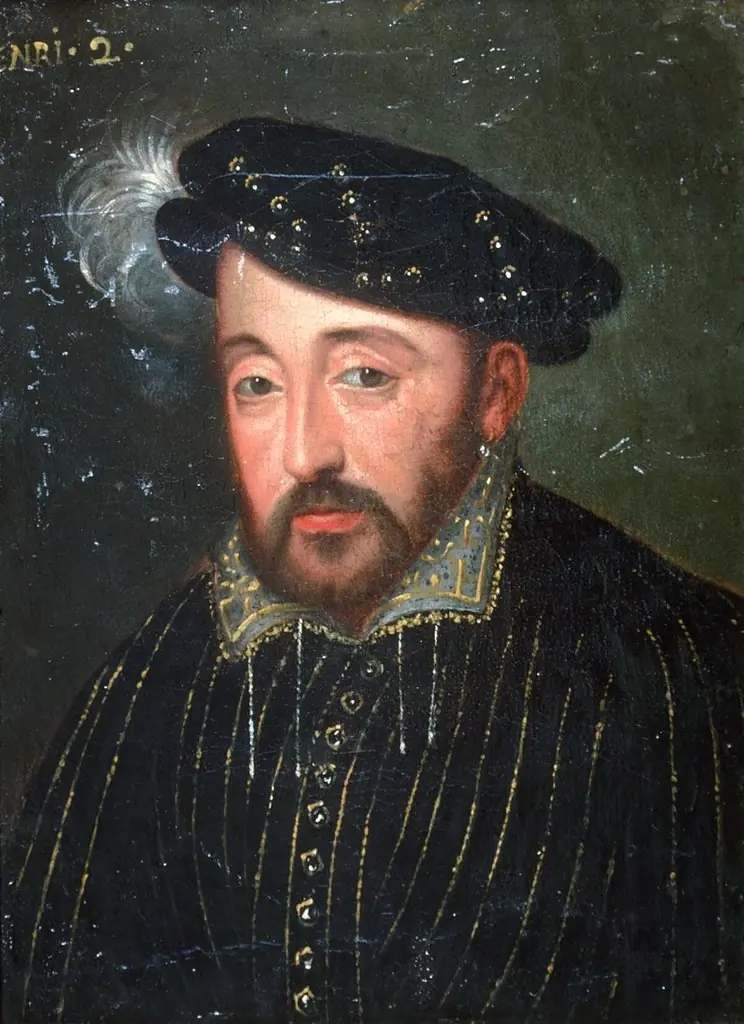 Henri II, King of France
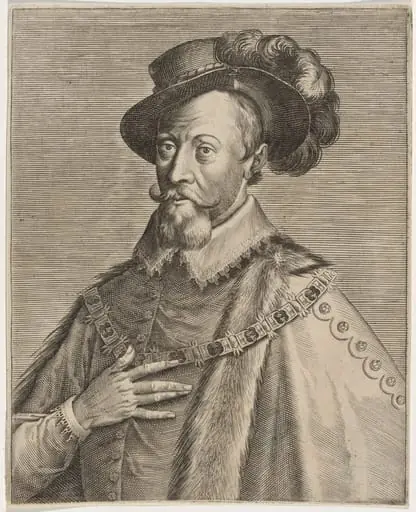 Robert Dudley, Earl of Leicester
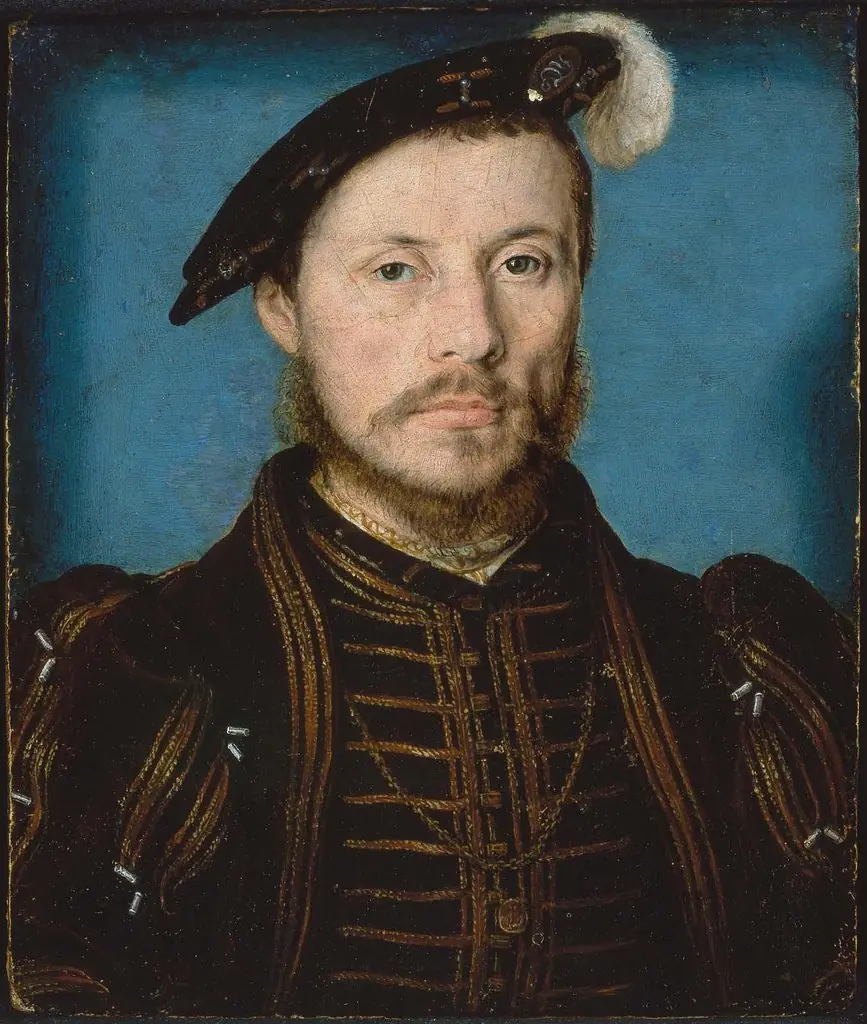 Portrait of a Man, identified as Anne de Montmorency (1493 - 1567)
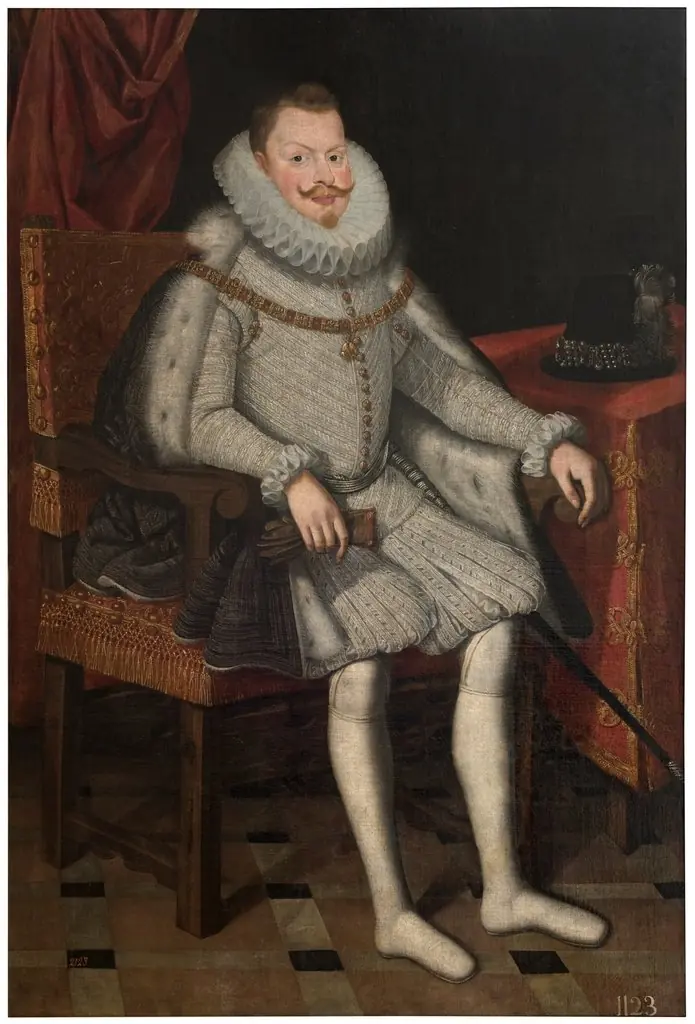 Felipe III rey de España sedente
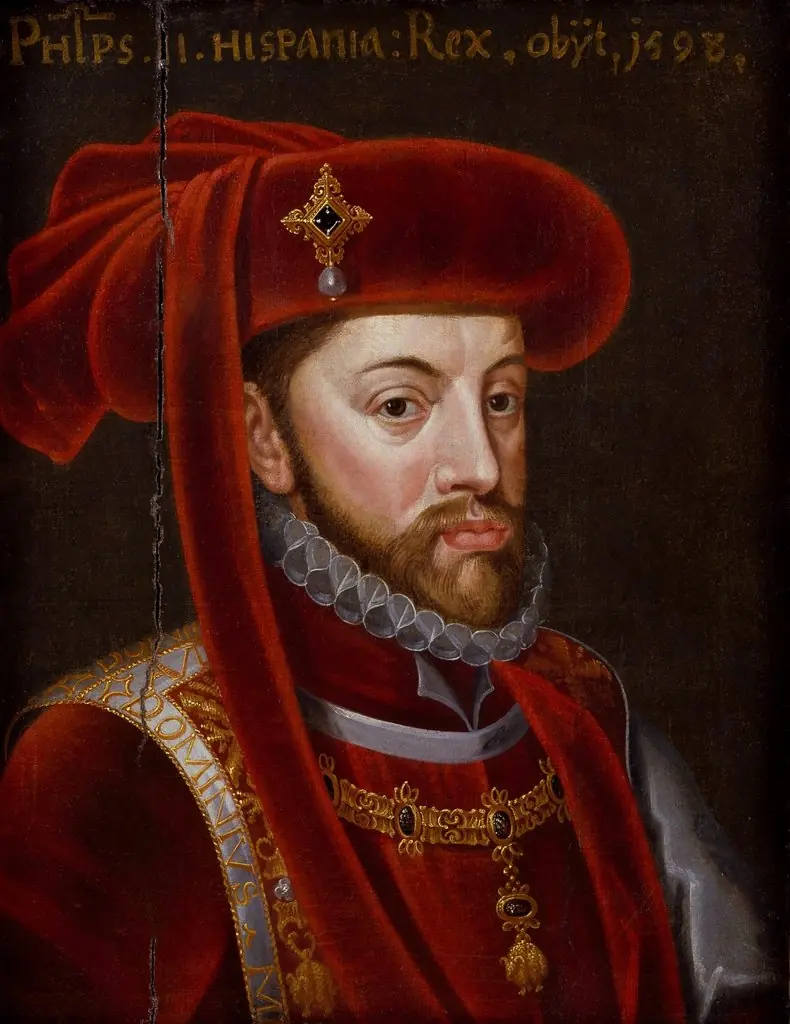 Philip II, King of Spain
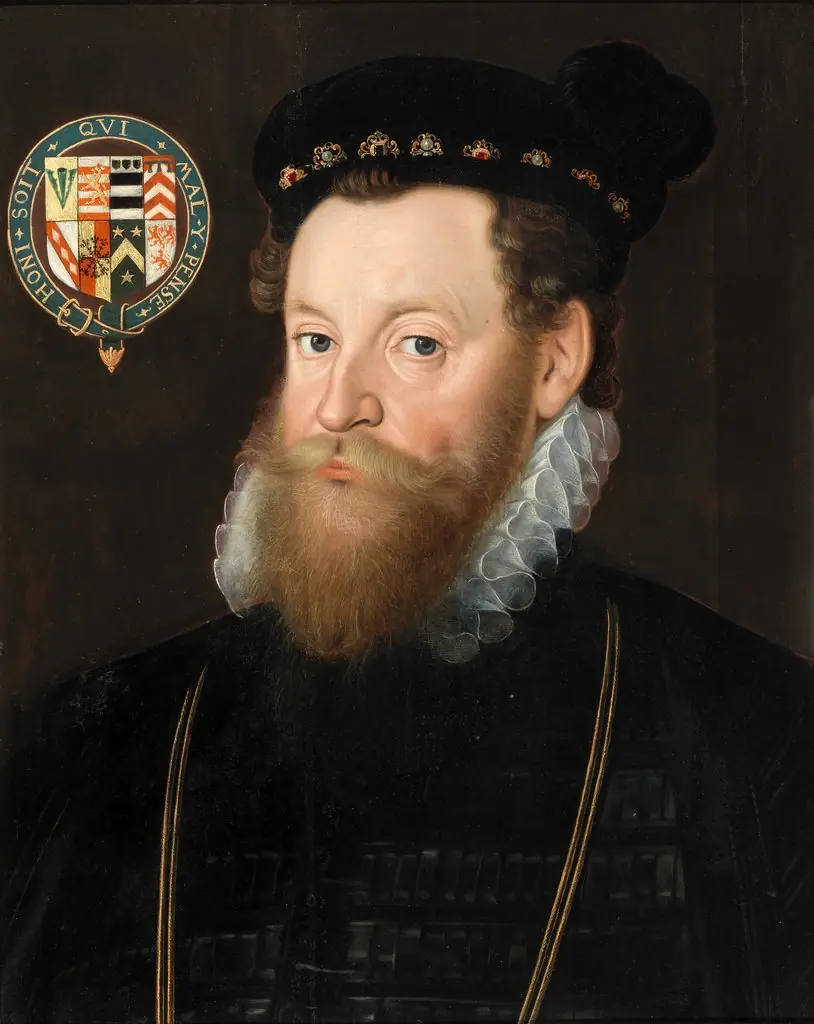 Portrait of Sir Henry Sidney (1529-1586), Lord Deputy of Ireland
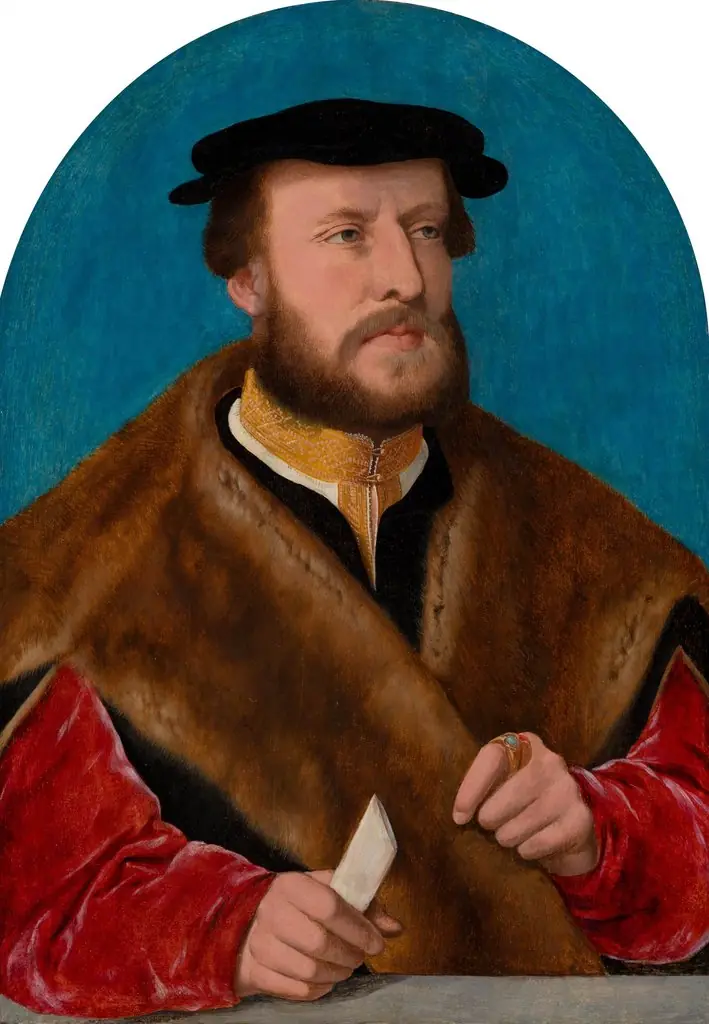 Portrait of Jakob Omphalius