Artwork
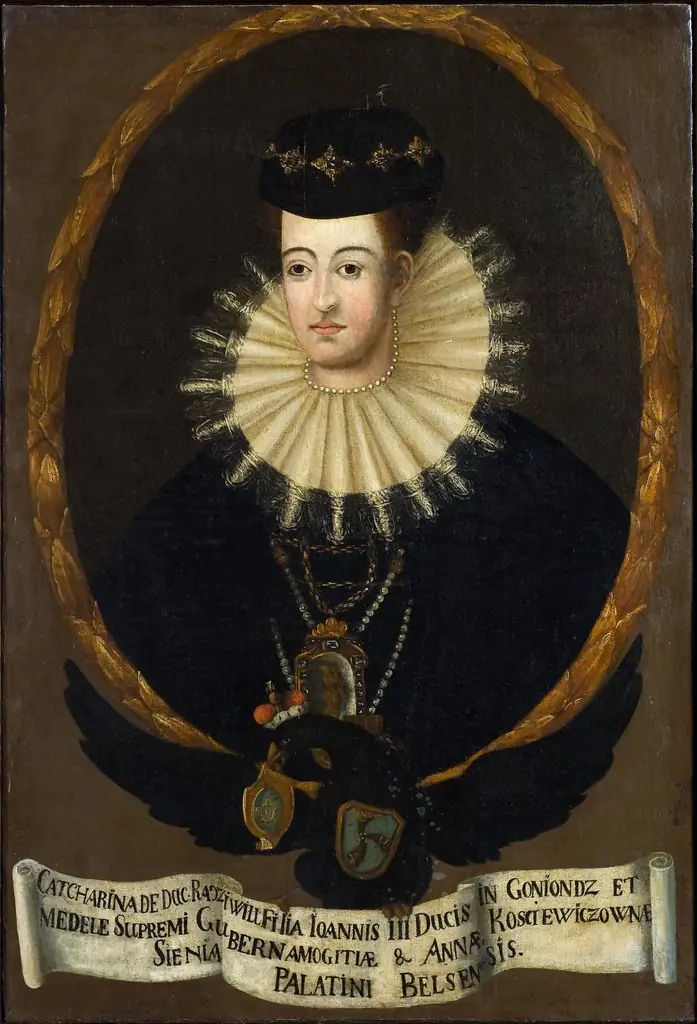
Portrait of Petronella Dowojno née Radziwiłł (1526–1564)
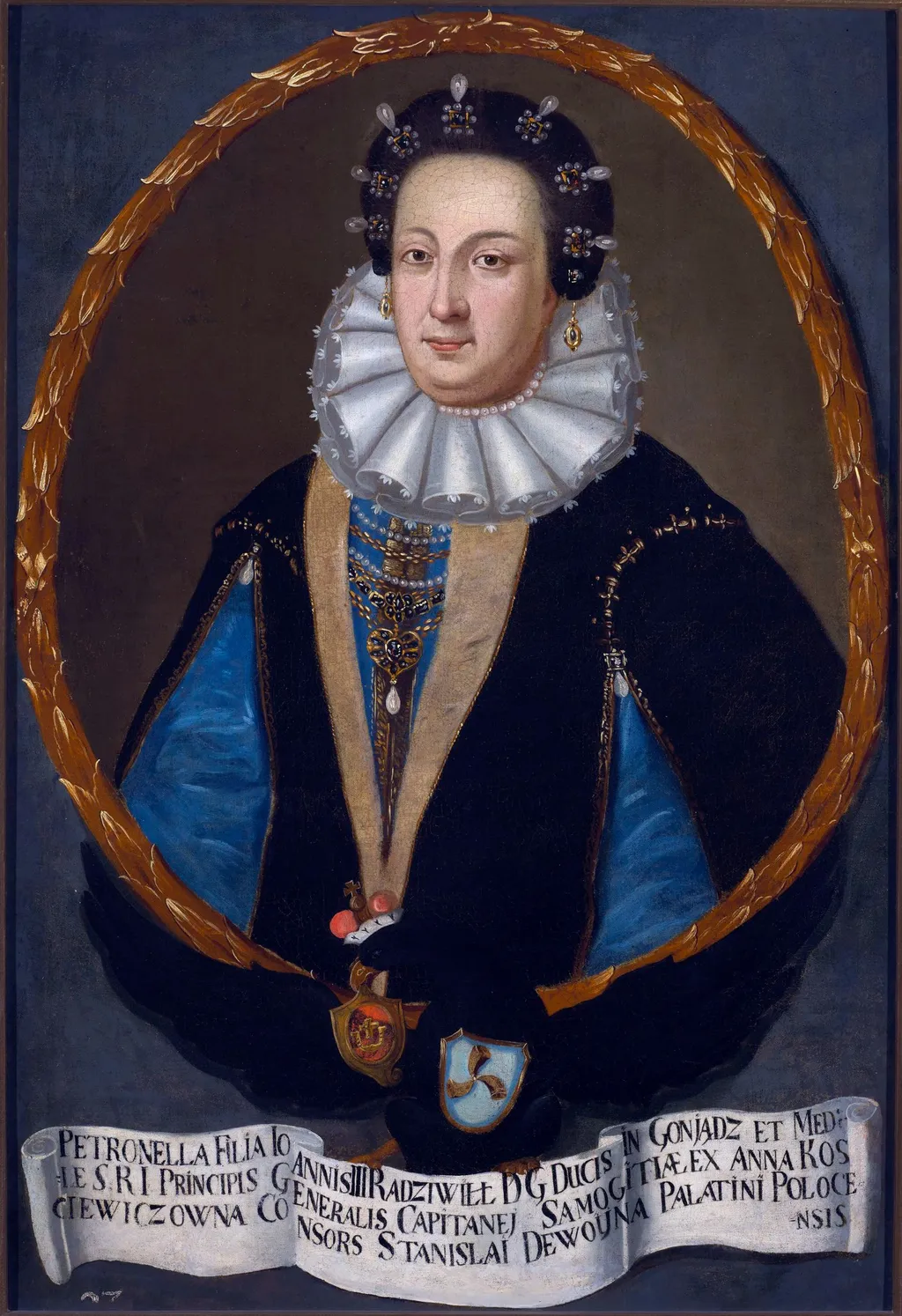
Portrait of Petronella Dowojno née Radziwiłł (1526–1564) is an oil painting by the Rococo painting artist Unknown. It dates from 1735 and is held in the collection of the National Museum in Warsaw. The Portrait of Petronella Dowojno née Radziwiłł is a 16th-century oil painting depicting a noblewoman.
About this work
Overview
Portrait of Petronella Dowojno née Radziwiłł (1526-1564) is an oil on canvas painting by an unknown Polish artist, dated between 1733 and 1737.
Portrait of Petronella Dowojno née Radziwiłł (1526-1564) is an oil on canvas painting by an unknown Polish artist, dated between 1733 and 1737. Measuring 106 cm in height and 73.5 cm in width, the artwork forms part of a series of portraits set within laurel wreaths. It depicts a noblewoman from the prominent Radziwiłł family and is distinguished by its heraldic detail and Latin inscription. The painting is held in the collection of the National Museum in Warsaw, where it carries the accession number MP 4462 MNW.
Subject & Meaning
The painting portrays Petronella Dowojno, a noblewoman born into the Radziwiłł family in 1526, who died in 1564. She is shown from the waist up within an oval format, her identity secured by a white scroll at the bottom bearing a black Latin inscription. Two heraldic shields flank the lower edge of the oval, representing her lineage and marital alliance. One shield features red and gold elements, while the other displays a blue field with a gold symbol. The gold laurel wreath encircling the oval reinforces her elevated social standing and virtue, functioning as a classical symbol of honor and distinction.
Technique & Style
Executed in oil on canvas, the portrait demonstrates smooth, precise brushwork, particularly in the rendering of textile textures and jewelry. The artist modeled the figure with even light falling from the left, creating subtle tonal transitions on the face and the crisp pleats of the sitter's large starched white ruff collar. The palette is composed of deep blacks, rich blues, warm golds, and creamy whites set against a muted dark brown background. The surface exhibits fine crackling across the painting, most noticeably on the face, indicating the age and material behavior of the work.
History & Provenance
Created between 1733 and 1737, the portrait was produced long after the sitter's death in 1564, indicating it is likely a commemorative posthumous work rather than a life study. The painting is part of a broader series of portraits framed by laurel wreaths. It entered the collection of the National Museum in Warsaw, where it remains today, identified by the institution's artwork ID 509947 and accession number MP 4462 MNW.
Context
The portrait belongs to a tradition of Polish noble portraiture that frequently employed heraldic and inscriptive elements to document lineage and status. The creation of the series to which this work belongs in the 1730s reflects an eighteenth-century cultural impulse among the Polish aristocracy to reconstruct and visualize their ancestral histories. By employing the conventions of Renaissance fashion, such as the ruff collar and elaborate pearl jewelry, the unknown artist anchored the posthumous representation of a sixteenth-century figure within an established visual vocabulary of aristocratic authority and dynastic continuity.
Artist & collection