Artwork
Raja Gulab Singh
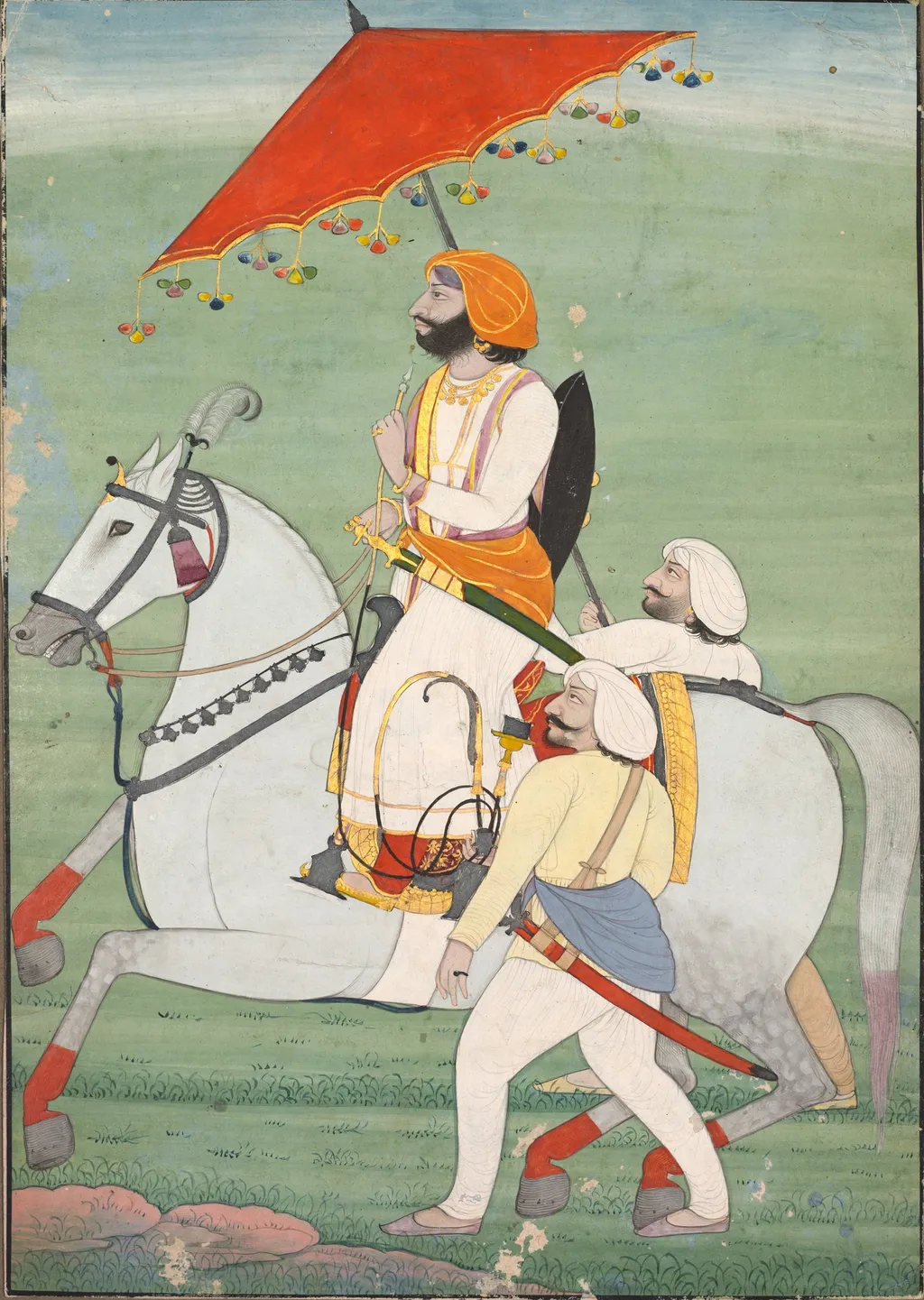
Raja Gulab Singh is an unspecified painting. It dates from 1835 and is held in the collection of the Cleveland Museum of Art.
About this work
Subject & Meaning
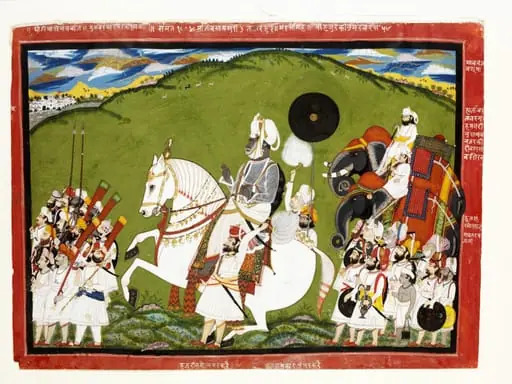
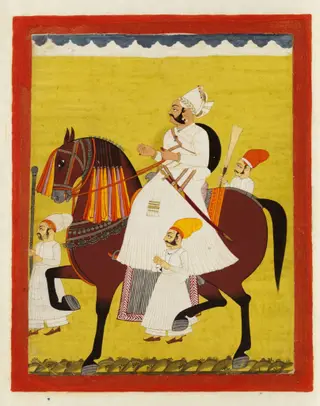
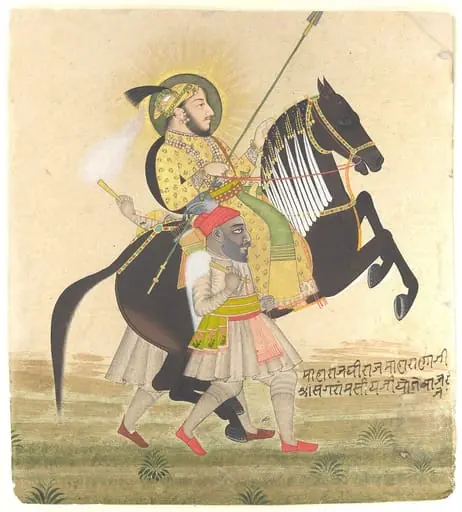
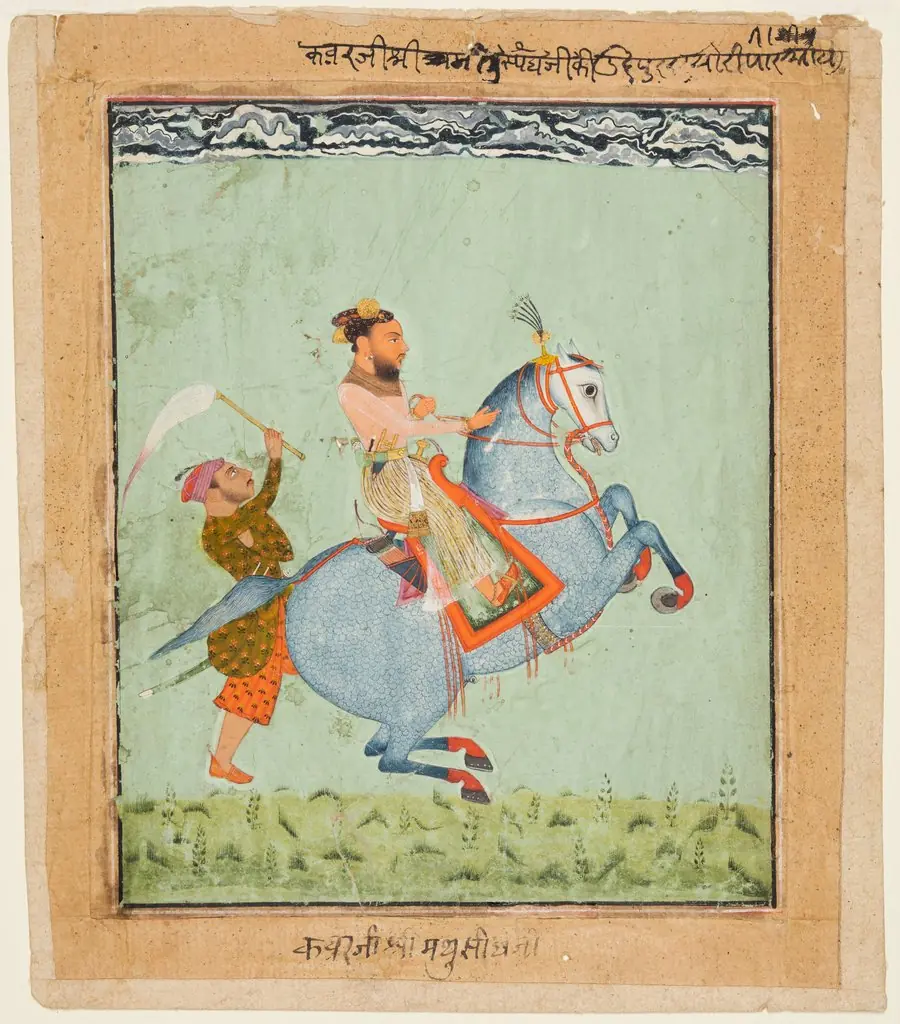
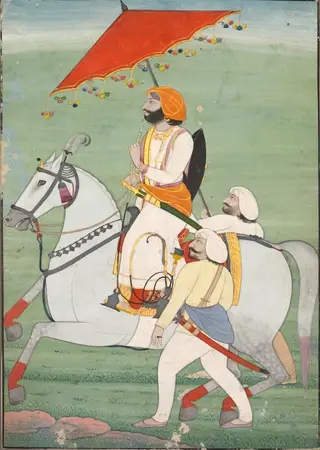
The painting portrays Raja Gulab Singh, a prominent 19th-century ruler of the princely state of Jammu and Kashmir, emphasizing his regal status and authority.
The painting portrays Raja Gulab Singh, a prominent 19th-century ruler of the princely state of Jammu and Kashmir, emphasizing his regal status and authority. The work functions as a visual assertion of power, reflecting the political prominence and cultural patronage of the era. Its depiction underscores themes of sovereignty and elite identity within the historical context of the region.
The composition follows established portrait conventions of the period, reinforcing the subject's elevated social position through formal attire and dignified posture. The painting's provenance at the Cleveland Museum of Art connects it to early 20th-century collecting practices, highlighting its significance in Western institutional narratives.
The artwork was created in 1835, placing it within the broader timeline of colonial-era patronage and artistic exchange. Its presence in a major museum collection illustrates its role in shaping narratives about South Asian history and leadership.
The painting is housed at the Cleveland Museum of Art, which maintains it as part of its permanent collection. Its accession and display reflect ongoing scholarly and public interest in the visual culture of princely states.
History & Provenance
Raja Gulab Singh is a painting dated to 1835, with its inception recorded as 1 January 1835. The work is held in the collection of the Cleveland Museum of Art, where it is catalogued under the accession number 1925.1338. No further details regarding its commission, earlier ownership chain, or intermediate provenance are documented in the available sources.
The painting Raja Gulab Singh is part of the collection at the Cleveland Museum of Art, where it is cataloged under the accession number 1925.1338. It was created in 1835 and has been exhibited at the museum as part of its South Asian art displays.
Overview
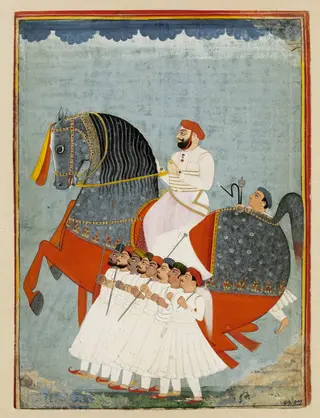
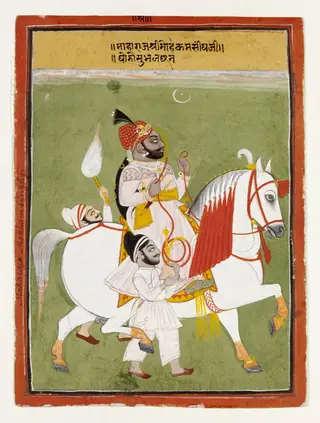
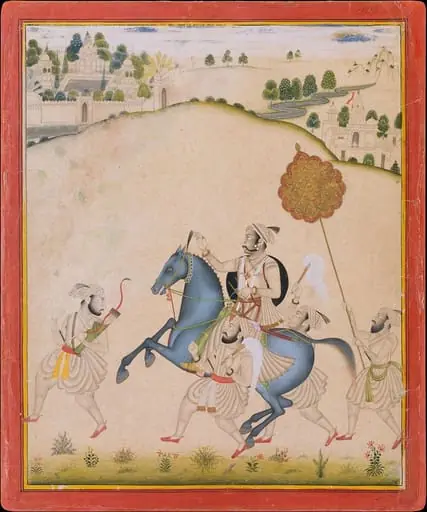
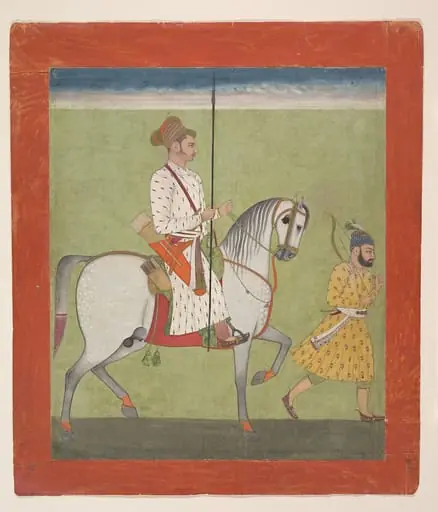
The work titled “Raja Gulab Singh” portrays a seated rider in vivid orange and white garments astride a white horse. He holds a red umbrella from which fruit hangs, while a second figure in yellow and blue walks behind, bearing a long staff. The scene rests on a simple green ground dotted with a few stones, rendered in flat, bold colors.
Technique & Style
The painting employs a flattened pictorial space with strong, saturated hues that recall the aesthetic of stained glass or folk miniatures. Decorative detailing appears on the horse’s reins and the umbrella, while the background remains minimal, emphasizing the figures through color contrast rather than perspective.
Context
Raja Gulab Singh (1792–1857) was a prominent Sikh ruler in the Jammu region, known for his political alliances and architectural patronage. Portraits of such leaders often served to legitimize authority and display wealth, employing symbolic elements like umbrellas and fruit to communicate power and auspiciousness.
Artist & collection