Artwork
Raja Gulab Singh (1792–1857) of Jammu and Kashmir
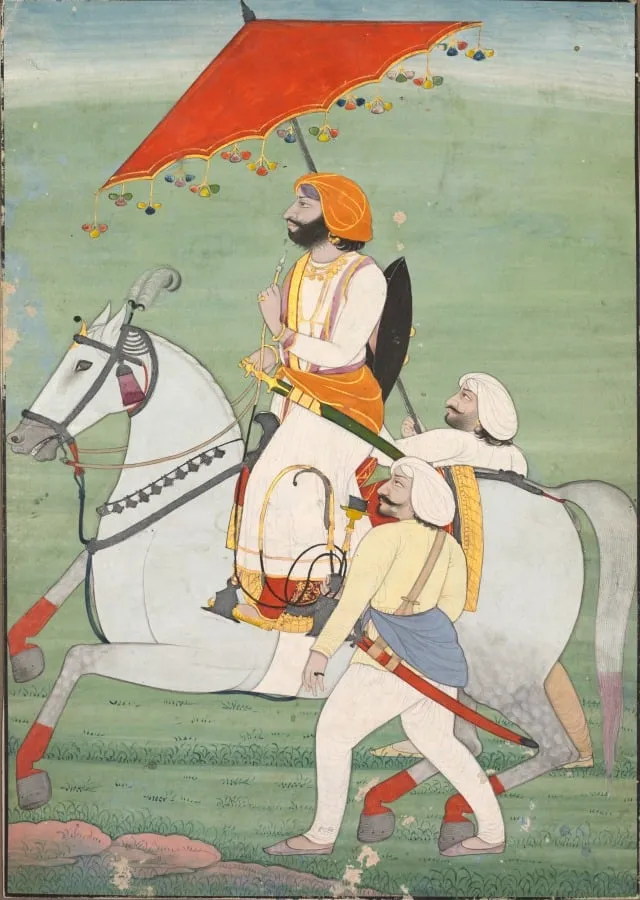
Raja Gulab Singh (1792–1857) of Jammu and Kashmir is an unspecified painting by the Pahari Painting artist Unknown. It dates from 1835 and is held in the collection of the Cleveland Museum of Art. The work is an equestrian portrait of Raja Gulab Singh, the founder of the Jammu and Kashmir princely state in 1846.
- Accession no.
- 1925.1338
- Credit line
- Gift of J. H. Wade
About this work
Overview
The work is an equestrian portrait of Raja Gulab Singh, the founder of the Jammu and Kashmir princely state in 1846. Rendered on a flat gold field, the composition places the ruler on a white horse, underscoring his authority before his formal coronation.
Subject & Meaning
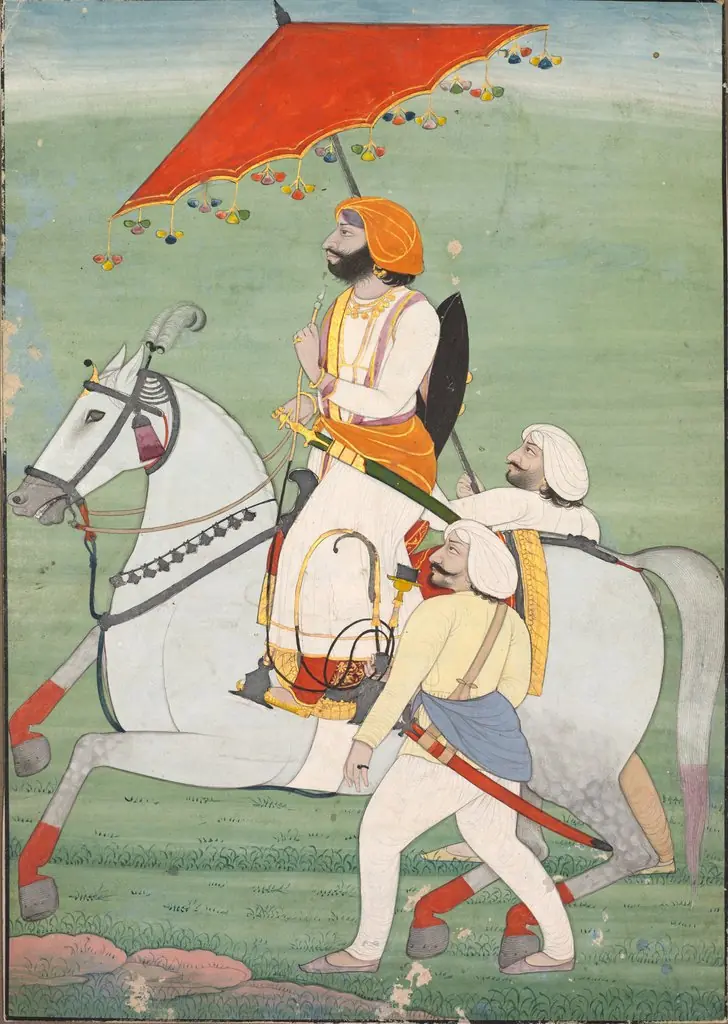
Gulab Singh is depicted with a sword and shield, traditional emblems of martial prowess, while a red umbrella hovers overhead as a visual cue of royal status. A servant bearing a hookah accompanies the rider, suggesting a cultivated, aristocratic lifestyle.
Technique & Style
The painting employs a simplified background of uniform gold, eliminating spatial depth and focusing attention on the figure and his accoutrements. The use of bright, flat color and clear outlines reflects a courtly aesthetic common in mid‑19th‑century Indian portraiture.
History & Provenance
Created before Gulab Singh assumed the title of Maharaja, the portrait functions as a pre‑emptive visual assertion of his emerging power. The work has remained associated with the Dogra dynasty’s visual legacy, illustrating the early self‑presentation of the state’s founder.
Context
The portrait belongs to a broader tradition of Pahari court painting, where rulers were often shown on horseback with symbols of sovereignty and refinement. Such images served both diplomatic and internal propaganda purposes, reinforcing the ruler’s legitimacy among subjects and peers.
Artist & collection









- Raja Gulab Singh
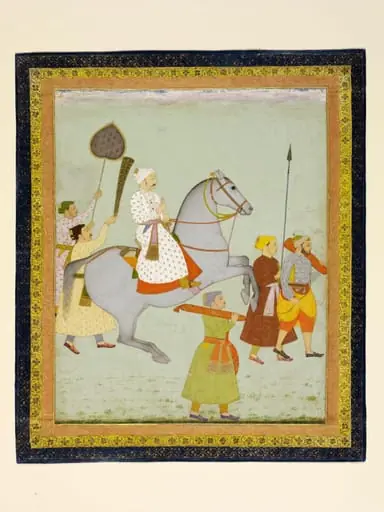 Maharaja Sawai Jai Singh
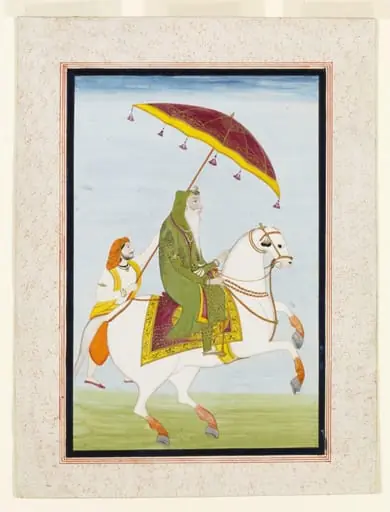 Maharaja Ranjit Singh
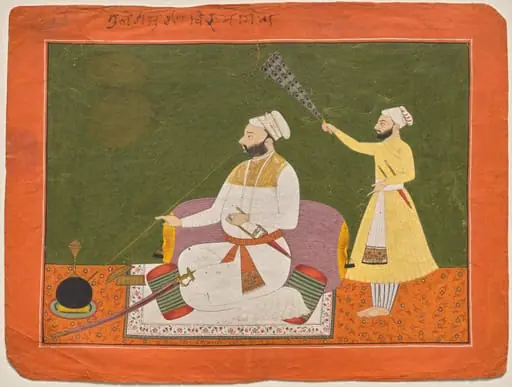 Raja Bikram Singh of Guler smoking a hookah
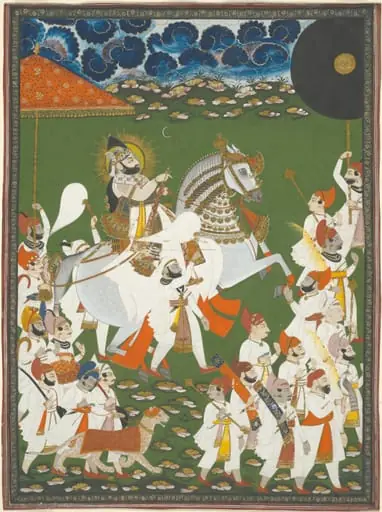 Maharana Bhim Singh in Procession
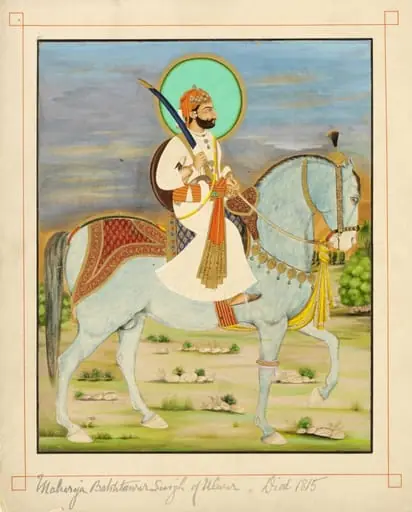 Maharaja Bakhtawar Singh
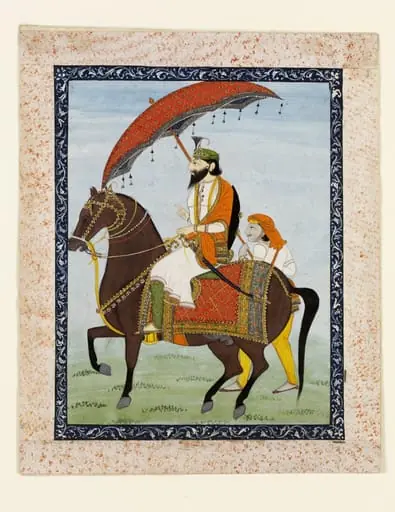 Raja Dhian Singh
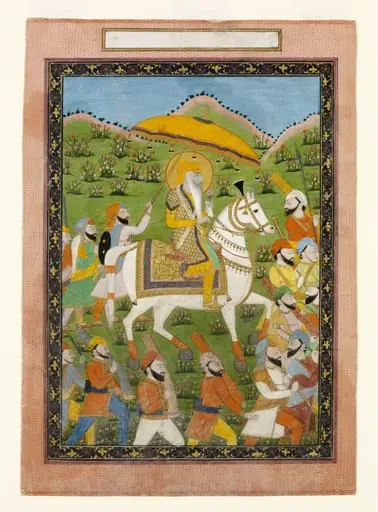 Maharaja Ranjit Singh
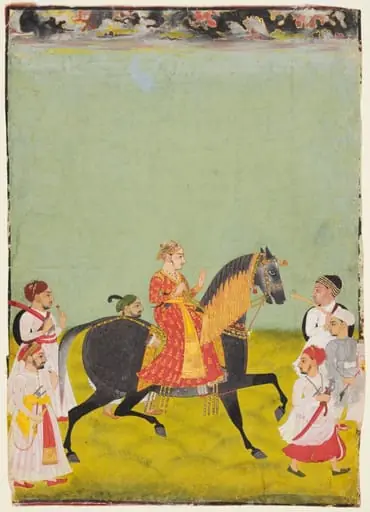 Equestrian Portrait of Maharana Raj Singh II of Mewar (r. 1755–62)
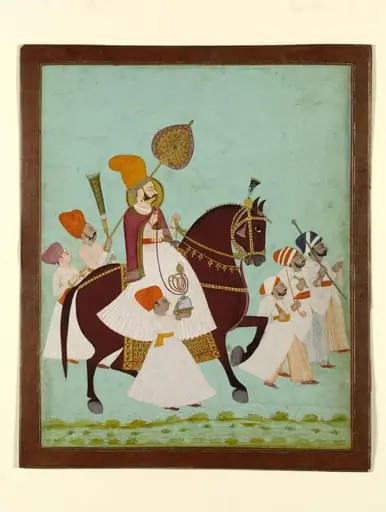 Maharaja Ram Singh
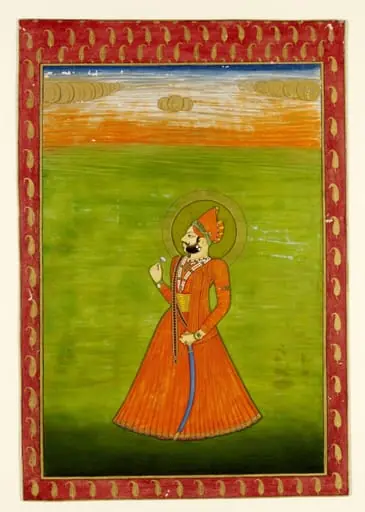 Maharaja Man Singh