Artwork
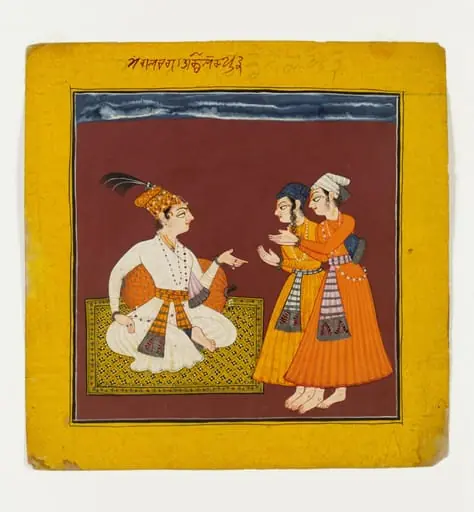
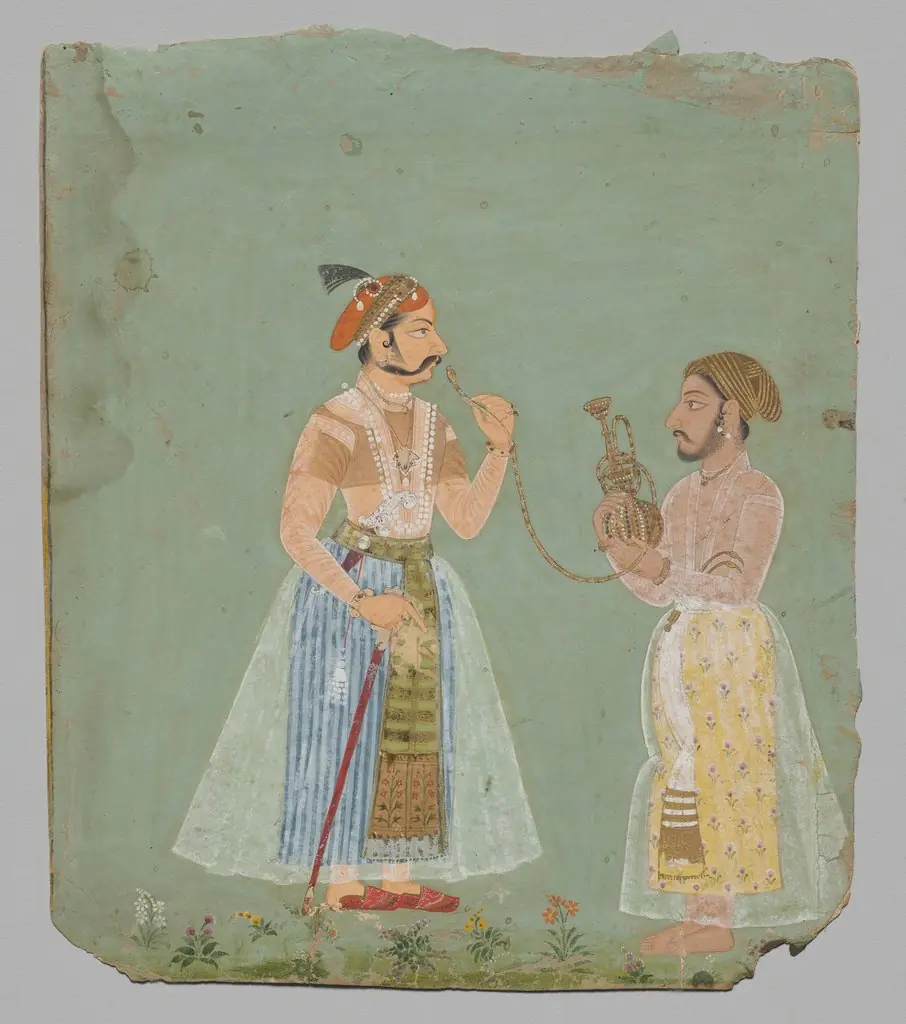
Rana Amar Singh II (reigned 1698–1710) smoking a hookah
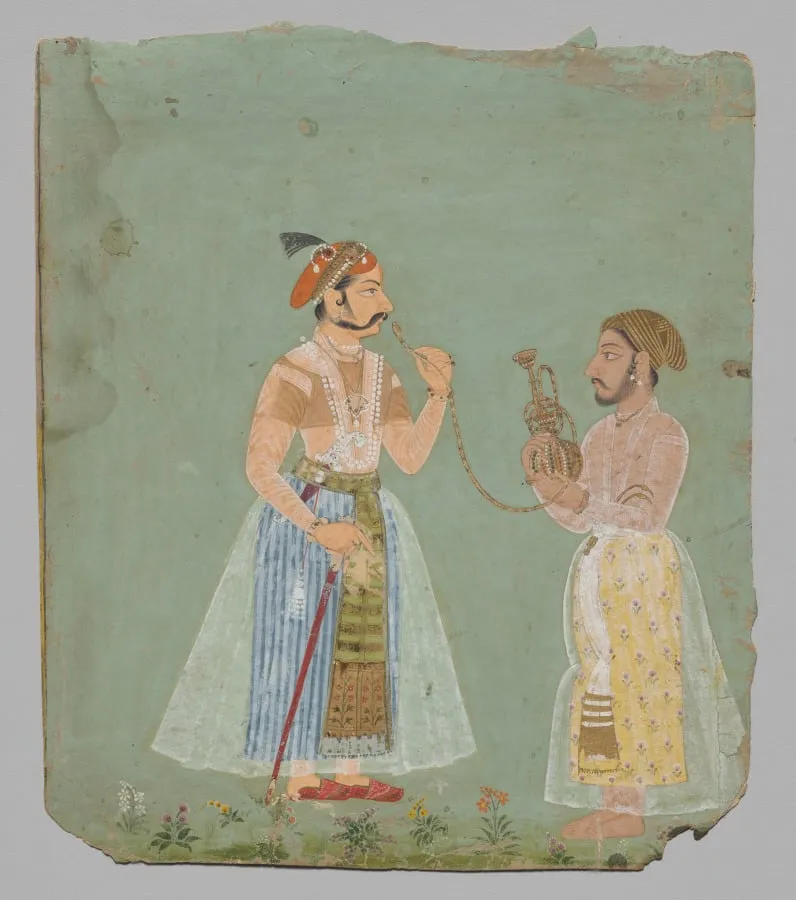
Rana Amar Singh II (reigned 1698–1710) smoking a hookah is an unspecified painting by the Baroque artist Unknown. It dates from 1700 and is held in the collection of the Cleveland Museum of Art.
- Accession no.
- 1991.170
- Credit line
- Seventy-fifth anniversary gift of Dr. Norman Zaworski
About this work
Overview
The painting portrays Rana Amar Singh II, ruler of Mewar in southern Rajasthan from 1698 to 1710, seated on a carpet and inhaling from a long hookah.
The painting portrays Rana Amar Singh II, ruler of Mewar in southern Rajasthan from 1698 to 1710, seated on a carpet and inhaling from a long hookah. He wears a white muslin tunic cinched with a floral‑embroidered sash, while dark sandalwood paste is applied to his chest and arms. The composition follows a formal portrait format, with a muted background and a band of stylized flowers at the lower edge.
Subject & Meaning
Although a Hindu Rajput monarch, the ruler is presented in the visual language of Mughal imperial portraiture, a choice that underscores his political authority and cultural connections. The inclusion of the hookah, a courtly leisure object, and the regal pose convey both personal refinement and sovereign status within the broader Indian courtly milieu.
Technique & Style
The artist employs a delicate muslin texture for the tunic, highlighted by a sash whose border features intricate floral embroidery, a motif popularized at Shah Jahan’s court. The background’s subdued hue and the ornamental floral fringe echo Mughal aesthetic conventions, while the application of sandalwood paste creates deep, matte shadows on the figure’s torso and arms, enhancing three‑dimensionality.
Context
The work exemplifies the syncretic visual culture of early‑18th‑century Rajasthan, where Rajput patrons often adopted Mughal artistic formulas to assert legitimacy. By rendering a Hindu ruler in a style traditionally reserved for Muslim emperors, the painting reflects the fluid exchange of artistic ideas across regional and religious boundaries.
Artist & collection