Artwork
Saint Bernard of Clairvaux
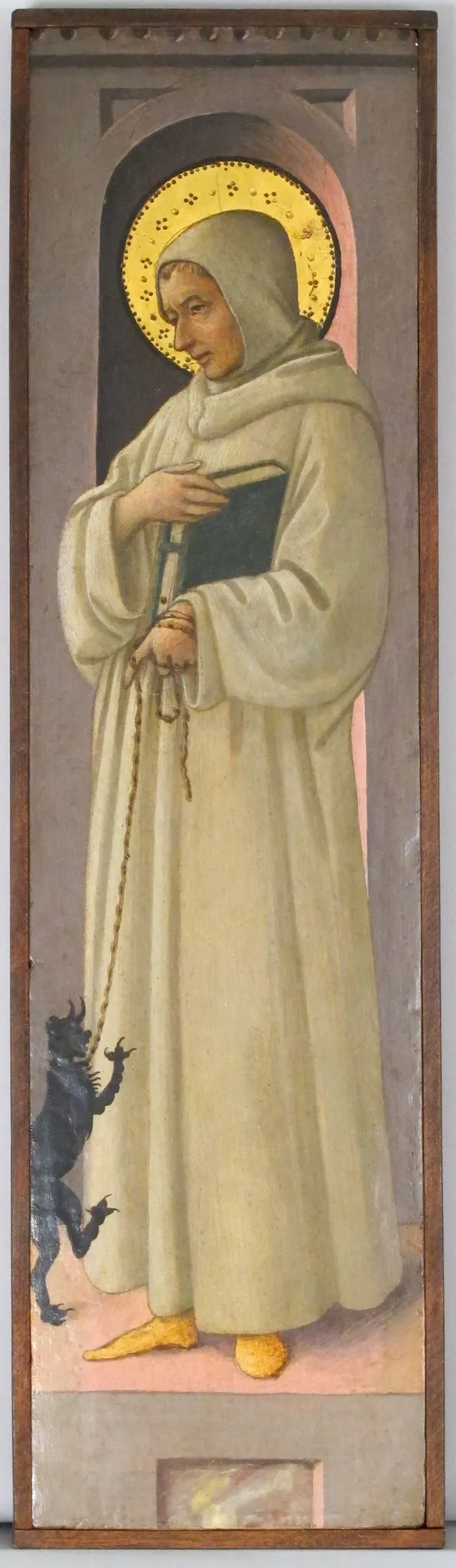
Saint Bernard of Clairvaux is an unspecified painting. It dates from 1447 and is held in the collection of the Metropolitan Museum of Art.
About this work
Technique & Style
Created in 1447, this religious painting is attributed to the Workshop of Fra Filippo Lippi and depicts Saint Bernard of Clairvaux alongside a man and a devil.
Created in 1447, this religious painting is attributed to the Workshop of Fra Filippo Lippi and depicts Saint Bernard of Clairvaux alongside a man and a devil. The work functions as a panel painting, measuring 48.3 centimeters in height and 12.7 centimeters in width, indicating a narrow vertical format typical of devotional objects. It is currently part of the Robert Lehman Collection at the Metropolitan Museum of Art.
As a religious genre piece from the mid-fifteenth century, the artwork employs the painting medium to render its narrative subjects, adhering to the stylistic conventions of the workshop. The physical dimensions and classification confirm its status as a portable, panel-based devotional image rather than a large-scale fresco or altarpiece.
History & Provenance
Saint Bernard of Clairvaux is a religious painting dated to 1447 and attributed to the workshop of Fra Filippo Lippi. The work was created in the mid-fifteenth century as a devotional image depicting the saint, a man, and a devil. It later entered the collection of Robert Lehman, the noted American collector whose holdings were subsequently transferred to the Metropolitan Museum of Art.
The painting, measuring 48.3 by 12.7 centimeters, is now held at the Metropolitan Museum of Art as part of its Robert Lehman Collection, where it remains on view as a documented example of mid-Quattrocento Florentine workshop production. No further details of commission, intermediate ownership, or acquisition date are recorded in the available documentation.
The painting Saint Bernard of Clairvaux, created in 1447 by the workshop of Fra Filippo Lippi, is held in the collection of the Metropolitan Museum of Art in New York. The work was formerly owned by Robert Lehman before entering the museum's holdings. While specific inventory or accession numbers are not detailed in the available records, the institution serves as its current location.
The provided sources do not contain information regarding specific past exhibitions or a detailed exhibition history for this panel.
Context
The 1447 panel of Saint Bernard of Clairvaux, recorded in the Metropolitan Museum of Art and formerly in the Robert Lehman collection, exemplifies mid‑15th‑century devotional painting. Its attribution to the Workshop of Fra Filippo Lippi situates it within a broader Renaissance context of collaborative workshop production, where religious imagery combined narrative clarity with emotive presence. Scholars have highlighted the work’s stylistic synthesis of Gothic devotional conventions and emerging naturalistic detail, using it to trace the evolution of saintly representation in Italian art.
Critical analysis emphasizes its spiritual intensity and the symbolic inclusion of a devil, underscoring its role in shaping the iconography of saintly authority in art history.
Overview
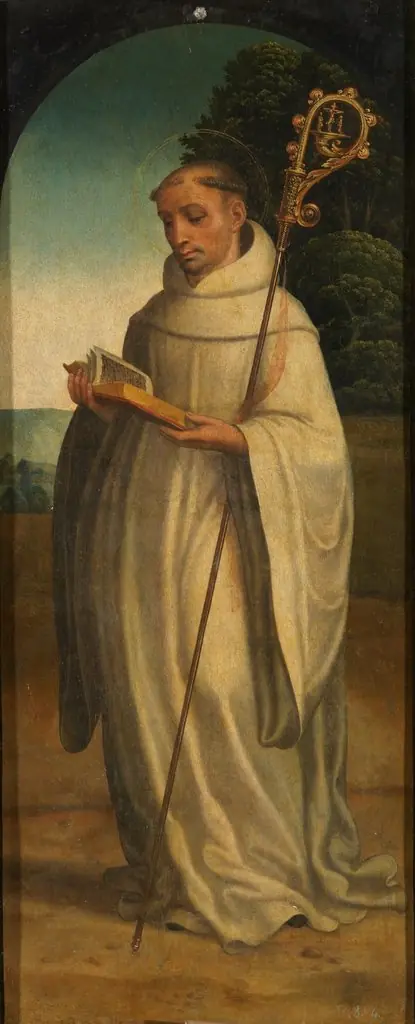
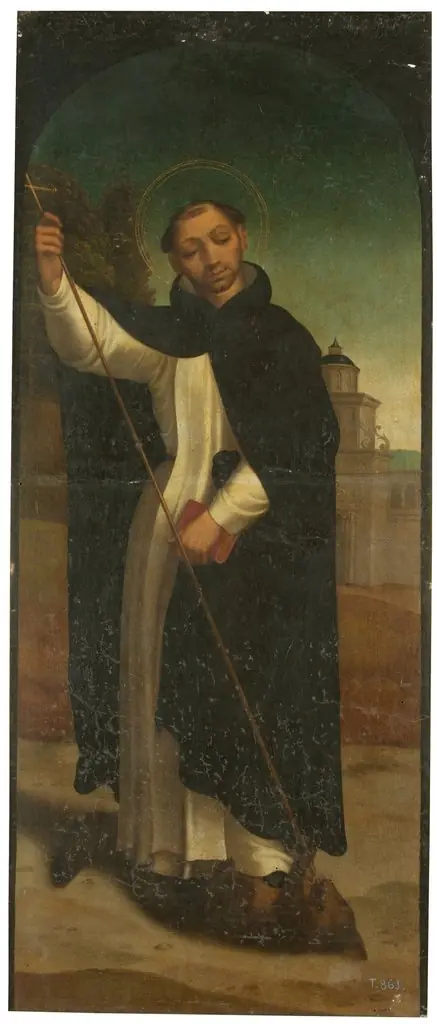
This painting portrays a solitary male figure, identified as Saint Bernard of Clairvaux, standing before an arched architectural element. Dressed in a flowing white monastic habit, he holds a book and is distinguished by a subtle halo. The composition conveys a sense of quiet introspection, with the figure's gaze directed downwards.
A small, dark creature introduces a dynamic element to the otherwise still scene, contrasting with the work's generally serene atmosphere.
Subject & Meaning
The central figure is Saint Bernard of Clairvaux, a prominent medieval abbot and reformer of the Cistercian order. His white habit signifies his monastic affiliation, while the halo confirms his sanctity. The book he holds likely represents his scholarly and theological contributions.
The small, dark creature ascending his robe is a symbolic element, often interpreted as a representation of temptation or evil, which the saint, through his piety, resists or transcends.
Artist & collection

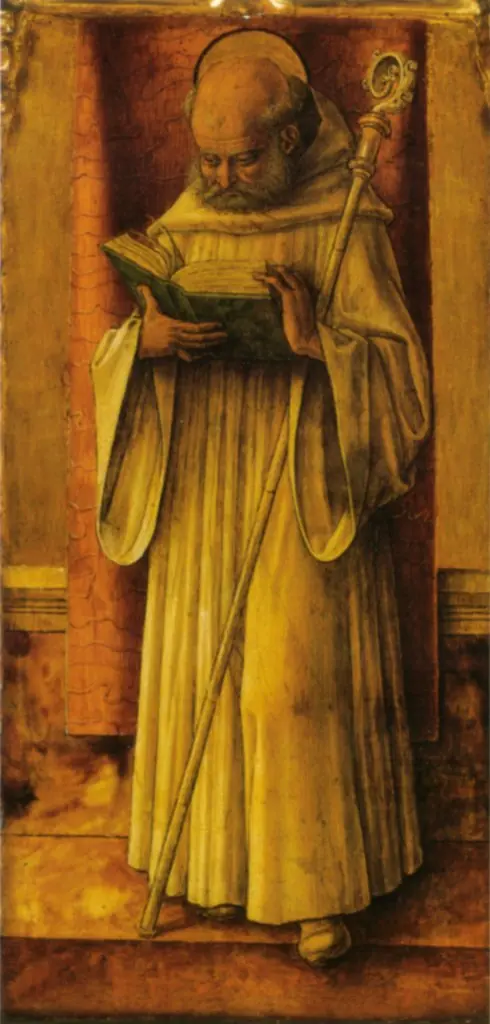
![Saint Francis [far left panel], by Cosimo Tura](https://artifactworldgallery.com/img/cosimo-tura--saint-francis-far-left-panel--3b890eb4471ebc8a-w320.webp)