Artwork
Saint Jerome
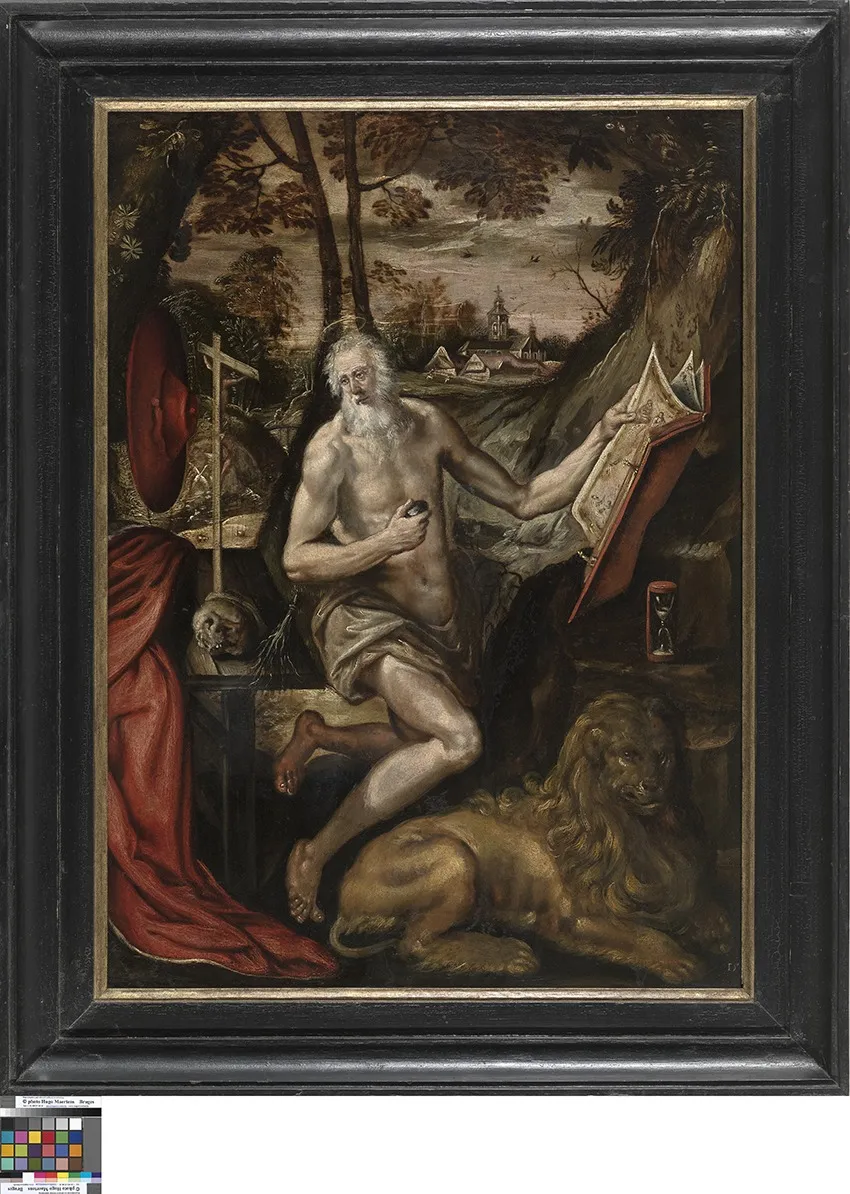
Saint Jerome is an unspecified painting by the Early Baroque Italian artist Unknown. It dates from 1569 and is held in the collection of the Groeningemuseum.
About this work
Subject & Meaning
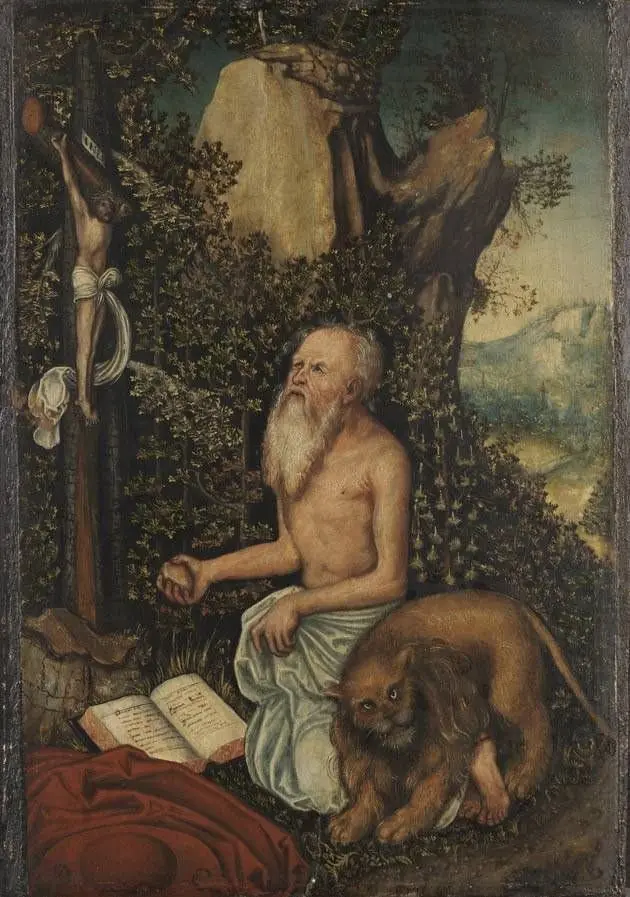
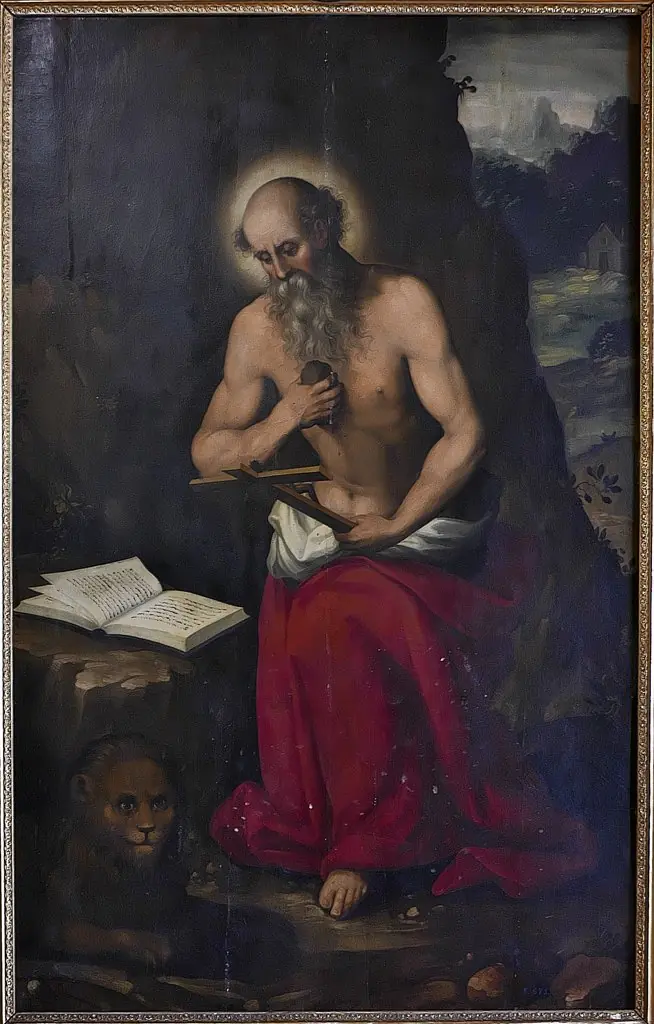
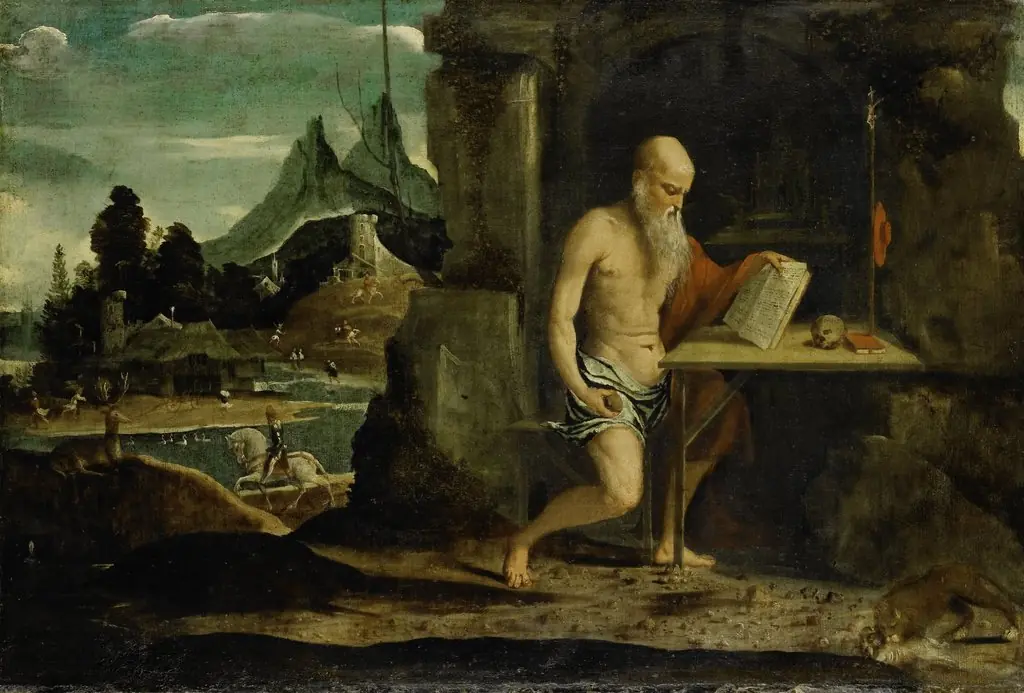
The iconography presents the saint within a landscape featuring a tree and a church building, accompanied by traditional attributes including a book and a lion.
Created in 1569 by an anonymous master from the Southern Netherlands, this religious painting centers on Saint Jerome as its primary subject. The iconography presents the saint within a landscape featuring a tree and a church building, accompanied by traditional attributes including a book and a lion.
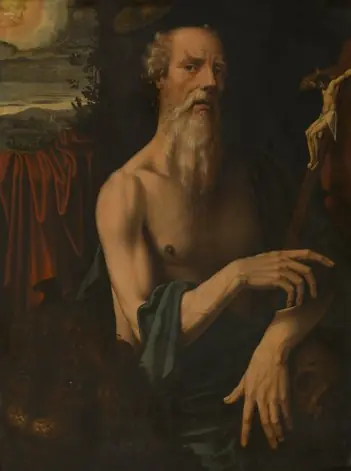
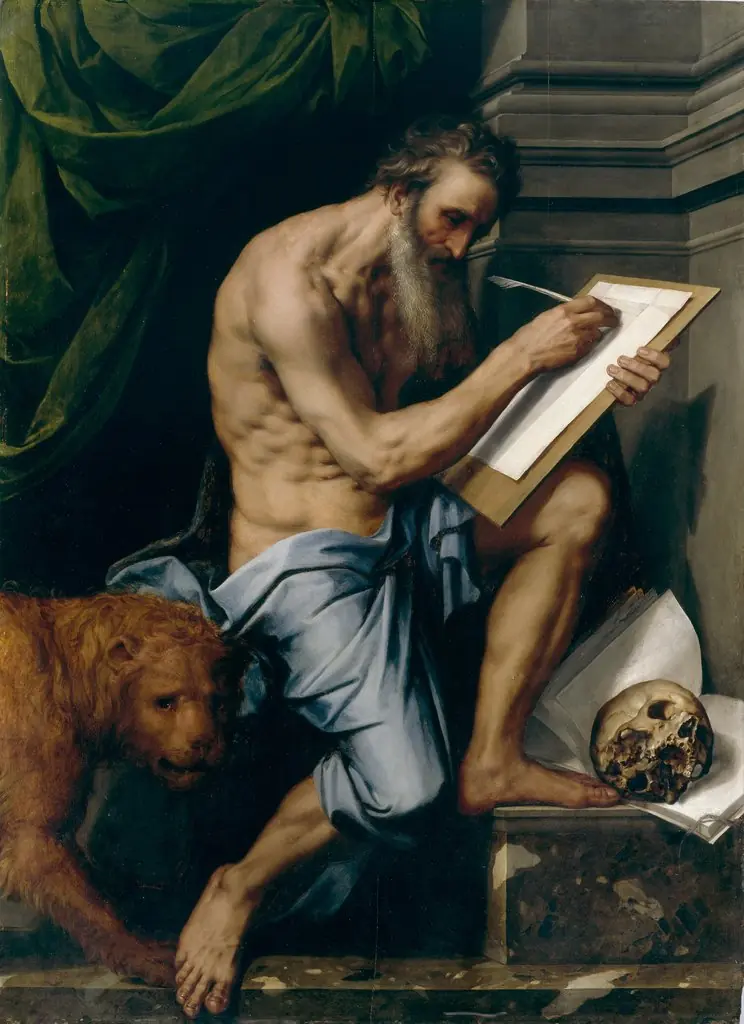
Distinctive symbolic elements include the presence of an hourglass, which likely serves as a memento mori or a reference to the passage of time and the urgency of penance. Together, these visual components construct a devotional image that emphasizes Jerome's role as a scholar and hermit while invoking themes of mortality and spiritual reflection.
Technique & Style
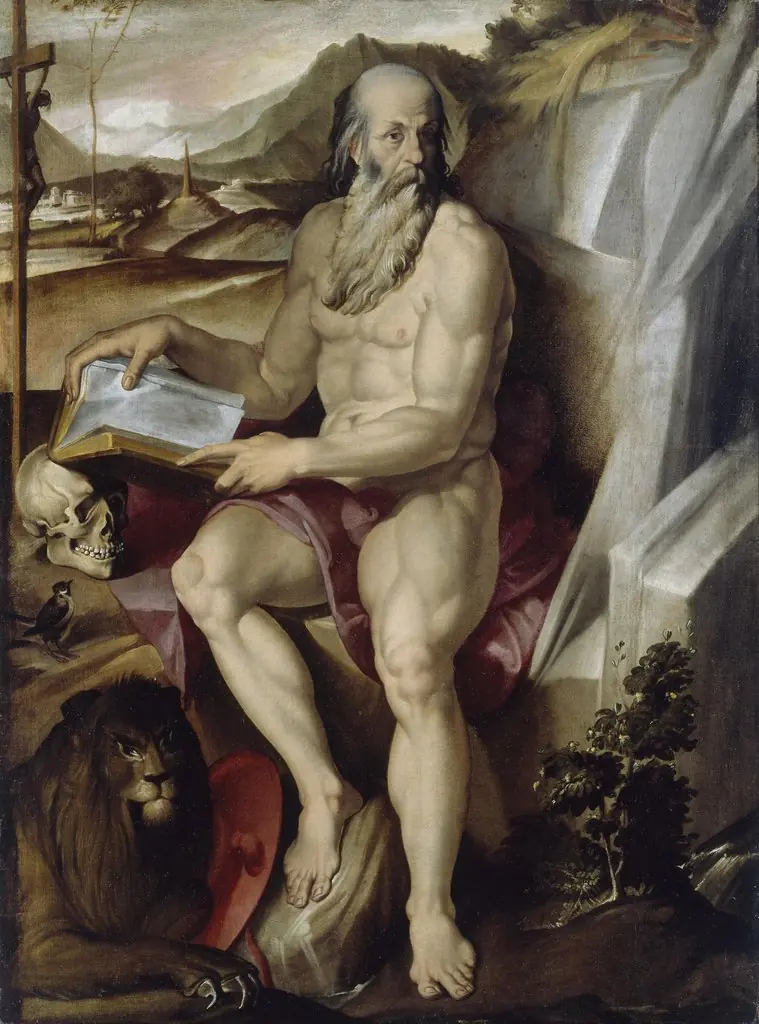
The painting is executed in oil on panel, measuring 67 cm by 48.5 cm, and depicts Saint Jerome with a book, a church building, a lion, a tree, and an hourglass. The composition shows Jerome seated within a stone arch, surrounded by the symbolic lion and tree, and is part of the Groeningemuseum's collection. The work reflects the stylistic characteristics of 16th‑century Southern Netherlandish religious painting, emphasizing meticulous detail and rich coloration.
History & Provenance
The painting Saint Jerome was created in 1569 by an anonymous master from the Southern Netherlands, as recorded in the work's entry. Its dimensions are 67 centimeters in height and 48.5 centimeters in width. The piece entered the collection of the Groeningemuseum and is part of the Flemish Art Collection, where it remains on display.
The work depicts Jerome with a book, a church building, a lion, a tree, and an hourglass, reflecting themes of scholarship and devotion in a religious context.
The painting Saint Jerome, attributed to an anonymous master from the Southern Netherlands and dated 1569, is housed in the Groeningemuseum where it is recorded under the inventory identifier Groeningemuseum 00145. It has been part of the museum’s permanent collection since its acquisition and was featured in the 2015 exhibition "Early Netherlandish Painting: Masterpieces from the Groeningemuseum," which highlighted key works from the museum’s holdings of 15th- to 16th-century religious art.
The work measures 67 cm in height and 48.5 cm in width and depicts Saint Jerome alongside symbolic elements such as a book, a church building, a lion, a tree, and an hourglass. It was included in the 2015 exhibition "Early Netherlandish Painting: Masterpieces from the Groeningemuseum," which highlighted key works from the museum’s holdings of 15th- to 16th-century religious art.
Its accession number is Groeningemuseum 00145.
Overview
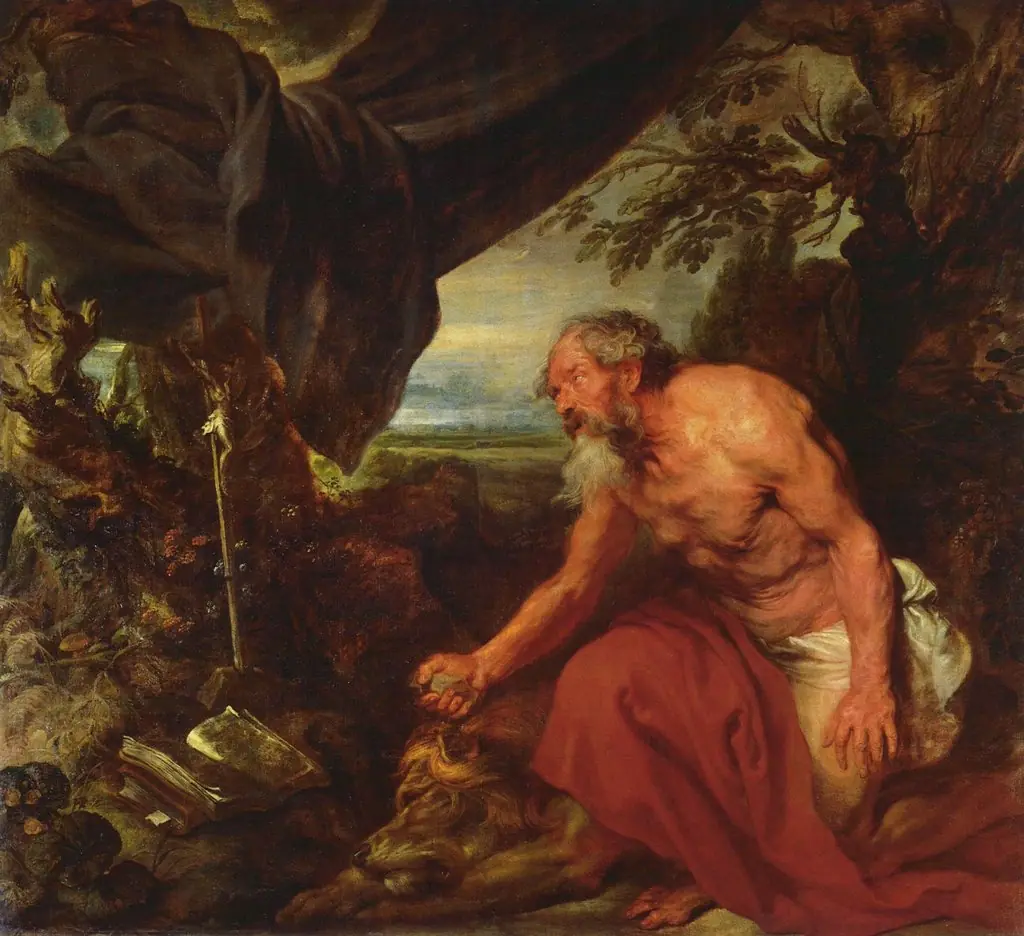
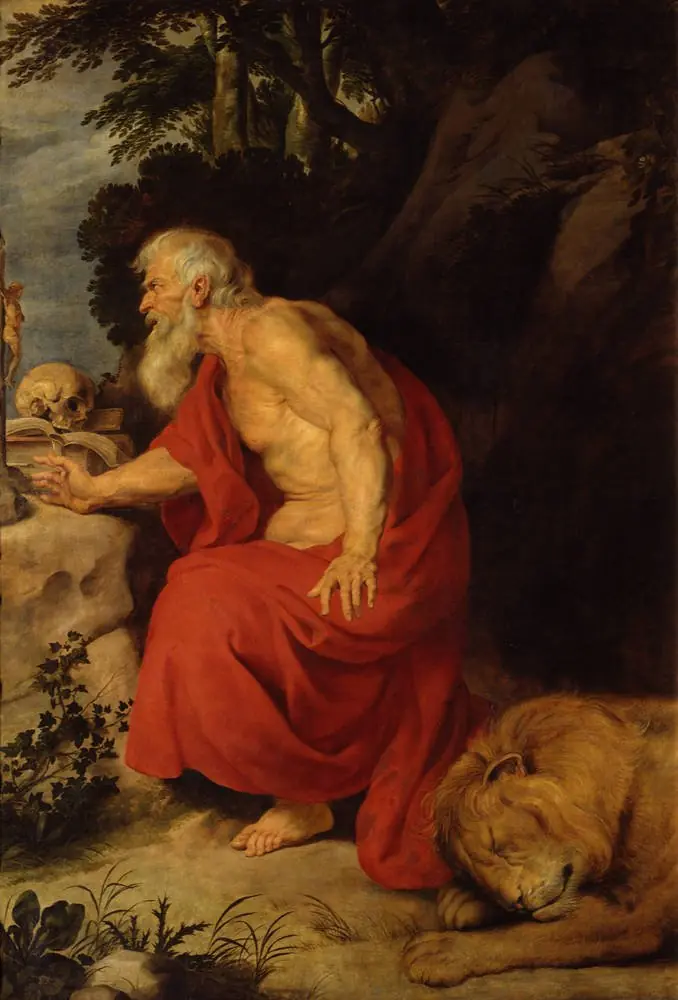
This painting depicts Saint Jerome in a contemplative outdoor setting, characterized by a strong contrast of light and shadow. The composition includes the saint, a lion, a red-cloaked figure, and a distant village, all set against a hilly landscape.
Context
The depiction of Saint Jerome reflects the Renaissance interest in classical scholarship and religious themes. The combination of a serene natural setting with symbols of spirituality and mortality aligns with the period’s artistic and philosophical preoccupations.
Legacy
As a representation of Saint Jerome, this painting contributes to the enduring artistic tradition of depicting this saint, influencing or reflecting broader cultural and religious values of its time. However, without specific artist or date, its direct impact on art history cannot be precisely determined.
Artist & collection