Artwork
Saint Rose of Lima
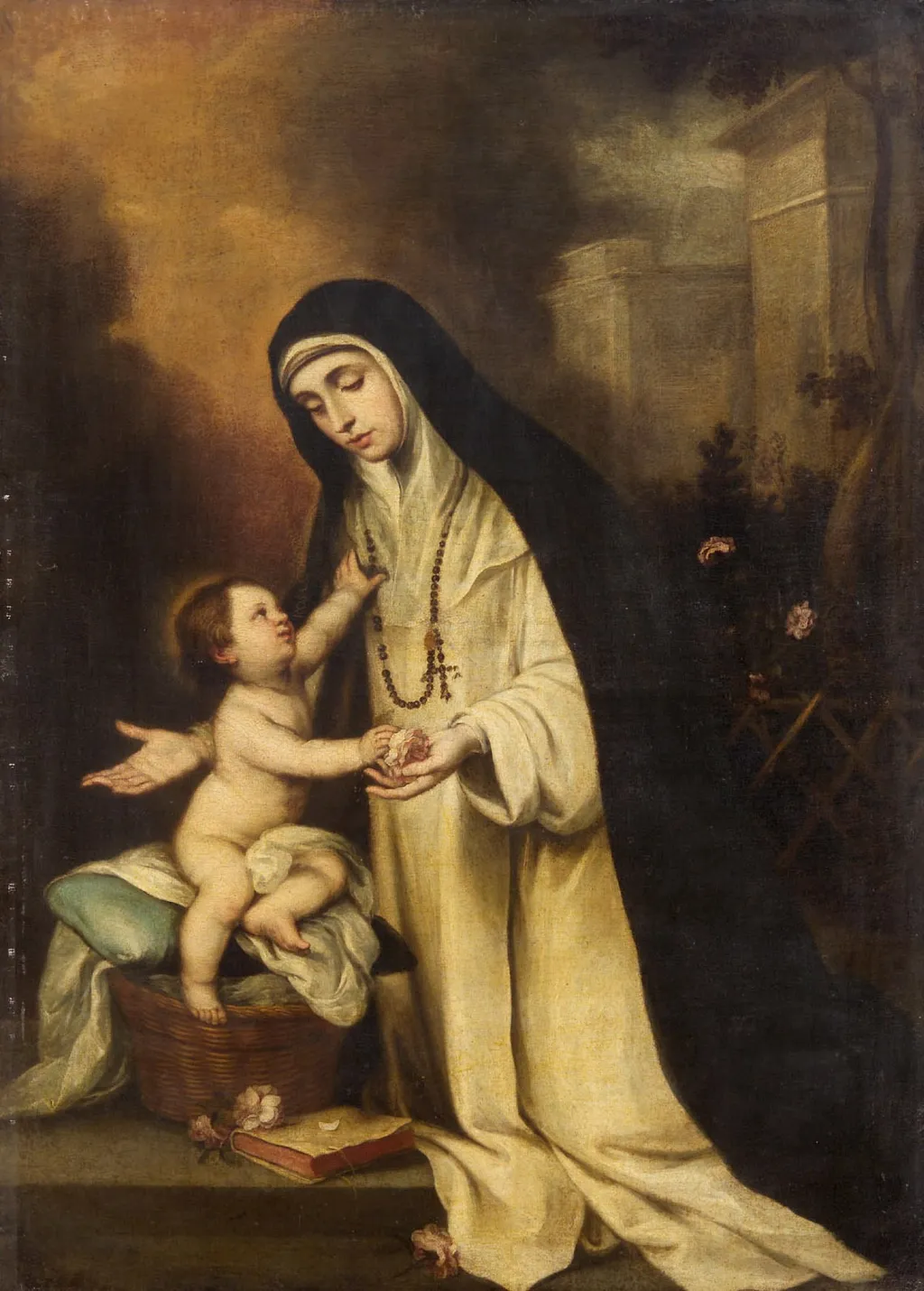
Saint Rose of Lima is an unspecified painting by the Spanish Baroque Tenebrist artist Unknown. It dates from 1690 and is held in the collection of the Kunsthistorisches Museum. This painting depicts a kneeling woman in a white robe and black veil, accompanied by a naked baby on a nearby basket.
About this work
Subject & Meaning
As a work of religious art, it belongs to a long tradition of devotional imagery produced to honor her sanctity and to inspire veneration among the faithful.
The painting depicts Rose of Lima, a Catholic saint venerated as the first person born in the Americas to be canonized. As a work of religious art, it belongs to a long tradition of devotional imagery produced to honor her sanctity and to inspire veneration among the faithful.
The image portrays the saint as the central subject of devotion, presenting her as a model of piety, mystical devotion, and consecrated virginity. Such depictions typically function as objects of contemplation, encouraging viewers to meditate on her spiritual virtues and to seek her intercession.
Held in the collection of the Kunsthistorisches Museum, the work contributes to the museum's holdings of religious painting, situating the saint within the broader visual culture of late seventeenth-century Catholic devotion.
Technique & Style
The painting is executed in oil on canvas, depicting Saint Rose of Lima in a devotional composition typical of Counter-Reformation religious art. It measures 146 cm in height by 107 cm in width, reflecting the standard format for devotional panels of the period. The work demonstrates meticulous attention to material rendering, particularly in the depiction of fabric textures and facial expression, characteristic of late 17th-century Spanish-influenced religious painting.
The canvas support shows appropriate aging consistent with its 1680 date, with no noted structural instability or conservation concerns affecting its current condition.
History & Provenance
A religious painting titled Saint Rose of Lima was created in 1680. It is attributed to an anonymous artist and measures 146 cm in height by 107 cm in width. The work belongs to the religious art genre and portrays Rose of Lima.
It has been part of the collection at the Kunsthistorisches Museum since its inception, with its creation recorded as January 1, 1680.
Legacy
The painting's enduring legacy lies in its role as a cornerstone of Counter-Reformation devotional art, particularly through its powerful portrayal of Saint Rose of Lima's asceticism and mystical visions. Its visual language of extreme self-mortification influenced subsequent generations of artists depicting female saints, establishing a template for conveying spiritual intensity through physical austerity. The work's presence in major collections shaped institutional approaches to religious art, while its technical innovation in rendering fabric textures and symbolic details became a reference point for academic instruction in the 18th and 19th centuries.
Overview
This painting depicts a kneeling woman in a white robe and black veil, accompanied by a naked baby on a nearby basket. The scene is set against a dark background with a subtle glow behind the woman.
Artist & collection









 Santa Rosa de Lima
 Saint Clare of Assisi Adoring Jesus
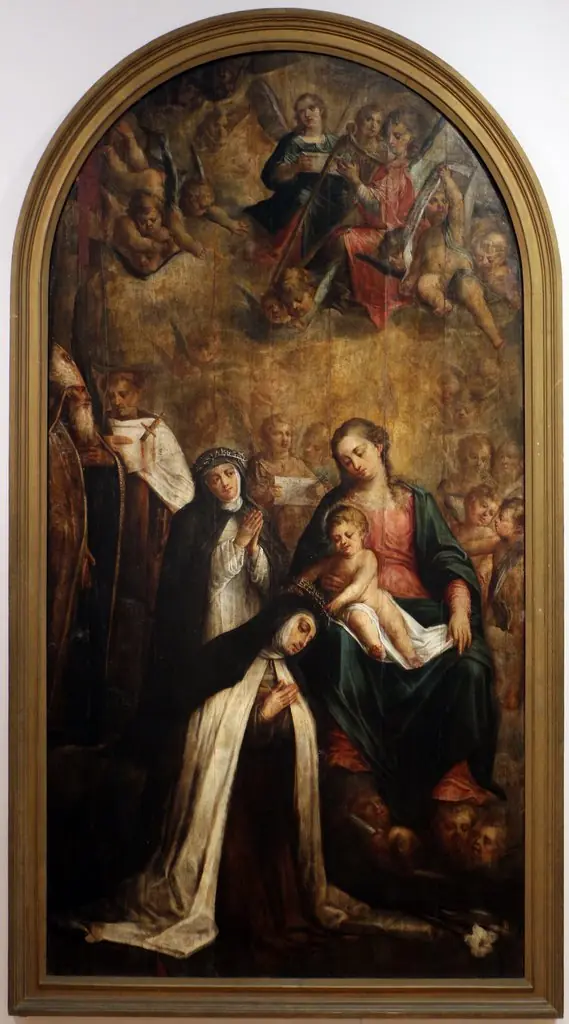 Saint Mary Magdalene of Pazzi crowned with thorns
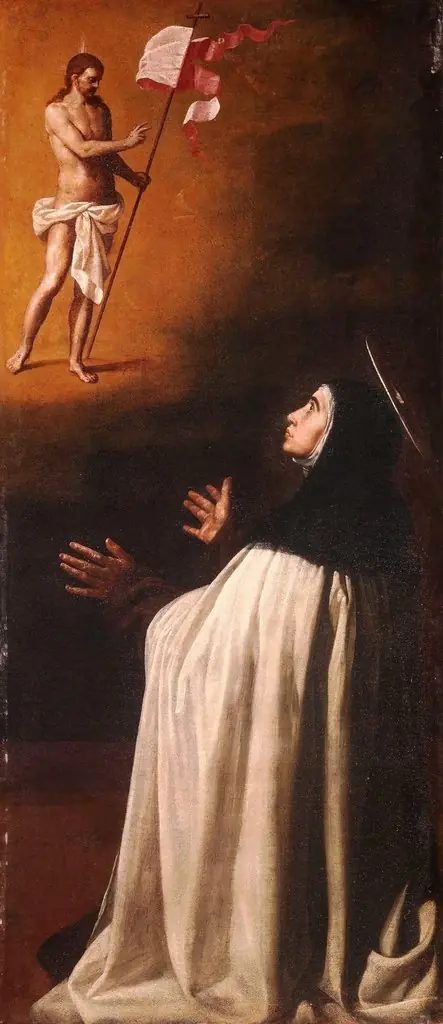 The crucified Christ appears to Saint Teresa
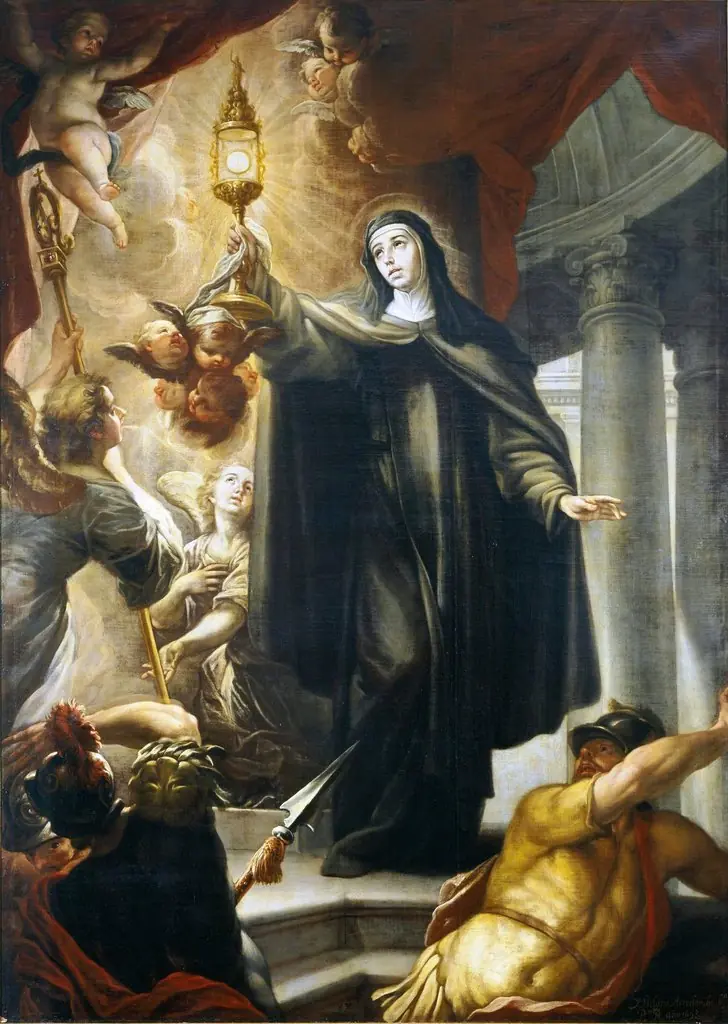 Saint Clare Driving Away the Infidels with the Eucharist
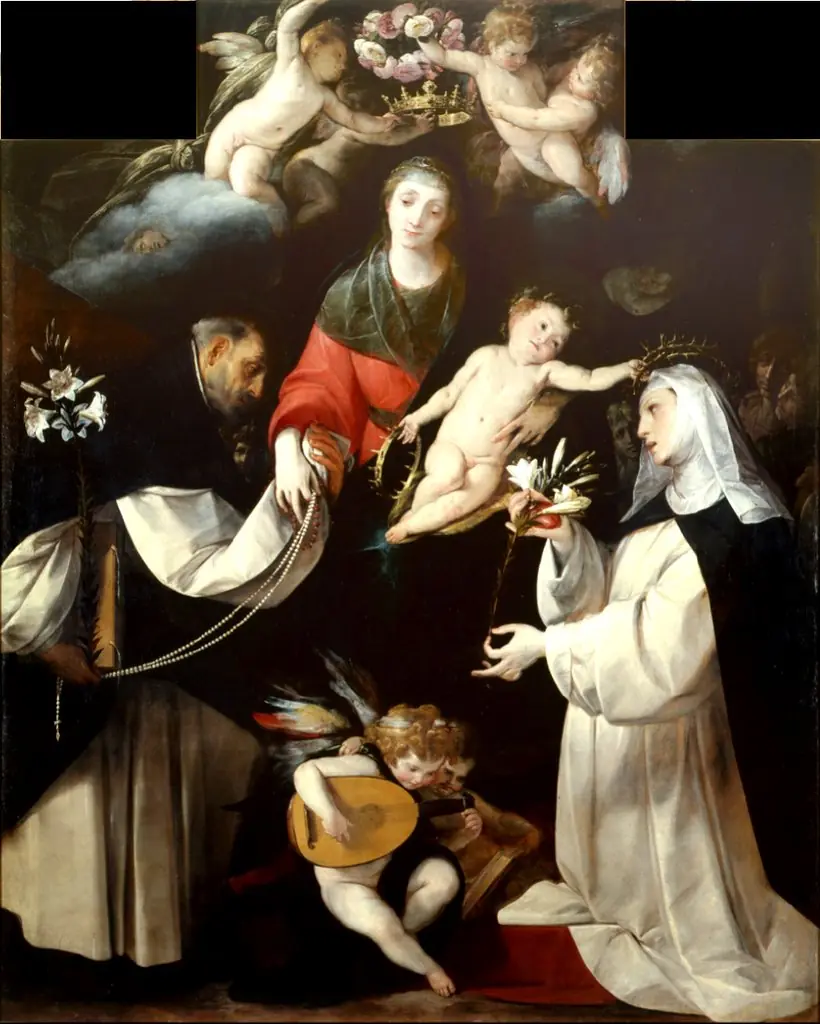 The Madonna of the Rosary
 Saint Clara
 Saint Teresa of Avila
 The Virgin and Child
 Santa Teresa de Jesús