Artwork
Saints Peter and John the Evangelist
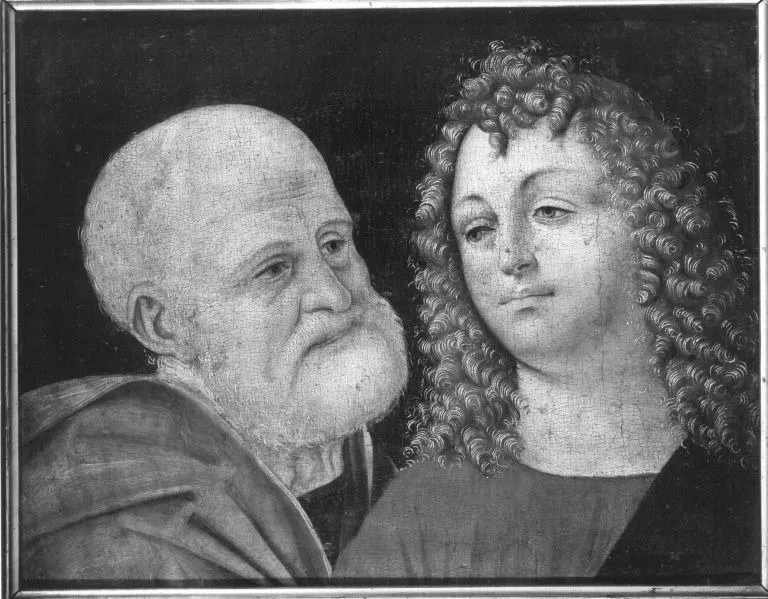
Saints Peter and John the Evangelist is an unspecified painting by the Early Renaissance artist Unknown. It dates from 1496 and is held in the collection of the Bavarian State Painting Collections. The work presents two standing figures against an unadorned black backdrop.
About this work
Overview
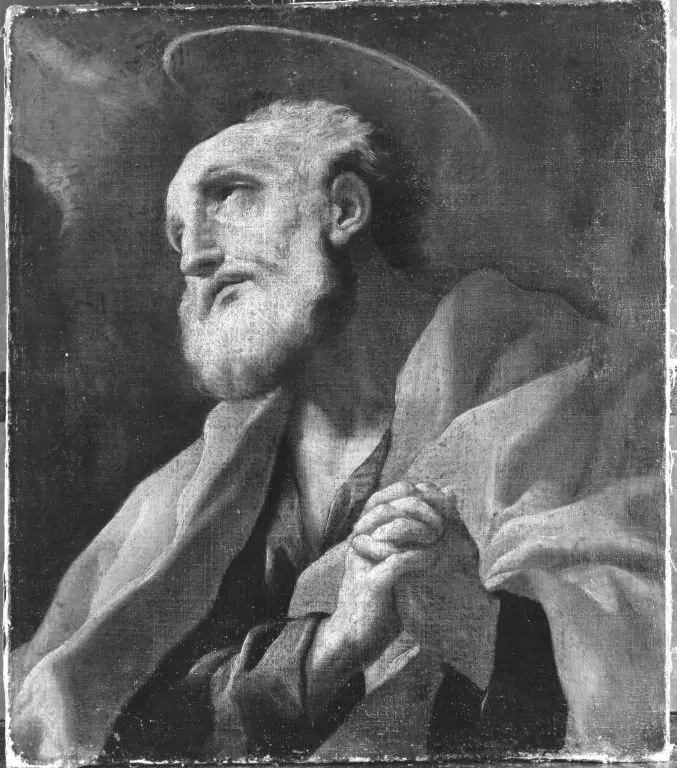
The elder, positioned on the left, is bald with a long white beard and wears a dark, high‑collared robe, his eyes turned toward the right.
The work presents two standing figures against an unadorned black backdrop. The elder, positioned on the left, is bald with a long white beard and wears a dark, high‑collared robe, his eyes turned toward the right. Beside him, a younger man with curly hair faces forward, dressed in a simple dark tunic. The stark contrast between the dark clothing and the black background isolates the pair, emphasizing their presence.
Subject & Meaning
The figures are identified as Saint Peter and Saint John the Evangelist, traditional apostolic icons. Peter is distinguished by his age and beard, symbols of his role as the church’s foundational leader, while the youthful John, often associated with spiritual insight, looks directly ahead, suggesting contemplation or revelation.
Technique & Style
Rendered in a limited palette, the painting relies on chiaroscuro to model the bodies, using the black ground to heighten the three‑dimensionality of the figures. The brushwork is restrained, focusing on contour and modest shading rather than elaborate detail, which reinforces the work’s solemn, devotional tone.
History & Provenance
The artist remains unidentified, and no documented commission or original location is recorded. The piece appears to belong to a broader tradition of anonymous devotional images produced for private or liturgical use, where the emphasis was on recognizable saints rather than individual authorship.
Context
Depictions of Peter and John together were common in medieval and early Renaissance iconography, often serving as visual reminders of apostolic authority and spiritual guidance. The stark compositional approach aligns with a period when simplicity was employed to focus worshippers’ attention on the sanctity of the subjects.
Artist & collection









- The Holy Family
 Madonna and Child with two Saints
 The Virgin and Child wiith four Saints
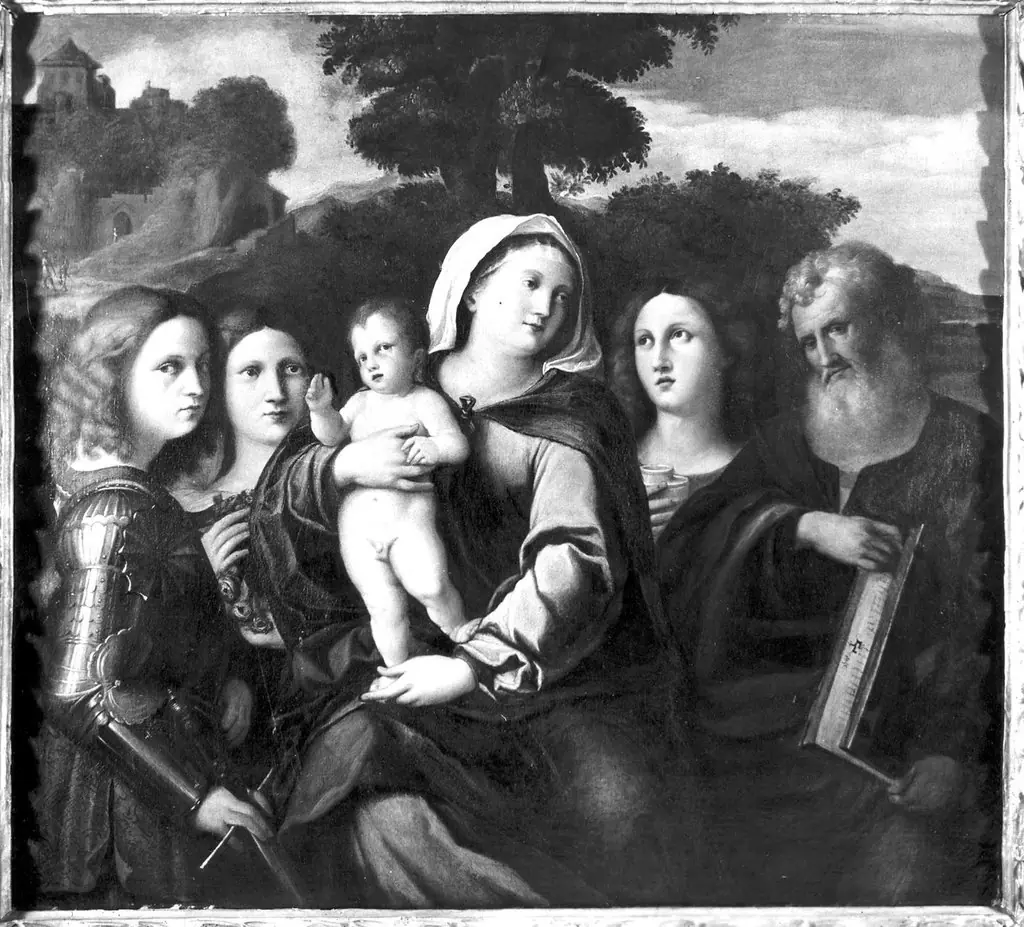 Mary with the Child and four Saints in front of a Landscape
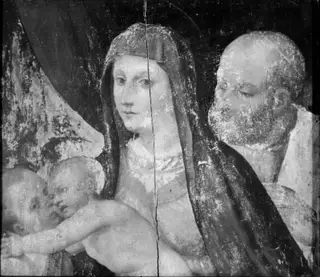 The Holy Family
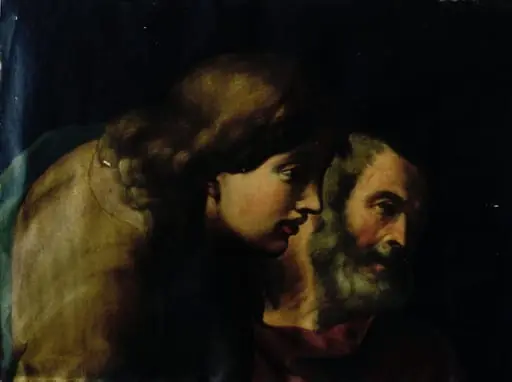 Două capete
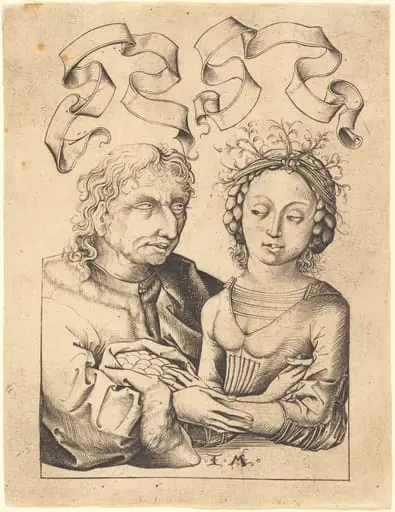 The Foolish Old Man and the Young Girl
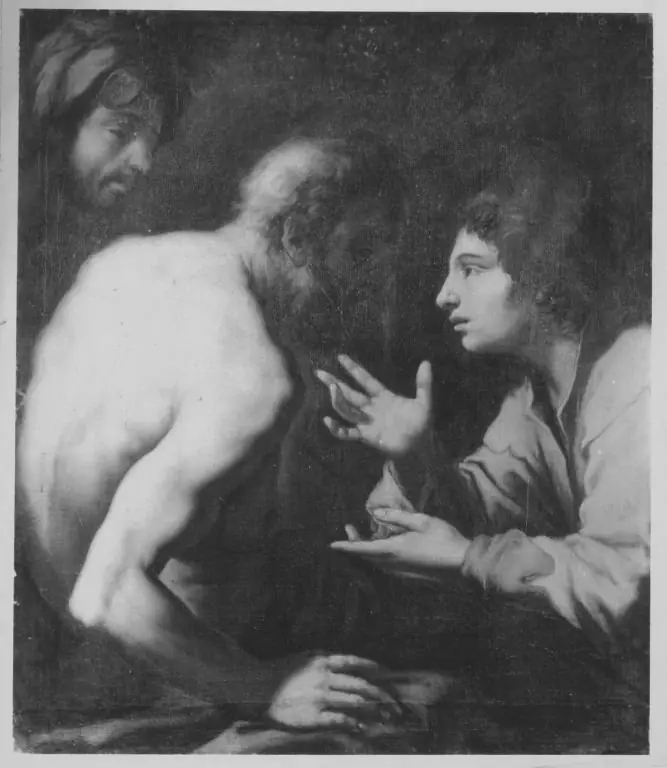 Joseph als Traumdeuter
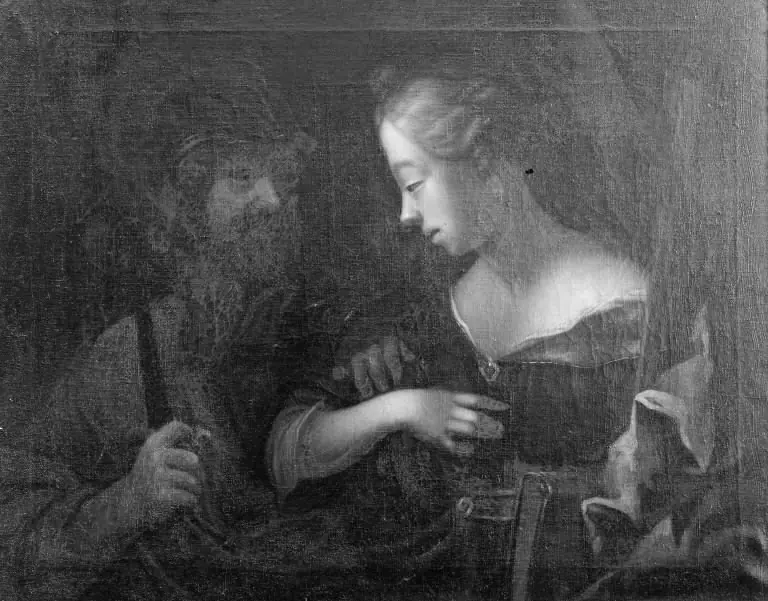 Et ungt fruentimmer i blå kjole, samtaler med en gammel mand
 Et ungt fruentimmer i blå kjole, samtaler med en gammel mand
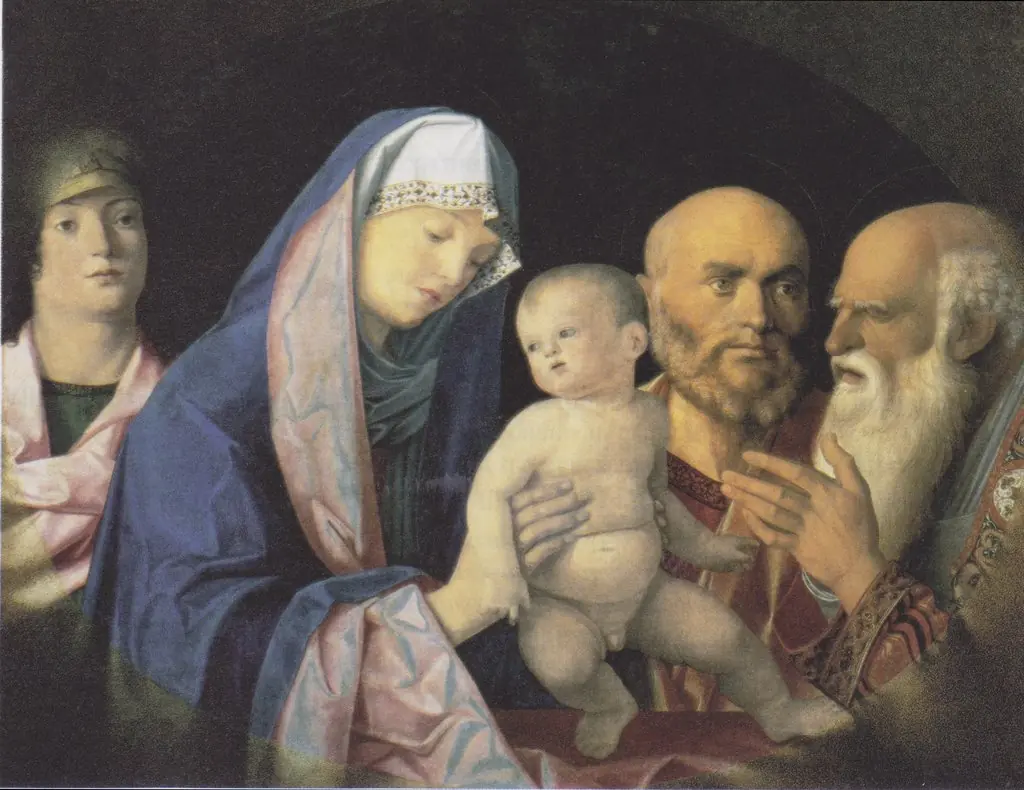 Presentation of Jesus
 Hl. Petrus