Artwork
Samantabhadra
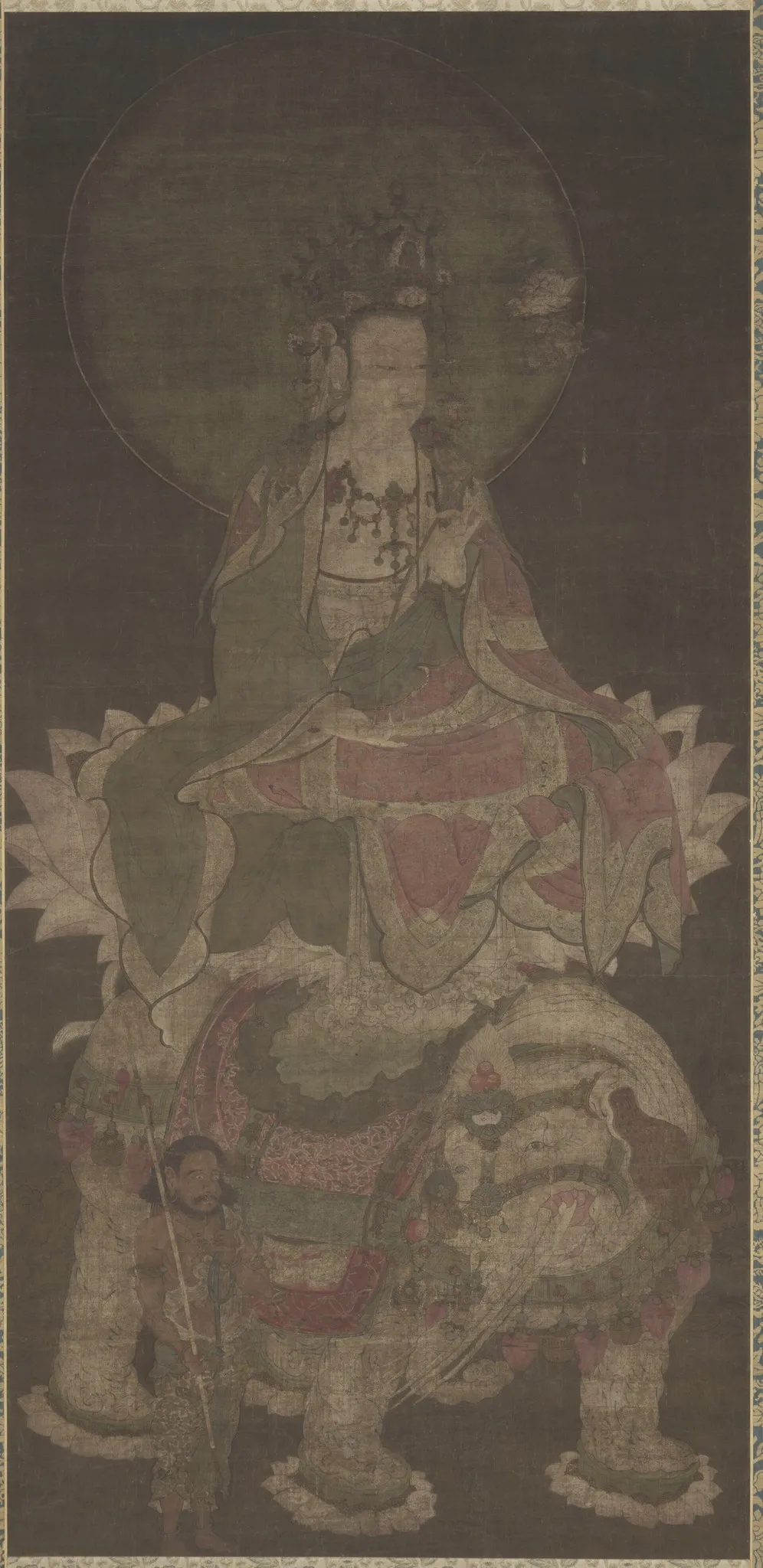
Samantabhadra is an unspecified painting. It dates from 1163 and is held in the collection of the Cleveland Museum of Art. The work depicts a seated figure clothed in bright robes, positioned upon a lotus blossom against a dark backdrop.
About this work
Technique & Style
The work is attributed to an unknown artist and is currently held in the collection of the Cleveland Museum of Art.
Samantabhadra is a painting created in China in 1163. The work is attributed to an unknown artist and is currently held in the collection of the Cleveland Museum of Art. As a painting, the medium consists of pigment applied to a support surface, though the specific materials such as silk or paper are not detailed in the available records. The formal qualities are defined by its classification within the painting genre of 12th-century Chinese art.
History & Provenance
Created in China in 1163, this painting depicts the bodhisattva Samantabhadra. The work was executed by an artist whose identity remains unknown. It currently resides in the collection of the Cleveland Museum of Art, where it is cataloged under the accession number 1962.161.
No further details regarding its original commission, intermediate ownership history, or specific circumstances of creation are provided in the available records.
Overview
The work depicts a seated figure clothed in bright robes, positioned upon a lotus blossom against a dark backdrop. The central figure holds a fan and wears a beaded necklace, while a smaller attendant stands nearby, grasping a staff. Although the pigments have faded over time, the remaining colors retain contrast with the surrounding darkness.
Subject & Meaning
The seated individual is identified as Samantabhadra, a bodhisattva associated with practice and vows in Buddhist tradition. The lotus base signifies purity, and the fan may symbolize the spreading of teachings. The attendant’s staff suggests support or guidance, reinforcing the theme of compassionate activity.
Context
Paintings of Samantabhadra were common in East Asian Buddhist art, often serving devotional purposes within temples or monastic settings. The use of a lotus throne and attendant aligns with iconographic conventions that convey the bodhisattva’s enlightened qualities.
Artist & collection

 Thirteen Buddhas Welcoming the Dying Believer to the Western Pure Land
 Avalokiteshvara (Guanyin), the Bodhisattva of Compassion
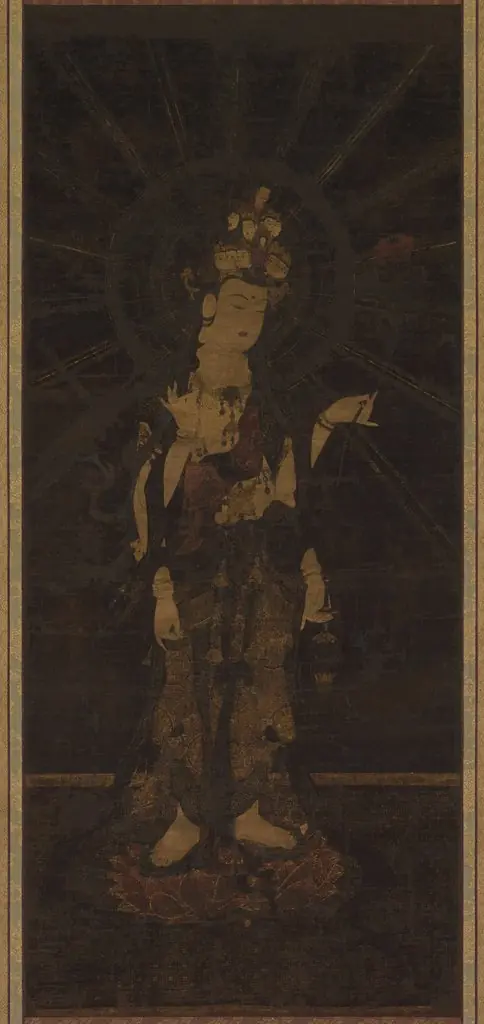 Eleven-Headed Kannon (Jūichimen Kannon)
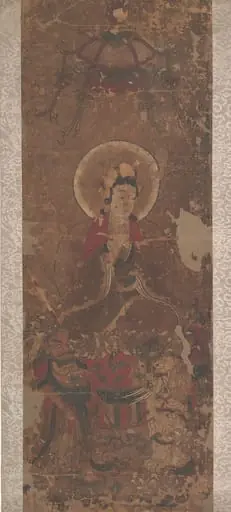 Untitled
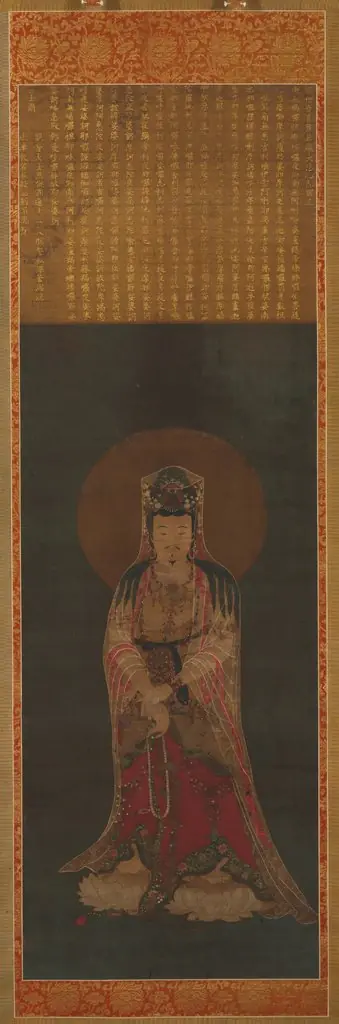 Kannon
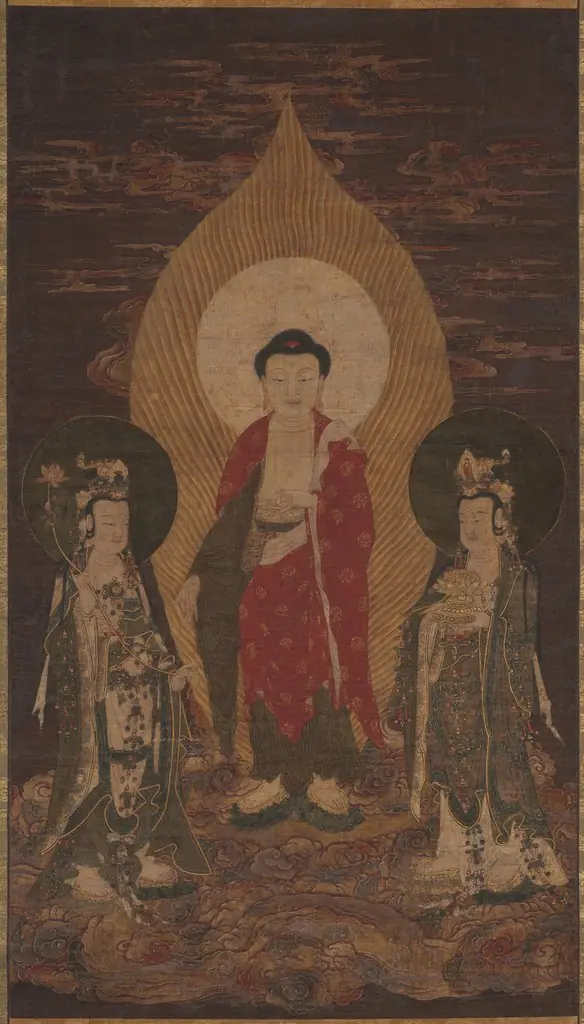 Amitābha Triad
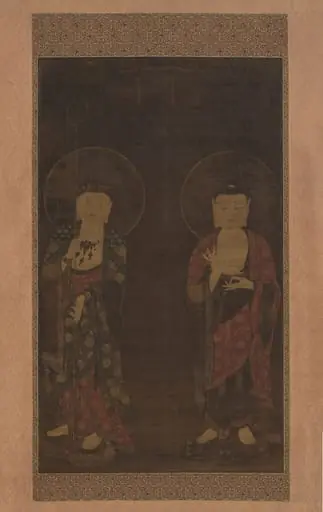 아미타불과 지장보살도 고려|阿彌陀佛・地藏菩薩圖 高麗|Amitabha and Kshitigarba
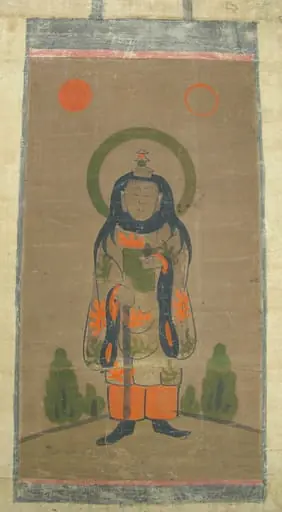 雨宝童子図大津絵|Ōtsu-e of Uhō Dōji
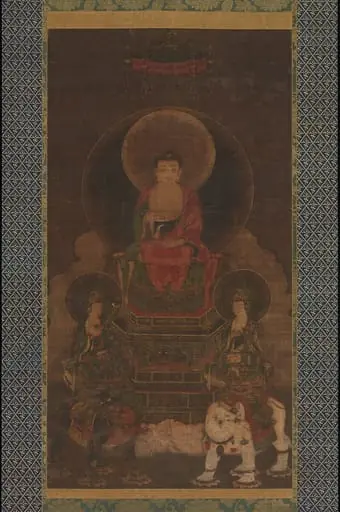 釈迦三尊像|Shaka (Shakyamuni) Triad
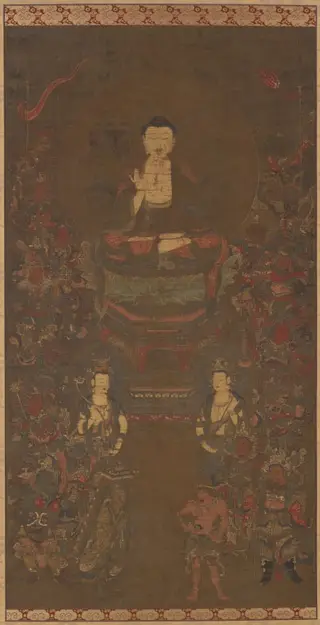 Shakyamuni with the Sixteen Benevolent Deities