Artwork
Samantabhadra on an Elephant with Two Attendants
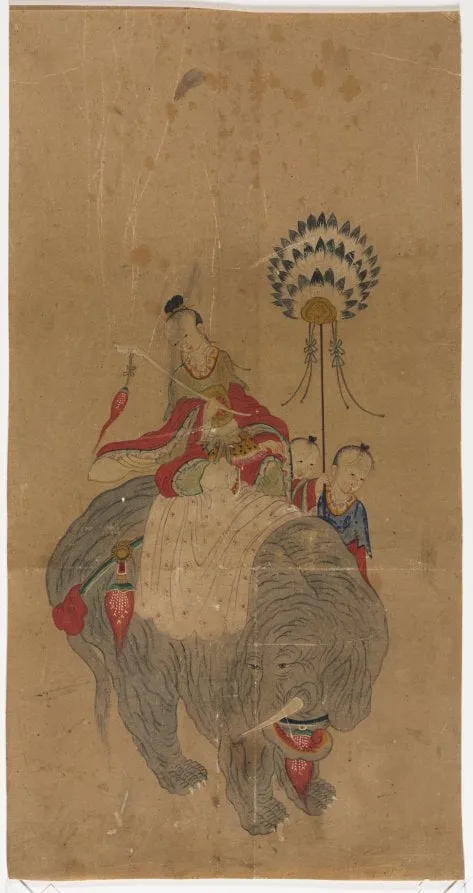
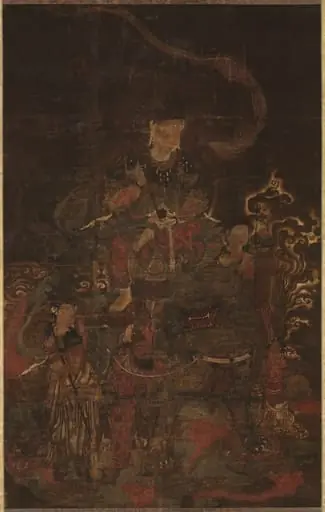
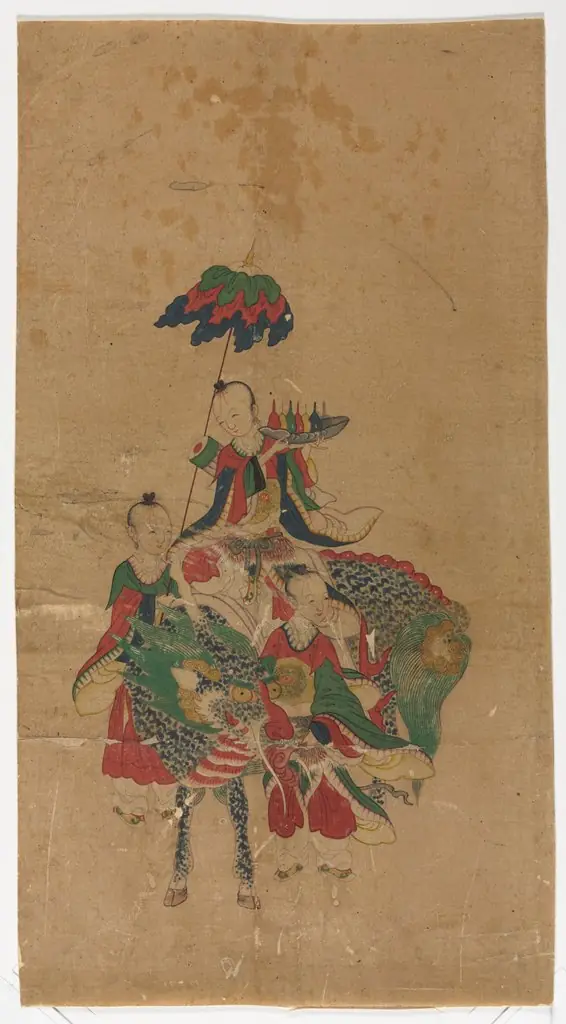
Samantabhadra on an Elephant with Two Attendants is an unspecified painting by the Korean Minhwa artist Unknown. It dates from 1651 and is held in the collection of the Cleveland Museum of Art. This painting depicts Samantabhadra, a Buddhist deity, riding an elephant with two attendants.
- Accession no.
- 1915.219
About this work
This painting shows Samantabhadra, a Buddhist figure linked to kindness and good wishes.
A blue-skinned figure rides a white elephant, flanked by two smaller attendants. The scene glows with gold and red details, set against a simple background.
This painting shows Samantabhadra, a Buddhist figure linked to kindness and good wishes. It was likely made for celebrations, maybe even as part of a larger set of images. The mix of Buddhist and Daoist ideas was common in Korea during this time.
To see more like this, look up korea, joseon dynasty (1392–1910).
Overview
This painting depicts Samantabhadra, a Buddhist deity, riding an elephant with two attendants. Created in the late 18th century, it exemplifies the era's artistic themes.
Subject & Meaning
Samantabhadra is associated with benevolence and auspicious wishes. The painting's wish-granting connotations made it suitable for celebratory occasions.
Technique & Style
The work features a blue-skinned Samantabhadra on a white elephant, accompanied by two smaller attendants, with gold and red accents against a simple background.
Context
The blending of Buddhist and Daoist elements was characteristic of Korean art during this period, reflecting the cultural syncretism of the Joseon dynasty.
History & Provenance
The painting's size suggests it may have been part of a multi-panel screen or album featuring a series of Daoist and Buddhist figures.
Artist & collection