Artwork
Monju as a Child
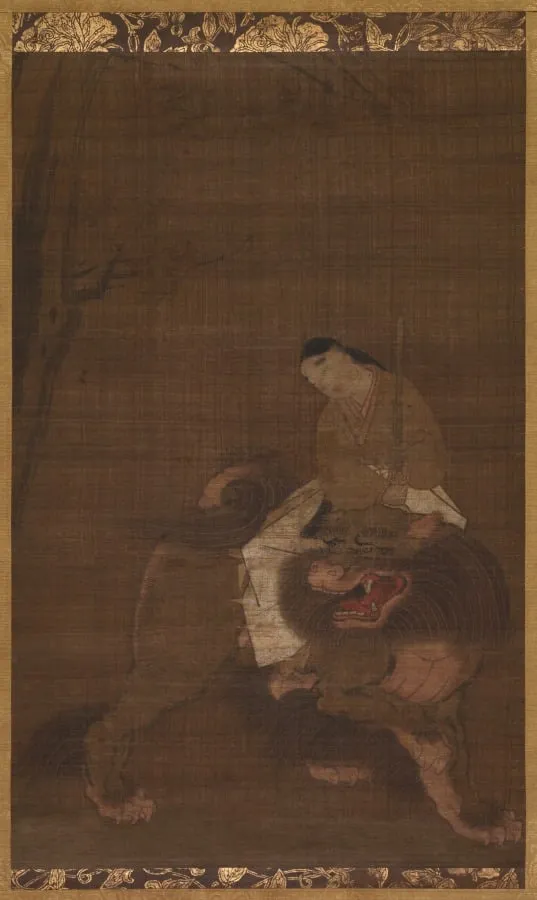
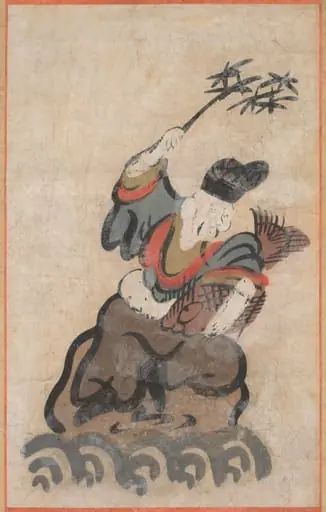
Monju as a Child is an unspecified painting by the Joseon dynasty painting artist Unknown. It dates from 1486 and is held in the collection of the Cleveland Museum of Art. The painting depicts a youthful figure dressed in elaborate court attire, astride a lion.
- Accession no.
- 1992.385
- Credit line
- Bequest of Maud Eells Corning
About this work
A young boy in fancy Japanese robes rides a lion, holding a sword and a holy book.
A young boy in fancy Japanese robes rides a lion, holding a sword and a holy book. The lion lifts one paw like it just stopped to look back.
This painting shows Monju, a Buddhist figure of wisdom, as a child. The way the boy and lion stand feels real, not stiff like older religious art. The tree behind them is just a few quick brushstrokes, simple but full of life.
To see more art like this, look up japan, muromachi period (1392–1573).
Overview
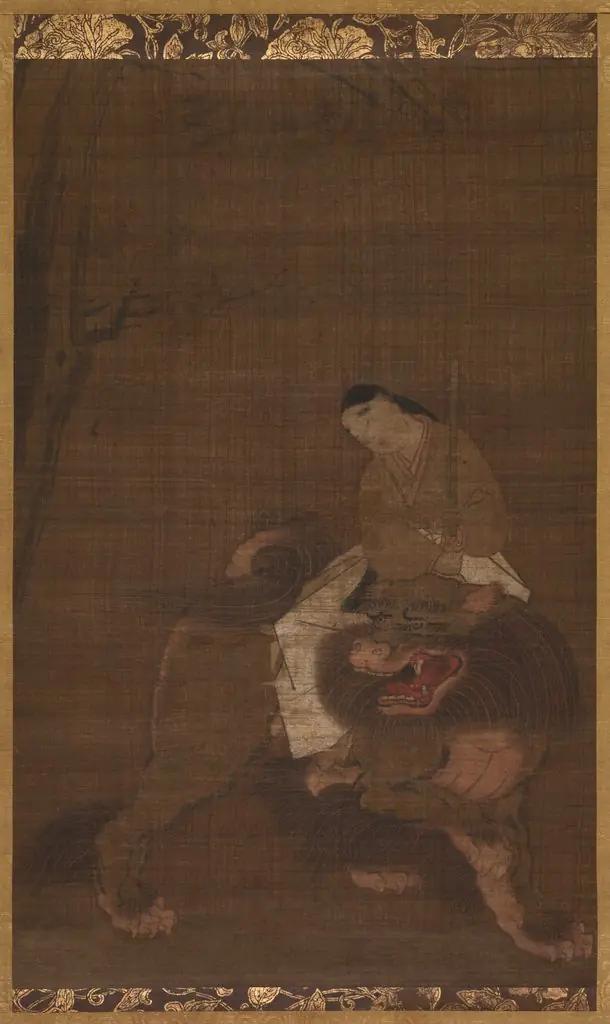
The painting depicts a youthful figure dressed in elaborate court attire, astride a lion. He clutches a sword in one hand and a sacred text in the other, while the lion pauses with its front paw lifted, as if turning to look back. A loosely rendered tree provides a minimal backdrop, giving the scene a sense of movement and immediacy.
Subject & Meaning
The child is understood as a representation of the bodhisattva Monju, the Buddhist embodiment of wisdom, rendered here in a juvenile form. The sword and scripture are traditional attributes of Monju, while the lion, frequently linked to this deity, reinforces the association. Some scholars interpret the figure as a Wakamiya, a youthful kami whose Buddhist counterpart aligns with Monju, highlighting syncretic religious themes.
Technique & Style
The composition combines naturalistic modeling of the boy and lion with the spontaneous brushwork typical of the Muromachi period. The figures are rendered with attention to volume and gesture, contrasting with the sketchy ink strokes that suggest the tree and surrounding foliage. This blend of realism and expressive line marks a departure from the more rigid iconography of earlier devotional paintings.
History & Provenance
Created during Japan’s Muromachi era (1392–1573), the work reflects the period’s interest in integrating Buddhist iconography with native Shinto motifs. While the exact patron remains unidentified, the painting likely belonged to a temple or aristocratic collection that valued such syncretic imagery. It has since entered a museum collection, where it serves as a representative example of Buddhist‑Shinto visual synthesis.
Artist & collection