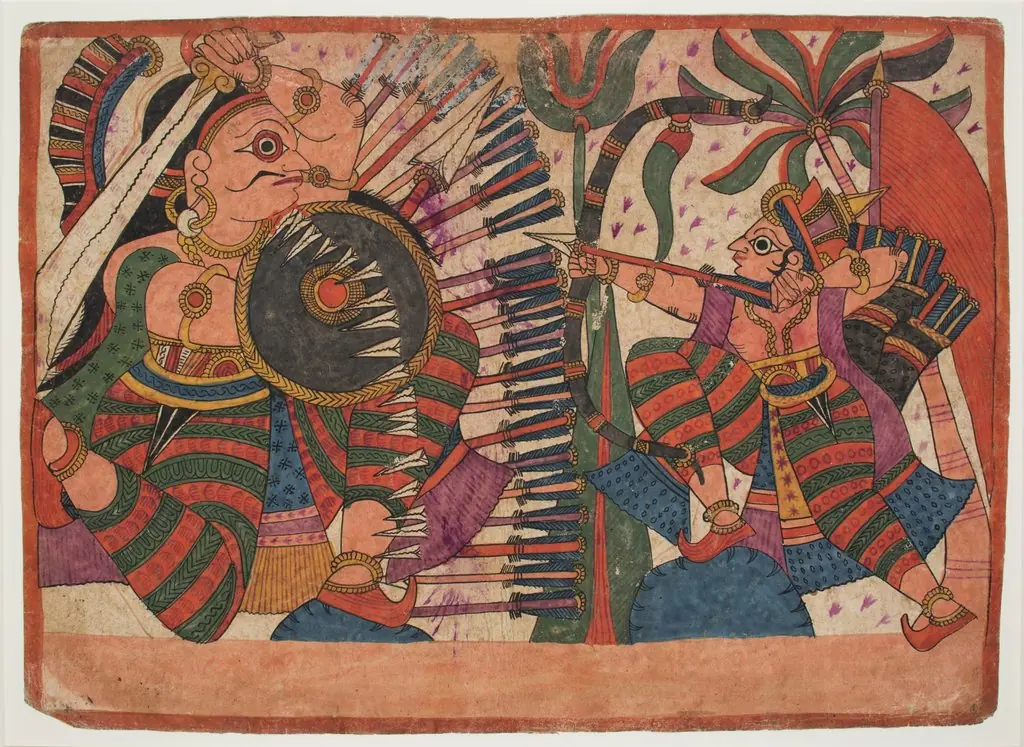
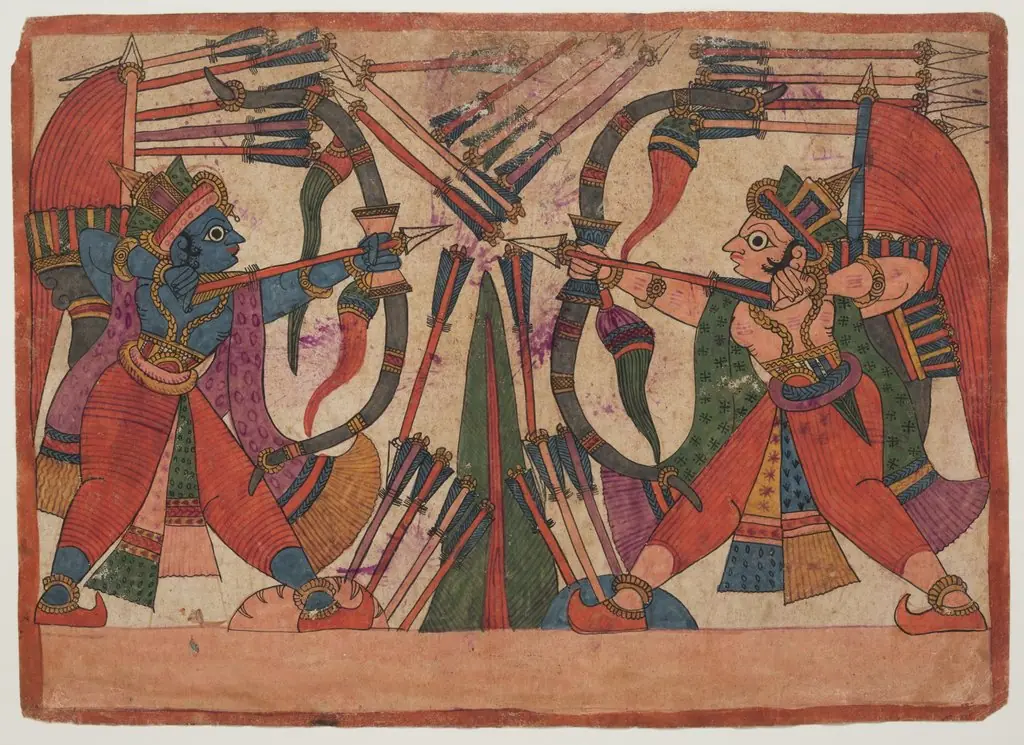
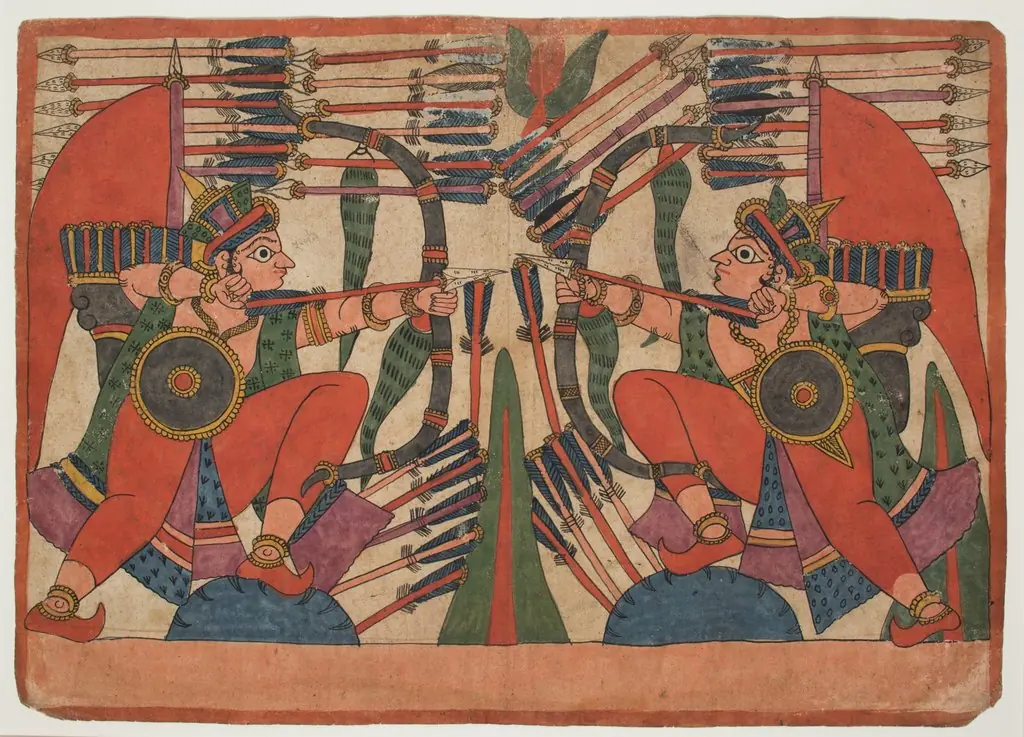
Artwork
Scene from the Ramayana
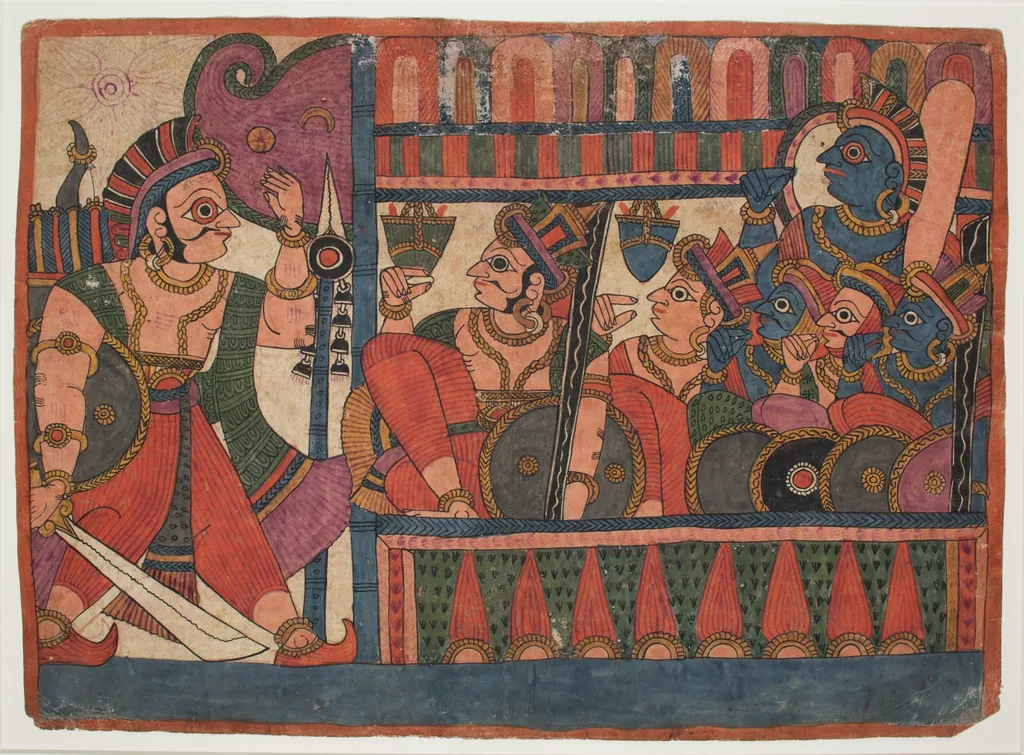
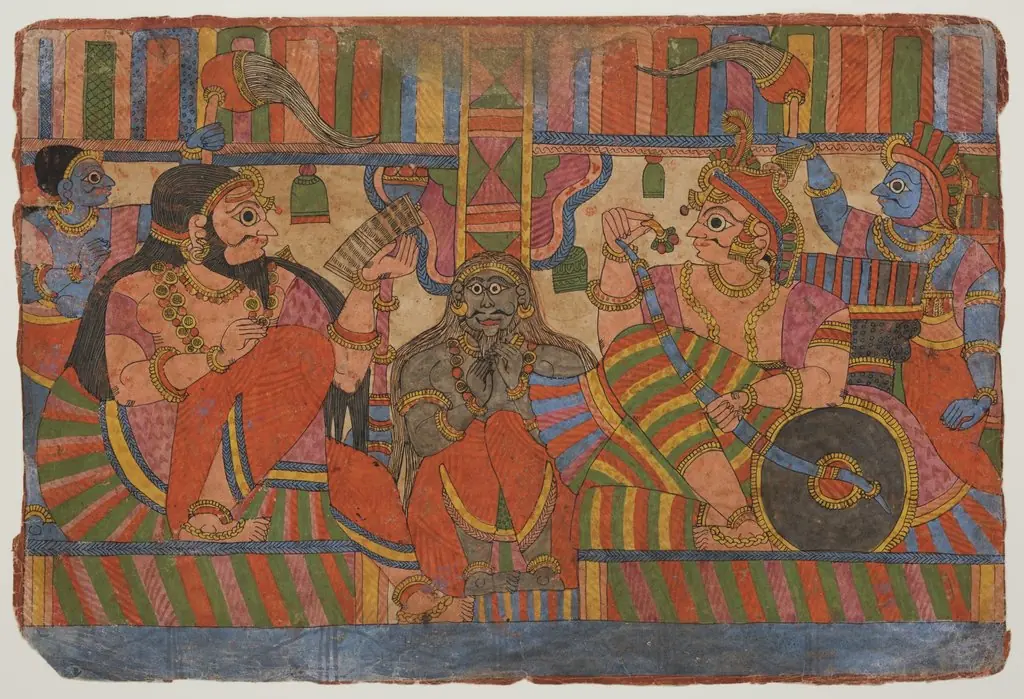
Scene from the Ramayana is an unspecified painting by the Patna School of Painting artist Unknown. It dates from 1800 and is held in the collection of the Detroit Institute of Arts.
About this work
Overview
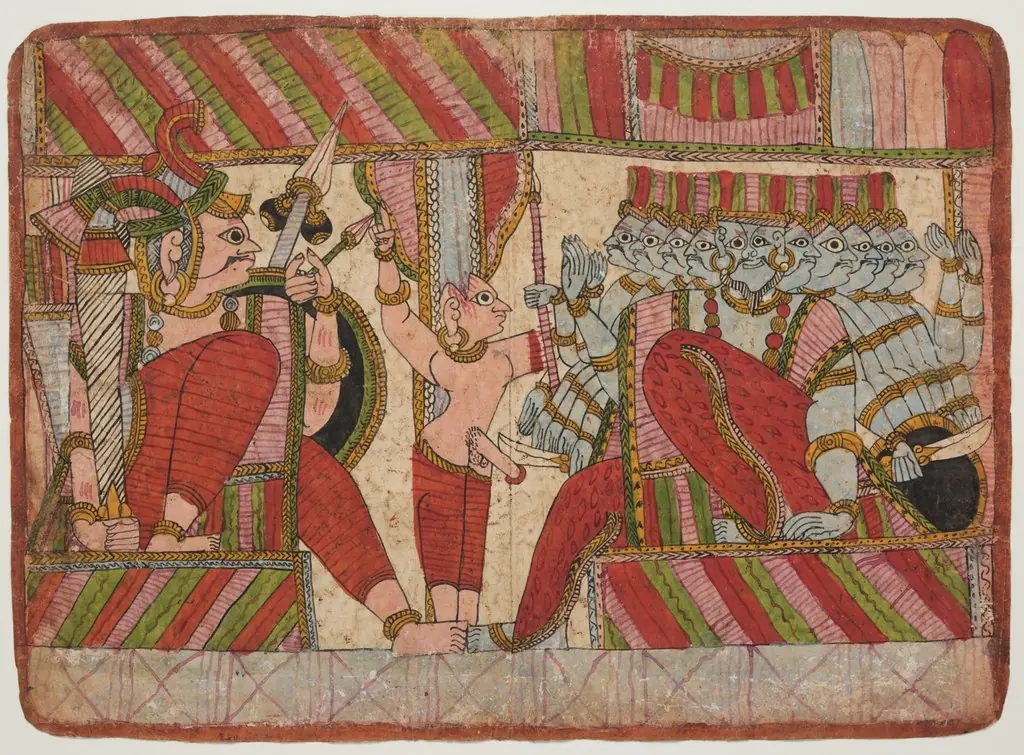
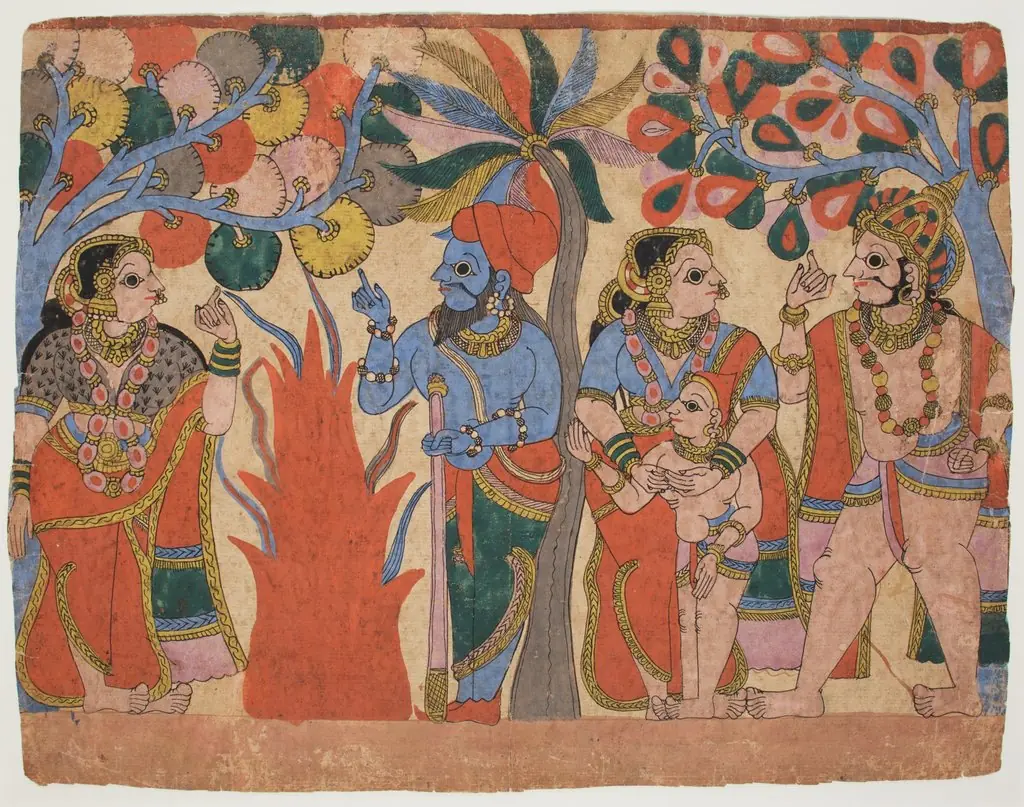
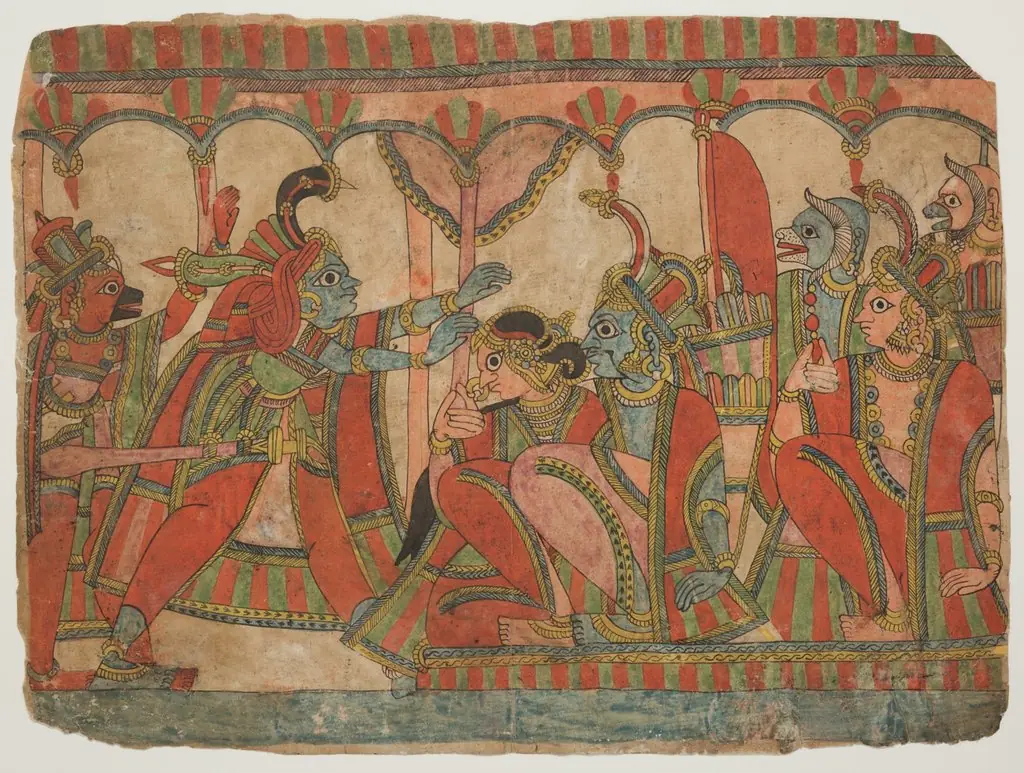
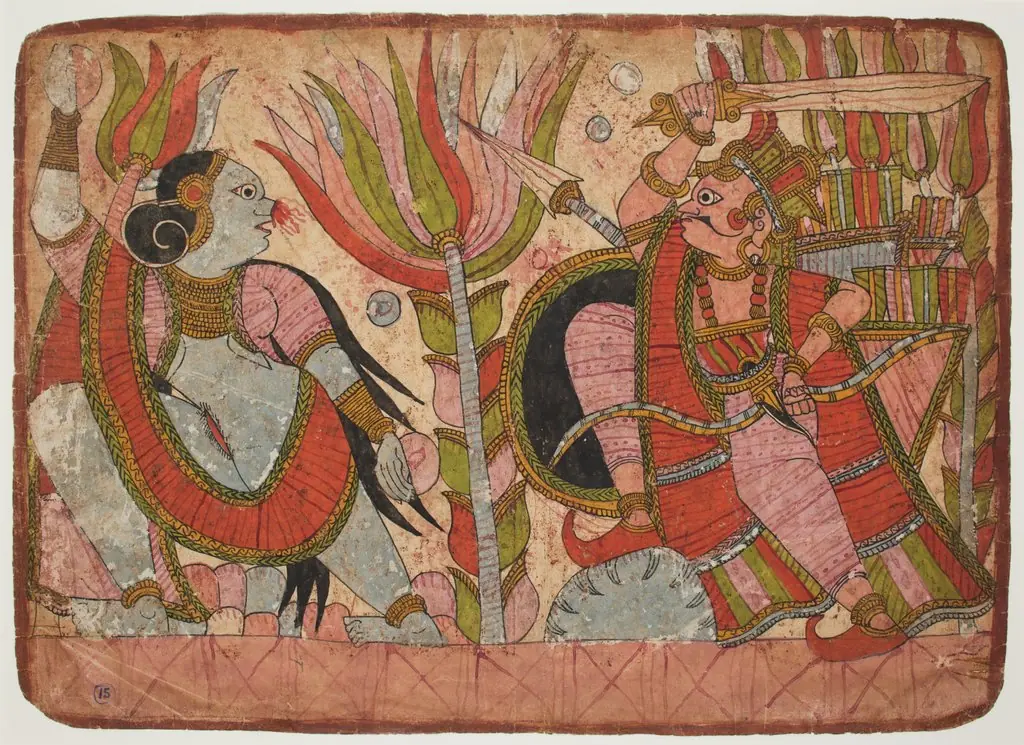
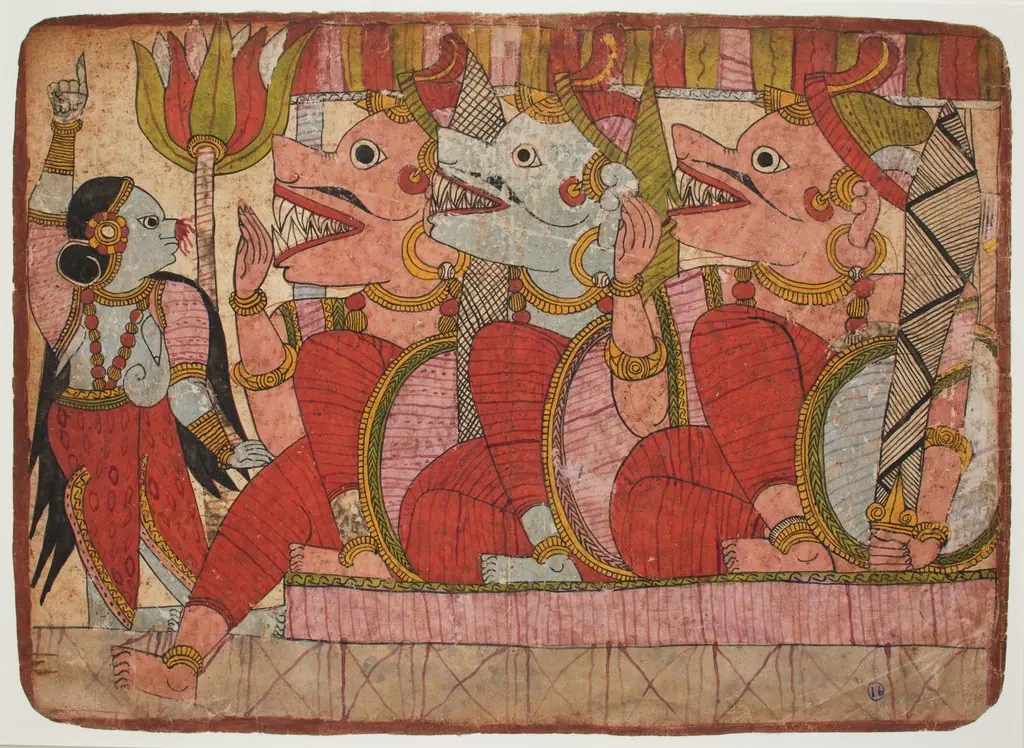
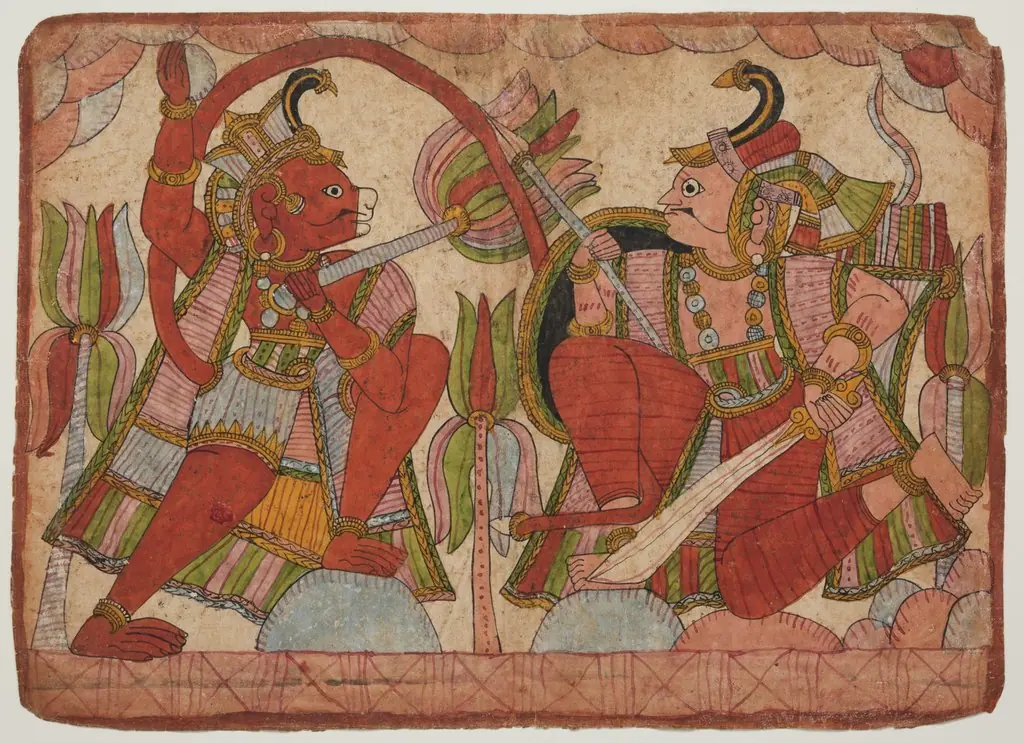
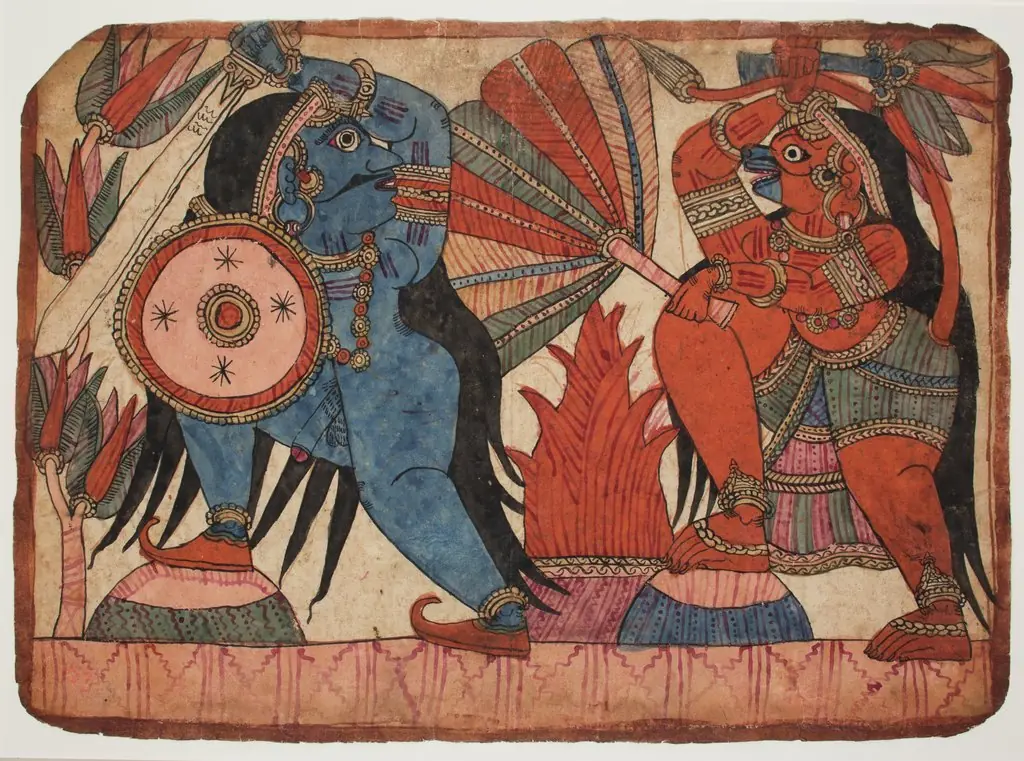
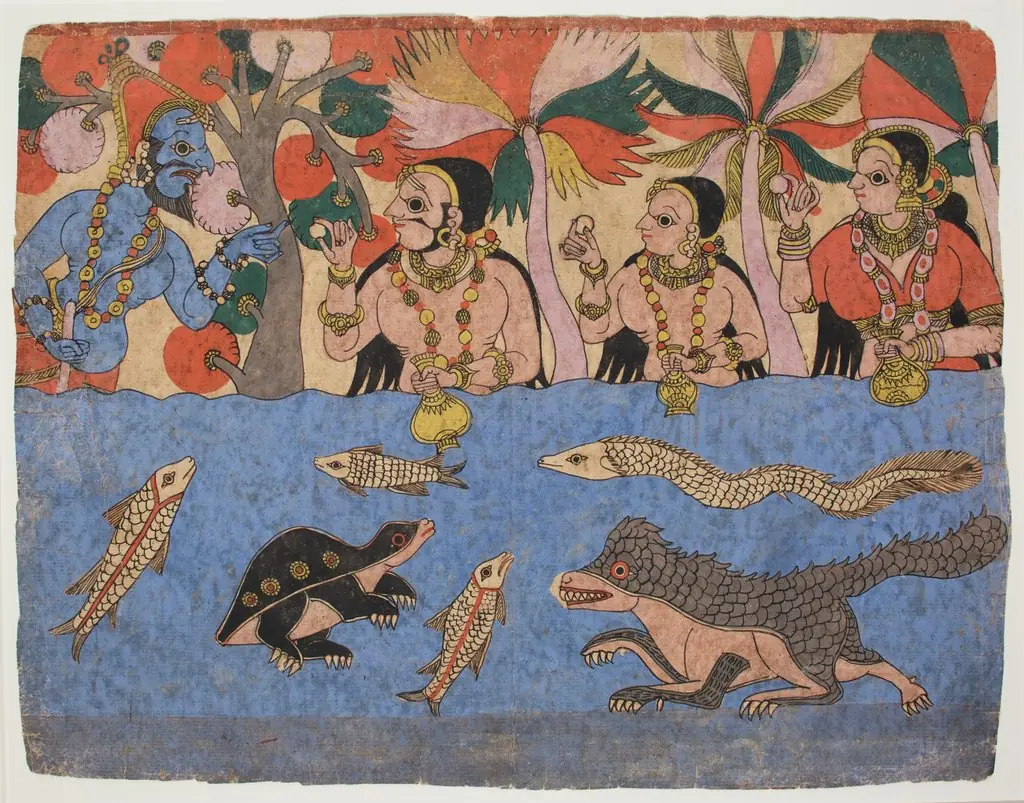
This painting depicts a narrative moment from the Ramayana, rendered in a vibrant, detailed style typical of late Mughal or Rajput court art.
This painting depicts a narrative moment from the Ramayana, rendered in a vibrant, detailed style typical of late Mughal or Rajput court art. Multiple figures are arranged in a shallow space, with dynamic postures and richly patterned garments. The composition emphasizes hierarchy and gesture, particularly through the central woman’s pointing motion, which directs the viewer’s attention to the armed figure below.
Subject & Meaning
The scene likely illustrates a moment of recognition or confrontation in the Ramayana, possibly Sita identifying Rama or another key figure. The man in armor may represent Rama or Lakshmana, while the women on the balcony could be Sita and her attendants. The blue figure above, adorned with a white headdress and ornate necklace, may symbolize a divine presence, such as Hanuman or a celestial observer, watching over the unfolding drama.
Technique & Style
The artist employs bold, saturated hues, red, green, blue, and gold, to define forms and convey symbolic meaning. Clothing and accessories are rendered with fine brushwork, showcasing intricate textile patterns and elaborate jewelry. The flat, decorative background with minimal depth reinforces the focus on figures and ornamentation, characteristic of regional Indian painting traditions that prioritize narrative clarity over naturalistic space.
History & Provenance
The painting likely originated in a Rajput or Deccan court workshop during the 17th or early 18th century, a period when illustrated epics were commissioned by royal patrons. Its style aligns with regional schools that blended Mughal precision with indigenous color traditions. While its exact provenance is undocumented, similar works were often created for private devotional or courtly viewing, not public display.
Context
During this era, illustrated manuscripts of the Ramayana flourished across northern and central India, serving both religious and political purposes. Rulers patronized these works to align themselves with heroic ideals and divine authority. The emphasis on costume and ornament reflects the importance of courtly identity, while the inclusion of divine figures underscores the sacred dimension of royal legitimacy and moral order.
Legacy
This painting exemplifies the enduring visual language of Indian epic illustration, influencing later regional styles and modern reinterpretations of classical narratives. Its attention to detail and symbolic use of color contributed to a broader aesthetic tradition that valued narrative precision and spiritual resonance over realism. Such works remain important references for understanding the intersection of art, religion, and court culture in pre-colonial India.
Artist & collection