Artwork
Standing Ksitigarbha
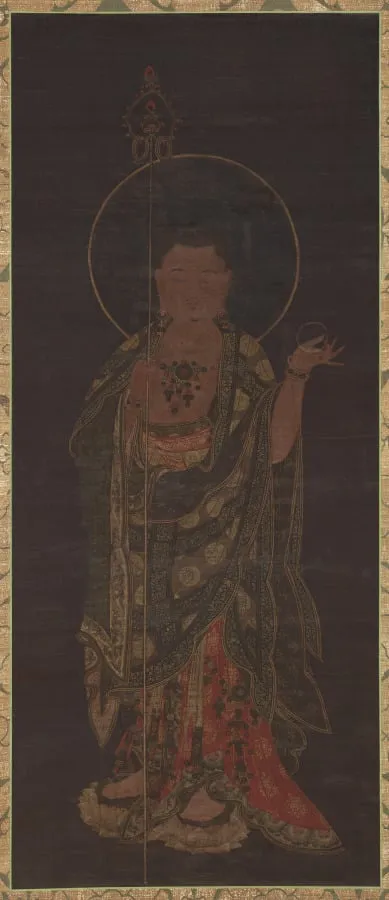
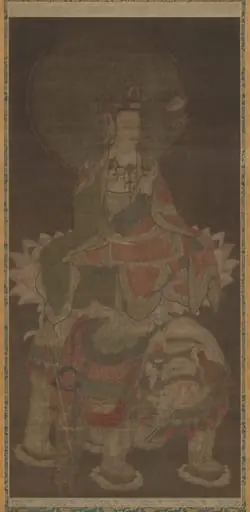
Standing Ksitigarbha is an unspecified painting by the Korean Minhwa artist Unknown. It dates from 1325 and is held in the collection of the Cleveland Museum of Art. Created in the fourteenth century, this hanging scroll portrays the bodhisattva Kṣitigarbha as a youthful monk.
- Accession no.
- 2025.141
- Credit line
- John L. Severance Fund
About this work
Overview
Created in the fourteenth century, this hanging scroll portrays the bodhisattva Kṣitigarbha as a youthful monk. Rendered in the Goryeo tradition, the work measures roughly a hand‑tall panel and is now part of the Cleveland Museum of Art’s collection. The figure’s serene expression and modest attire convey a devotional purpose rather than courtly display.
Subject & Meaning
Kṣitigarbha, known in Korean as 지장보살, is venerated as the savior of souls trapped in the intermediate realm. In the scroll he carries a staff that announces his arrival and a wish‑fulfilling jewel, both emblematic of his pledge to guide and liberate suffering beings from purgatorial torment.
Technique & Style
The artist employs a restrained palette and fluid brushwork typical of Goryeo devotional paintings. Simple monastic robes are rendered with subtle folds, while the figure’s gentle face and relaxed posture suggest a living presence. Minimal ornamental detail allows the symbolic objects to dominate the visual narrative.
History & Provenance
Produced during the Goryeo Dynasty, such scrolls were often commissioned as acts of piety, intended for personal or temple use. The piece entered the Cleveland Museum of Art through a mid‑twentieth‑century acquisition, though earlier ownership records remain sparse.
Context
Kṣitigarbha’s prominence grew across East Asia as a compassionate intercessor for the dead, influencing both visual culture and ritual practice. The scroll reflects this broader religious climate, where lay devotion and monastic iconography intersected in portable formats suitable for private contemplation.
Artist & collection