Artwork
Sheetaladevi: The Smallpox Goddess (recto), from a Kalighat album
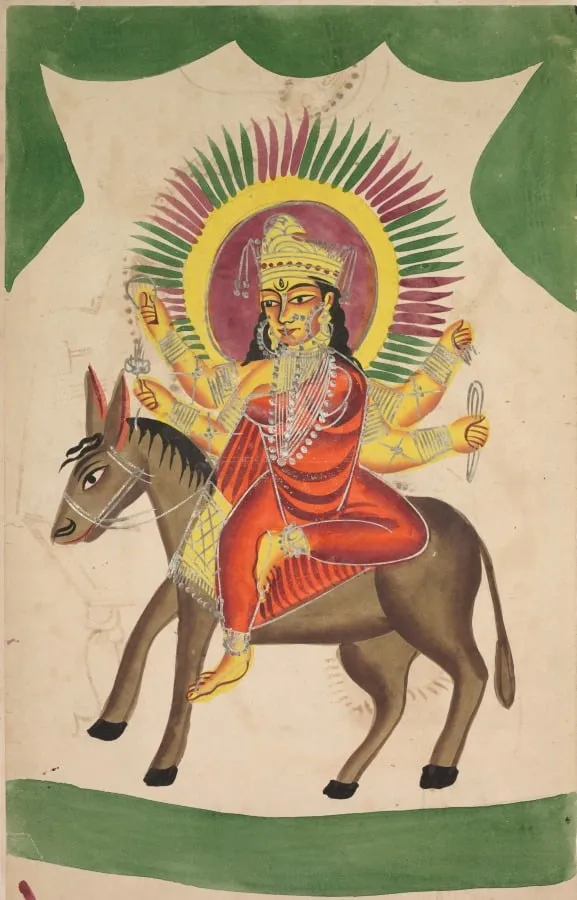
Sheetaladevi: The Smallpox Goddess (recto), from a Kalighat album is an unspecified painting by the Bengal School artist Unknown. It dates from 1890 and is held in the collection of the Cleveland Museum of Art. This work, a modestly sized painting from a Kalighat album, portrays Sheetala, the Hindu deity associated with smallpox.
- Accession no.
- 2003.157.a
About this work
Overview
This work, a modestly sized painting from a Kalighat album, portrays Sheetala, the Hindu deity associated with smallpox. Rendered in the brisk, graphic style typical of Kalighat artists, the image presents the goddess seated on a donkey, holding a broom and a water pot, her expression serene despite the dual nature of her powers.
Subject & Meaning
Sheetala embodies a paradox: she can both inflict and avert disease. Believers view scars from smallpox as a sign of her favor, while rituals aim to appease her to prevent further outbreaks. The calm demeanor of the figure reflects the protective aspect, whereas the presence of the donkey, an animal considered inauspicious, hints at her capacity for danger.
Technique & Style
Executed with the rapid brushwork and bold outlines characteristic of Kalighat painting, the composition includes a rippled curtain above the goddess, evoking a theatrical backdrop. The simplified forms, flat areas of color, and minimal shading convey a sense of immediacy, catering to a popular audience seeking accessible devotional images.
History & Provenance
Kalighat, a bustling district of Kolkata, became a center for itinerant artists in the 19th century who produced inexpensive prints for everyday worshippers. This particular sheet, part of a larger album, reflects that tradition of mass‑produced religious art, intended for private devotion rather than elite patronage.
Context
The visual motif of a stage curtain alludes to the regional drama "Sheetalapala," a folk performance that narrated the goddess’s myths. By integrating theatrical elements, the painting bridges visual and performative storytelling, reinforcing Sheetala’s cultural presence in Bengal’s religious life.
Legacy
Works like this exemplify how Kalighat painters democratized sacred imagery, making complex theological concepts available to a broad public. The image continues to serve as a reference for scholars studying popular devotional art and the interplay between disease, faith, and visual culture in colonial India.
Artist & collection









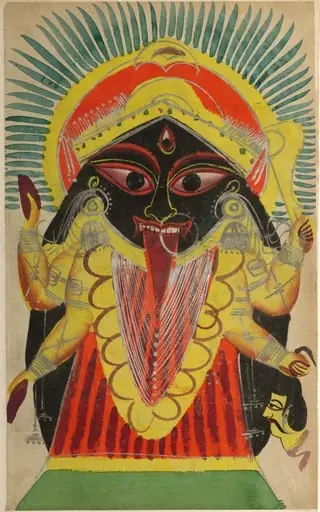
- The Goddess Kali (recto), from a Kalighat album
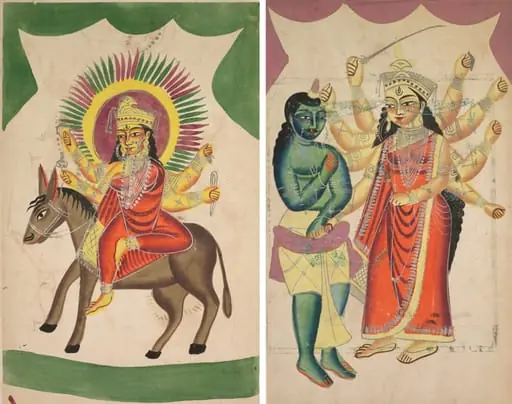 Leaf from a Kalighat album: Sheetaladevi: The Smallpox Goddess (recto); Durga (verso)
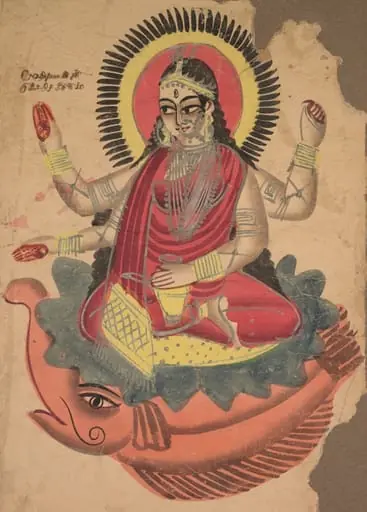 The Goddess Ganga
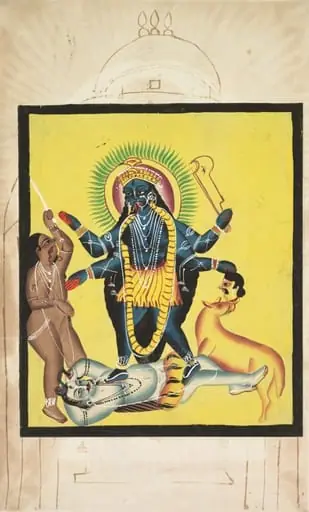 Kali Standing on Shiva (verso), from a Kalighat album
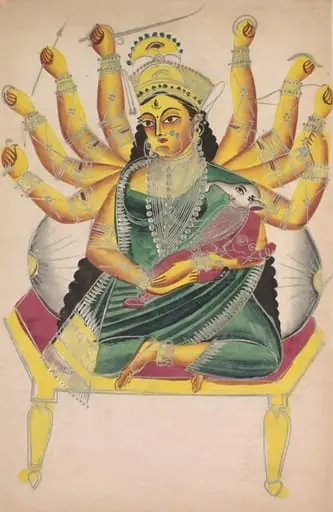 Ganesha-Janani (Mother of Ganesh)
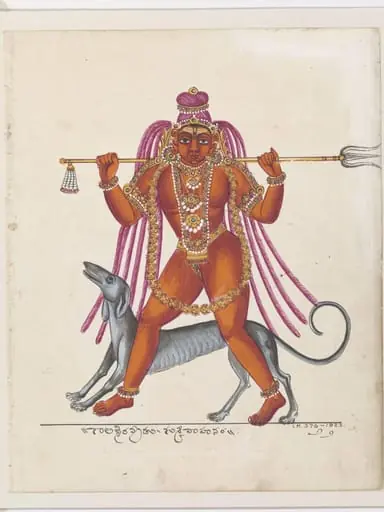 Kala-Bhairava, an emanation of the god Shiva, with trident and hound.