Artwork
Shiva and Devi on Gajasura's hide
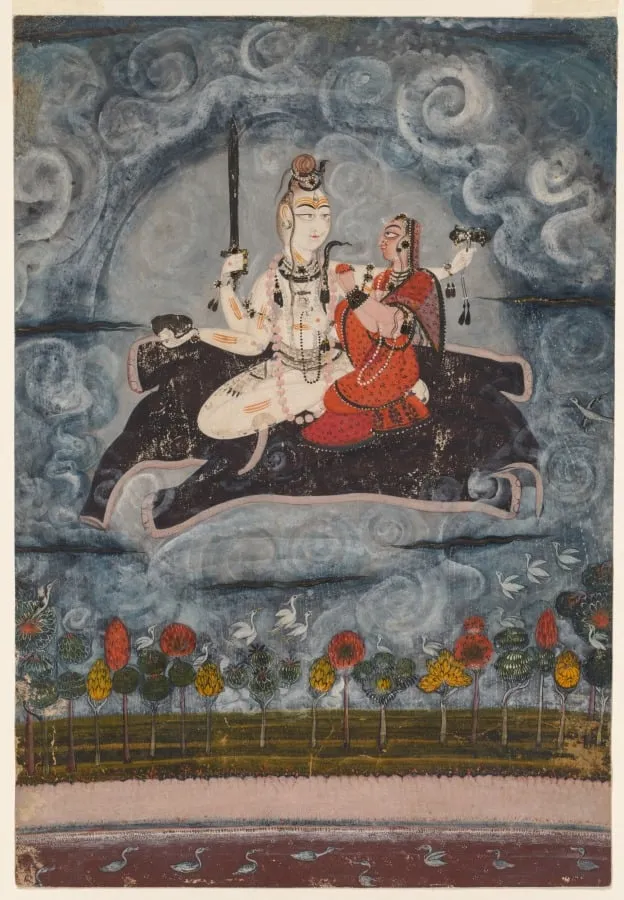
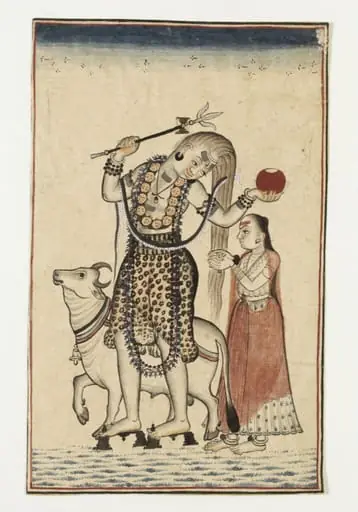
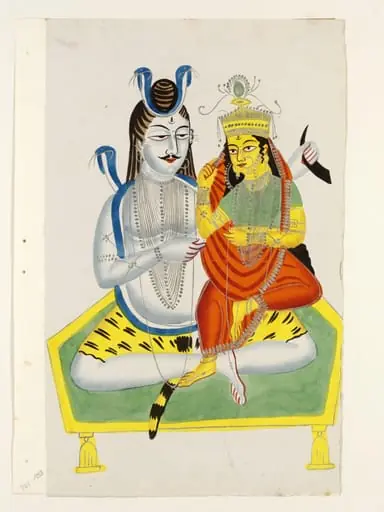
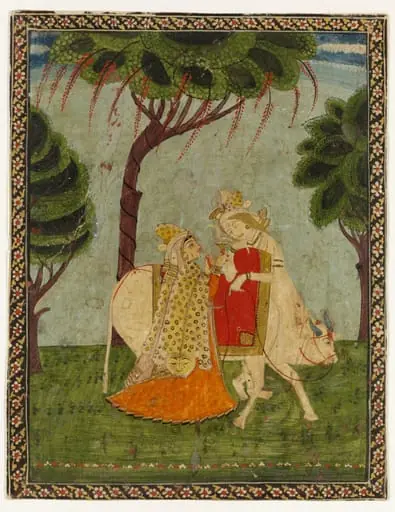
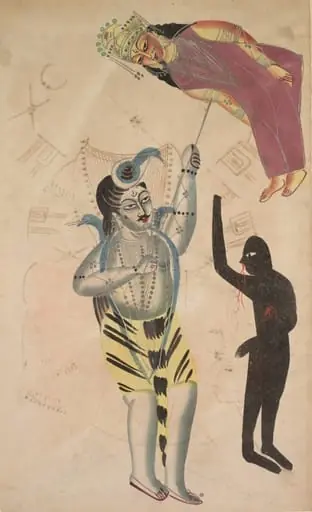
Shiva and Devi on Gajasura's hide is an unspecified painting by the Baroque artist Unknown. It dates from 1678 and is held in the collection of the Cleveland Museum of Art. This painting depicts the Hindu deities Shiva and Devi seated together atop the hide of Gajasura, a slain elephant demon.
- Accession no.
- 1952.587
- Credit line
- Edward L. Whittemore Fund
About this work
Overview
This painting depicts the Hindu deities Shiva and Devi seated together atop the hide of Gajasura, a slain elephant demon.
This painting depicts the Hindu deities Shiva and Devi seated together atop the hide of Gajasura, a slain elephant demon. They float above storm-laden clouds, their forms rendered with delicate precision against a luminous sky. The composition conveys a sense of ethereal suspension, blending divine power with intimate stillness.
Originating from the Pahari hill kingdoms of northern India, the work reflects regional artistic traditions that emphasized emotional nuance in divine representation.
Subject & Meaning
Shiva and Devi embody complementary cosmic forces: destruction and creation, asceticism and devotion. Their locked gazes signify a union beyond duality, where opposing energies coexist in harmony. The elephant hide beneath them symbolizes the subjugation of ego and chaos, while their serene posture suggests transcendence over violence.
Devi’s presence tempers Shiva’s fierce attributes, illustrating the balance between raw power and nurturing grace in Hindu cosmology.
Technique & Style
Executed in the Pahari miniature style, the painting employs fine brushwork, muted pigments, and intricate detail to render textures like ash-smeared skin, serpentine hair, and flowing fabric. The figures are stylized yet expressive, with elongated eyes and graceful contours. Swirling clouds and floating forms create a sense of weightlessness, while the limited palette enhances the spiritual atmosphere. Backgrounds are minimally rendered, focusing attention on the divine pair.
History & Provenance
The painting likely originated in one of the small Himalayan hill states, such as Basohli or Guler, during the 17th or 18th century. These courts patronized artists who illustrated Hindu epics and devotional themes with refined elegance. Though its exact provenance is undocumented, its stylistic features align with other Pahari works commissioned by local rulers for private devotion or courtly display, reflecting a blend of religious devotion and aristocratic taste.
Context
In the Pahari region, devotional painting flourished as a means of personal and royal spiritual expression. Artists drew from Bhakti traditions that emphasized intimate, emotional connections with the divine. Unlike grand temple sculpture, these works invited quiet contemplation.
The depiction of Shiva and Devi as tender companions, rather than distant deities, reflects a broader cultural shift toward accessible, emotionally resonant imagery in Hindu art.
Legacy
This painting exemplifies the Pahari school’s enduring contribution to Indian visual culture: the fusion of mythic grandeur with human tenderness. Its influence extended into later Rajasthani and Company school styles, where divine intimacy remained a central theme. Though lesser known than Mughal or Deccani traditions, Pahari works like this one preserved regional aesthetics and spiritual narratives, offering a quiet counterpoint to more monumental artistic forms.
Artist & collection