Artwork
Shiva intercedes for King Bana, from an Usha-Aniruddha
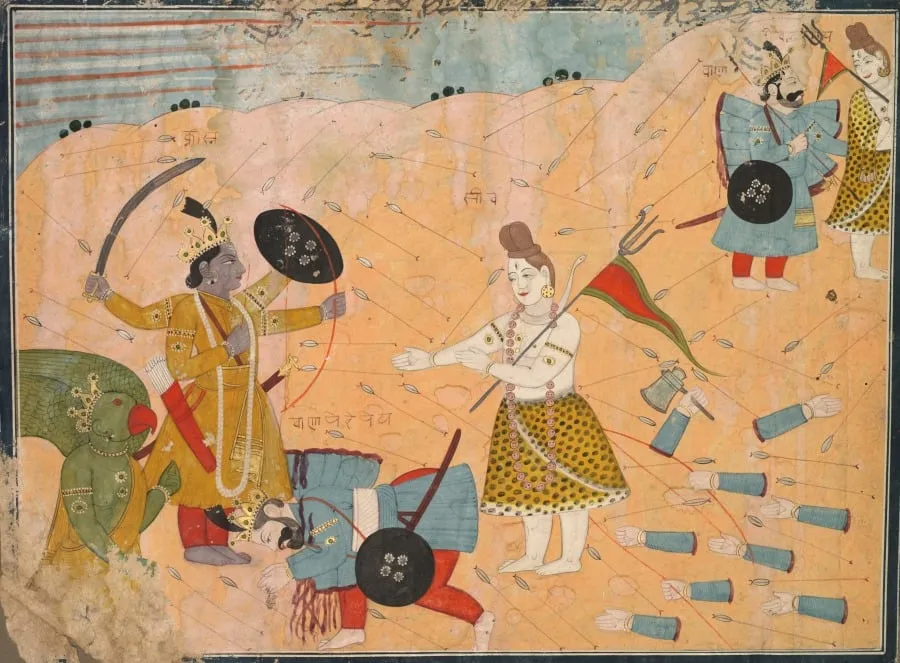
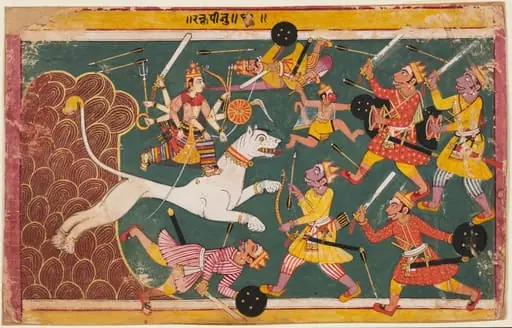
Shiva intercedes for King Bana, from an Usha-Aniruddha is an unspecified painting by the Pahari Painting artist Unknown. It dates from 1840 and is held in the collection of the Cleveland Museum of Art. The work titled Shiva Intercedes for King Bana depicts a dynamic combat tableau rendered in vivid hues and decisive line work.
- Accession no.
- 1934.218
- Credit line
- Gift of Mrs. Charles Eisenman
About this work
Overview
On the right, a blue‑and‑gold armored fighter raises his sword amid a spray of arrows, all set against a rocky hillside backdrop.
The work titled Shiva Intercedes for King Bana depicts a dynamic combat tableau rendered in vivid hues and decisive line work. Central to the scene is a serene, white‑clad figure wielding a spear, confronting a green monster, while a blue‑skinned warrior with sword and shield stands over a fallen combatant on the left. On the right, a blue‑and‑gold armored fighter raises his sword amid a spray of arrows, all set against a rocky hillside backdrop.
Subject & Meaning
The composition illustrates a moment from the Usha‑Aniruddha narrative, wherein the deity Shiva intervenes on behalf of the defeated king Bana. The calm demeanor of the spear‑bearing figure suggests divine mediation, contrasting with the surrounding chaos of battle and emphasizing the theme of divine protection amidst human conflict.
Technique & Style
Executed with bold outlines and a saturated palette, the painting employs a stylized realism characteristic of late traditional Indian court art. The use of flat areas of color, combined with sharp delineation of figures, creates a clear visual hierarchy that guides the viewer’s eye across the action without obscuring individual gestures.
History & Provenance
The piece originates from a manuscript illustrating the Usha‑Aniruddha episode, though specific details of its creation, such as the artist, workshop, or date, remain undocumented. It has been preserved within a collection of narrative paintings that were likely commissioned for devotional or instructional purposes.
Context
Within the broader corpus of Hindu mythological art, scenes of divine intercession serve to reinforce theological concepts of deity involvement in mortal affairs. This work aligns with similar visual traditions that portray gods as active participants in epic battles, reinforcing moral and religious instruction through vivid storytelling.
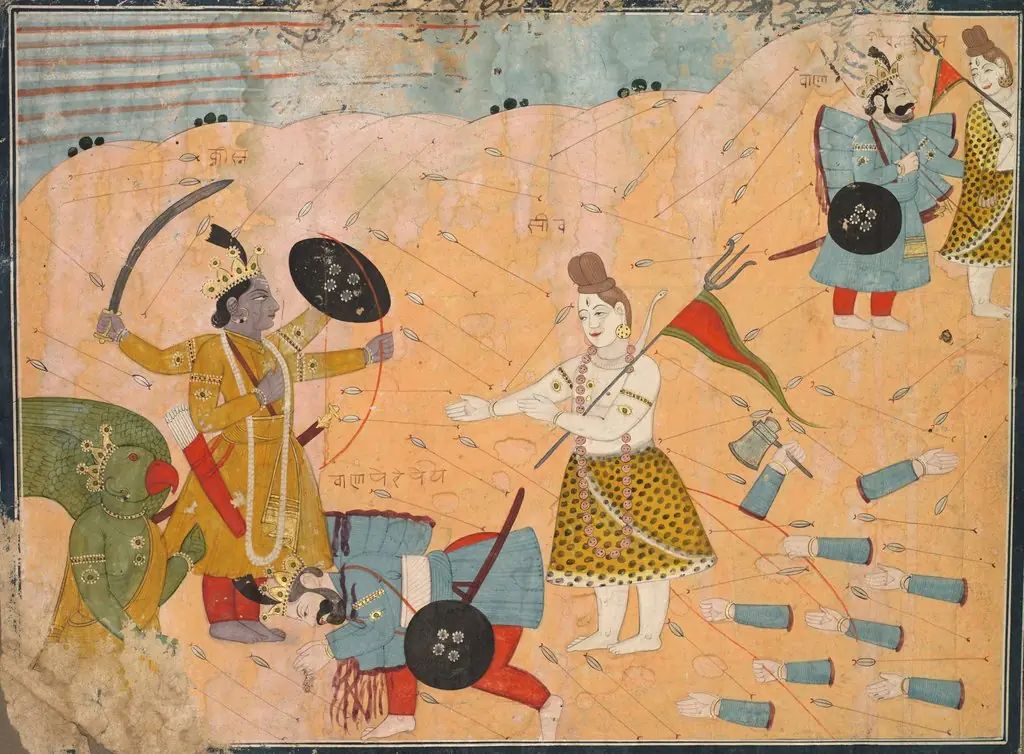
Artist & collection









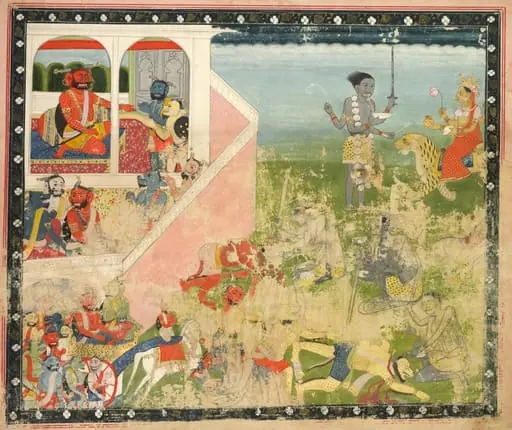 Kali and Devi attack, from a Devi Mahatmya
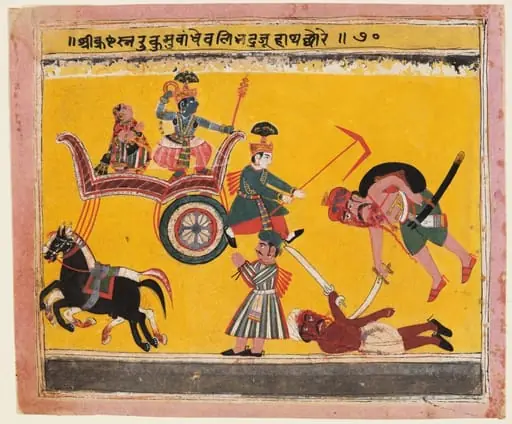 Abduction of Rukmini: Krishna Tied the Hands of Rukma, from a Bhagavata Purana
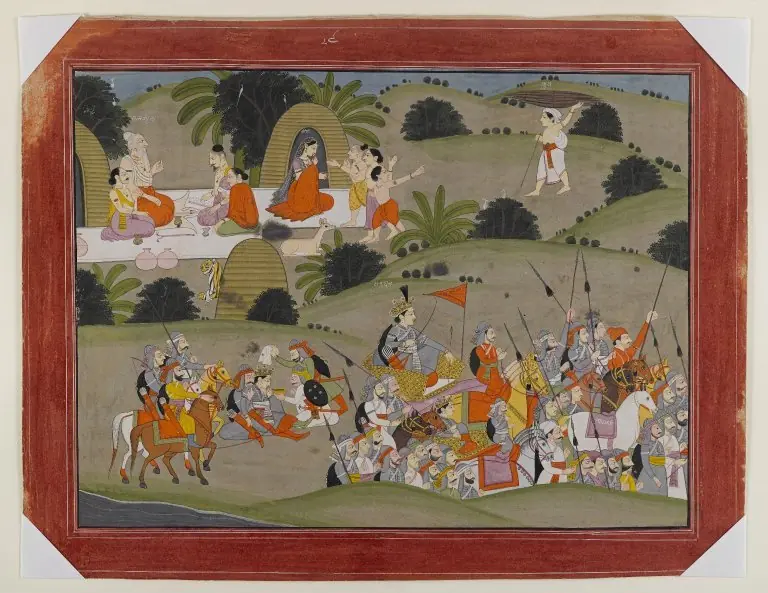 Battle between Lava and Rama's brother, Shatrughna, near the hermitage of Valmiki
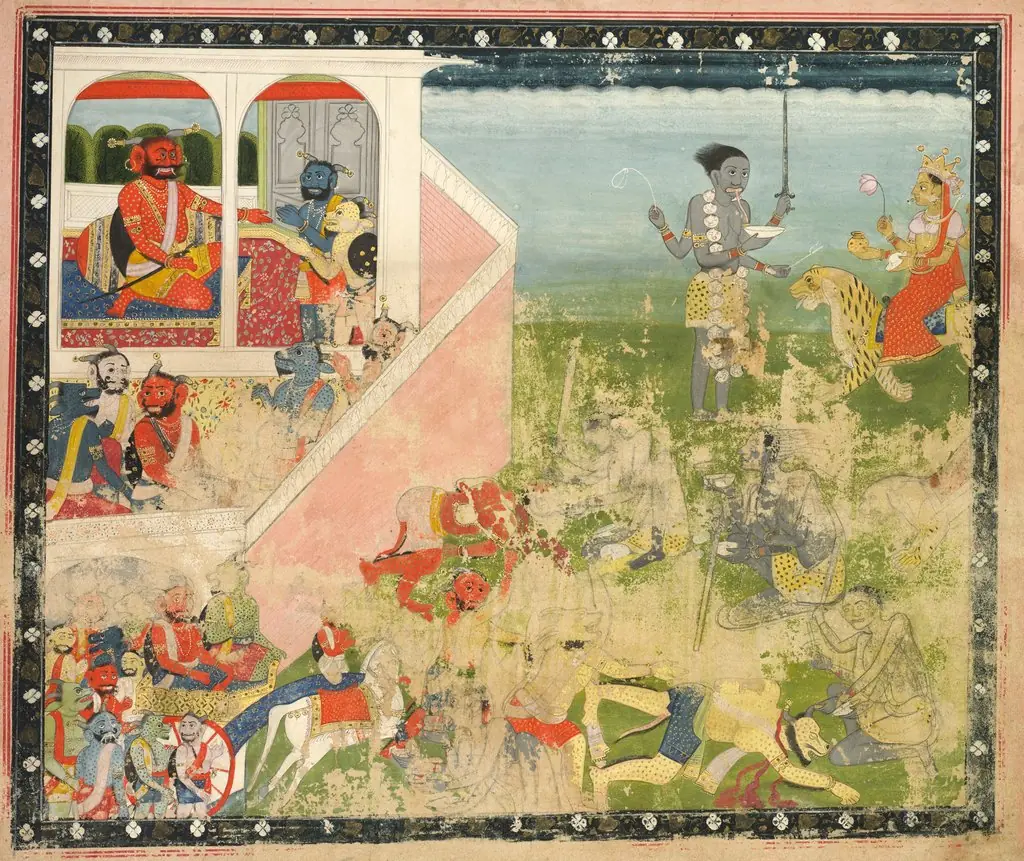 Kali and Devi Attack: Leaf from a Devi Mahatmya
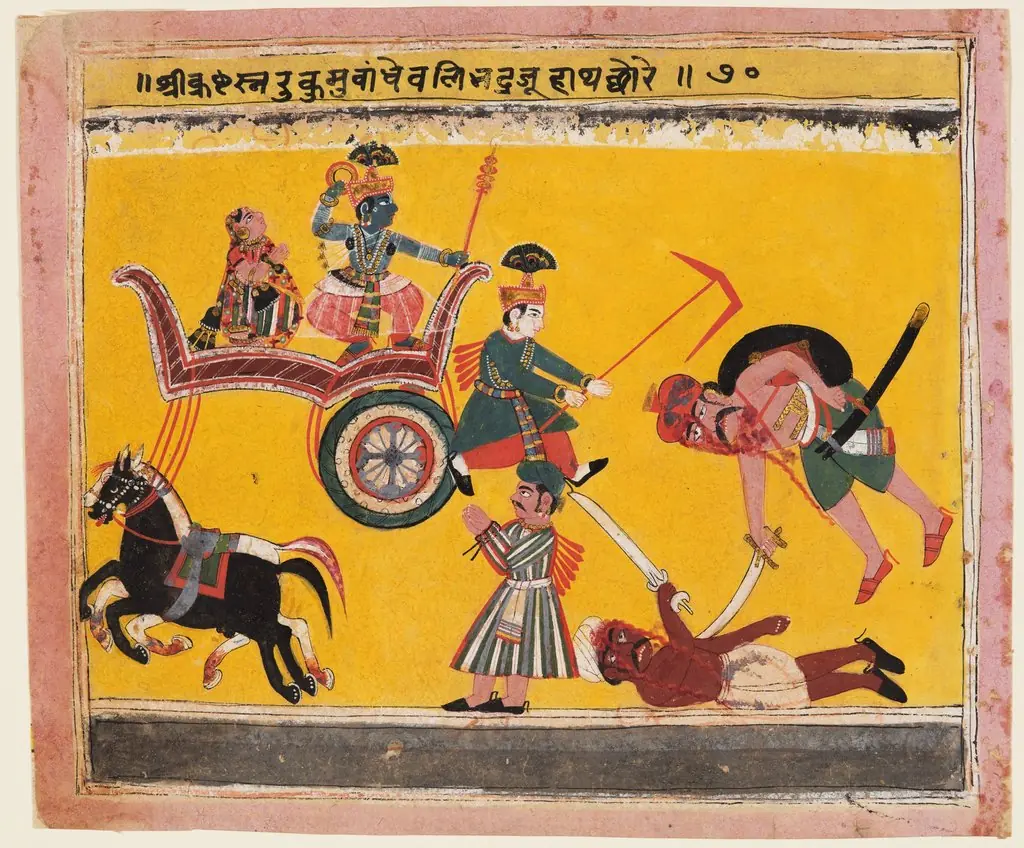 Abduction of Rukmini: Krishna Tied the Hands of Rukma, from a Bhagavata Purana
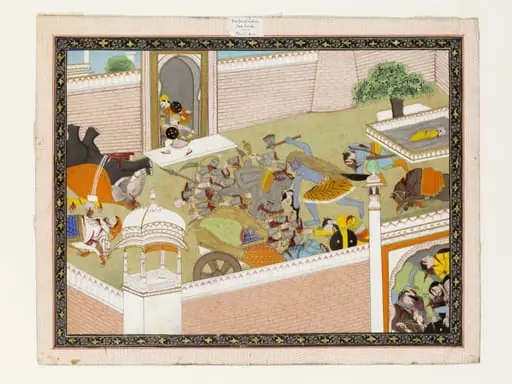 Vishnu as Parasurama
 The Goddess Annihilates the Demon Raktabija, from a Devi-Mahatmya
 Untitled