Artwork
Sketch of a Young Man and Persian Calligraphy
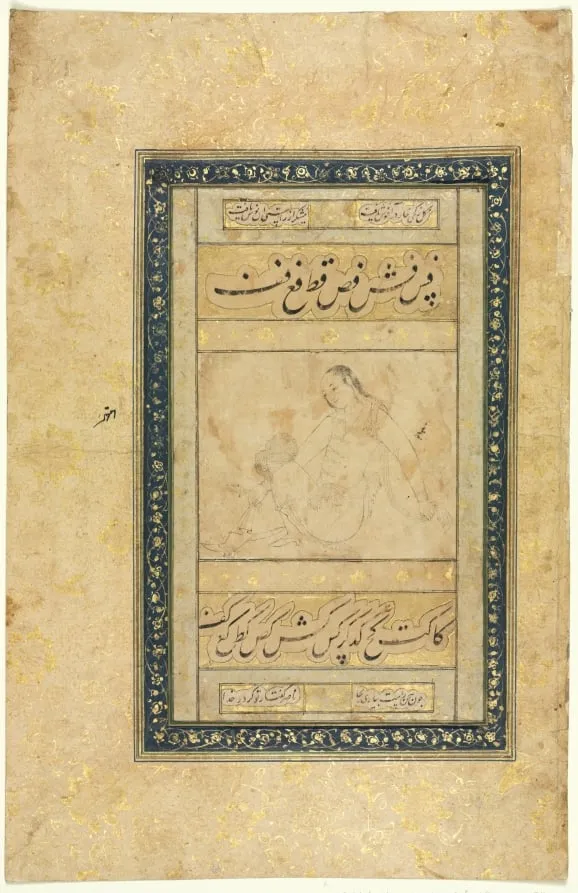
Sketch of a Young Man and Persian Calligraphy is a drawing by the Baroque artist Unknown. It dates from 1640 and is held in the collection of the Cleveland Museum of Art.
- Accession no.
- 1925.132
- Credit line
- The Charles W. Harkness Endowment Fund
About this work
Overview
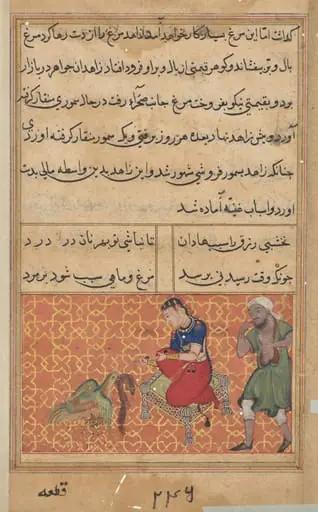
This drawing combines a delicate portrait of a young man engaged in writing with ornate Persian calligraphy arranged above and below the image.
This drawing combines a delicate portrait of a young man engaged in writing with ornate Persian calligraphy arranged above and below the image. The sketch, rendered in light ink with subtle shading, is framed by a dark, finely detailed border. Gold and black ink script fills the surrounding space, creating a balanced composition where text and image coexist as interdependent elements of visual harmony.
Subject & Meaning
The young man, depicted in quiet concentration, appears to be a scholar or scribe at work. His posture and activity suggest contemplation and intellectual pursuit, common themes in Safavid-era artistic representations of literate elites. The surrounding calligraphy, likely poetic or religious in content, reinforces the cultural value placed on learning and the written word in Persian courtly life.
Technique & Style
The sketch employs light, controlled linework and minimal shading to define form, reflecting a restrained aesthetic rooted in Persian miniature traditions. The calligraphy is executed with precision, using gold ink for emphasis against black, typical of high-status manuscripts. The intricate border, possibly inspired by arabesque designs, frames the composition with geometric and floral motifs, enhancing its ceremonial character.
History & Provenance
The work originates from the Safavid period, likely produced in Isfahan during the late 16th or early 17th century. It may have been part of a larger manuscript or a standalone devotional or literary page. Its preservation suggests it was valued by collectors or patrons who appreciated the fusion of calligraphy and figurative art, though its exact provenance remains undocumented.
Context
During the Safavid era, Isfahan emerged as a center for refined manuscript production, where calligraphy and illustration were elevated to near-equal status. This piece reflects a broader cultural trend: the integration of poetry, scripture, and portraiture within single compositions, often commissioned by nobility to express both piety and intellectual refinement.
Legacy
Though modest in scale, this drawing exemplifies a distinctive Safavid approach to combining text and image, influencing later Persian and Mughal artistic practices. Its quiet elegance continues to inform modern appreciation for the interplay between figurative art and calligraphy in Islamic visual culture, serving as a quiet testament to the era’s scholarly ideals.
Artist & collection









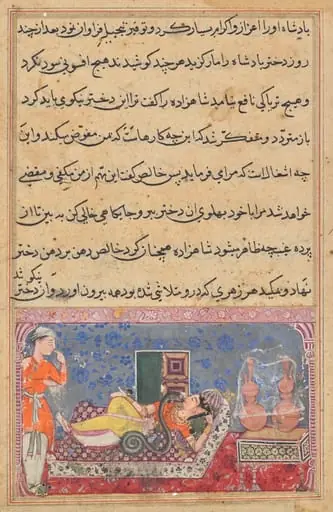
- Khalis repays the prince for his kindness by changing into a snake and sucking the poison from the king’s daughter, from a Tuti-nama (Tales of a Parrot): Eighteenth Night
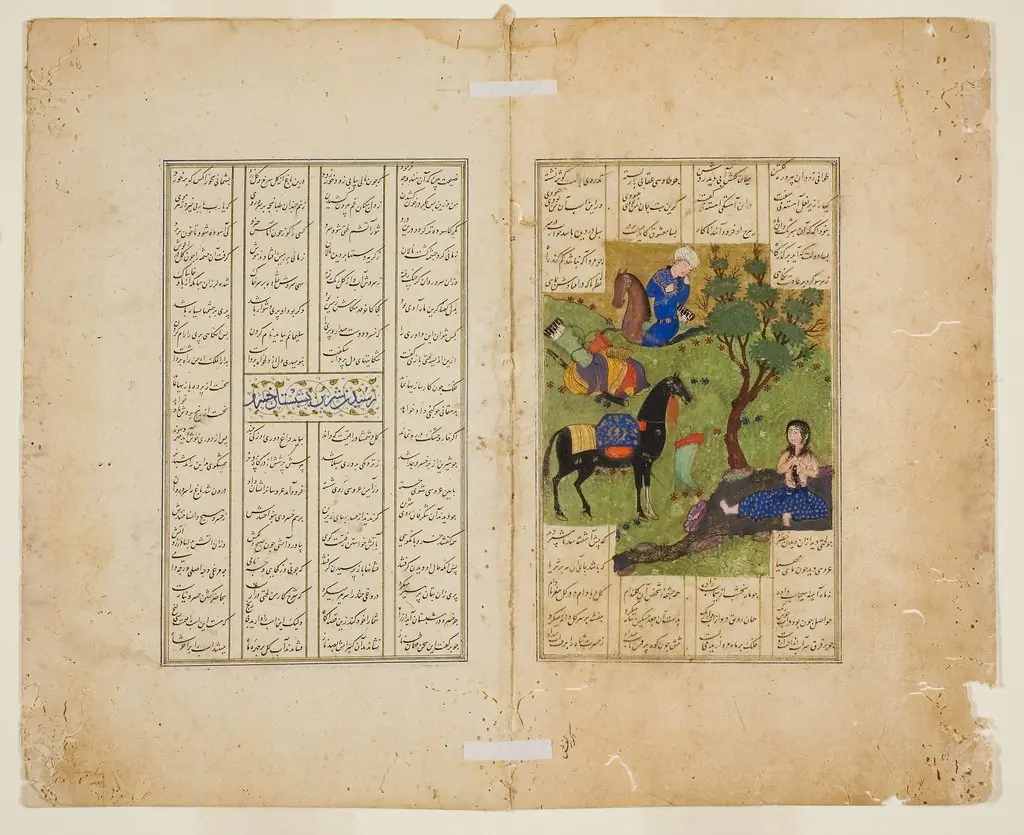 Khusrau Gazing at Shirin, from a copy of the Khamsa of Nizami
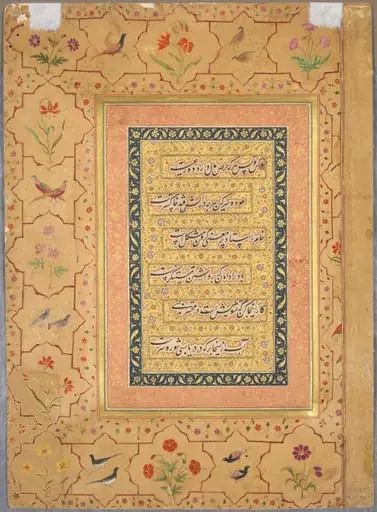 Calligraphy framed by an ornamental border with poppies and pairs of birds, from the Late Shah Jahan Album (verso)
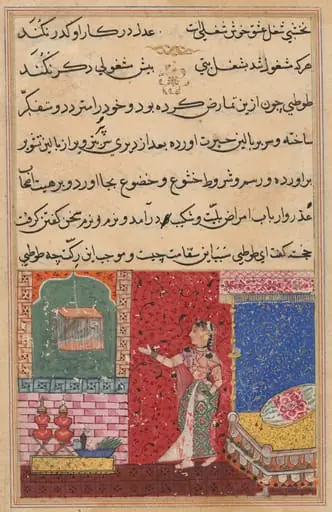 The Parrot Addresses Khujasta at the Beginning of the Fifteenth Night, from a Tuti-nama (Tales of a Parrot)
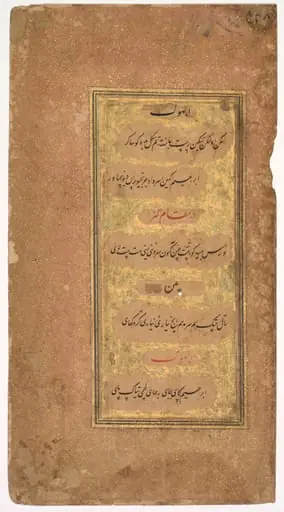 From Dohras (Songs) 40 and 42 from the Kitab-i Nauras (Book of Nine Essences) of Sultan Ibrahim Adil Shah II of Bijapur (r. 1580–1627); verso: From Dohras (Songs) 40 and 36 from the Kitab-i Nauras of Sultan Ibrahim Adil Shah II
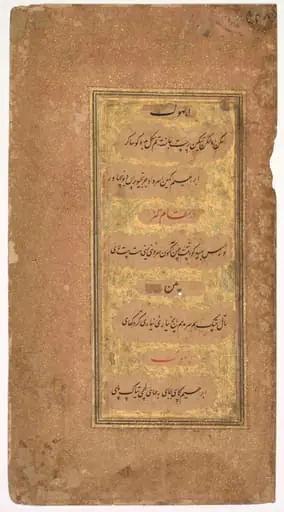 From Dohras (Songs) 40 and 42 from the Kitab-i Nauras (Book of Nine Essences) of Sultan Ibrahim Adil Shah II of Bijapur (r. 1580–1627) (recto)
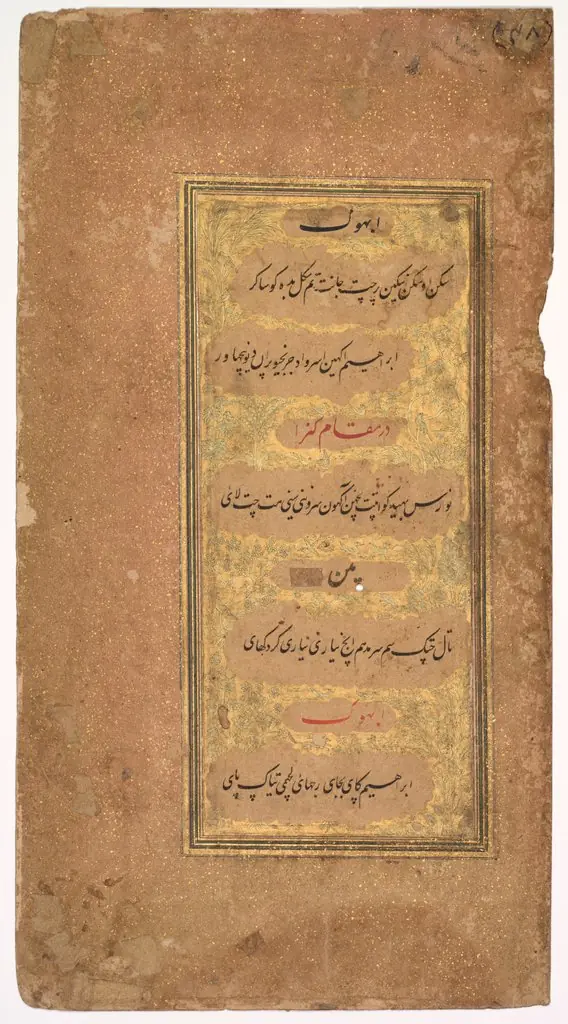 From Dohras (Songs) 40 and 42 from the Kitab-i Nauras (Book of Nine Essences) of Sultan Ibrahim Adil Shah II of Bijapur (r. 1580–1627); verso: From Dohras (Songs) 40 and 36 from the Kitab-i Nauras of Sultan Ibrahim Adil Shah II
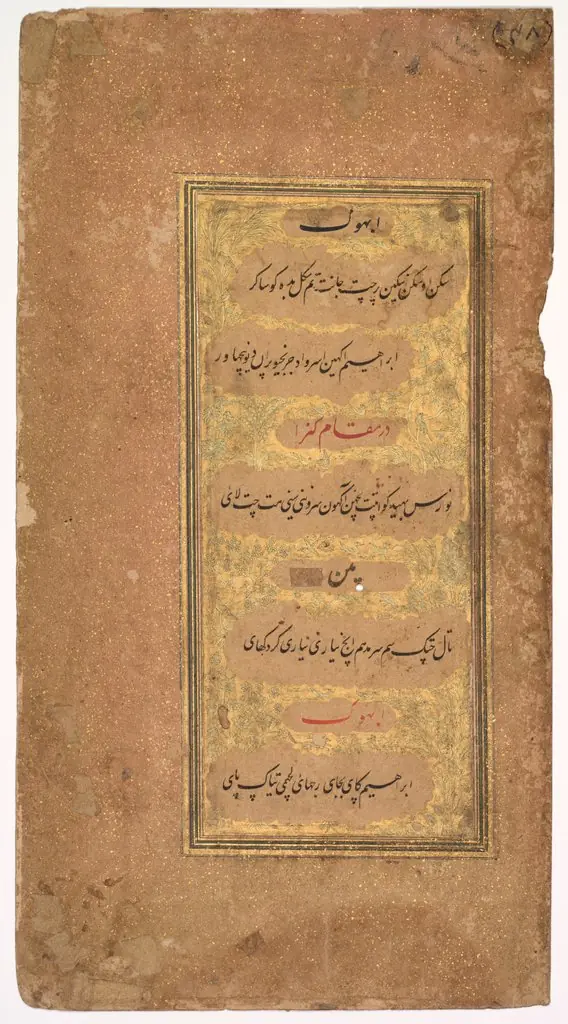 From Dohras (Songs) 40 and 42 from the Kitab-i Nauras (Book of Nine Essences) of Sultan Ibrahim Adil Shah II of Bijapur (r. 1580–1627) (recto)
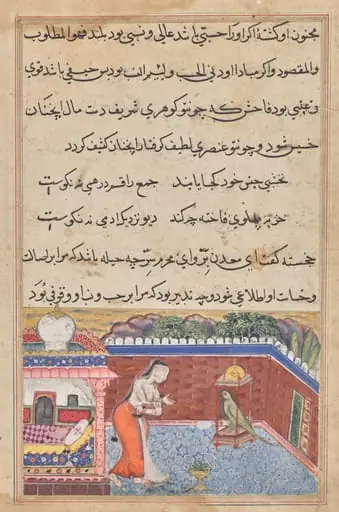 The parrot addresses Khujasta at the beginning of the thirty-first night, from a Tuti-nama (Tales of a Parrot)
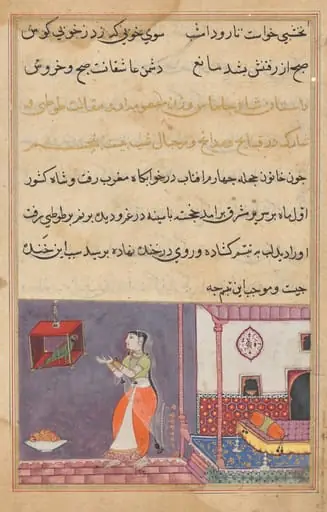 The Parrot Addresses Khujasta at the Beginning of the Twenty-fifth Night, from a Tuti-nama (Tales of a Parrot)
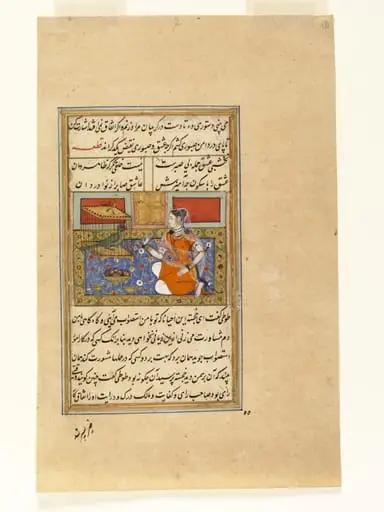 Khojasta talking to the parrot
 The bird of seven colors brings a sable to the pious man, from a Tuti-nama (Tales of a Parrot): Fifty-second Night