Artwork
Sketches of Horses (verso)
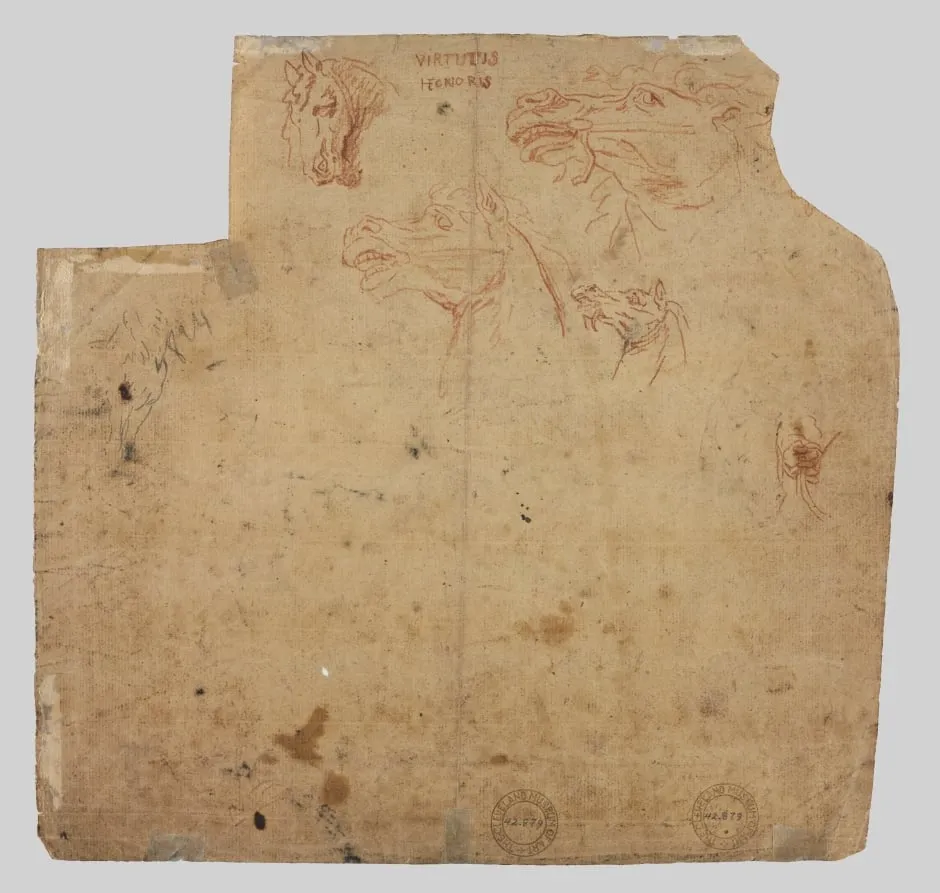
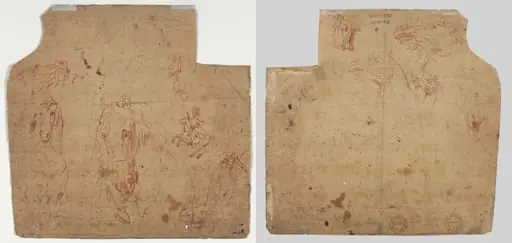
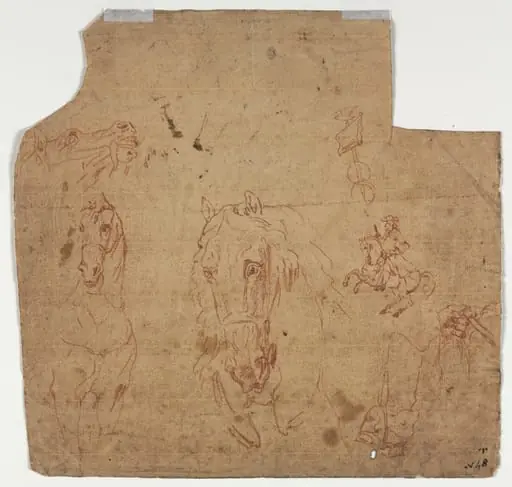
Sketches of Horses (verso) is a drawing by the Baroque artist Unknown. It dates from 1604 and is held in the collection of the Cleveland Museum of Art. This drawing, executed in red ink on tan paper, presents a series of horse heads arranged in a loose, observational composition.
- Accession no.
- 1942.879.b
- Credit line
- Gift of Robert Hays Gries
About this work
Overview
This drawing, executed in red ink on tan paper, presents a series of horse heads arranged in a loose, observational composition.
This drawing, executed in red ink on tan paper, presents a series of horse heads arranged in a loose, observational composition. The rough edge along the left margin and scattered dark marks suggest it was made on a fragment of a larger sheet. The work functions as an anatomical study, emphasizing the structure of equine heads and necks rather than a finished scene. The medium and spontaneity point to its role as a preparatory exercise.
Subject & Meaning
The sketch focuses on the varied expressions and forms of horse heads, capturing subtle differences in posture, tension, and gaze. Each head is rendered with distinct character, indicating close observation of live animals. Rather than symbolic or narrative intent, the work reflects a practitioner’s engagement with animal physiology, likely intended to refine understanding of movement and musculature in motion.
Technique & Style
Red chalk or ink is used with fluid, confident strokes to define contours and shading, emphasizing volume without heavy modeling. The artist employs varied line weight to suggest texture and form, particularly around the eyes, nostrils, and jawlines. The rough paper surface interacts with the medium, enhancing the tactile quality of the drawing. The absence of background or context directs attention solely to the heads themselves.
History & Provenance
The drawing’s origin is tied to a Baroque-era artist known for equestrian studies, though its specific authorship remains unconfirmed. It likely belonged to a private sketchbook used for practice or reference, common among artists training in anatomy. Its survival as a standalone fragment suggests it was separated from a larger collection, possibly during later cataloging or dispersal of an estate.
Context
In the 17th century, detailed animal studies were integral to artistic education, particularly for those depicting battle scenes or noble hunts. While Baroque art often emphasized dramatic lighting and grandeur, this sketch reveals a quieter, empirical tradition, focused on direct observation rather than theatrical effect. Such studies were foundational for artists working in courtly or military commissions.
Legacy
This drawing exemplifies the enduring value of preparatory work in artistic practice. Though unsigned and unattributed, it contributes to the broader understanding of how artists engaged with natural forms outside of commissioned pieces. Its preservation offers insight into the daily discipline behind more polished Baroque works, highlighting the quiet labor of observation that underpinned the era’s visual language.
Artist & collection









![Figure on Horseback and Other Studies [verso], by Winslow Homer](https://artifactworldgallery.com/img/winslow-homer--figure-on-horseback-and-other-studies-verso--3909dbf700a8f786-w320.webp)